Cover photo: David Wright, Wikimedia Commons (CC BY-SA 2.0)
A way through this story
Winter wheat drilling dates for autumn 2026
This guide is for winter wheat drilled in autumn 2026 for harvest 2027. The year in the title is the drilling year, not the harvest year. It takes the next decision on from BritFarmers’ Harvest 2026 yield results without reopening the separate questions of when crops are cut or how the current harvest is progressing.
Jump to the seed rate calculator if the field target, TGW and loss assumptions are already decided. The calculator works to a single flat rate; if you are drilling to variable-rate maps instead, the kit side lives in our UK precision agriculture guide.
The current AHDB Recommended List evidence does not provide one optimum UK drilling date. It classifies winter-wheat trials by sowing period. AHDB’s January 2026 drilling guidance says most trials are sown between 25 September and 1 November. It calls sowing before 25 September early and discusses late trials from 1 November to 31 January. Treat 1 November as the handover point between published evidence bands, not a one-day biological threshold or a date that is simultaneously better and worse.
The field decision sits between several risks. Early emergence can lengthen exposure to aphids and BYDV and narrow the time available for grassweed control. Delaying can create more time for a weed flush, but establishment falls as soils cool and a good seedbed can disappear in one wet week. Variety, end market, soil, weed burden, seed lot, drilling capacity and forecast all matter.
Use the bands below to frame a plan, then set the target plant population and establishment assumption field by field. The broader rotation and enterprise choices remain with the UK arable farming guide; this page owns the detailed winter-wheat date and seed-rate calculation.
How to read the early, main and late drilling windows
The cleanest way to use the AHDB dates is as labels for comparing evidence, not as traffic lights. A field can be agronomically early, timely or late for reasons that a national calendar cannot see.
- Before 25 September: AHDB classes this as early sown. Its dedicated early-sown trials run from 25 August to 14 September, while the early row also uses suitable main-series trials drilled before 25 September. An early entry may suit a particular rotation or geography, but it brings more time for crop growth, weeds and aphid exposure before winter.
- 25 September to the 1 November boundary: most current Recommended List trials fall in this interval. That makes it the strongest evidence base for comparing varieties, not an automatic optimum window for every UK field.
- From the 1 November boundary: AHDB’s explanation describes trials from 1 November to 31 January as late sown, while its table says after 1 November. Either way, later crops have less time to establish and tiller, so the seed-rate and variety decisions need revisiting rather than carrying an October plan forward unchanged.
- Beyond January: the question becomes variety-specific vernalisation and latest safe sowing. A date in the Recommended List is a conservative flowering limit, not a promise of commercial yield or a reason to force a crop into poor conditions.
The same calendar means different things on different soils. A light field that can still make a firm, even seedbed after rain is not the same proposition as a heavy field being worked because the planned date has arrived. Blackgrass pressure can justify holding the worst fields back, while a clean field may not benefit from the same delay. The plan should therefore be a field order with decision points, not one farm-wide start date.
Calculate winter wheat seed rate in kg/ha
The calculator converts a chosen target spring population into a drilling quantity. It needs the actual seed-lot thousand grain weight and tested germination, plus a separate estimate of field survival after germination. It does not choose the right target for the field.
Winter wheat planning tool
Seed rate calculator
Enter the target spring plant population and figures from the actual seed lot and field plan. The calculator converts them into seeds/m², kg/ha and kg/acre.
Calculated requirement
- Required seed population
- — seeds/m²
- Seed rate
- — kg/ha
- Seed rate per acre
- — kg/acre
- Combined establishment
- —% of seed sown
- Total seed for field
- —
Show the formula and worked example
Required seeds/m² = target plants/m² ÷ (germination fraction × establishment fraction of germinated seed).
kg/ha = required seeds/m² × TGW in grams ÷ 100.
Worked example only: 250 target plants/m², 45 g TGW, 95% germination and 90% establishment of germinated seed produces 292 seeds/m² and 131.6 kg/ha. Across 20 ha, that is about 2.63 tonnes.
This calculator estimates seed quantity, not yield or the correct target population for an individual field. Use current seed-lot results, AHDB Recommended List data, breeder guidance and field-specific professional advice. Always follow current product authorisations and labels.
The final conversion from required seeds/m² and TGW to kg/ha follows the AHDB seed-rate conversion tool. Laboratory germination and survival after germination are the preceding adjustment from target plants to required seeds. Keeping them separate makes both assumptions visible rather than hiding them in one percentage.
What the seed-rate calculation is doing
Start with the number of spring plants wanted in each square metre. Divide that target by the germination fraction and the expected field-survival fraction after germination to find the number of seeds that must be placed. Multiply required seeds/m² by thousand grain weight in grams, then divide by 100 to convert the result to kg/ha.
- Required seeds/m² = target spring plants/m² ÷ (germination fraction × field-survival fraction after germination)
- Seed rate kg/ha = required seeds/m² × TGW in grams ÷ 100
- Total seed tonnes = kg/ha × field hectares ÷ 1,000
For a worked example, 250 target spring plants/m², a 45 g TGW, 95% germination and 90% survival after germination produce a combined establishment of 85.5% of seed sown, requiring 292 seeds/m² and 131.6 kg/ha. Across 20 hectares, the calculated quantity is about 2.63 tonnes. Those are example inputs, not a recommended rate.
Keep the two loss factors separate. Germination comes from the current seed-lot test. The field-survival input is the proportion of germinated seed expected to survive field and overwinter losses. AHDB’s published establishment benchmarks are proportions of seeds sown, so they already include germination loss and must not be entered unchanged beside a separate germination figure. To translate a combined benchmark, divide it by the germination fraction: 70% of seed sown established with 95% laboratory germination is about 73.7% survival after germination.
Use an actual seed test. AHDB’s seed-health guidance says not to use seed with germination below 78%, so the calculator rejects lower figures rather than producing a superficially precise rate from unsuitable seed.
A kg/ha figure cannot rescue a weak assumption. Recalculate when TGW changes between lots, when the drill date moves, when a different field has a different seedbed, or when weather changes the establishment outlook. Keep the input sheet with the drilling record so the emerging plant count can be compared with the plan later.
Choose a target population before choosing kg/ha
The calculator deliberately leaves the target box empty because there is no responsible national default. AHDB’s wheat establishment guide gives general benchmarks of 70% of seeds sown established and 260 established plants/m², but it also says the appropriate target depends on sowing date and weed pressure. It describes about 150 plants/m² in the thinnest parts of a field, with more where crop competition is needed.
Those figures need context. AHDB’s October Recommended List trials use final spring targets of 250 plants/m² for conventional wheat and 175 for hybrids, typically expecting 90% establishment. They are controlled trial targets, not a ready-made commercial prescription. Copying one into every field would ignore variety type, drilling date, soil, pests, weeds and the farm’s own establishment history.
Combined seed-to-plant establishment also moves sharply. AHDB cites averages of 90% of seeds sown on sandy soils and 65% on loams and clays. It says the proportion falls after mid-October and can be around 50% of seeds sown in mid-November. These are evidence benchmarks, not direct entries for a calculator that already applies laboratory germination. Convert a combined figure to survival after germination as explained above, or use the farm’s measured loss factors. A well-structured clay in a fit seedbed may outperform a crude soil average; a damaged sandy seedbed can underperform it.
Higher population is not free insurance. Dense crops can increase lodging risk and alter root, tiller and canopy structure. The useful sequence is target first, then germination and survival after germination, then kg/ha. If the calculated answer looks surprising, inspect the four inputs instead of rounding the output towards last year’s rate.
Blackgrass: buy time without losing the seedbed
Delayed drilling is one part of integrated blackgrass control, not a stand-alone cure. AHDB’s integrated blackgrass guidance reports average control above 30% when winter cereals are delayed until after mid-October across the evidence it reviews. It attributes the benefit to more weeds emerging before sowing, later weeds being less competitive and residual herbicides often working better in later conditions.
That is an average response, not a guarantee for one field or one autumn. Dormancy, moisture, the size of the seedbank and the time actually available for a flush all change the result. AHDB advises drilling fields with the heaviest blackgrass burden last and combining date with competitive crops, suitable plant population, row spacing and a strong seedbed.
There is a practical tension. The longer the delay, the more time there may be to reduce a grassweed flush, but wheat establishment begins to decline after mid-October. A planned delay that ends in a smeared or waterlogged seedbed is not the same strategy as a clean late entry into fit ground. Drilling capacity matters because the weather window must be used without lowering establishment across the rest of the farm.
Map the burden before harvest residue disappears, set the field order and agree the point at which a winter crop is no longer the sensible choice. The arable rotation-planning guide covers the wider crop-sequence decision. This page keeps to the narrower question: how weed pressure changes the date and population entered into the winter-wheat plan.
BYDV: emergence date matters more than the calendar date alone
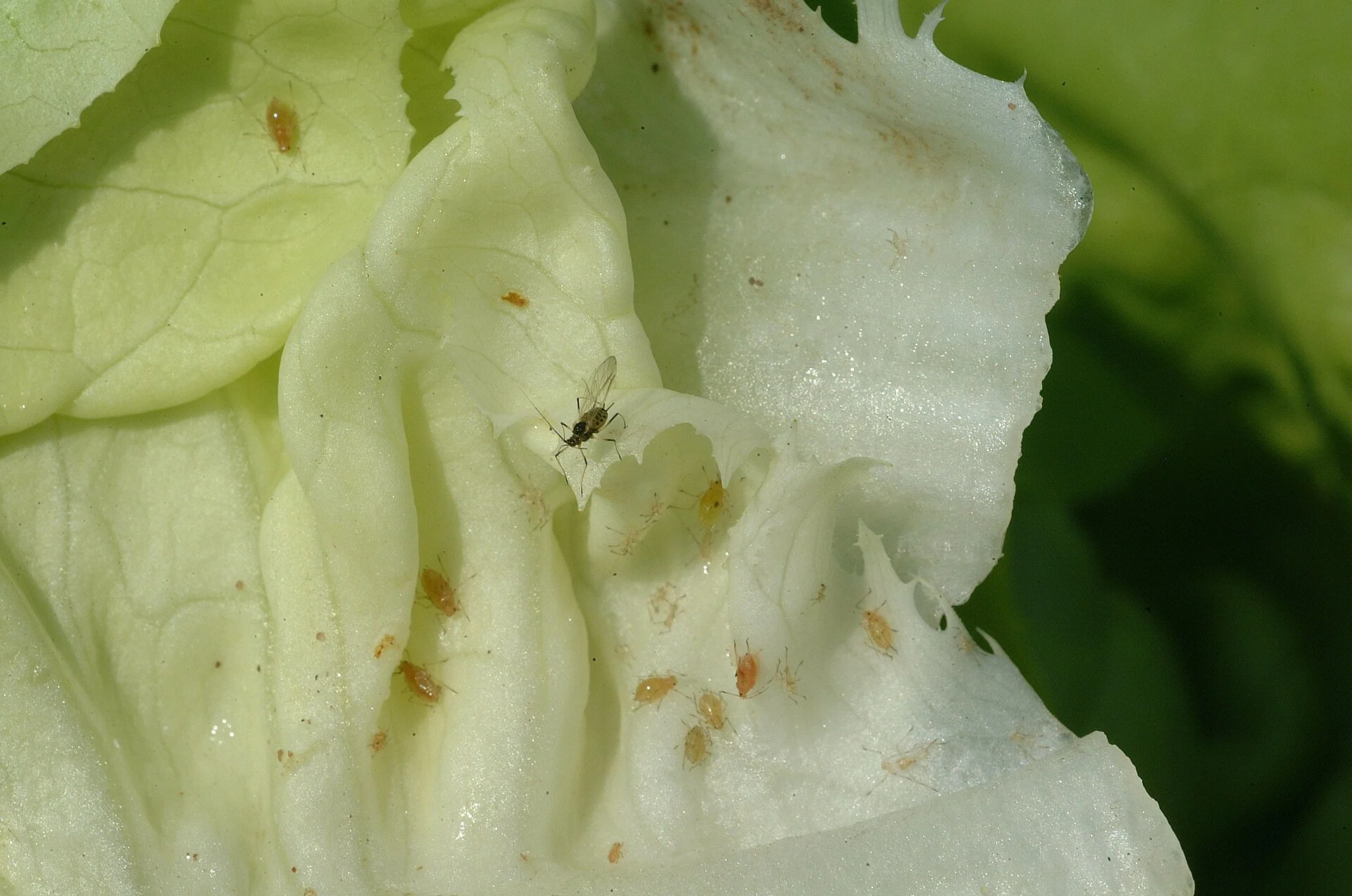
Barley yellow dwarf virus risk begins with aphids reaching an emerging crop. AHDB’s current BYDV guidance describes crop-emergence date as possibly the most important risk factor. Earlier crops spend longer exposed while temperatures can support aphid movement and reproduction; later emergence can shorten that period.
Date is only one control. AHDB also points to field location, surrounding grassland, volunteer cereals and grassweeds, varietal resistance or tolerance, natural enemies and monitoring. A poorly managed green bridge can move aphids from dying volunteers into the new crop. A later calendar date does not remove that route.
The current AHDB BYDV tool uses accumulated temperature from crop emergence or a treatment date. AHDB says to intensify monitoring around a T-sum of 150°C and that the second generation may be present around 170°C. It is a conservative decision-support tool, not an automatic instruction to spray. As checked on 30 July 2026, AHDB’s more detailed model for autumn 2026 was still described as coming soon, so this guide does not claim that model is live.
Do not turn a drilling guide into a pesticide programme. Product authorisations, resistance guidance and field thresholds can change. Use monitoring, current professional advice and the BritFarmers crop-protection and IPM guide. Where a product is considered, follow the current authorisation and label; the HSE label guidance explains that statutory conditions cover crop, dose, timing, operator and environmental restrictions.
When a wet seedbed should stop the drill
A date on a plan is not evidence that a field is fit. AHDB’s establishment guide says soil, weather, cultivations and drainage materially affect emergence. It advises against excessively cloddy or overworked seedbeds, and it links poor or impeded drainage with weak rooting and waterlogging.
The practical conclusion is that field condition should overrule calendar neatness. That is agronomic judgement rather than an AHDB threshold. Check whether the drill can hold depth, close the slot and leave seed-to-soil contact without smearing or compaction. If the answer is no, putting more seed into the calculation does not remove the physical problem.
AHDB gives a general sowing-depth benchmark of about 4 cm, modified by pest and field conditions. Treat it as a starting point and check actual placement behind the drill. Depth variation, surface trash and wheelings can create several establishment percentages within the same field, which is why one flat loss assumption can be misleading.
Use the farm’s own records. Compare seedbed notes, drilled rate, emergence counts and spring plant population. The soil-health and structure guide covers drainage and compaction in more depth, while the UK rainfall guide provides regional context. Neither can decide whether today’s field carries the drill; that remains a field inspection.
Variety choice and the latest safe-sowing date
Late drilling makes variety choice more important. The current AHDB winter-wheat variety tool is based on Recommended List 2026/27 data released on 1 December 2025. It can filter for early- and late-sown yield evidence, latest safe sowing, soil type, rotational position, disease resistance, lodging and market requirements.
Latest safe sowing is a vernalisation category. It is the conservative latest date expected to provide enough cold exposure for a variety to progress to flowering. It is not a yield guarantee, and it does not say the field will establish well. The current Recommended List table uses end-of-January, mid-February and end-of-February categories, with evidence strength varying by variety.
Check the live table rather than copying an old list of names. Varieties leave the Recommended List, new candidates arrive and some latest-safe dates are based on limited or very limited data. If drilling has moved beyond the intended slot, confirm the exact seed in the shed against the current RL and breeder or agent guidance.
Market requirement comes first. A variety that fits a late slot but misses the intended milling, export, distilling or feed specification has not solved the business problem. Keep the variety, seed lot, contract, date and seed-rate calculation on the same field sheet.
A field-by-field drilling checklist
Use this as a planning order rather than a universal recipe:
- Confirm the 2027 crop’s end market and any contract or variety requirement.
- Check the exact variety in the current Recommended List, including sowing-date evidence and latest safe sowing.
- Map blackgrass and other grassweed pressure, then set the field order before drilling starts.
- Record the seed-lot TGW and tested germination instead of using a catalogue average; do not use seed below AHDB’s 78% germination threshold.
- Choose the target spring plant population for that field and date.
- Estimate survival after germination using soil, seedbed, date, pests and farm records; do not reuse a combined seeds-sown establishment percentage.
- Run the calculator and order enough seed for the planned hectares plus a controlled operational allowance.
- Recheck the field after rain; do not defend the planned date at the expense of seed placement and soil structure.
- Record actual drill date, depth, rate and conditions.
- Count emerged plants in representative areas, then compare the result with the target and improve the next calculation.
- Monitor aphids and use the current BYDV decision-support information from crop emergence.
Do not carry these winter-wheat dates across to barley. For a spring crop, use the separate spring barley drilling guide; it owns a different crop, season and establishment decision.
Autumn 2026 update note
This version was fact-checked on 30 July 2026 as a pre-season planning guide. It uses AHDB Recommended List 2026/27 data and current establishment, blackgrass and BYDV guidance.
The first hard evidence of the season arrived on 31 July. AHDB’s first harvest report of 2026 has wheat averaging 6.8 t/ha, down 13% on a UK five-year average already lowered by the poor 2024 and 2025 harvests, with reported yields running from 3.9 to 11.5 t/ha and only 10% of surveyed farms beating their own five-year line. The report’s list of what separated farms reads like a syllabus for this page: soil type and its ability to retain moisture, drilling date, use of organic fertilisers, previous cropping history, and variety and seed choice. None of that changes the windows or the formula below. It does raise the cost of treating them as one decision for the whole farm rather than one per field.
The date classifications and formula are stable enough to plan around, but live risk information is not. Recheck the AHDB BYDV tool when it activates for the autumn, confirm whether the announced new model has gone live, and use current monitoring rather than carrying a previous season’s aphid position forward.
The article should be updated when autumn conditions establish a clear regional pattern. Useful changes are evidence-led: whether fields are moving early or late, whether the intended false seedbed has worked, how establishment assumptions are changing and which official tool or Recommended List edition is current. A weekly timestamp without new evidence would add noise rather than utility.
BritFarmers’ Harvest 2026 progress report remains the place for current combining updates. Once the drill starts, this page should own the post-harvest establishment decision and calculator.
Sources, legal limits and farm-saved seed
The dates on this page come from AHDB trial classifications and the current Recommended List. They do not replace variety, seed-lot, field or professional advice. The calculator estimates quantity only. It cannot predict yield, select a target population or decide whether a seedbed is fit.
Use current product information. It is an offence to breach statutory pesticide conditions, and authorisations can differ between Great Britain and Northern Ireland. This guide therefore names no pesticide product, mixture or dose and does not reproduce an old herbicide programme.
Seed provenance also matters. GOV.UK seed-certification guidance sets the marketing route for seed in England and Wales, with separate national arrangements elsewhere. Farmers using their own harvested seed should also check current farm-saved-seed obligations, including declarations and remuneration where they apply.
Keep the calculation with the evidence behind it: seed-lot test, field assumption, RL edition and drill record. That turns a one-off kg/ha answer into something the farm can test against emergence and improve.
Winter wheat drilling plan for autumn 2026
For autumn 2026, use 25 September to 1 November as the main AHDB trial interval, not as a national optimum. Before 25 September is classed as early; from 1 November is classed as late. Field condition, grassweed pressure, BYDV exposure, variety and drilling capacity determine where an individual field sits.
Set the target spring population first. Enter current TGW and germination, estimate field survival after germination separately, and let the calculator convert those decisions into seeds/m² and kg/ha. Do not enter a combined seeds-sown establishment benchmark alongside germination. Recalculate when the lot, date or field changes.
The best drilling plan is not the neatest calendar. It is the one that records why each field was entered, measures what established and feeds that result into the next decision.
Frequently Asked Questions
What are the main winter wheat drilling dates in the UK?
AHDB classes winter wheat sown before 25 September as early and says most Recommended List trials are drilled between 25 September and the 1 November boundary. Its explanation describes trials from 1 November to 31 January as late, while its table says after 1 November. These are evidence categories, not one optimum national window or a one-day biological threshold.
How do I calculate winter wheat seed rate in kg/ha?
Divide the target spring plants/m² by the laboratory-germination fraction and the field-survival fraction after germination to get required seeds/m². Multiply that result by TGW in grams and divide by 100 to get kg/ha. Do not enter a combined seeds-sown establishment percentage as the second factor.
What seed rate is 300 seeds/m² at 45 g TGW?
Three hundred seeds/m² at 45 g TGW equals 135 kg/ha. That conversion starts with required seeds/m²; if 300 is a target plant population, germination and field-establishment losses must be applied first.
Should winter wheat drilling be delayed for blackgrass?
Delayed drilling can contribute to integrated blackgrass control, and AHDB reports an average benefit above 30% after mid-October across its reviewed evidence. The result is field- and season-specific, while later drilling also lowers wheat establishment.
How late can winter wheat be drilled?
The limit is variety-specific. Current Recommended List latest-safe-sowing categories run from the end of January to the end of February. They describe vernalisation limits, not likely yield or whether a field is fit to drill.
Does early winter wheat drilling increase BYDV risk?
Earlier emergence can lengthen the period in which aphids reach and reproduce in a crop. AHDB describes emergence date as possibly the most important BYDV-risk factor, but field location, green bridges, variety and monitoring also matter.
BritFarmers Weekly
One email a week: what’s moved on schemes, prices, disease control and policy, with links to primary sources. Free. No sponsors. Unsubscribe anytime. Subscribe.
Primary sources
- AHDB: Sowing winter wheat late — understanding the risks, 5 January 2026
- AHDB: Winter wheat Recommended and Candidate Lists 2026/27
- AHDB: Winter wheat variety selection tool using RL 2026/27
- AHDB: Seed rate conversion tool
- AHDB: Establishment in wheat — germination and emergence
- AHDB: Seed-health tests — germination, viability and vigour
- AHDB: Recommended Lists winter wheat on trial
- AHDB: Integrated management of black-grass
- AHDB: How drilling date affects arable weed populations
- AHDB: BYDV management in cereals
- AHDB: BYDV tool
- AHDB: New BYDV management tool announcement, 11 March 2026
- HSE: Understanding the pesticide product label
- GOV.UK: Seed certification for marketing in England and Wales
- GOV.UK: Farm-saved seed
You’ve reached the end of this story.