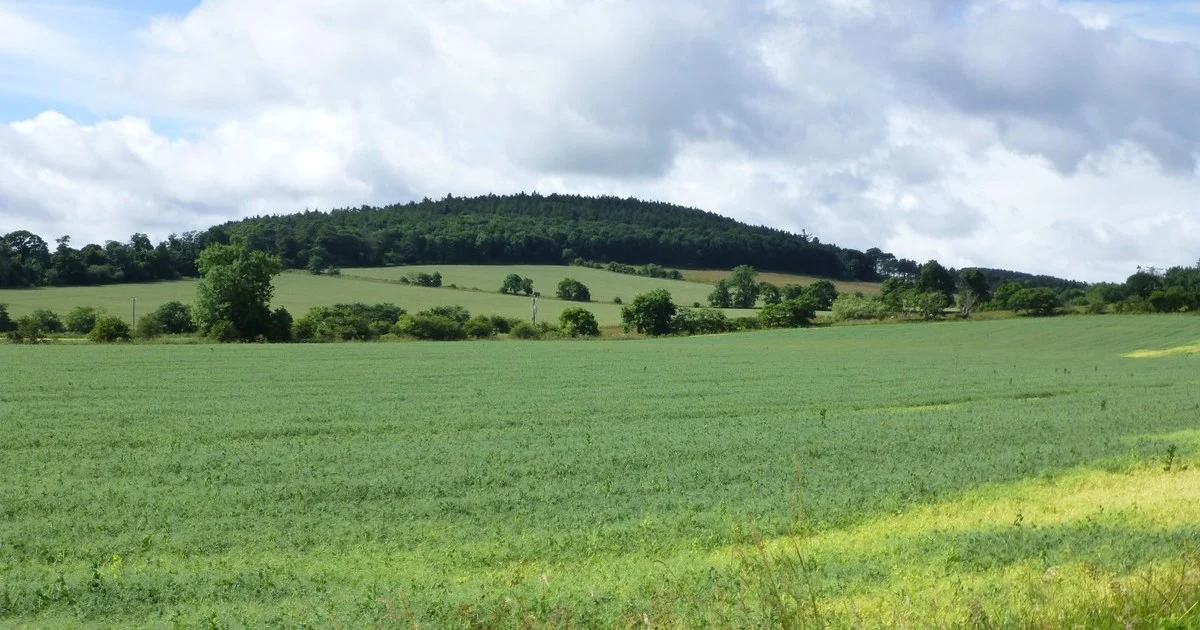
Cover photo: Russel Wills (CC BY-SA 2.0, cropped) · Source
Last updated: June 2026. A working farmer’s walk through arable rotation planning on a small or mixed UK holding in 2026: how to choose your break crops, why second wheats are punished, the blackgrass problem nobody admits to, the SFI overlay that actually pays you, the gross-margin maths every choice depends on, and the practical six-year plan I’d write down on the back of an envelope before I drilled a single drill. General information, not agronomy advice. See the rotation-planning checklist at the end for the six steps to take before the next autumn drill.
We added wheat and oilseed rape to the rotation here two years ago. The first proper arable conversation I had with the agronomist was on the verge of the bottom field in mid-October, both of us looking at a stubble I hadn’t yet decided what to do with, and he asked me a question that has stayed with me ever since: “What does this field look like in 2029?” Not next year. Not the spring. 2029. Twenty-three years on this holding, twenty-one of those running salad and field vegetables, and I had been used to thinking in seasons. Arable thinks in rotations, plural, and the difference is everything.
This is what I’ve learnt since, sat with the agronomist and the seed reps and the gross-margin spreadsheet and a stack of AHDB Recommended List brochures. It is written for someone running a smaller holding, the 80 to 250-hectare end of the British arable scale, where the field-to-field choices matter more because you can’t average a bad block of land across a thousand hectares of better. The big estate gets to play with statistical noise. The small holding cannot afford to. The decisions matter more on a small holding because every block of land has to earn.
A way through this story
Why rotation is the cheapest input on the farm
The cheapest tool in arable farming is the planning sheet. Every credible piece of long-term research from AHDB, NIAB, Rothamsted, the John Innes Centre and the academic agronomy faculties says the same thing in slightly different language: a well-planned rotation is worth more, season after season, than any single chemistry, variety or machinery decision.[1] The Rothamsted long-term experiments, running in some cases since the 1840s, show yields of cereals after a legume or root break crop running 0.5 to 1.5 tonnes per hectare ahead of cereal-after-cereal on the same soil under the same management.[2] That is the cheapest 0.5 to 1.5 tonnes per hectare a working farm will ever buy.
The cost side is the harder part. A rotation that includes oilseed rape, beans or a legume cover sacrifices the gross margin of a wheat crop in those years and substitutes a lower-margin or higher-volatility crop for the rotational benefit. The trick is to size that sacrifice honestly, not optimistically, on a per-field gross-margin basis over the whole rotation cycle, not in any one year. Most of the rotation arguments I have heard at the market over the last two years come down to looking at one year’s gross margin from one crop and ignoring the four years of downstream effect.
The bones of a small-holding rotation: what to drill where
The classic UK arable rotation, the one almost every textbook and AHDB guide starts with, is some version of:
Wheat → wheat (second wheat) → oilseed rape → wheat → wheat → break crop
Six years, two break crops, four wheats. It is the rotation a great deal of UK arable land has been farmed on for thirty years. It is also the rotation that is now visibly creaking in the South and East under blackgrass pressure, sclerotinia and clubroot in OSR, and the gradual loss of effective insecticides for autumn oilseed establishment. The pure six-year cereal-heavy rotation is no longer a default to fall into without thought.
A working rotation for a small UK holding in 2026 has more diversity than that. The framework I’d build from is six years, four crops, two of them break crops:
Year 1: First wheat (winter wheat after a break, the cleanest, highest-yielding wheat in the rotation) Year 2: Break crop A (oilseed rape, winter beans, or a cover-crop-plus-spring-cereal combination) Year 3: First wheat (second wheat slot becomes a first wheat by re-rotation) Year 4: Break crop B (the alternative to the year-2 break; if year 2 was OSR, year 4 is beans, and vice versa) Year 5: First wheat Year 6: Spring crop with cover crop overwinter (spring barley after a cover, or spring beans)
Three first wheats. No second wheat. Two distinct break crops to break disease cycles. A spring crop slot in year 6 that lets you put down a cover crop overwinter and tackle blackgrass with a grass-weed-tolerant spring drilling regime. The total winter wheat acreage is half the rotation, which is the working sweet spot for a small holding that needs a margin every year but cannot afford the agronomic risk of more.
It will not be the highest-yielding rotation on paper in year one. It will out-perform a wheat-heavy rotation in average yield across the six-year cycle once disease, herbicide cost and rotation premium are accounted for. The AHDB Wheat Growth Guide and the Defra Agroecology research programme have both run the comparison; the gross-margin numbers track the same direction in every published version.[3]
Second wheats: the slot that pays worst
Second wheats are the slot in the rotation that pays worst, and the trap is that they often look the cheapest because the wheat seed is already there, the agronomy is familiar, and the OSR or beans alternative looks like a faff. On a properly costed gross margin, second wheats yield 0.8 to 1.5 tonnes per hectare less than first wheats on the same soil, attract a take-all rating premium on seed treatment, and require a higher disease-control programme.[4] On a £180 to £220 a tonne feed wheat market, that gap is £150 to £300 a hectare of lost revenue before higher input costs.
If you must take a second wheat (the rotation collapsed because the break-crop seed didn’t arrive, the autumn was too wet to drill, the contractor cancelled), at least take it knowing the cost. Soft Group 4 feed wheats with a take-all rating of 6 or above on the AHDB Recommended List are the right varieties. Targeted fungicide. Lower drill rate. Manage expectations. The right answer for a small holding nine years out of ten is not to take the second wheat at all. Drill spring barley with a cover-crop overwinter, take the lower headline yield, and re-set the rotation.
Break crops: oilseed rape, beans and the question of pulses
Oilseed rape used to be the default break crop on most of the UK arable map. The combination of cabbage stem flea beetle pressure since the neonicotinoid ban in 2018, sclerotinia and clubroot on tighter rotations, and a price that swings violently with vegetable oil markets has made OSR a riskier proposition than it was ten years ago. The Defra Crops Survey numbers show UK OSR area down from over 700,000 hectares in 2012 to around 293,000 hectares in 2024.[5] On a small holding in 2026, OSR is a workable break crop only if (a) your soil and rotation history support it, (b) you have flexibility on drilling window so you can hit early-August or wait for the second window in September, and (c) you have an established outlet for the seed.
The alternative break crops to consider seriously:
Winter beans. Field beans (Vicia faba) are a nitrogen-fixing legume that adds residual N to the soil and breaks cereal disease cycles. The Recommended List has a small number of good winter bean varieties with reliable standing power.[6] Margin is modest in most years but the rotational value is excellent. Drilling window is October to November, harvest in late September. The pulse market is volatile; finding a buyer is the practical bottleneck on smaller acreages.
Spring beans. Less yield than winter beans but a simpler agronomy and a useful spring-drilling slot. Pulse Pioneers and the PGRO trials are the working reference.[7] Spring beans into a cover-crop residue give a decent blackgrass break and put nitrogen into the soil before the next wheat.
Linseed. Marginal in most years but a niche outlet exists. Low-input crop. Light land only.
Sugar beet. If you have the contract and you are in the British Sugar catchment, beet is the highest-margin break crop in the UK rotation. Most small holdings outside the catchment do not have access. The contract is the gate.
Grain maize. Increasingly viable in the South given climate trends. A late harvest that interferes with wheat drilling is the working constraint. Works best on light soils with a good autumn.
Cover crops as a partial break. Not a cash crop, but a 12-week cover overwinter into spring barley counts as a partial rotation reset. The break-crop nutrition and soil-structure benefits accrue without the cash-crop revenue. SFI now pays for it (see below).
The blackgrass conversation nobody admits to
Blackgrass (Alopecurus myosuroides) is the most expensive weed in UK arable farming and the single biggest reason to break a continuous wheat rotation. The AHDB blackgrass cost-benefit calculator estimates yield losses of 5 to 50 per cent in heavily infested fields, and the herbicide cost to “manage” rather than eliminate runs to £80 to £200 a hectare a year in the worst counties.[8] Resistance to pre-emergence and post-emergence chemistry is now widespread; ALS resistance is the working assumption in Suffolk, Cambridgeshire, Norfolk, Lincolnshire and Hertfordshire.
The working answer is rotation, drilling date and cultivation, in that order, not chemistry. Spring drilling kills more blackgrass than any pre-emergence stack will ever kill. Delayed autumn drilling (mid-October onwards) buys you a stale-seedbed flush you can spray off before the wheat goes in. Ploughing periodically buries blackgrass seed; minimum-tillage continuously rewards it. The hybrid practical answer on a small holding is: in fields with a known blackgrass problem, take a spring crop with a cover overwinter every third year and accept a lower yield for the reset.
The conversation no one likes is that “blackgrass-free” land is now worth measurably more on the open market and on rent than land with a known problem. The Strutt and Parker and Knight Frank rural reports have flagged a discount on land with documented blackgrass in the order of 5 to 15 per cent.[9] Telling a new buyer or new tenant the field is “manageable” when it is not is a bad-faith move that catches up at the third lease review.
SFI overlay: which actions actually fit a rotation
The Sustainable Farming Incentive, in its 2026 form, pays per-hectare rates for a set of actions you can layer over arable land alongside the cash crop or in lieu of one.[10] The actions that fit a working small-holding rotation and pay properly are:
- CNUM3 (Legume fallow): A 3-year SFI legume fallow action, paid at £532/ha/year for SFI26 agreements, that can fit an awkward break slot where the land is eligible.
- AHL2 (Winter bird food on arable land): A pollen and nectar mix or wild-bird seed mix that fits the awkward corners and headlands. Stand-alone or with the in-field actions.
- AHW1 (Pollen and nectar flower mix): 2 to 3-year mix that doubles as a sclerotinia spore reset for the OSR slot.
- Soil assessment, soil management planning and soil organic matter testing: Still useful evidence for rotation decisions, but I cannot source a current SFI26 SAM1 or CSAM1 payment action for it. Treat it as agronomy and audit evidence, not a bankable SFI26 line, unless a current GOV.UK action page says otherwise.
- CIPM1 (Integrated Pest Management plan): A modest payment for the IPM paperwork most growers should be doing anyway.
- OFC4 (Companion cropping on cash crops): Pays a rate for under-sowing a legume into OSR or wheat. Tightly stewarded; not for every field.
- CSAM2 (Multi-species winter cover crop): Pays £129/ha/year for a winter cover crop. The crop is not for harvest; the payment is for the cover.
The current rates and the eligibility detail are on the gov.uk SFI handbook and move with each annual update.[10] The right approach for a small holding is to model the SFI options into the rotation at the start of the cycle and confirm against the most recent handbook before submission. Rate cuts and option changes have been the consistent feature of SFI since launch; the rate you signed up for in 2023 is not the rate paid in 2026. The Defra news pages and the RPA SFI agreement pages are the canonical reference at the point of application.
The honest framing of SFI is that it pays for the rotation hygiene you should be doing anyway and partially closes the gap on a cash crop that the rotation needs but the gross margin doesn’t quite justify in any one year. On a 200-hectare holding running our six-year rotation, the SFI overlay on the break crop years is worth roughly £100 to £180 per hectare on the relevant area, which closes a meaningful slice of the gross-margin gap to wheat. It does not turn a marginal break crop into a profit centre. It does make the rotation viable.
Our SFI 2026 Actions Explained guide covers the SFI action-by-action picture in more detail.
The gross-margin maths every choice depends on
Every rotation decision should pass a six-year gross-margin test. The numbers I’d put on the back of an envelope for a working small holding in late 2026, using AHDB and Defra working figures and rounded for honesty rather than precision, look like this for a 10-hectare planning block:
First winter wheat: yield 8.5 t/ha at £190/t = £1,615/ha gross output. Variable costs (seed, fertiliser, chemicals, drying) £600 to £700/ha. Gross margin £900 to £1,015/ha.
Second winter wheat: yield 7.0 t/ha at £190/t = £1,330/ha gross output. Variable costs £650/ha (higher fungicide and seed treatment loadings). Gross margin £680/ha.
Winter OSR: yield 3.6 t/ha at £390/t = £1,404/ha gross output. Variable costs £600/ha. Gross margin £804/ha.
Winter beans: yield 4.2 t/ha at £230/t = £966/ha gross output. Variable costs £350/ha (low fertiliser, nitrogen fixed). Gross margin £616/ha. Plus the residual N for the following wheat, worth roughly £80 to £120/ha.
Spring barley: yield 6.0 t/ha at £175/t = £1,050/ha gross output. Variable costs £400/ha. Gross margin £650/ha. Plus the blackgrass reset value, which is real but hard to put a number on.
The numbers are working planning figures, not pre-committed prices. The point is the spread: first wheat is the highest-margin slot, OSR is the highest-margin break, beans are the lowest-margin break but the highest rotational value, spring barley is a margin-sacrifice for a blackgrass reset.
Add the SFI overlay payments at year-end and the picture shifts. CNUM3 legume fallow is £532/ha/year for SFI26 agreements; CSAM2 multi-species winter cover crop is £129/ha/year across the spring barley overwinter slot. Those bankable SFI26 figures are enough to change the rotation model, but not enough to treat SFI as a substitute for crop margin.
A six-year rotation gross margin on a working 10-hectare block, with two first wheats, one second-wheat slot replaced by spring barley, one OSR, one beans and SFI overlay where applicable, runs us roughly £4,700 to £5,400 over the six-year cycle. The equivalent continuous-wheat rotation (six wheats, alternating first and second wheat slots) at the same prices runs roughly £4,800 to £5,100 before the blackgrass cost. Once an honest blackgrass cost of £200/ha is added in the worst three years, the diverse rotation pulls ahead by £400 to £700 over the cycle, plus the SFI uplift.
The maths is not magic. It is not a gold mine. It is a working rotation that earns honestly and protects the asset for the next cycle. That is the bar.
Soil, structure and the long-term picture
The bit nobody costs into the gross margin is what the rotation does to the soil over time, and the bit that matters most over a 20-year farming life is exactly that. Continuous cereals with deep cultivations on heavy land slowly destroy soil structure, slumps the seedbed, and reduces water infiltration to the point where every wet autumn is a write-off. The AHDB Healthy Grassland Soils and the Defra Soil Health Action Plan both flag the same direction of travel: organic matter, biological activity and structure are the assets that take 20 years to build and 5 years to lose.[11]
A rotation that includes a legume break, a cover crop overwinter, and occasional ploughing to reset compaction, on a working medium-loam soil, will hold or build organic matter over 10 years. A continuous-cereal rotation with primary tillage every year will not. The cost of rebuilding lost soil structure (the deep subsoiling, the compost applications, the cover-crop seed) is the cost the gross margin does not show until you have to do it.
Our UK Soil Health 2026 guide covers the soil-side picture in working detail. The rotation is the cheapest soil-management tool you own.
Cover crops, catch crops and the year-six slot
The spring-cropping slot in year 6 of the framework rotation is where a cover crop overwinter does the most work. A 12-week brassica-cereal-legume mix drilled in August or early September into the wheat stubble holds nitrogen, builds organic matter, breaks pest cycles and resets blackgrass. The crop is grazed off (if you have stock or a contract grazier) or sprayed off and incorporated before the spring drill.
The agronomic detail and the species choice are covered in our UK Cover Crops and Catch Crops 2026 guide. The key planning point is that the cover crop has to fit the rotation, not be an afterthought. Sowing date is the working constraint: a cover sown after late September on heavy land is a half-cover by January and not worth the seed cost.
Where the rotation meets the SFI clock and the rotational fallow
SFI payments on rotational options run on annual review dates and can shift with the rotation. The rotational fallow actions (such as a 1-year legume fallow) move year to year on different blocks; the multi-year agreements (such as a 3-year herbal ley) tie a block of land down for the period. Modelling the SFI overlay into the rotation means choosing the right balance of one-year flexible options and multi-year locked options, and confirming the option is still funded in the year you intend to start it.
The trap on multi-year SFI options is that the agreement runs for the option period regardless of whether the rate later changes. A locked-in 3-year option at the 2024 rate is paid at the 2024 rate even if the 2026 handbook changes the rate. That has cut both ways for growers depending on direction of policy travel.
Worked example: a 200-hectare Suffolk holding
A worked example, using our six-year framework rotation on a notional 200-hectare arable block (rounded numbers, not promised prices) might run as follows.
Year 1: 200 ha first winter wheat. Gross margin £950/ha. £190,000.
Year 2: 100 ha winter OSR (with AHW1 pollen and nectar margin), 100 ha winter beans. Gross margin £800/ha OSR, £700/ha beans. £80,000 + £70,000 = £150,000.
Year 3: 200 ha first winter wheat (after the break crops, both fields). £190,000.
Year 4: 100 ha winter beans (where OSR was), 100 ha winter OSR (where beans were). £75,000. Plus pollen and nectar margin overlay on AHW1 strip.
Year 5: 200 ha first winter wheat. £190,000.
Year 6: 200 ha spring barley with cover crop overwinter. Gross margin £650/ha plus £129/ha CSAM2. £156,000 rounded.
SFI overlay across the whole holding for CIPM1 IPM plan and any eligible CNUM3 legume fallow on margin blocks needs modelling against the current GOV.UK SFI26 action list rather than assuming a fixed £30,000 to £45,000 over the six-year cycle. Soil assessment and organic matter testing can still support the plan, but I would not attach a SAM1 or CSAM1 payment to it without a current live action page.
Six-year gross margin: roughly £950,000 to £1,000,000 across the 200-hectare holding, or £790 to £830 per hectare per year averaged across the rotation cycle. That is the working number a small-holding arable rotation in 2026 can be expected to produce on medium-loam land at central price assumptions, before fixed costs and before tax.
It is not a gold mine. It is a working number. The dispersion around the number is enormous: a wet October, a market correction or a bad blackgrass year can take 20 per cent off it. A good year can put 15 per cent on it. Treat any single-year number with caution. The rotation cycle, averaged, is the only honest unit of measurement for arable economics on a small holding.
A six-step rotation-planning checklist
Six things to do before the next autumn drill.
Walk every field. Note the field history (last three crops), the soil type, the drainage, the blackgrass map, the slope and aspect, and the SFI agreement. One side of A4 per field. The base of every rotation decision.
Sit down with the agronomist for a two-hour walk-and-talk session before final crop decisions. Costs maybe £200 to £400. Saves a £20,000 mistake.
Run the gross-margin spreadsheet at central price assumptions for every cropping option for every field. Sensitivity-test the result at minus 15 per cent on price and minus 10 per cent on yield. If the rotation only works at central assumptions, the rotation is too fragile.
Confirm the SFI options you intend to start are still funded at the current handbook rate. The handbook changes annually; the rate matters.
Lock in seed orders for the year-1 wheat and the year-2 break crops by the end of June. Late summer seed shortages on the popular varieties are the rule, not the exception.
Walk the field margins, the wet patches, the hedge bottoms and the headlands. Decide which SFI action goes on each. The poor productive corners are where SFI earns most.
Where this is heading
Three forces will shape arable rotation planning over the next five years.
The first is climate. UK winter rainfall is rising, autumn drilling windows are narrowing, and the cost of a wet October has gone up. The rotations that survive will have more spring cropping, shorter autumn drilling windows and more emphasis on field drainage.
The second is policy. The Sustainable Farming Incentive direction of travel since 2024 has been towards lower per-hectare rates, broader eligibility and reduced budget. Whether the trend continues, stabilises or reverses depends on the next Spending Review. Plan for a real-terms reduction in SFI rates over the rotation cycle, not an increase.
The third is the supply-chain consolidation in seed, agronomy and grain marketing. Frontier, Wynnstay, ADM and the smaller regionals are increasingly the only practical route to market for a small-holding tonnage. Building a working relationship with one grain merchant and one or two agronomy advisers is increasingly the working norm.
The thing that will not change is that rotation is the cheapest input on the farm.
Further reading
The AHDB Wheat Growth Guide and the AHDB Recommended Lists are the working agronomy reference for variety choice and disease management.[12] The Defra Crops Survey and the AHDB Cereals and Oilseeds market reports are the working price and market reference.[5] Rothamsted Research publishes the long-term experiment data on rotation effects.[2] The Pulse Growers Research Organisation publishes the working agronomy for pulses.[7] For BritFarmers readers, this guide sits alongside our SFI 2026 Actions Explained guide, our UK Cover Crops and Catch Crops 2026 guide, our UK Soil Health 2026 guide and our UK Agricultural Markets and Prices 2026 guide.
Sources
[1] AHDB, Wheat Growth Guide, ahdb.org.uk: https://ahdb.org.uk/knowledge-library/wheat-growth-guide; NIAB, Crop rotation research summary, niab.com.
[2] Rothamsted Research, Long-term experiments: Broadbalk and Hoosfield, rothamsted.ac.uk: https://www.rothamsted.ac.uk/national-capability/the-long-term-experiments.
[3] Defra, Agroecology and agroforestry research, gov.uk; AHDB, Rotation and gross margin guidance, ahdb.org.uk.
[4] AHDB, Recommended List of cereals and oilseeds, ahdb.org.uk: https://ahdb.org.uk/rl; HGCA / AHDB, Wheat second wheat performance.
[5] Defra, Survey of agriculture in England: cereals and oilseeds, gov.uk: https://www.gov.uk/government/collections/structure-of-the-agricultural-industry; AHDB, Cereals and Oilseeds Markets, monthly, ahdb.org.uk.
[6] AHDB Recommended List, Winter and spring beans, ahdb.org.uk.
[7] Processors and Growers Research Organisation (PGRO), Pulse Pioneers and agronomy guides, pgro.org.
[8] AHDB, Blackgrass cost-benefit calculator and management guidance, ahdb.org.uk.
[9] Strutt & Parker, English Estates Survey, struttandparker.com; Knight Frank, Rural Market Update, knightfrank.co.uk.
[10] Defra and Rural Payments Agency, Sustainable Farming Incentive (SFI) handbook, gov.uk: https://www.gov.uk/government/collections/sustainable-farming-incentive-guidance-for-applicants-and-agreement-holders.
[11] Defra, Soil Health Action Plan and progress, gov.uk; AHDB, Great Soils and Healthy Grassland Soils programmes, ahdb.org.uk.
[12] AHDB, Recommended List 2025-26 wheat, barley and oilseed rape, ahdb.org.uk.
[13] LEAF (Linking Environment and Farming), Integrated Farm Management framework, leaf.eco.
[14] NFU, Arable economics and gross margin benchmarking, nfuonline.com.
[15] Frontier Agriculture and Wynnstay Group, Annual reports and market commentary.
About the author
I run a salad and field vegetable holding in Suffolk, twenty-three years on the same ground, the last two with a slice of wheat and oilseed rape rotated in alongside the iceberg, baby-leaf and brassicas. The arable rotation is, in a real sense, the newest conversation I’ve had on this farm, and the one I’ve spent the most evenings reading about. The notes above are the working framework I sat down and wrote out for my own use in winter 2024 and have been editing every season since.
The headline: on a small holding, rotation is the cheapest input on the farm and the only one that compounds. The arable conversation runs in three-to-six-year cycles, not in one season; cost it that way and the choices are easier than they look.
Disclaimer: This guide is general information about arable rotation planning in 2026. It is not regulated agronomic, financial or legal advice and is not a substitute for tailored guidance from your agronomist, your grain merchant or your accountant. The Agricultural and Horticulture Development Board (AHDB), Defra, NIAB, the Pulse Growers Research Organisation, Rothamsted Research and your appointed agronomist are the appropriate first ports of call for variety choice, disease and weed control and rotation design. SFI rates, market prices and policy detail change; always confirm the current position before relying on it.
You’ve reached the end of this story.