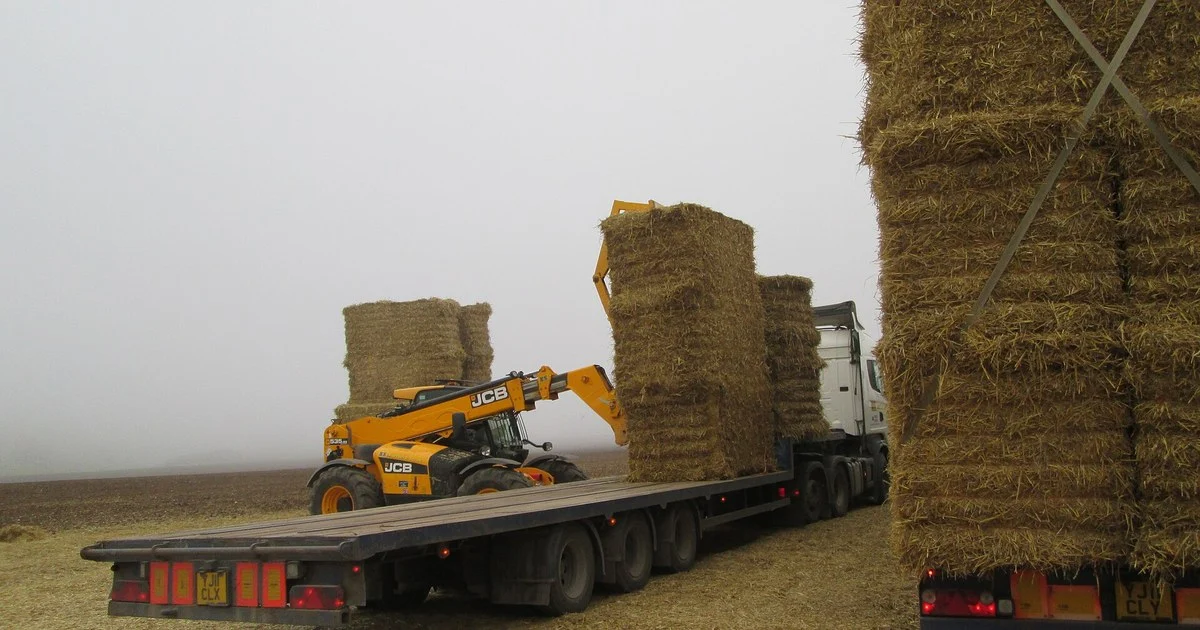
Cover photo: Adrian Diack (CC BY-SA 2.0, cropped) · Source
Last updated: 7 October 2026. The price table and the market analysis cover AHDB figures for the week ending 2 October; the harvest figures come from AHDB’s final harvest report of the season, published 25 September. The page is refreshed when AHDB’s weekly report lands.
Tim’s take:
The phone calls this week all have the same shape: is it worth selling anything off the combine at these numbers, or does the store earn its keep? November feed wheat gave up £10.50 after its July high, clawed all of it back and more to touch £219.25 in early September, then handed £3.25 straight back and has drifted since: £209.75 on 18 September, £205.75 a week later, and £206.25 at the close on 2 October. A market doing that is a market that has not made its mind up. What follows is where the price actually stands and what is pushing it about.
A way through this story
What is the UK wheat price now?
UK feed wheat futures for November 2026 closed at £206.25 a tonne on Friday 2 October 2026, up £0.50 on the week after a £4.00 fall the week before, according to AHDB’s arable market report of 5 October. Delivered feed wheat for November movement was quoted at £218.50 a tonne into Yorkshire, down £2.00 on the week; bread wheat was quoted at £232.50 a tonne into the North West, £229.00 into Yorkshire and £221.50 into Northamptonshire for November.
UK wheat prices — week ending 2 October 2026
The futures figure is the November 2026 contract settlement; delivered quotes are for the region and movement month shown. This table is refreshed when AHDB’s weekly arable market report lands. Last updated 7 October 2026.
| Series | Price | Note |
|---|---|---|
| Feed wheat futures, Nov 2026 | £206.25/t | up £0.50 on the week |
| Delivered feed wheat, Yorkshire | £218.50/t | November movement, down £2.00 |
| Bread wheat delivered, North West | £232.50/t | November movement, £27.25 over futures |
| Bread wheat delivered, Yorkshire | £229.00/t | November movement, £23.75 over futures |
| Bread wheat delivered, Northamptonshire | £221.50/t | November movement, £16.25 over futures |
| Nov 2026 recent high | £219.25/t | reached 2 September |
Source: AHDB arable market report, 5 October 2026. Delivered quotes are the freshest AHDB reported for the week ending 2 October; premiums are against the Nov-26 futures close on the quote day. AHDB had no East Anglia feed wheat quote that week.
The £219.25 high of 2 September now sits £13 above the market. Politics has moved it more than crops over the last fortnight. In the week to 25 September, talks on restoring Black Sea shipping, and the chance that Russia could restart its export terminals quickly under a ceasefire, took £4.00 off November; the Trump and Xi meeting in Washington produced no immediate Chinese commitment to buy more US grain, though China has since said it plans to cut tariffs on a range of US farm goods including wheat and maize. In the week to 2 October, a USDA stocks report showing US maize stocks 35% up on the year, plus a stronger dollar, weighed on Chicago, while a Saudi tender for 535,000 tonnes of wheat and Russia’s rejection of a Black Sea truce lifted Paris, and UK futures followed Paris up by 50p. The next things likely to move it are Defra’s provisional English harvest estimates on 8 October and the USDA’s world supply and demand estimates on 9 October.
Three prices, one market
Wheat gets quoted three ways in this country, and mixing them up costs real money in a negotiation. The futures price is the headline number, published daily on AHDB’s futures prices page: it is the previous session’s settlement for a standard feed wheat contract, and it is what most market commentary means by “the wheat price”.
The delivered price is what a merchant will pay for grain arriving at a mill, port or feed compounder in a named region and month. It sits above or below futures depending on haulage, local demand and when you can move the load. This week’s board ran from £218.50 for delivered feed wheat into Yorkshire in November, through £221.50 for bread wheat into Northamptonshire, to £232.50 for bread wheat into the North West in November: same market, different loads.
The third number is the one closest to what actually lands in your bank account: the ex-farm price from AHDB’s corn returns, a weekly survey of what farmers were genuinely paid, published each Monday and covering trades from the preceding Friday to Thursday. It is the longest-running domestic price series for cereals, with records back to 1990. AHDB is plain that it exists as a historical record of what was paid rather than a base for contract prices, which is worth remembering when a buyer waves it at you.
Feed wheat against milling wheat
The futures contract is a feed wheat contract, so everything above is a feed value. Milling wheat is a different sale: the load has to meet a flour specification on protein and grain quality, and when it does, it earns a premium over feed. How big that premium is depends on the season. A year that fills sheds with poor-spec wheat makes the good samples scarce and the premium widens; a clean quality year does the opposite. This week the premium is visible in the delivered quotes: bread wheat into the North West for November stood £27.25 a tonne over the November futures price on the survey day, and Yorkshire bread wheat £23.75 over, where the North West delivery was £37.00 over in mid-July. The gap has narrowed since July, which is what you would expect with the wheat harvest finished and milling quality strong on specific weight, Hagberg and protein: more of the crop is making the grade. It has come in again since early September, when the same North West quote sat £29 over.
What is moving the price in 2026
Harvest, first. AHDB’s final harvest report of 2026, published on 25 September with data to 21 September, has the wheat harvest complete: the last wheat on its survey farms was cut in the week ending 14 September, and spring barley was 99% done, with a little left in the north of Scotland. After an exceptionally early start and a rapid run through England and Wales, the pace slowed as the combines moved north, and wheat finished broadly in line with 2025. Our harvest 2026 dates guide tracks the running order in detail. A fast harvest puts grain in front of buyers early, and early grain is sold grain: plenty of it moves straight off the combine because the drying maths or the cash flow says it must.
Yield is the sting in it. AHDB puts the average wheat yield across its survey farms at 6.9 t/ha, 11% below the five-year average and under last year’s UK average of 7.2 t/ha, and that benchmark was already dragged down by the poor 2024 and 2025 harvests. Reported yields ran from 3.9 to 11.5 t/ha, but only a small share of farms got near or above their usual figure. Quality is the better news for millers: specific weights on Group 1 samples averaged 81 kg/hl, Hagberg falling numbers averaged 365 and protein averaged 13.5%, though AHDB calls quality across the crops highly variable. Where the final national number lands is tracked in our harvest 2026 yields guide.
Supply abroad is still doing most of the work. The French maize crop is in a poor way: just 23% rated good or excellent as of 21 September, level on the week but against 62% a year earlier, and in mid-September AHDB reckoned the projected 42% fall in production was already in the price. Growers there are cutting fast, 45% done by 21 September against 13% at the same point last year, so the argument has moved from how much rain fell to how much grain there actually is. Across the Atlantic the US maize harvest was 13% complete by 20 September, slightly ahead of the five-year average, and the USDA’s 1 September stocks figure of 53.2 Mt, 35% up on the year, has put the weight of US supply back in front of the market. In the week to 2 October Chicago wheat lost $7.44 a tonne and maize $12.01, while Paris milling wheat gained €4.75.
Behind it all still sits the Black Sea, and the risk still cuts both ways. Late September brought talks involving Ukraine, Turkey, India and Egypt on restoring shipping, and traders sold on the chance that Russia could restart its Black Sea and Sea of Azov terminals quickly if a ceasefire came. By early October Russia had rejected proposals for a truce on Black Sea attacks, Ukrainian exports were still well below capacity, and Ukraine’s farm minister was warning that winter wheat plantings for 2027 could fall by 17%. Add China’s plan, announced after the Trump and Xi meeting, to cut tariffs on US wheat, maize and other farm goods, and the price is being driven by headlines no UK farm can plan around.
Sell off the combine or store it?
There is no clean answer this year, and anyone offering one is selling something. The case for moving grain now: the market is still offering around £206 for November, and it showed in early August, and again in late September, how fast it can shed money. The case for the store: the Black Sea premium is no longer hypothetical, the EU numbers are genuinely tight, and wheat yields 11% below the five-year average mean there is less of yours to sell, which makes each tonne’s timing matter more. What decides it on most farms is not the market view at all but drying cost, store condition and when the money is needed. Our UK arable farming guide covers the storage and moisture arithmetic that should sit under the decision.
Where to check the price each week
Futures settle daily on AHDB’s futures page. The corn returns ex-farm survey lands each Monday. The weekly arable market report, published on the AHDB news pages, pulls the futures, delivered and global picture together and is the single most useful ten minutes of market reading available to a UK grower. For next season’s planning, our winter wheat drilling guide covers dates and seed rates once the marketing year turns.
Frequently asked questions
How much is wheat per tonne in the UK?
UK feed wheat futures for November 2026 closed at £206.25 a tonne on 2 October 2026, up £0.50 on the week. Delivered feed wheat was quoted at £218.50 a tonne into Yorkshire for November; bread wheat was quoted at £232.50 a tonne into the North West, £229.00 into Yorkshire and £221.50 into Northamptonshire for November.
Why did UK wheat prices fall in early August 2026?
Traders took profits after the November contract set a high of £207.00 a tonne in late July, and a fast early harvest added selling pressure. The fall did not last: Black Sea disruption to Russian and Ukrainian exports carried the contract clear of that level through late August and up to £219.25 in early September, before talk of a peace deal eased it back to £212.50. It has since drifted lower, closing at £206.25 in the week ending 2 October.
What is the difference between feed wheat and milling wheat?
Feed wheat goes into animal rations and is what the UK futures contract trades. Milling wheat must meet a flour specification on protein and grain quality, and earns a premium over feed values when the sample makes the grade. The premium widens or narrows with the quality of each season’s crop.
What is the UK wheat yield in 2026?
AHDB’s final harvest report of 2026, with data to 21 September, puts the average wheat yield across its survey farms at 6.9 t/ha, 11% below the five-year average, with reported yields ranging from 3.9 to 11.5 t/ha and most farms below their own historical average. The wheat harvest is complete, and milling quality has been strong: Group 1 specific weights averaged 81 kg/hl and protein 13.5%.
You’ve reached the end of this story.