Cover photo: Oliver Macdonald Maccheek (CC BY-SA 3.0, cropped) · Source
Blackgrass control works by stacking measures: spring cropping, later drilling, ploughing and competitive crops cut numbers; herbicides tackle survivors.
A way through this story
Blackgrass control at a glance
- What it is: black-grass (Alopecurus myosuroides) is an annual grass weed of winter crops, worst on heavy, poorly drained land in the south and east of England
- Why it matters: AHDB’s integrated black-grass guidance says about 95 to 100% control is needed to stop populations increasing
- Biggest cultural levers, as AHDB rates them: spring cropping (about 90% control), fallow or grass ley (70 to 80% less seedbank a year), ploughing (about 70%), delayed autumn drilling (over 30%) and competitive crops (under 25%)
- Herbicides: pre-emergence herbicides do most of the work in cereals; post-emergence products are weakened by widespread resistance
- Oilseed rape: AHDB’s 2015 Scotland report recorded no black-grass resistance to propyzamide, but it needs cold, moist soil and careful water stewardship
- Flufenacet: still approved in Great Britain, but its EU approval was not renewed, which matters for growers in Northern Ireland
How to identify black-grass
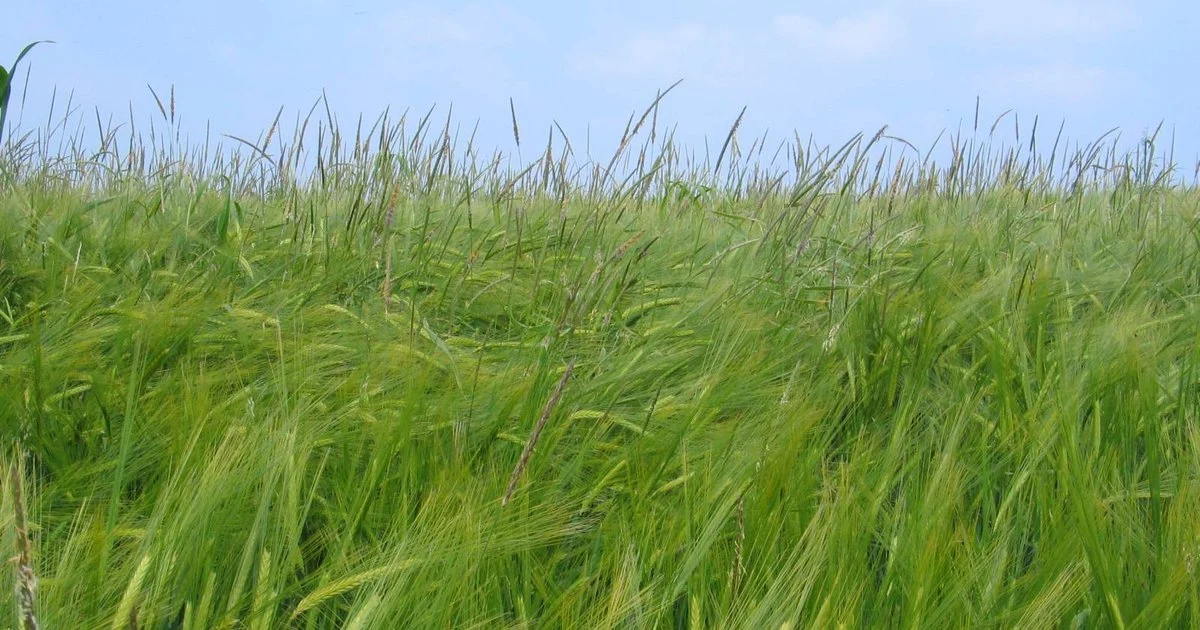
Bayer’s grass weed ID guide describes black-grass as a tall, upright annual with a compact, narrow and pointed flower spike 3 to 13 cm long, often tinted purple. The leaf blade is bluish-green, short, flat and hairless, and usually rough with a clear keel. The same guide gives the details that settle an identification at the seedling stage:
- Ligule: medium, about 2.5 mm, blunt and finely serrated
- Auricles: absent
- Leaf sheath: often purple on seedlings
- Emergence: about 80% of seed germinates in autumn, so it is mainly a problem in winter crops
Two common grass weeds get mistaken for it. Italian rye-grass has dark green, hairless leaves, a short 1 to 2 mm ligule and a flattened head with spikelets on alternate sides of the stem, according to Bayer’s Italian rye-grass page. Annual meadow-grass is small, pale green and loosely tufted, with a branched, spreading, triangular head and a boat-shaped leaf tip (Bayer). AHDB’s grass weed identification guide has photographs of each weed at four growth stages, which helps when plants are small.
June and July are the easiest months to see how big the problem is. Bayer points out that heads stand above the crop canopy then, so you can map hotspots and count plants per square metre before harvest.
Why black-grass is so hard to beat
Individual plants are not very competitive. The trouble is seed. SRUC’s technical note on black-grass in Scotland gives 80 to 150 seeds per head. At the Hutchinsons grassweed site in Cambridgeshire, technical manager Dick Neale told Farmers Weekly in September 2026 that surviving plants “tiller their socks off”, and that an uncontrolled population of 50 plants/m² could return 150,000 seeds/m².
AHDB’s page on the threat to Scotland sums up why the weed took off in England: mostly autumn cropping, a drift to earlier drilling, simple wheat and oilseed rape rotations, reduced cultivations that leave seed near the surface, and herbicide resistance, which the page describes as key. Large populations can cut yields by more than 50%, according to the same page.
The weed does have weak points. Seed does not live long in the soil: AHDB’s integrated control guide puts the decline at about 75% a year, with fewer than 10% of seeds left after two years without fresh seed return. SRUC’s technical note adds that it does not emerge from deeper than 5 cm. Most cultural control works by exploiting those two facts.
Cultural control: the measures that cut numbers
AHDB’s integrated control guide ranks the non-chemical options by the control each typically gives. Its figures come from a review of field data (Lutman and others, Weed Research, 2013).
- Spring cropping, about 90% control: around 80% of black-grass emerges in autumn, so a spring crop lets you destroy that flush before drilling. Spring barley competes better than spring wheat. AHDB warns that spring crops are hard to establish on heavy soils and have a more limited choice of herbicides
- Fallow or grass ley, a 70 to 80% cut in the seedbank each year: AHDB says a one-year break is not long enough to bring a high infestation down, and letting plants set seed during the break greatly undermines it
- Ploughing, about 70% control: good inversion buries fresh seed below 5 cm, where seedlings are unlikely to emerge. Because the seed is short-lived, the next ploughing brings few viable seeds back up, which is why AHDB highlights rotational ploughing, for example once every three to six years. Where control fails under no-till or shallow non-inversion tillage, AHDB says infestations can rise more than tenfold a year
- Delayed autumn drilling, over 30% control: drilling after mid-October lets more black-grass emerge before sowing, where it can be sprayed off, and pre-emergence herbicides are often 25 to 30% more effective in later-drilled crops
- Competitive crops, under 25% control: barley competes better than wheat, and AHDB gives high winter cereal seed rates, such as more than 300 plants/m², as an example
The original AHDB-funded trials behind delayed drilling (Moss and others, Rothamsted and NIAB TAG) found that sowing winter wheat about three weeks later, moving from mid or late September to early or mid-October, reduced black-grass infestations by 33% on average, and cut heads and seeds per plant by 49%. Higher seed rates suppressed black-grass by up to 28%. Spring-sown wheat had 92% fewer black-grass plants emerging than September-sown wheat.
Our winter wheat drilling guide covers the yield side of drilling later, and the spring barley guide covers the spring option.
Stale seedbeds, rotation, fallows and drainage
AHDB’s guidance on drilling date and weeds has a short list of rules for the gap between harvest and drilling:
- Wait for a flush of weeds before drilling where you can, and remember that dry weather reduces emergence
- Use a non-selective herbicide and cultivations together, and follow best practice to limit the risk of glyphosate resistance
- Expect cultivations, especially in moist soil, to leave some seedlings alive
- Drill the cleanest fields first and leave the worst black-grass fields until last
- Account for dry soils, which make pre-emergence herbicides less effective
A wider rotation does more than any single tactic. Breaking up wheat and oilseed rape with spring crops, a grass ley or a fallow gives you years when no black-grass seed is returned. Our rotation planning guide works through the options. Under SFI26, the CNUM3 legume fallow action allows cutting to stop black-grass setting seed, and the CSAM2 winter cover crop action is another way to keep land covered between cash crops. Check the full SFI 2026 actions list for what fits your farm.
Bayer notes that black-grass thrives where drainage is poor, and that on lighter land it shows up in the wetter areas. Fixing drains will not remove an established population, but it widens the window for spring cropping and stale seedbeds. Our field drainage guide covers the basics.
Prevention matters too. AHDB’s integrated guide says spraying off or cutting black-grass patches in winter wheat in the first week of June reduces seed return, and doing it in the same areas for two or three years gives the biggest reduction. Hand-roguing works at low populations. Limit the spread of seed on combines, balers and cultivation equipment, and in straw and manure.
Pre- and post-emergence herbicides in cereals
Always read the product label before use. Rates, crop stages, latest timings and buffer zones differ between products and change. Get advice from a BASIS-qualified agronomist.
In winter cereals, pre-emergence herbicides carry most of the chemical control. Actives used against black-grass in wheat and barley include flufenacet, diflufenican, pendimethalin and prosulfocarb. BCPC’s January 2026 product update also lists a new cinmethylin plus diflufenican product for spring barley and winter wheat, approved in Great Britain only; check its label for the weeds it covers.
AHDB’s resistance guidance says resistance can reduce the effect of all pre-emergence herbicides, but usually only to a limited degree, and that flufenacet appears the least affected. Resistance to pre-emergence herbicides also seems to build more slowly than resistance to post-emergence ALS and ACCase herbicides.
Timing is changing. Hutchinsons’ monitoring, reported by Farmers Weekly in September 2026, found black-grass emergence starting in the first week of October and carrying on in small numbers to mid-November. Dick Neale’s advice is to sequence actives, rather than putting one big stack on at drilling, so that something active is in the soil through that whole period. Dry seedbeds reduce how well any pre-emergence herbicide works, which is one more reason later drilling into moist soil helps.
Post-emergence grass weed herbicides in cereals mostly belong to two groups: ALS inhibitors, such as mesosulfuron plus iodosulfuron, and ACCase inhibitors, such as the “fops” and “dims”. These are the groups black-grass has beaten most often.
AHDB reports resistance to ALS and ACCase herbicides through most arable areas of England. Its resistance guidance says resistance to mesosulfuron plus iodosulfuron, introduced in the UK in 2003, has been found on more than 400 farms in 26 counties. Using these high-risk herbicides in mixtures and sequences with lower-risk modes of action improves overall control but does not stop resistance increasing.
That does not make post-emergence sprays useless, but it does mean they should not be the main plan. Testing seed from surviving plants tells you which groups still work on a given field. Our crop protection guide covers integrated pest management more widely.
Propyzamide in oilseed rape and winter beans
Always read the product label before use. Rates, crop stages, latest timings and buffer zones differ between products and change. Get advice from a BASIS-qualified agronomist.
Oilseed rape and winter beans give a chance to use chemistry that black-grass has not beaten. AHDB’s 2015 report on black-grass in Scotland recorded no cases of resistance to the oilseed rape herbicides propyzamide and carbetamide. Ask your agronomist about current resistance testing results before relying on that.
Label checked on 3 November 2026: Kerb Flo 500 (MAPP 15586), from Corteva, is a suspension concentrate containing 500 g/litre propyzamide. The product label approves it for winter oilseed rape and winter field beans, allows one treatment per crop, and gives the latest time of application as before 1 February in the year of harvest. The label also says it may only be applied to edible crops between 1 October and that latest time, and must not be used on winter field beans grown on sands, very light or light soils. Other propyzamide products have their own labels.
Soil conditions decide how well it works. On its Kerb Flo 500 page, Corteva advises soil temperatures at or below 10°C at 30 cm depth, and a soil moisture deficit below 50 mm and falling. The active forms a shallow layer about 2.5 to 5 cm deep, so black-grass germinating below that is poorly controlled. In its October 2026 article, Corteva says late October and November often give the optimum timing, but that field conditions should decide, not the calendar.
Water stewardship is part of using propyzamide. Corteva’s Kerb Flo 500 guidance is not to spray where there is a risk of run-off to watercourses, not to apply to waterlogged or saturated soil, and to avoid frozen ground where later rain could wash product off. In Corteva’s October article, an agronomist warned that spraying cracked, dry soil ahead of heavy rain risks losses straight to water. Corteva also lists product choice and field risk factors as part of keeping propyzamide out of water. Look at recent rainfall in your region when soils are drying out.
Herbicide resistance: what it means for your fields
Herbicide resistance was first found in black-grass in England in 1982, and AHDB now says it has been detected in almost every English county and at a low frequency in Wales and Scotland. AHDB describes two broad types:
- Target-site resistance: a change in the protein a herbicide attacks makes the weed less sensitive to that herbicide. Rotating modes of action helps against it
- Enhanced metabolism, or non-target-site resistance: the weed gets better at breaking down a wide range of herbicides, whatever their mode of action. It is less well understood
AHDB’s page on Scotland goes further: it is now widely accepted that some degree of resistance occurs on all farms where black-grass herbicides have been used routinely, even where black-grass was not the target. If control has slipped, collect seed from survivors in summer and have it tested before choosing next season’s programme.
The long-term answer is to lean less on herbicides. The Rothamsted and NIAB TAG trials concluded that there are no quick fixes, and that more balanced rotations and a move away from ever-earlier drilling must be the longer-term goal.
Black-grass in Scotland
Black-grass grows naturally in Scotland, but at low levels. AHDB’s 2015 report Is black-grass a threat to Scotland? says resistant black-grass arriving from England is a bigger risk than resistance developing in native populations, given that, at the time of the 2015 report, more than 20,000 farms in England had confirmed resistance. Seed can travel on harvest machinery and balers, in straw, and as a contaminant in crop seed. Laboratory-confirmed resistant populations have been found in the Borders, though their origin is uncertain.
Scottish farms have some advantages: more mixed farming, so infested fields can go down to grass, more ploughing and more spring cropping. AHDB warns, though, that delayed autumn drilling may be riskier and less effective in Scotland’s cooler, wetter climate. SRUC’s 2010 technical note recorded the weed spreading into the Lothians and Fife, and a 2008 report from Angus traced to contaminated seed.
AHDB’s advice for Scottish growers: watch for new or spreading patches, remove small populations by hand-roguing or spraying off, make sure machinery from England arrives clean, and get seed tested if resistance is suspected.
Flufenacet: Great Britain, the EU and Northern Ireland
Always read the product label before use. Rates, crop stages, latest timings and buffer zones differ between products and change. Get advice from a BASIS-qualified agronomist.
Flufenacet is one of the most important pre-emergence actives against black-grass, and its future differs on each side of the Irish Sea.
In the EU, Commission Implementing Regulation (EU) 2025/910 of 20 May 2025 did not renew the approval of flufenacet, because of concerns about endocrine-disrupting properties. The EU’s AGRINFO summary gives 10 June 2025 as the date of entry into force, and says stocks can be used until 10 December 2026.
In Great Britain, the active substance remains approved. The University of Hertfordshire PPDB lists its GB approval as running to 31 October 2027, and BCPC’s April 2026 update reports new GB-only flufenacet products approved until 24 February 2030. The active substance and individual products carry separate approval dates, and both can change, so check the HSE register for the product you plan to use. When we checked the register on 3 November 2026, most GB-only flufenacet product authorisations ran to 30 April 2030.
Northern Ireland flufenacet deadline, checked 3 November 2026: Northern Ireland follows EU pesticide rules. Under the EU rule, existing stocks can be used until 10 December 2026. BCPC’s July 2025 update listed NI approvals of flufenacet products expiring on 10 December 2026, but its April 2026 update says they expire at the end of this year and its August 2026 update gives 31 December 2026. The HSE pesticides register, checked on 3 November 2026, lists 10 December 2026 as the expiry date for almost all flufenacet products authorised in Northern Ireland, so plan on that as the last date of use and check your product on the HSE pesticides register.
A month-by-month black-grass planner
These timings are general; the weather and your soil decide the detail.
- June and July: walk fields while heads stand above the crop, map patches, count plants per square metre, rogue or spray off small patches before seed is shed, and collect seed from survivors for resistance testing
- July to September: after harvest, encourage a flush of weeds with shallow cultivation where soil moisture allows, then destroy it before drilling. Plan field order so the worst fields are drilled last
- Late September to mid-October: drill the cleanest fields first. Delay the worst black-grass fields until after mid-October where soils and the forecast allow
- October to mid-November: Hutchinsons found black-grass emergence running from the first week of October to mid-November (Farmers Weekly, September 2026). The cereal herbicide section above covers what that means for pre-emergence programmes
- Late October onwards: in oilseed rape and winter beans, the propyzamide section above covers soil conditions, water stewardship and the label’s latest timing
- February to April: drill spring crops into clean seedbeds on fields where autumn control failed, if the soil allows
About this guide
This guide summarises published guidance and research from AHDB, SRUC, Bayer, Corteva, BCPC and Farmers Weekly. Every source is listed below and was checked on 3 November 2026.
It is general information about black-grass control in the UK, not advice for a particular farm and not a recommendation of any product. Herbicide labels, approvals and rules change, and the right programme depends on your soil, rotation and resistance status. Check the product label and the HSE pesticides register, and talk to your own agronomist before making spray decisions.
Frequently Asked Questions
What is the best way to control blackgrass?
There is no single fix. AHDB research shows that the biggest reductions come from cultural measures such as spring cropping, rotational ploughing, fallows and delayed autumn drilling, combined with a pre-emergence herbicide programme. Stacking several measures is what gets control close to the 95 to 100% needed to stop numbers rising.
Is it black-grass or blackgrass?
Both are used. AHDB and Bayer write black-grass, while farmers and the farming press often write blackgrass. The scientific name is Alopecurus myosuroides.
How do I tell black-grass from Italian rye-grass?
Black-grass has a medium, blunt and finely serrated ligule of about 2.5 mm, no auricles and a narrow, pointed, often purple head. Italian rye-grass has dark green leaves, a short ligule of 1 to 2 mm, sometimes small auricles, and a flattened head with spikelets on alternate sides of the stem.
How long does black-grass seed last in the soil?
Not long. AHDB puts the annual decline at about 75%, with fewer than 10% of seeds left after two years, as long as no new seed is returned. SRUC says some seed can survive for up to three years, occasionally longer.
Does delayed drilling work for black-grass?
Yes, as part of a programme. AHDB rates delayed autumn drilling at more than 30% control, and AHDB-funded trials found that sowing winter wheat about three weeks later cut black-grass plants by a third on average and made pre-emergence herbicides work better.
When can propyzamide be applied?
That depends on the product label. The Kerb Flo 500 label (MAPP 15586), checked on 3 November 2026, allows one treatment per crop in winter oilseed rape and winter field beans, between 1 October and before 1 February in the year of harvest. Corteva advises applying when soil at 30 cm is at or below 10°C and moist.
Is flufenacet banned in the UK?
Not in Great Britain, where it remains approved. Its EU approval was not renewed in 2025, and Northern Ireland follows EU pesticide rules, so flufenacet products face an end to use in Northern Ireland in December 2026. Check the HSE pesticides register for your product.
Is black-grass a problem in Scotland?
Not yet on the scale seen in England, but AHDB warns that resistant black-grass could arrive from England on machinery, in straw or in crop seed. Scottish growers are advised to clean machinery, rogue small patches and test seed if resistance is suspected.
Can I get paid to control black-grass under SFI?
SFI does not pay for black-grass control itself, but some actions help. The CNUM3 legume fallow action allows cutting to stop black-grass setting seed, which makes it a useful break in a badly infested field. Check the current SFI26 rules before applying.
BritFarmers Weekly
One email a week: what’s moved on schemes, prices, disease control and policy, with links to primary sources. Free. No sponsors. Unsubscribe anytime. Subscribe.
Sources
Sources checked on 3 November 2026.
- AHDB: Integrated management of black-grass
- AHDB: How drilling date affects arable weed populations
- AHDB: Herbicide resistance in black-grass
- AHDB: Sustaining winter cropping under threat from herbicide-resistant black-grass (Moss, Hull, Knight and Cussans)
- AHDB: Is black-grass a threat to Scotland?
- AHDB: How to identify grass weeds in arable fields
- Bayer Crop Science UK: Black-grass
- Bayer Crop Science UK: Italian rye-grass
- Bayer Crop Science UK: Annual meadow-grass
- Corteva: Kerb Flo 500 product label (MAPP 15586), read 3 November 2026
- Corteva: Kerb Flo 500
- Corteva: Getting the best grassweed control from propyzamide in a changing climate
- Farmers Weekly: Three steps to better blackgrass control (September 2026)
- SRUC Technical Note TN626: Black-grass, managing the risk under Scottish conditions (2010, PDF)
- AGRINFO: Flufenacet, non-renewal of approval
- University of Hertfordshire PPDB: Flufenacet
- BCPC: UK Pesticide Guide new products and approvals, July 2025
- BCPC: UK Pesticide Guide new products and approvals, January 2026
- BCPC: UK Pesticide Guide new products and approvals, April 2026
- BCPC: UK Pesticide Guide new products and approvals, August 2026
- HSE: Pesticides register
You’ve reached the end of this story.