Cover photo: Chris (CC BY-SA 2.0, cropped) · Source
CNUM3 legume fallow under SFI26: £532/ha a year, the 6-species seed mix rule, no grazing or fertiliser, cutting for blackgrass and compatible actions.
A way through this story
Key facts for CNUM3
- Full name: CNUM3 Legume fallow, a nutrient management action in the Sustainable Farming Incentive 2026 (SFI26)
- Rate: £532 per hectare per year
- Length: 3 years
- Eligible land: arable land, temporary grassland, fallow and horticultural permanent crops below the moorland line
- Seed mix: at least 6 flowering species, including legumes
- Grazing, fertiliser and manure: not allowed on the established fallow
- Placement: rotational or static
- Applications: SFI26 is shown on GOV.UK as closed
Can you still apply?
No. GOV.UK lists SFI26 as closed for applications. The offer ran in two windows during 2026: the first, for small farms and farms without an existing environmental land management revenue agreement, closed at 11:59pm on 28 August; the second, open to everyone eligible, closed at 3:48pm on 22 September once the budget was allocated.
The detail below is aimed at holders who now have a CNUM3 commitment to deliver, and at planners weighing up a legume break for any later round. SFI24 and SFI 2023 holders stay on the rules of their own agreement.
Payment, and the link to NUM3
SFI26 pays £532 per hectare per year for legume fallow. GOV.UK’s change history records that the rate was reduced for SFI26, with the cut applying only to new SFI26 agreements and not to existing SFI23 or SFI24 ones.
NUM3 was the legume fallow action in the SFI 2023 offer, and the government’s January 2024 rate table listed it at £593 per hectare. CNUM3 is the code used in SFI24 and kept for SFI26. Payment comes through the agreement’s quarterly instalments, and SFI26 agreements are capped at £100,000 a year with one agreement per business.
Why the action exists
The aim is an established legume fallow whose plants grow and flower from late spring through summer and give green cover over winter. GOV.UK lists three purposes: better nutrient efficiency and soil health; pollen, nectar and food for pollinators and farmland birds; and support for integrated pest management by reducing grass weeds and, near crops, encouraging natural pest predators.
In plain terms it is a break of roughly two summers that builds fertility, gives you a chance to clean up grass weeds and puts flowers on the farm.
Which land qualifies
CNUM3 can go on agricultural land below the moorland line that is registered with the right land cover and declared with a compatible land use code:
- Arable land used to grow crops (arable or leguminous and nitrogen-fixing crop codes)
- Temporary grassland (TG01)
- Arable land lying fallow (FA01)
- Horticultural permanent crops (TC01)
SSSI land is eligible, but you must give notice to Natural England and hold SSSI consent before doing the action. Land with historic or archaeological features is eligible once you have an SFI HEFER, and deep-rooted legumes such as lucerne must be kept off any area with features identified in it. Total or part of a parcel’s available area can be entered.
Rules for the established fallow
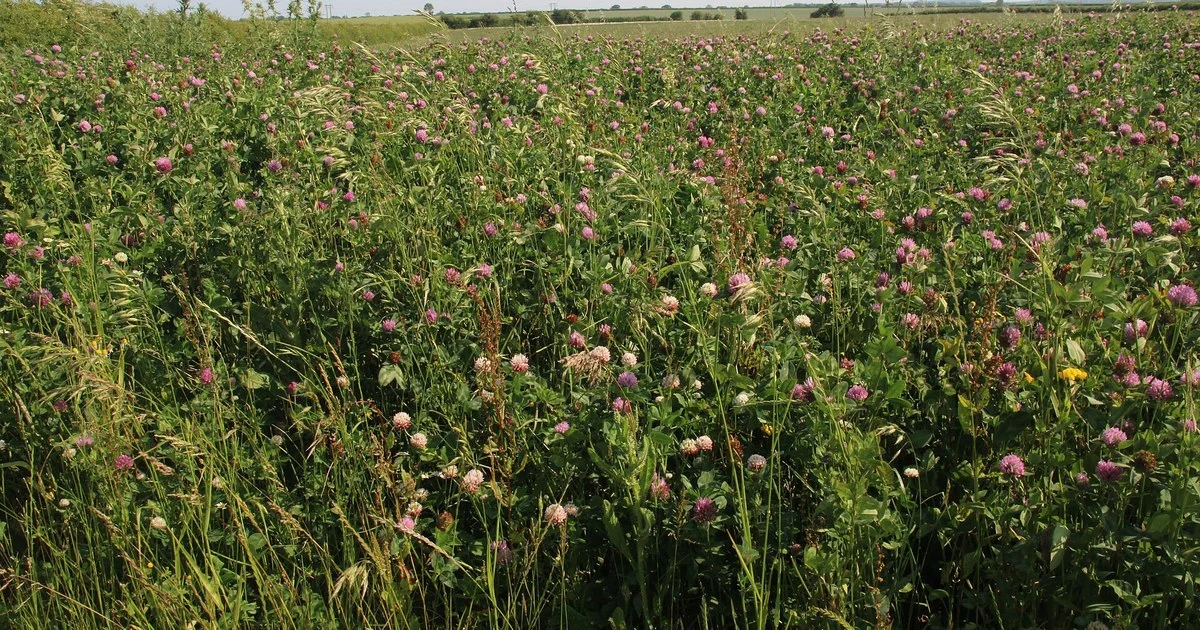
Sow a mix of at least 6 flowering species, including legumes. GOV.UK lists alsike clover, bird’s-foot trefoil, black medick, common vetch and lucerne as examples. The mix can also carry non-legume flowers and grasses such as cocksfoot or timothy, which can help with blackgrass.
Once it is established, usually from the second spring after sowing, the following are not allowed:
- Grazing with livestock (GOV.UK suggests CSAM3 herbal leys if you want to graze)
- Regular vehicle access, turning or storage, such as bales or machinery
- Cutting, except to stop blackgrass setting seed or to control other annual grass weeds
- Any fertiliser or manure
- Pesticides, apart from herbicide weed wiping or spot treatment of injurious weeds, invasive non-native species, nettles or bracken
An existing legume fallow can count if it meets these rules and is not already paid for under another scheme, such as the Countryside Stewardship option AB15 (two year sown legume fallow).
When to sow and how long to keep it
Get the fallow established by autumn, within 12 months of the action’s start date. Leave it in place for long enough to meet the aim, usually until the end of the second summer after sowing. Then re-establish it by the following autumn, on the same ground or elsewhere, and keep it until the end date.
If what you want is a spring-sown legume crop removed in the same summer, GOV.UK says to look at SOH3 (multi-species summer-sown cover crop) instead. As a rotational action, your first-year area sets the most you can enter in years two and three.
Records and compatible actions
Records to keep include parcel-level field operations, invoices showing the seed mix used, and photographs or other documents. Supply them if asked.
On the same area you can also have AGF1 or AGF2 (agroforestry), SOH1 (no-till farming), PRF2 and the organic actions OFC3, OFC4, OFC5, OFM4, OFM5 and OFM6. Older compatible actions include CIPM1, CNUM1 and CSAM1 from SFI24 and IPM1, NUM1 and SAM1 from SFI 2023. Boundary actions such as CHRW2, BND1, BND2 and WBD2 can run on the parcel edges.
Establishment and blackgrass advice
GOV.UK’s advisory notes, which are not requirements, suggest sowing on sunny sites and on fields where you want to control grass weeds, ease compaction, cut winter runoff or reduce fertiliser for the next crop. They suggest avoiding remote field corners, areas with rare arable wildflowers and fields with ragwort, creeping or spear thistle, or broad-leaved and curled dock.
Sow into a firm, fine, level, weed-free seedbed. Spring or autumn usually suits, though grass weeds are easier to control in spring-sown fallows. Broadcast, or drill no deeper than 1 cm, and roll if dry enough. Check germination and pest damage in the first few months and re-sow patches if needed.
In the first spring and summer, cut as blackgrass begins to head and follow up as needed. In the second year, GOV.UK suggests cutting between March and mid-June, then leaving the area uncut for around 8 weeks between June and August so plants can flower. Check for nesting birds before any cut, and remove cuttings where you can.
Frequently Asked Questions
What is CNUM3 legume fallow?
CNUM3 is the SFI action that pays you to sow and keep a flowering legume-based fallow for roughly two summers, to build soil fertility, feed pollinators and birds and help control grass weeds.
How much does CNUM3 pay?
Under SFI26 it pays £532 per hectare per year for 3 years. GOV.UK says this rate was reduced for SFI26 and only applies to SFI26 agreements.
Is NUM3 the same as CNUM3?
NUM3 was the legume fallow action in the SFI 2023 offer. CNUM3 is the SFI24 code that continues in SFI26. Each agreement follows the version of the rules it was signed under.
Can I graze a legume fallow under CNUM3?
No. Grazing is not allowed on the established fallow. GOV.UK points farmers who want to graze towards CSAM3 herbal leys instead.
Can I cut CNUM3 to control blackgrass?
Yes. Cutting is allowed to stop blackgrass setting seed or to control other annual grass weeds. Otherwise the fallow should be left uncut so it flowers.
BritFarmers Weekly
One email a week: what’s moved on schemes, prices, disease control and policy, with links to primary sources. Free. No sponsors. Unsubscribe anytime. Subscribe.
Source: GOV.UK: CNUM3 Legume fallow (updated for SFI26)
You’ve reached the end of this story.