Cover photo: David Medcalf (CC BY-SA 2.0, cropped) · Source
CSAM3 herbal leys in SFI26: the £224/ha rate, the minimum seed mix, the nitrogen limit, eligible land and which actions can share the field.
A way through this story
CSAM3 at a glance
- Action: CSAM3 Herbal leys, one of the soil health actions in the Sustainable Farming Incentive 2026 (SFI26)
- Payment: £224 per hectare per year
- Duration: 3 years
- Land: arable land, temporary grassland, fallow and improved permanent grassland below the moorland line
- Minimum seed mix: 1 grass, 2 legumes and 2 herbs or wildflowers
- Fertiliser: keep inorganic nitrogen to a minimum, usually no more than around 40 kg N per hectare per year
- Location: rotational or static, so the ley can move after year one or stay put
- Status: GOV.UK lists SFI26 as closed for applications
Where SFI26 stands in autumn 2026
GOV.UK now shows SFI26 as closed for applications. Two windows ran this year. Window 1 shut at 11:59pm on 28 August 2026 and was limited to small farms and farms without an existing environmental land management revenue agreement. Window 2 was open to all eligible farmers and closed at 3:48pm on 22 September 2026, with the scheme page noting closure once the budget had been allocated.
This page is for farms that put CSAM3 into an SFI26 agreement and now have to deliver it, and for anyone planning leys ahead of a future offer. Anyone holding an SFI24 or SFI 2023 agreement keeps following the rules for that agreement, not the SFI26 version set out here.
What CSAM3 pays, and how it relates to SAM3
The SFI26 rate is £224 per hectare per year, paid as part of your agreement’s quarterly instalments. The GOV.UK change log says the rate was reduced for SFI26 and that the cut applies only to SFI26 agreements, not to existing SFI23 or SFI24 ones.
CSAM3 is the code the action already carried in SFI24. If you are looking up SAM3, that was the SFI 2023 version, also called herbal leys. For comparison, the government’s table of SFI 2023 rates from 1 January 2024 put SAM3 at £382 per hectare, so a ley moving from an old agreement into SFI26 earns noticeably less per hectare.
Two wider SFI26 limits also apply: each business can hold only one SFI26 agreement, and the agreement value is capped at £100,000 per year.
What the action is meant to achieve
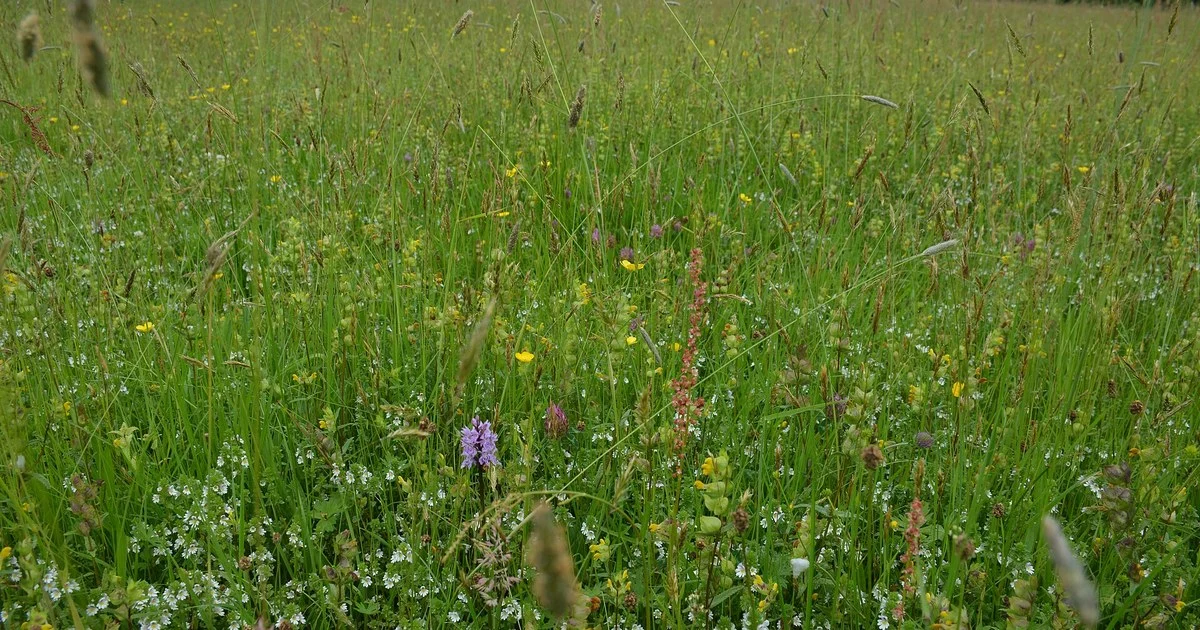
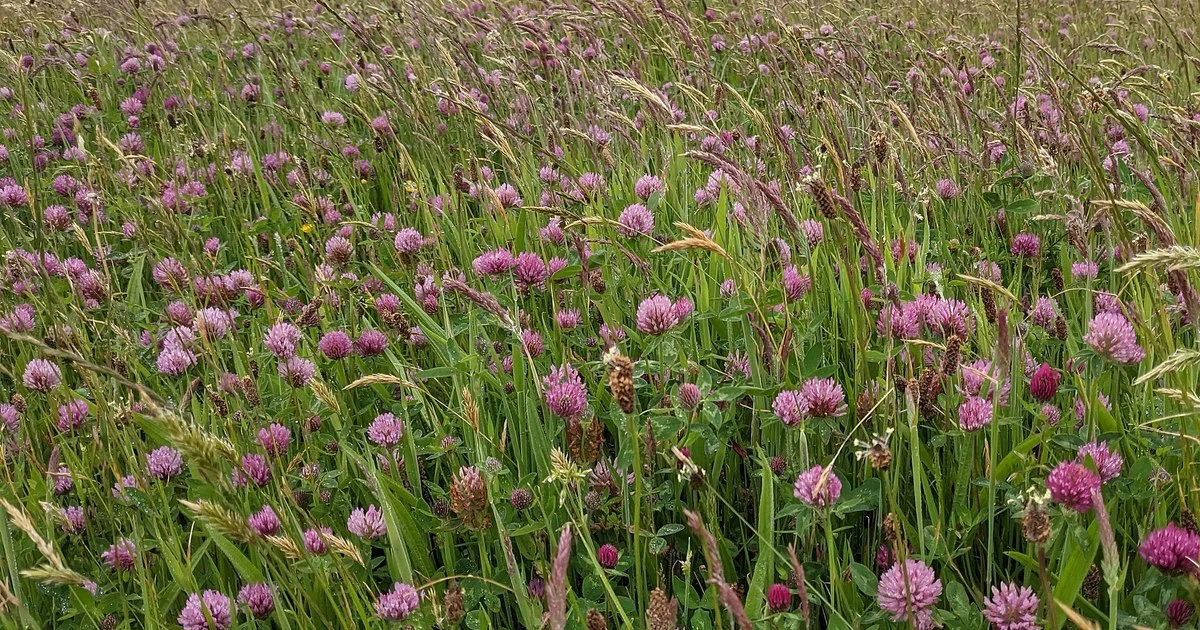
GOV.UK sets out the aim as an established ley with a mixture of grasses, legumes and herbs or wildflowers, giving varied root structures and patches of flowering plants from late spring through the summer.
The purpose behind that is practical as well as environmental. The ley should produce a high volume of forage with very little bagged nitrogen, cope better with drought, and help build soil structure, carbon, biology and fertility. If a ley could not reasonably be expected to do those things, it is not meeting the action.
Eligible land for CSAM3
The land must sit below the moorland line, be registered with an eligible land cover on your digital maps and be declared with a compatible land use code. The eligible types are:
- Arable land used to grow crops, with arable or leguminous and nitrogen-fixing crop land use codes
- Temporary grassland (TG01)
- Arable land lying fallow (FA01)
- Improved permanent grassland (PG01)
Sites of special scientific interest cannot go into CSAM3. Land carrying a historic or archaeological feature is also ineligible, but only the area of the feature itself is excluded, so the rest of the parcel can still be entered. You can put the whole of a parcel’s available area in, or just part of it.
What you must do on the ley
- Sow a mix containing, as a minimum, 1 grass species, 2 legume species and 2 herb or wildflower species
- On land you have identified as at risk of erosion or runoff, use establishment methods that keep that risk down; the soil management plan from CSAM1 or SAM1 can be used to identify this land
- Keep inorganic nitrogen fertiliser to a minimum, which GOV.UK says will usually mean no more than around 40 kg N per hectare per year
- Do not use the established ley for storage
- Do not apply pesticides, except herbicides used to weed wipe or spot treat injurious weeds, invasive non-native species, nettles or bracken, or to destroy the ley so a new one can be sown
An existing ley can be paid if it meets these rules, though you may need to re-sow it. It cannot already be funded under another scheme option, such as the Countryside Stewardship option GS4 (legume and herb-rich swards).
Timing across the three years
Establish the ley by early autumn, within 12 months of the action’s start date. Keep it in the same place long enough to do its job, which GOV.UK says will usually be until the end of the second summer after sowing. Then re-establish a ley by early autumn, on the same field or a different one, and keep it until the action ends.
Because CSAM3 is rotational, the area you enter in year one sets the ceiling for years two and three under the SFI26 rules. You can drop the area in year two and climb back up in year three, but never above the first-year figure. If weather or anything else stops you delivering on some of the land, tell the payments agency in writing as soon as possible.
Evidence to keep
Keep records of field operations at land parcel level with the matching invoices, including the details of the seed mix you used, plus photographs or other documents. You must supply them if asked. A dated photo of the ley in flower each summer and the seed merchant’s mix sheet filed with the invoice cover most of what an inspector is likely to want. That last point is our practical suggestion rather than a GOV.UK rule.
Actions that can share the same land
Several SFI26 actions can sit on the same area as CSAM3, including AGF1 and AGF2 (in-field agroforestry), SOH1 (no-till farming), PRF1 (variable rate application of nutrients), PRF2 and the organic actions OFC1, OFC3, OFM1 and OFM4. From older agreements, CSAM1, CNUM1 and CIPM1 (SFI24) and SAM1, NUM1 and IPM1 (SFI 2023) are also compatible, along with a set of Countryside Stewardship Higher Tier actions.
On the boundaries of a CSAM3 parcel you can also run hedgerow and buffer actions such as CHRW2, BND1, BND2 and WBD2. Legume fallow (CNUM3) is a separate action that bans grazing; its own guidance points farmers who want to graze towards CSAM3 instead.
Seed mix and management advice
GOV.UK’s advice, which is not part of the requirements, says a high-quality herbal ley will usually include at least 5 grasses, 4 legumes and 4 herbs. Grasses it names include cocksfoot, festulolium, meadow fescue, perennial ryegrass, smooth-stalked meadow grass, tall fescue and timothy. Legume options include alsike clover, bird’s-foot trefoil, lucerne, red clover, sainfoin, common and winter vetch, black medick and white clover. Suggested herbs include chicory, ribwort plantain, burnet, salad burnet, sheep’s parsley and yarrow. It also suggests keeping festulolium and perennial ryegrass together below 70% of the mix by weight.
Graze it, cut it or both. Resting the ley for at least 5 weeks in a row between early May and late July lets flowers open for pollinating insects. Roots can take up to 4 years to make a real difference to soil structure, which is worth bearing in mind if you plan to plough out after two summers. Remember the legal rule against cultivating, fertilising or spraying within 2 m of the centre of a hedgerow when you sow.
Frequently Asked Questions
What is CSAM3 in SFI?
CSAM3 is the herbal leys action in the Sustainable Farming Incentive. It pays you to establish and keep a ley of grasses, legumes and herbs that produces forage with very little bagged nitrogen and improves soil structure.
How much does CSAM3 pay in SFI 2026?
Under SFI26 it pays £224 per hectare per year over a 3-year agreement. GOV.UK notes the rate was reduced for SFI26; existing SFI23 and SFI24 agreements keep their own rates.
Is CSAM3 the same as SAM3?
They cover the same thing. SAM3 was the herbal leys action in the SFI 2023 offer, while CSAM3 is the code used in SFI24 and carried into SFI26. Each agreement follows its own version of the rules.
Can I graze a CSAM3 herbal ley?
Yes. You can graze it with livestock, cut it, or do both. GOV.UK suggests resting it from grazing and cutting for at least 5 consecutive weeks between early May and late July so the flowers can open.
Can I still apply for CSAM3?
Not at the moment. GOV.UK lists SFI26 as closed for applications after Window 2 shut on 22 September 2026. Check the funding for farmers page on GOV.UK for any future offer.
BritFarmers Weekly
One email a week: what’s moved on schemes, prices, disease control and policy, with links to primary sources. Free. No sponsors. Unsubscribe anytime. Subscribe.
Source: GOV.UK: CSAM3 Herbal leys (updated for SFI26)
You’ve reached the end of this story.