A way through this story
CLIG3 key points
- Action: CLIG3 Manage grassland with very low nutrient inputs, a grassland farmland wildlife action in SFI26
- Payment: £151 per hectare per year
- Duration: 3 years, every year at the same location
- Land: temporary grassland and improved or low input permanent grassland below the moorland line
- Nutrient cap: no more than 12 tonnes per hectare of cattle farmyard manure, or the equivalent available nutrients
- No ploughing, reseeding, drainage work or digestate
- Supplements available: haymaking, late cut haymaking, lenient grazing and native breeds
- Applications: GOV.UK lists SFI26 as closed
Where things stand with SFI26
SFI26 is shown on GOV.UK as closed for applications. Window 1 ran for small farms and farms without an existing environmental land management revenue agreement and closed at 11:59pm on 28 August 2026. Window 2 was open to all eligible farmers and closed at 3:48pm on 22 September 2026, once the budget had been allocated.
The detail here is for farms delivering CLIG3 in a new SFI26 agreement and for anyone planning a low input grassland system. SFI24 and SFI 2023 agreement holders keep to the rules of their own agreement.
The rate, and the LIG1 and LIG2 history
CLIG3 pays £151 per hectare per year, through the agreement’s quarterly instalments. The SFI26 rate matches what the government’s January 2024 table showed for the two SFI 2023 actions with the same name: LIG1 (outside severely disadvantaged areas) and LIG2 (inside them), both at £151 per hectare. CLIG3 is the code used in SFI24 and continued in SFI26. We found no LIG3 code in the SFI 2023 tables, so anyone searching for LIG3 is most likely after CLIG3.
GOV.UK’s SFI26 change note covers how the total available area rule works at the point of application, rather than any change to the rate. SFI26 agreements are capped at £100,000 a year and limited to one per business.
What the grassland should look like
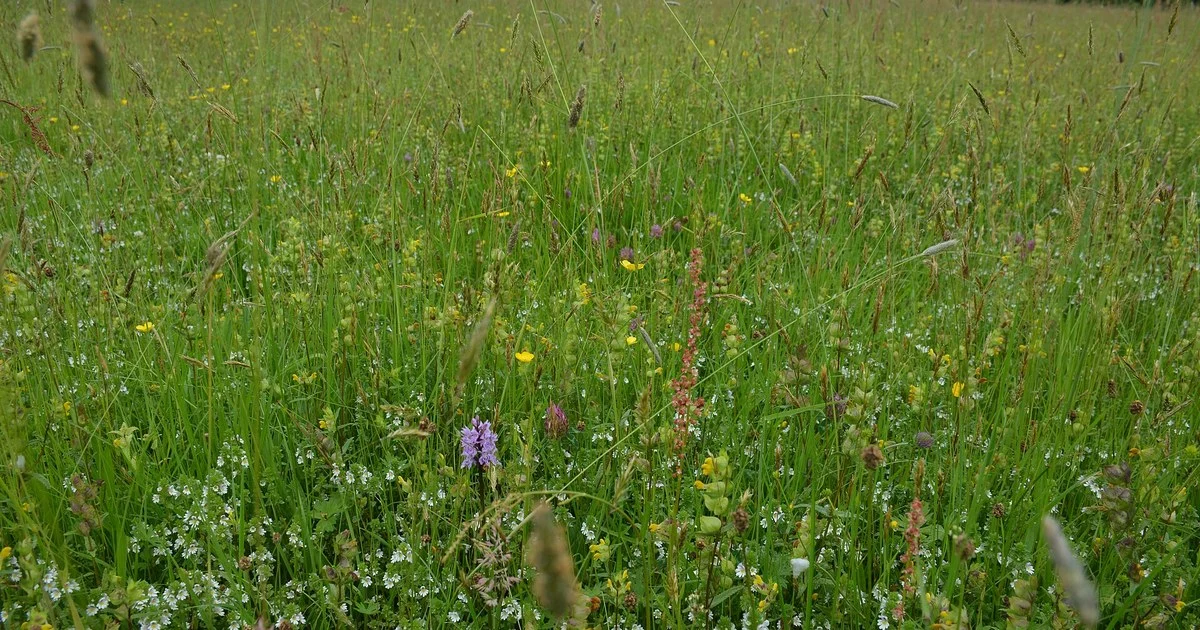
The aim is a sward with flowering grasses and wildflowers from late spring and through summer, a range of plant heights by autumn, some flowering grasses and wildflowers left to set seed and some tussocky grass allowed to develop.
That sward is meant to give nectar and shelter for invertebrates and food for farmland birds, support integrated pest management where it sits close to crops, and reduce nutrients running off into watercourses.
Land and area rules
Eligible land is below the moorland line, mapped with the right land cover and declared with a compatible code:
- Temporary grassland (TG01)
- Improved and low input permanent grassland (PG01)
SSSIs are eligible once you have given notice to Natural England and received consent. Land with historic or archaeological features needs an SFI HEFER first.
CLIG3 is a total area action: it must cover the total available area in a land parcel at the point of application. The exception is where you also apply for CIGL1 (grassland field corners or blocks taken out of management), already have CIGL1 in an SFI24 agreement, or already have GRH6 (priority habitat species-rich grassland) in an SFI24 agreement. The action is static, so it stays in the same place for all 3 years.
Inputs, grazing and what is banned
Nutrients must not exceed 12 tonnes per hectare of cattle farmyard manure, or the equivalent available nutrients from fertiliser or other organic manures. You must graze or cut in a way that can meet the aim, keep bare ground to a minimum and maintain an intact sward all year without compacted or poached areas. Supplementary feeding is allowed if it does not cause poaching.
On CLIG3 grassland you must not:
- Apply digestate or other industrial by-products, including paper waste
- Carry out mechanical work, including hay and silage cutting, in a way that may disturb breeding birds or damage nests
- Carry out drainage works
- Plough, cultivate or reseed
- Apply pesticides, other than herbicide weed wiping or spot treatment of injurious weeds, invasive non-native species, nettles or bracken
- Let scrub develop on land with historic or archaeological features
Existing very low input grassland can qualify if it meets the rules and is not paid under another option, such as Countryside Stewardship GS2 or GS5.
Cutting for hay or silage
If you take a conserved forage cut, the area must be left ungrazed and uncut for a continuous period of at least 7 weeks during spring and summer beforehand, so flowering grasses and wildflowers can develop. In each parcel, leave an uncut margin around the edge of the entered area when you cut, to shelter invertebrates. After the cut, keep managing the area in a way that meets the aim.
GOV.UK’s advice suggests cutting after plants have flowered and set seed, usually from around the end of June in the lowlands and mid-July in the uplands. Check for nesting birds first. The aftermath can be grazed or a second cut taken in late summer or early autumn.
Supplements, stacking and records
CLIG3 is a base action for four supplements applied for in the same SFI26 application: GRH7 (haymaking), GRH8 (haymaking, late cut), GRH10 (lenient grazing) and SPM3 (keep native breeds on grazed habitats, more than 80%). SPM3 can be combined with any one of the other three.
On the same area, SFI26 also allows AGF1 and AGF2 (agroforestry), PRF2 and the organic actions OFC1, OFC2, OFM1 and OFM2. Older compatible actions include CIPM1, CNUM1 and CSAM1 from SFI24 and IPM1, NUM1 and SAM1 from SFI 2023. Keep parcel-level field records, invoices and photographs as evidence.
Grazing and sward advice
GOV.UK’s optional guidance for grazed swards that are not cut for forage: start grazing at an average sward height of around 10 to 12 cm, aim to hold an average of around 5 cm with a mix of heights, and take stock off when the average drops below about 5 cm. Paddock grazing or temporary electric fencing helps rotate pressure.
For more wildlife value, keep a higher average of around 8 cm or more, with some areas over 10 cm for insects and seeding plants and some shorter areas where birds can feed. To limit poaching, reduce or remove stock when wet, move feeders and troughs, take heavier cattle off in winter and feed on drier fields. If you are already below the input limit, try not to increase inputs.
Frequently Asked Questions
What is CLIG3 in SFI?
CLIG3 is the SFI action for managing grassland with very low nutrient inputs, so the sward flowers, sets seed and develops tussocks that support insects and farmland birds.
How much does CLIG3 pay?
Under SFI26 it pays £151 per hectare per year for 3 years, the same per hectare figure as the SFI 2023 actions LIG1 and LIG2.
How much manure can I spread under CLIG3?
No more than 12 tonnes per hectare of cattle farmyard manure, or the equivalent available nutrients from fertiliser or other organic manures. Digestate and paper waste are not allowed.
Can I cut hay or silage on CLIG3 land?
Yes, but the area must be left ungrazed and uncut for at least 7 continuous weeks in spring and summer first, and you must leave an uncut margin around the edge of the entered area.
Is there a LIG3 action?
We found no LIG3 in the SFI 2023 rate tables. The SFI 2023 versions were LIG1 and LIG2, and CLIG3 is the SFI24 code used again in SFI26.
BritFarmers Weekly
One email a week: what’s moved on schemes, prices, disease control and policy, with links to primary sources. Free. No sponsors. Unsubscribe anytime. Subscribe.
Source: GOV.UK: CLIG3 Manage grassland with very low nutrient inputs (updated for SFI26)
You’ve reached the end of this story.