Cover photo: Bill Harrison (CC BY-SA 2.0, cropped) · Source
A way through this story
Where FETF 2026 stands
FETF 2026 opened on 17 March 2026 and closed at midday on 12 May 2026. This list shows what the 2026 round paid, which is a useful guide if there is another round.
The Farming Equipment and Technology Fund paid a set grant for each item, worked out as a percentage of what Defra expected the item to cost (see below). Each application had to be worth between £1,000 and £25,000, with one application per theme: Productivity, Slurry and Animal Health and Welfare. The Animal Health and Welfare theme was only open to farms with beef cattle, dairy cattle, sheep, pigs, laying hens or broilers. The 2026 list had 287 items, and the median grant was £681.
If you have a FETF 2026 agreement: claim by 20 January 2027
If you accepted a Grant Funding Agreement (GFA), the claim deadline is 11.59pm on 20 January 2027. The Rural Payments Agency (RPA) will not accept late claims. You make one claim for each grant theme, after you have paid for and received every item in that GFA, and partial payments are not available.
- Pay in full from a business account, or a business credit card paid from it. Cash, a personal account, lease, hire purchase and part exchange are not allowed.
- Email the claim form that came with your GFA to ruralpayments@defra.gov.uk from an email address linked to your SBI. Links to OneDrive, Dropbox, Google Drive or iCloud are not accepted.
- Invoices must show each item’s cost separately, the make and model, the FETF 2026 item code, and delivery or installation costs separately, because those are not funded.
- Send redacted bank statements that still show the bank’s name and logo, the account name, the last 4 digits of the account number, and the transaction date, type and amount.
- Send a photo of each item on site, out of its packaging, larger than 600 by 400 pixels, showing the whole item and its serial plate where the specification asks for it. Photos must not identify people.
To change or drop an item, you need RPA’s written approval before the deadline, and you cannot add items. The amended agreement must still be worth between £1,000 and £25,000 and still score at or above the funding threshold, or RPA will withdraw it. RPA aims to pay within 60 working days of a complete claim. After payment you must keep the items, working and in use for the same purpose, for 5 years, and keep the paperwork for 7. RPA can visit up to 5 years after payment. Source: GOV.UK: Claim your FETF 2026 grant payment.
How FETF grant values were worked out
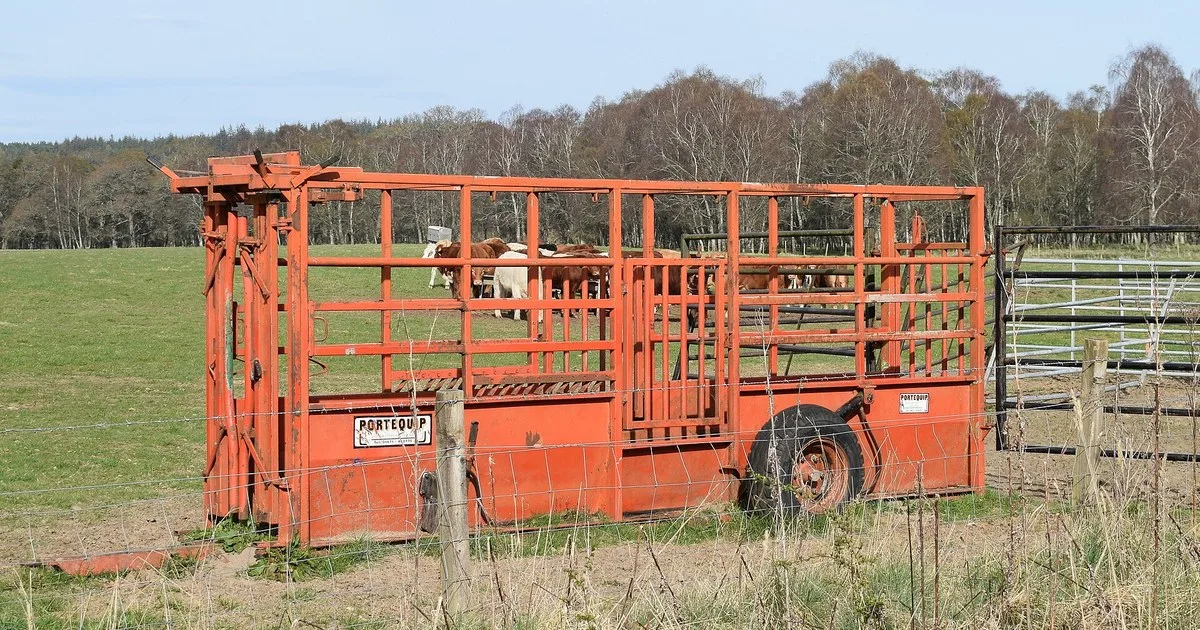
Defra set an expected average cost for each item from a cross-section of suppliers. The grant was 40% or 50% of that average cost, or of the price you actually paid if it was lower. A hydraulic squeeze crush (FETF60), for example, had an expected average cost of £13,180 and a grant of £6,590, which is 50%. The combine mounted weed seed reduction system (FETF410) was paid at 40%: £23,699 on an expected £59,248. Some items hit the £25,000 cap, such as the 1.8m intra row weeder (FETF5), with an expected average cost of £60,348.
Each item also carried a score. RPA scored every application, then funded each theme from the highest score down until the money ran out, which set the cut-off for that round. Items had to be new or ex display. Second hand, home built and ex demonstration items, items already bought, and anything not expected to last 5 years were not eligible. Source: GOV.UK: Apply for FETF 2026.
FETF 2026 grant values by group
Animal health and welfare had 200 items. Cattle had 67, with grants from £3 to £8,774 and a median of £458. Pigs had 50 items, up to £17,521 (median £266). Poultry had 38 items, up to £7,449 (median £173). Sheep had 45 items, up to £8,774 (median £404). Every group started at £3.
Productivity had 70 items. Arable (9 items) ran from £1,227 to £23,699 with a median of £7,354. Forestry (10) ran from £1,804 to £25,000, median £11,240. General (11) ran from £323 to £25,000, median £2,773. Horticulture (11) ran from £319 to £25,000, median £9,015. Livestock (7) ran from £579 to £12,000, median £2,000. Resource and energy management (13) ran from £217 to £25,000, median £4,198. Water and irrigation management (9) ran from £272 to £4,922, median £721.
Slurry had 17 items. Application (13 items) paid £2,250 to £18,375, median £7,375. Collection and storage (3) paid £9,466 to £25,000, median £9,516. Slurry testing was one item at £10,803.
Examples of the largest FETF 2026 grants
- Robot pen cleaner (FETF251A), animal health and welfare: £17,521
- Automatic health and welfare remote monitoring system for pigs (FETF315PI), animal health and welfare: £8,775
- Mobile cattle handling system (FETF56), animal health and welfare: £8,337
- Automatic weighing and drafting crate for sheep (FETF72), animal health and welfare: £7,996
- Intra row weeders 1.8m (FETF5), inter row hoe 6m (FETF7), plug transplanting machine (FETF403) and tractor powered electric desiccator (FETF422), productivity: each £25,000
- Mobile slurry separator (FETF501), slurry: £25,000
- Nurse tank, minimum capacity 100m³ (FETF31), slurry: £18,375
- Nurse tank, minimum capacity 50m³ (FETF30), slurry: £14,250
- Real time inline nutrient analysis of slurry (FETF29), slurry: £10,803
FETF 2026 cattle items
There were 67 cattle items in the Animal Health and Welfare theme. The twelve largest grants were:
- FETF315CA, Automatic health and welfare remote monitoring system: £8,774
- FETF56, Mobile cattle handling system: £8,337
- FETF287CA, Mobile livestock shade: £7,449
- FETF60, Hydraulically or pneumatically operated squeeze crush: £6,590
- FETF66, Cattle auto identification (ID) shedding gate (automatic drafting): £6,345
- FETF94, Automatic calf feeder with washing facility: £4,749
- FETF93, Mobile calf milk pasteuriser and dispenser: £4,377
- FETF613, Visual or acoustic monitoring system: £4,180
- FETF85, Automated footbaths for cattle: £3,355
- FETF87, Handheld automatic teat washing unit: £3,279
- FETF327CA, Horned cattle crush: £3,263
- FETF235A, Automated mobility/body condition scoring system: £3,253
FETF 2026 sheep, pig and poultry items
The largest grants for other livestock, with the expected average cost Defra used:
- Sheep: remote monitoring system for health and welfare (FETF315SH) £8,774 on £17,549; automatic weighing and drafting crate (FETF72) £7,996 on £15,992; mobile sheep dip (FETF83) £7,880 on £15,760; mobile livestock shade (FETF287SH) £7,449 on £14,899; sheep conveyor (FETF73) £6,583 on £13,167; mobile sheep handling system (FETF69) £4,880 on £9,761.
- Pigs: robot pen cleaner (FETF251A) £17,521 on £35,043; mobile livestock shade (FETF287PI) £7,449 on £14,899; electronic sow feeder (FETF248A) £5,195 on £10,391; ultrahigh-pressure evaporative cooling mist line (FETF317PI) £4,968 on £9,937.
- Poultry: mobile livestock shade (FETF287POU) £7,449 on £14,899; feed system for split feeding (FETF269A) £5,913 on £11,826; ultrahigh-pressure evaporative cooling mist line (FETF326POU) £4,968 on £9,937; visual or acoustic monitoring system (FETF332POU) £4,120 on £8,240; spin feeder (FETF268A) £2,238 on £4,477.
Will there be a FETF 2027?
As of 7 October 2026, GOV.UK has not announced a 2027 round. Its funding page lists FETF as closed and gives the 2026 budget as £50 million: £20 million for productivity, £20 million for animal health and welfare and £10 million for slurry. The 2024 and 2025 rounds are also on GOV.UK, and the item lists change between rounds, so check any new specifications before you rely on these figures. Source: GOV.UK: Funding for farmers, growers and land managers.
Frequently Asked Questions
When did FETF 2026 close?
FETF 2026 closed at midday on 12 May 2026. Applications opened on 17 March 2026.
How much was each FETF 2026 grant worth?
Each application had to be worth between £1,000 and £25,000 for its theme. Individual items paid a set grant, from a few pounds for small items up to £25,000 for the largest equipment.
Who could apply for the FETF Animal Health and Welfare grant?
Farms with beef cattle, dairy cattle, sheep, pigs, laying chickens or broiler chickens, including rearing and breeding farms.
What is the FETF 2026 claim deadline?
11.59pm on 20 January 2027. You need a separate claim for each grant theme, sent with all the items in that agreement paid for and received.
BritFarmers Weekly
One email a week: what’s moved on schemes, prices, disease control and policy, with links to primary sources. Free. No sponsors. Unsubscribe anytime. Subscribe.
Source: GOV.UK: Farming Equipment and Technology Fund (FETF) 2026 (closed)
You’ve reached the end of this story.