A way through this story
AGF1 summary
- Action: AGF1 Maintain very low density in-field agroforestry on less sensitive land
- Payment: £248 per hectare per year, counting both the tree rows and the land between them
- Duration: 3 years
- Tree density: an average of 30 to 50 trees per hectare across the area entered in each parcel
- Land: arable, temporary grassland, fallow, improved permanent grassland and horticultural permanent crops on low sensitivity land
- Placement: static, same location every year
- Applications: SFI26 is closed according to GOV.UK
SFI26 application windows have closed
GOV.UK lists SFI26 as closed for applications. Window 1 closed at 11:59pm on 28 August 2026 and was open to small farms and to farms without an existing environmental land management revenue agreement. Window 2, open to all eligible farmers, closed at 3:48pm on 22 September 2026 after the budget was allocated.
What follows matters most to farms that now hold AGF1 in an SFI26 agreement, and to anyone planting trees with a later offer in mind. AGF1 agreements under SFI24 continue under the SFI24 rules.
How the payment works
AGF1 pays £248 per hectare per year. Importantly, the hectarage is not just the strip of ground under the trees. GOV.UK says it can include the area used to grow the trees and the areas between them used for arable or horticultural crops, grassland, or other eligible environmental land management actions.
Payments arrive as quarterly instalments. SFI26 agreements are capped at £100,000 a year, and each business can hold only one. AGF1 was already an SFI24 action under the same code; the SFI26 changes listed by GOV.UK clarify where it cannot be done and which systems qualify, and apply only to SFI26 agreements.
For denser systems, AGF2 covers low density agroforestry of 51 to 130 trees per hectare and pays £385 per hectare per year.
What counts as an eligible system
The action is for maintaining an existing in-field system, not paying for planting. To qualify:
- The system must contain established trees, at any stage of maturity, including newly planted saplings that will be left to become mature trees
- Fruit trees must be on semi-vigorous or vigorous rootstocks, which usually give trees at least 4 m tall
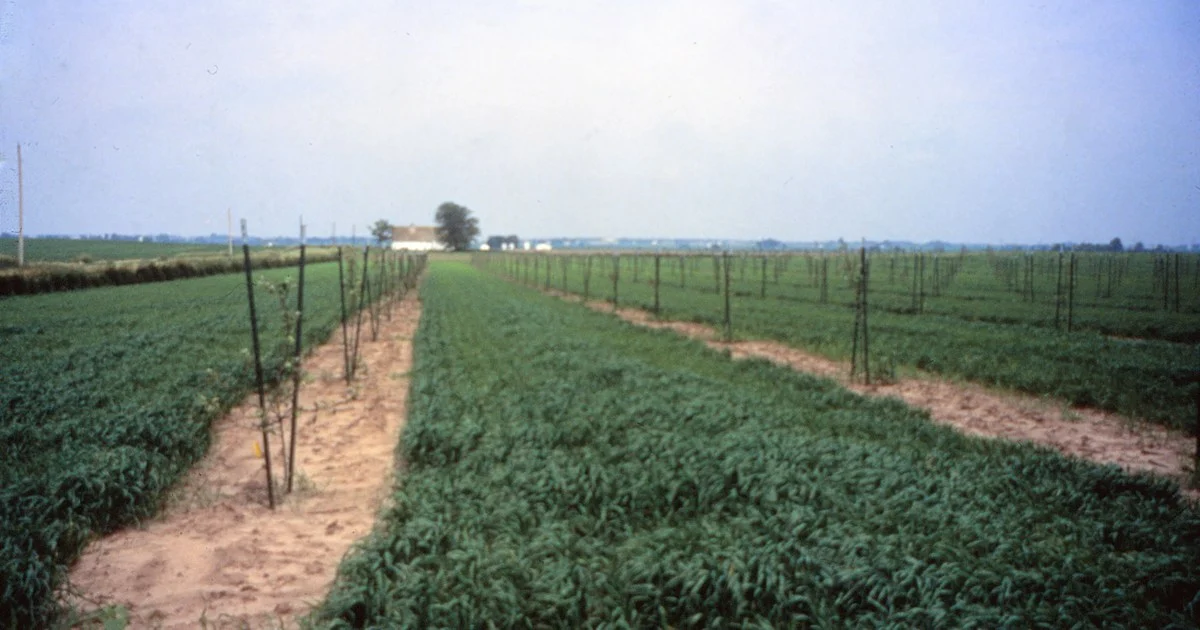
- Across the area entered in each parcel there must be an average of 30 to 50 trees per hectare, usually in rows or a grid
- The trees must be spaced so the potential canopy cover is under 20%, meaning a forestry environmental impact assessment was not required
The aim is a mix of trees (including shrubs) with crops, forage grassland or other eligible actions, to reduce erosion and flooding, improve water and air quality, shelter crops and livestock and store carbon.
Land you can and cannot use
AGF1 can only go on land with a low sensitivity to agroforestry, shown as the blue areas on the Forestry Commission’s map, and below the moorland line. The white areas, with higher sensitivity, are excluded. These include SSSIs and other sensitive areas listed in the forestry EIA guidance, and priority habitats such as species-rich grassland.
Eligible land types are arable land used for crops, temporary grassland (TG01), fallow (FA01), improved permanent grassland (PG01) and horticultural permanent crops (TC01). SSSIs are ineligible, and so is any area holding a historic or archaeological feature, though the rest of that parcel can still go in. All or part of a parcel’s available area can be entered.
Maintenance you must carry out
Throughout each of the 3 years, from the start date, you must keep the system in a state that can reasonably achieve the aim. GOV.UK spells out what that includes:
- Replacing dead trees where needed so the average stays at 30 or more trees per hectare in each parcel
- Protecting trees from livestock and pests such as deer and rabbits to prevent serious damage
- Managing weeds around the base of establishing trees
- Pruning and shaping trees once established
Keep parcel-level records of field operations and invoices, plus photographs or other documents. You must provide them if asked.
What can run between the trees
AGF1 can share land with a long list of other actions. On the same area, SFI26 actions include CSAM3 (herbal leys), CSAM2 (winter cover crop), CIPM2 (flower-rich grass margins), CAHL1 (pollen and nectar mix), CAHL2 (winter bird food), CLIG3 (very low input grassland), CNUM3 (legume fallow), SOH1 (no-till farming), PRF1, WBD3, WBD4, WBD6, WBD7 and several organic actions. Large numbers of SFI24, SFI 2023, Countryside Stewardship and Higher Tier options are also listed.
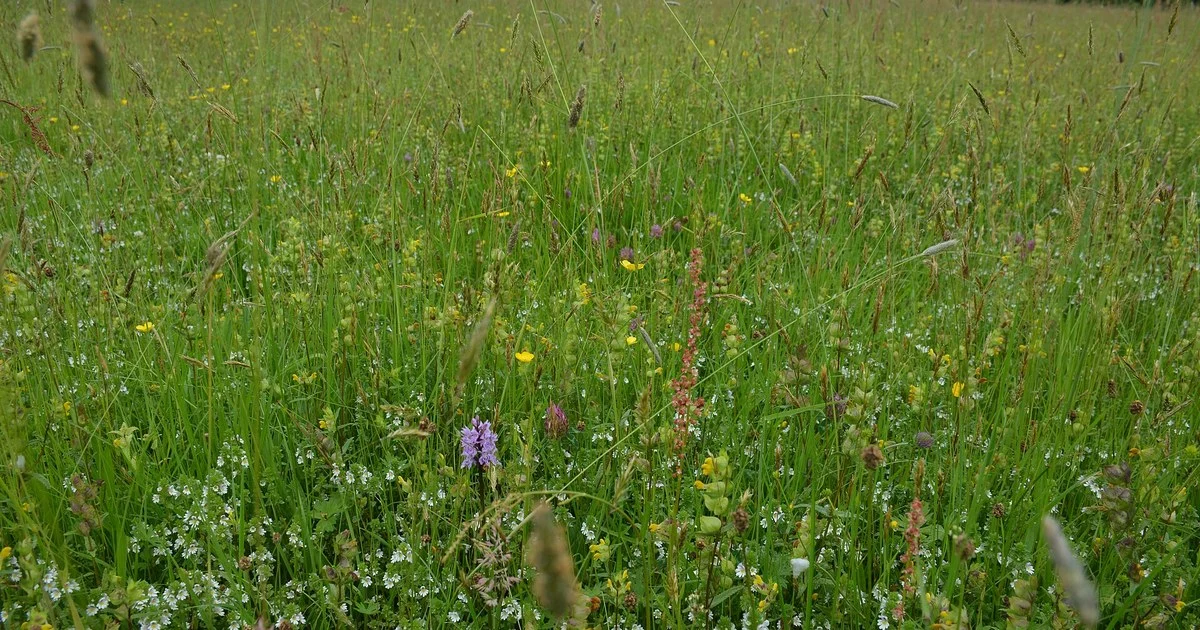
GOV.UK’s advice specifically suggests CIPM2, CAHL1 and CSAM3 in the alleys to raise biodiversity. Boundary actions such as CHRW2, BND1, BND2 and WBD2 can go on the parcel edges.
Spacing, roots and pruning advice
These are GOV.UK suggestions rather than rules. A forestry EIA is needed if you plant trees on 0.5 ha or more of farmland in a way that could create woodland, which the UK Forestry Standard defines as at least 20% canopy cover. You will usually stay under that if trees are planted on a grid at least 15 m apart, or in rows 24 m to 45 m apart with trees 3 m apart in the row.
Most tree roots sit in the top 60 cm and spread beyond the crown, so avoid ploughing, harrowing or poaching inside a root protection area, for example a 1.5 m radius from the tree for 3 m wide planted strips. Check whether you need an agriculture EIA screening decision from Natural England if your management would intensify uncultivated land or change field boundaries.
Prune to manage competition for light, allow machinery between rows and balance fruit or nut yield. For timber, early pruning followed by high pruning can give a clear stem of 3 m to 5 m. If you are still planning a system, GOV.UK points to the capital item PA4 for agroforestry planning help.
Frequently Asked Questions
What is AGF1 in SFI?
AGF1 is the SFI action that pays you to maintain very low density in-field agroforestry, meaning an average of 30 to 50 trees per hectare mixed with crops, grassland or other eligible actions.
How much does AGF1 pay in 2026?
It pays £248 per hectare per year under SFI26 for 3 years, and the area can include the land between the trees as well as the tree rows.
Does AGF1 pay for planting trees?
No. It is a maintenance action for an existing system with established trees, which can include newly planted saplings. Planting and planning support comes from capital items, such as PA4 for agroforestry planning.
What is the difference between AGF1 and AGF2?
AGF1 is for very low density systems of 30 to 50 trees per hectare and pays £248 per hectare. AGF2 is for low density systems of 51 to 130 trees per hectare and pays £385 per hectare.
Can I put herbal leys or cover crops under AGF1?
Yes. CSAM3 herbal leys, CSAM2 winter cover crops and many other actions can go on the same area as AGF1.
BritFarmers Weekly
One email a week: what’s moved on schemes, prices, disease control and policy, with links to primary sources. Free. No sponsors. Unsubscribe anytime. Subscribe.
You’ve reached the end of this story.