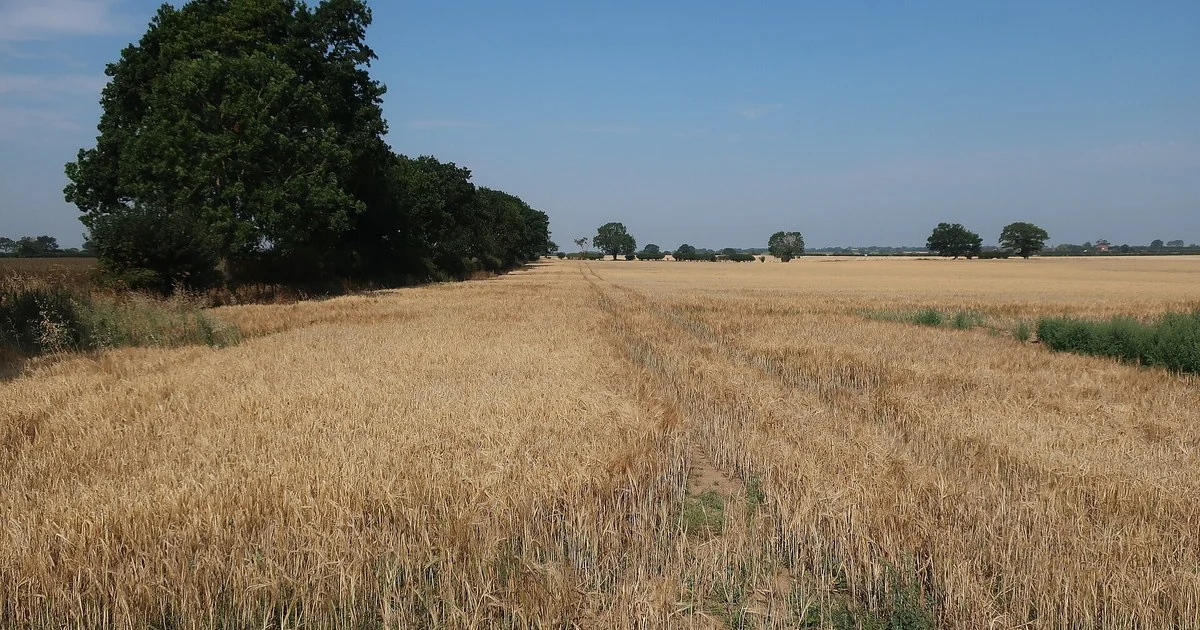
Cover photo: Hugh Venables (CC BY-SA 2.0, cropped) · Source
Tim’s take:
For livestock farmers, barley rarely matters because it is fashionable; it matters because it sits in feed ration after feed ration and competes with wheat, rapeseed and imported grain. AHDB’s latest 2026/27 balance points to a squeeze in home-grown supply, so procurement plans deserve attention now rather than when contracts are due for renewal.
The crop is forecast at 5.614 million tonnes, 753,000 tonnes below 2025 and 19% under the five-year average. Total availability falls 8% to 7.201 million tonnes, while domestic use slips by less than 1%. Animal feed use actually rises slightly to 4.393 million tonnes, leaving only 450,000 tonnes for exports or free stock, down 56% from 1.016 million tonnes. That tightening does not automatically mean a barley price spike, particularly with 250,000 tonnes of imports forecast, but the margin for error is plainly smaller.
Watch the first official UK balance sheets on 26 November 2026, followed by final crop figures on 10 December. Before then, compare spot feed barley with wheat and imported alternatives, and speak to your merchant about autumn and winter requirements rather than waiting for those numbers to land. Secure sensible cover where the feed budget allows, but do not chase the headlines. The update to watch is the November balance sheet; the action to take is to build a realistic feed-cost floor now.
UK barley supply is tight in 2026/27: AHDB puts the crop at 5.6Mt, the smallest since 2012/13. What it means for feed buyers, sellers and prices.
A way through this story
UK barley supply in 2026/27 at a glance
- UK barley production: 5.614 million tonnes (Mt), down 753,000 tonnes (12%) on 2025 and 19% below the five-year average
- Total availability: 7.201Mt, down 8%, after opening stocks of 1.337Mt and forecast imports of 250,000 tonnes
- Domestic use: 6.001Mt, down less than 1%. Animal feed takes 4.393Mt of that, slightly more than last season
- Surplus for export or free stock: 450,000 tonnes, down from 1.016Mt, a fall of 56%
- Next update: the first official UK balance sheets are due on 26 November 2026, and final UK crop figures follow on 10 December
All figures are from AHDB’s early balance sheets, published on 22 October and corrected on 23 October 2026.
Why the barley crop is so small
AHDB puts the 2026 UK barley crop at the smallest since 2012/13. Two things caused it: fewer acres and poorer yields.
Defra’s provisional figures for England show the pattern clearly. English barley production fell 11% to 3.7Mt, the smallest total barley harvest since 2012. Winter barley held up, with production up 1.7% and yields steady at 6.6t/ha. The damage was in spring barley. Its planted area fell 17%, yields fell 8% and production dropped 23%.
Most of the lost area was spring barley. Total English barley area fell 9.2%, driven by the 17% drop in spring barley, while winter barley area rose 1.6%. Defra reports that wheat and oat areas also fell this year, while oilseed rape area rose 36%, from 204,000 hectares to 276,000 hectares.
Defra said the hot weather and limited rainfall during the growing season hampered the harvest. Every English region produced less barley except Yorkshire and the Humber, which rose 2.1%.
Scotland adds uncertainty. The Scottish Government did not publish a provisional 2026 estimate, so AHDB estimated Scottish production itself. AHDB notes this makes the UK figure less certain than usual. The official November and December figures could move the UK total either way.
The split matters for the market. Spring barley supplies most of the UK’s malting grain, so a 23% fall in English spring barley production hits that end of the market hardest. AHDB still expects malting supply to be adequate overall, because demand from maltsters, brewers and distillers is weak, but a smaller spring crop leaves less room for quality problems.
Oats are short too, but straw is not
Barley is not the only feed grain in short supply. Defra’s provisional England figures put the 2026 English oat harvest at 527,000 tonnes, down 29% on 2025 and the smallest since 2012. The oat area fell 21%, from 162,000 to 129,000 hectares, and the average yield dropped 11% to 4.1t/ha. Regional oat yields ranged from 6.2t/ha in the North East to 3.4t/ha in the South West.
For livestock farms that feed home-grown or bought-in oats, that is a second grain that is scarcer this season. It adds to the case for comparing all the cereal options on price per unit of energy and protein, rather than sticking with last year’s ration by habit.
Straw is a different story. Despite the smaller grain crop, English barley straw production rose 5.4% to 1.3 million tonnes, and wheat straw rose 24% to 3.2 million tonnes, its highest since 2022. Bedding supply in England should be less of a worry than grain supply this winter, although forage remains short on many livestock farms after the dry summer.
Demand is barely changing, so the surplus shrinks
A smaller crop matters most when demand does not fall with it. AHDB expects UK barley use in 2026/27 to be almost unchanged.
Animal feed is forecast at 4.393Mt, up 0.3% on last season and 3.4% above the five-year average. AHDB expects the amount fed on farm to stay level, because many livestock farms need to replace forage after a dry summer cut grass growth. Our hay, silage and haylage guide covers the forage side of that problem.
Human and industrial use, mainly malting, brewing and distilling, is forecast at 1.407Mt, down 3% and 22% below the five-year average. AHDB links the weak demand to lower domestic alcohol consumption.
Put supply and demand together and the barley balance comes out at 1.2Mt, the lowest since 2007/08. After allowing 750,000 tonnes of operating stocks (the minimum users need to bridge to next harvest), AHDB leaves a surplus of 450,000 tonnes. Last season it was over 1Mt.
That surplus is what the UK would normally export. In 2025/26 the UK exported 479,000 tonnes of barley. On these numbers, 2026/27 offers much less room for exports unless the crop turns out bigger than estimated.
Wheat: a bigger crop, but not more grain
The wheat picture looks better at first glance. AHDB estimates the 2026 UK wheat crop at 12.074Mt, up 1% on the year, although still 9% below the five-year average.
In England, Defra’s provisional estimate is 10.8Mt, up 0.8%, because higher yields made up for a 1.8% fall in area. Northern regions generally did better than southern ones: Yorkshire and the Humber had the largest rise in wheat production, up 6.5%, and the North East had the highest yields at 8.4t/ha.
But opening stocks fell 24%, from 1.98Mt to 1.514Mt, which more than cancels out the extra production. Total wheat availability is 16.338Mt, down 1%. AHDB forecasts imports of 2.75Mt, up 5%.
Wheat demand is also forecast to fall, mostly in human and industrial use, which drops 2% to 6.411Mt. That leaves a wheat surplus of 859,000 tonnes, well above last season’s 156,000 tonnes. So wheat has more room than barley this season.
One uncertainty affects wheat in particular. The Ensus bioethanol plant on Teesside reopened in April 2026, but its operation was only secured until the end of October. AHDB’s forecast includes wheat use for bioethanol only up to that point. If the plant keeps running, industrial demand for wheat will be higher than these figures show. For current wheat values, see our UK wheat prices page.
What barley is trading at now
The latest AHDB Corn Returns, for the week ending 15 October 2026, put UK feed barley for October delivery at £176.00/t ex-farm, up 80p on the week. Feed wheat for the same month averaged £206.30/t. That is a gap of just over £30/t in barley’s favour, which is what AHDB means when it says feed barley is priced competitively against other grains.
Regional prices vary. Feed barley averaged £174.60/t in the Eastern region, £186.80/t in the North East and £188.80/t in the South West. Buyers in livestock areas are paying more than those in the arable east.
The forward prices tell the same story as the balance sheet. UK feed barley for December delivery averaged £190.30/t, £14.30 more than October, while feed wheat for December was almost unchanged at £206.40/t. The market is already paying more for barley that is stored and sold later in the season.
Trade has been thin. In that week, buyers reported 25,211 tonnes of feed barley against 91,584 tonnes of feed wheat, and no malting barley trades were recorded at all. AHDB also published no UK delivered prices for 22 October because it did not receive enough quotes to calculate a representative price. With so few trades reported, treat any single week’s price with caution.
Corn Returns are ex-farm averages of trades already done, published each Monday for the previous Friday to Thursday. They are a record of the market, not a contract price, and AHDB says they are not designed to be used as a base for contracts.
What it means for barley prices
A tight balance sheet does not set the price on its own. UK barley prices also depend on maize and wheat prices worldwide, the exchange rate, EU supplies and how much feed wheat livestock farms can use instead.
AHDB says feed barley is currently priced competitively against other feed grains, but that this could change through the season as the tighter balance sheet takes effect. The figures also point to a few practical consequences:
- Feed barley sellers have a smaller UK surplus competing for buyers than last season, and there is less pressure to find export homes for the crop
- Growers with barley in store should weigh the forward premium, £14.30/t more for December than October delivery in the latest Corn Returns, against their own storage, drying and finance costs before committing to sell now
- Livestock farmers buying feed should compare barley with feed wheat. Wheat is the more comfortable grain this season, so the usual price gap between the two may narrow or flip
- Malting barley should be adequate overall, according to AHDB, because brewing, malting and distilling demand is weak. But quality is uneven. “The functionality of the 2026 barley crop is mixed and regional, with poor-yielding crops also missing malting specification in droughted areas,” AHDB said. It expects more grain to move within the UK, which adds haulage costs
- Northern Ireland relies more on imports. HMRC data shows most UK barley imports last season went to Northern Ireland
Use local merchant bids and the AHDB corn returns rather than national figures when deciding when to sell or buy. A national shortfall does not mean every region is short.
What to watch before the next estimates
- 26 November 2026: AHDB’s first official UK cereals balance sheets for 2026/27, which may revise both barley production and feed use
- 10 December 2026: Defra’s final UK crop production figures, including Scotland
- Ensus: any decision about the plant running beyond October changes the wheat demand estimate
- Winter feeding: if the forage shortage is worse than expected, feed use of barley could rise above AHDB’s estimate
We will update this page when the official figures are published. For background on this year’s harvest, see our harvest 2026 yields report. Our straw prices page covers the knock-on effect on bedding and forage. If you are planning next spring’s barley, the spring barley drilling guide covers seed rates and timing.
Frequently Asked Questions
How much barley did the UK grow in 2026?
AHDB’s early estimate is 5.614 million tonnes, down 12% on 2025 and the smallest crop since 2012/13. The figure was corrected on 23 October 2026 and will be revised when official figures are published on 26 November and 10 December.
Why is UK barley production down in 2026?
Mainly because farmers planted much less spring barley and the dry growing season cut yields. In England, spring barley area fell 17% and production fell 23%, while winter barley held steady.
Will barley prices rise because of the small harvest?
Not necessarily. The smaller UK surplus supports values, but prices also depend on world maize and wheat prices, sterling, EU supply and how much feed wheat replaces barley in rations.
How much UK barley is used for animal feed?
AHDB forecasts 4.393 million tonnes of barley for animal feed in 2026/27, slightly more than last season, as livestock farms replace forage lost to the dry summer.
BritFarmers Weekly
One email a week: what’s moved on schemes, prices, disease control and policy, with links to primary sources. Free. No sponsors. Unsubscribe anytime. Subscribe.
Source: AHDB
You’ve reached the end of this story.