Cover photo: David Smith (CC BY-SA 2.0, cropped) · Source
UK Glasshouse — Last updated: April 2026. This guide covers heated glass economics, polytunnel systems, lighting, CO2, substrate hydroponics, biological control under cover, water and labour, the funding picture and the honest gross-margin reality on a working UK protected-cropping holding in 2026. It is general information, not tailored agronomy or business advice. Crop-specific specs (DLI, PPFD, EC) vary by variety and need calibrating with your agronomist; see the action checklist at the end for what to do this season.
The conversation that stays with me from the 2022 winter is the one I had with a neighbour who runs a heated tomato glass nursery. He was sat at our kitchen table going through his gas bill on a phone screen the size of a beer mat, and the line he kept coming back to was that the fuel cost on the spring-planted crop had gone past the labour cost, the seed cost and the agronomy cost combined. Third-generation grower, third-generation glass, and he was working out whether to plant the 2023 crop at all.
That was the year heated glass economics broke open in plain view. It hadn’t been comfortable before. It became, briefly, untenable. What’s followed in 2024, 2025 and into 2026 is the reset.
I’ve grown salad and field veg in Suffolk for 21 years, the last two with a slice of arable in the rotation. The protected end of that programme runs alongside the field veg the whole way: heated glass on the propagation side, polytunnel and double-skin coverage on a working slice of leafy salad and herbs, single-skin tunnels on the soft-fruit block we keep for direct sales. So this guide is the conversation I’ve had with our nursery manager, our agronomist, the gas engineer, and most of the neighbours who run protected systems for a living. AHDB Horticulture left the building in 2022. The trade press touches on this corner occasionally. Beyond that there isn’t much written down. For the wider field-veg picture, see /uk-salad-vegetable-production-guide-2026/; for the IPM detail, /uk-crop-protection-2026/; for the funding lines, /uk-farming-grants-guide/; for the redundant-glass conversion question, /class-q-r-permitted-development-rights-farm-diversification/; for everything else, /knowledge-hub/.
A way through this story
Where UK protected cropping sits in 2026 — UK Glasshouse
The bones of the sector look like this. Defra’s horticulture statistics for 2024 put protected vegetable production at 235,000 tonnes from around 410 hectares of glass and protected covering, the eighth consecutive year of declining tonnage from the 2015 peak.[1] Salad covers about 235 hectares of that, tomatoes 99, cucumbers 64. Protected soft fruit, separately, sits in the low thousands of hectares, dominated by polytunnel strawberry and substrate-grown raspberry, with the British strawberry harvest now over 90% under cover in some form.[2]
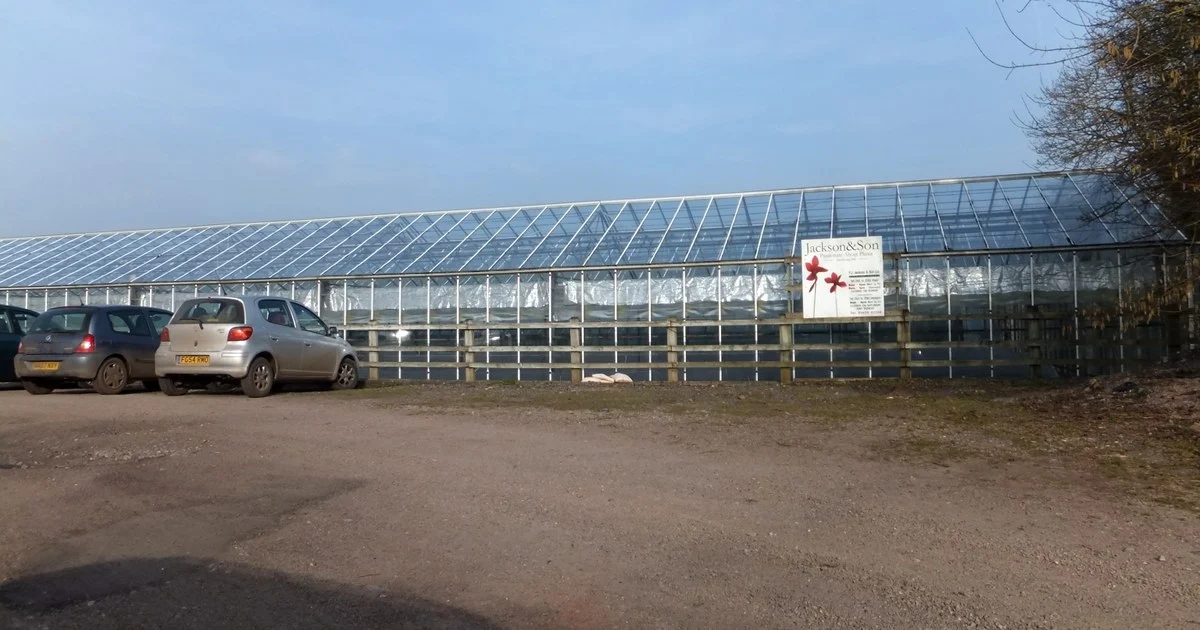
The sector is consolidating into bigger sites. Lea Valley, Thanet Earth and the cluster of east-coast operators run multi-hectare glasshouses with combined heat and power, supplemental lighting and controlled-environment kit that wasn’t in the catalogue when I came into the trade. The mid-tier independent glasshouse, the half-hectare to two-hectare working unit on a family farm, has thinned year by year. It’s the same consolidation story you see in field veg, just running faster because the capital cost per square metre is higher and the energy bill doesn’t forgive a small operator a bad winter.
Polytunnels are the other side of the picture. The boom that started with strawberry in the 2000s has pushed into raspberry, blackberry, blueberry, cherry, table-grape trial, leafy salad, brassica modules and culinary herbs. A serious slice of the British soft-fruit programme is now under poly. On our own holding, the polytunnel kit pays for itself faster than glass on the same crop, because the build cost per square metre is a fraction and the climate control is good enough for crops that don’t need a full controlled environment.
Where I land on this: the protected end of the sector is two trades, not one. Heated glass is a high-CapEx, high-OpEx, high-skill business that lives or dies on energy and labour management. Polytunnel is a more forgiving build pulled in where field exposure is too risky and full glass is too expensive. Don’t confuse them in the maths.
Heated glass economics: the energy line
The single number that matters on a heated glass operation is the energy line as a percentage of total cost. In the working glass tomato or cucumber business, gas (or its equivalent) routinely runs at 30–40% of total operating cost in a normal year, and it ran north of 50% in some 2022–23 contracts before the Energy Bills Discount Scheme and the new build of CHP and heat-pump kit pulled it back.[3] You can’t grow heated glass crops without managing the energy bill the way an arable grower manages fertiliser and a livestock farmer manages feed.
The supply-chain shock of 2022–23 was real. UK wholesale gas prices spiked through the autumn of 2021, peaked through 2022, and stayed elevated through 2023. The Government’s Energy Bills Relief Scheme (October 2022 to March 2023) and the successor Energy Bills Discount Scheme (April 2023 to March 2024) put a floor under the worst of it for non-domestic users, including horticulture, with an Energy and Trade Intensive Industries (ETII) sector list that captured part of horticulture but not all.[4] Several glasshouse operators planted reduced areas in the spring 2023 crop, ran shorter heated seasons, or skipped the lit-tomato programme altogether. The British Tomato Growers’ Association and the Lea Valley Growers’ Association both flagged that British self-sufficiency on tomato fell below 15% during that window.[5]
The answer set has shifted across 2024–26. Combined heat and power (CHP) with gas reciprocating engines is still the dominant solution on bigger sites, because it produces heat, electricity and CO2 from the same fuel, and the dual-purpose argument on CO2 (more on that below) tilts the maths. Biomass boilers (woodchip, straw) carry a place where the local fuel supply is reliable. Heat pumps, especially ground-source and water-source on sites with adjacent abstraction or borehole capacity, are the new conversation, with the Green Heat Network Fund and the Industrial Energy Transformation Fund visible behind some of the recent installs.[6] What I’m not seeing is a queue of operators committing seven-figure cheques to brand-new heated glass on the back of an envelope. The investment caution that came out of 2022–23 hasn’t fully lifted.
If I’m honest, the working calculus on heated glass in 2026 is harder than it was in 2019. Energy is forecast lower than the peak but higher than the pre-2021 baseline. CHP carbon-pricing exposure under the UK Emissions Trading Scheme is real for installations over 20 MW thermal.[7] And the buyer end has tightened its spec on carbon intensity per kilo of produce, so the energy decision is now also a Scope 3 decision.
Lighting: LED, photoperiod and the cheap-rate window
Supplemental lighting has moved from optional to standard on the high-value lit crops. LED has displaced HPS on most new builds since about 2020, with horticultural-grade fixtures running at 2.5–3.5 µmol/J wall-plug efficacy and lifetimes that put HPS to bed.[8]
The specs vary by crop. Working benchmarks (these are starting points; calibrate with your agronomist) sit roughly in the following ranges. Lettuce wants a Daily Light Integral around 14–17 mol/m²/day with PPFD targets in the 200–400 µmol/m²/s zone over a 16–18 hour photoperiod.[9] Lit tomato wants more, with a DLI in the 20–30 mol range and PPFD that can run above 800 µmol/m²/s in winter blocks where natural light is the binding constraint. Lit cucumber sits in a similar range. Culinary herbs sit lower, around 12–17 mol DLI on a 14–16 hour photoperiod. The Wageningen literature is the canonical reference set on the photobiology, and any working lit-crop holding has someone reading it.[10]
The capital cost question hasn’t gone away. A 1-hectare lit-tomato fit-out runs into seven figures by the time you’ve paid for fixtures, gear, controls, cabling and the half-megawatt of incoming electrical capacity. The yield uplift on lit tomato can be 30–50% on annual output and shifts the harvest curve into the winter weeks where the British supply gap is widest, but the ROI sits on a ten-year horizon, not a two-year one.
The other variable nobody outside the trade always gets is the electric-rate window. Run an LED programme on a working tariff and most of the photoperiod sits inside the 18:00–06:00 cheap-rate window where the wholesale electricity price is lowest. The lighting controls run accordingly. On the days where Great Britain’s wholesale electricity price hits the negative-pricing window (and there have been more of those each year through 2024 and 2025 as renewables capacity has grown), there’s an arbitrage to be had on demand response.[11] This is now a real conversation on bigger sites, not a slide in a conference deck.
What I’d actually do on lighting: don’t fit lit unless the crop economics justify it through the winter weeks specifically. Fit LED, not HPS. Build the controls so the photoperiod is on the cheap-rate window and the response curve to grid signals is in the system from day one.
CO2 enrichment: the dual-purpose argument
Atmospheric CO2 sits around 420 ppm in 2026. A working glass tomato, cucumber or pepper crop wants 800–1,000 ppm under good conditions for measurable yield response, and the yield uplift from enrichment is in the 20–30% range on lit crops, lower without supplemental light.[12] On lettuce and herbs the uplift is smaller but still real.
The standard CO2 source on a heated glass site is the boiler or CHP exhaust, scrubbed and dosed back into the house. That’s the dual-purpose argument: the fuel that’s heating the glass is also the source of the enrichment, and you’re not paying twice for it. Liquid CO2 delivered by tanker is the alternative on sites without on-site combustion, and the 2022 supply crunch on industrial CO2 (when several British food producers ran out for unrelated reasons) reminded everyone that the tanker route has supply risk.[13]
The control question matters. Pump CO2 into a vented house on a sunny May afternoon and you’ve burned fuel for nothing because half of it goes out the roof vent. The integrated climate-control kit (Priva, Hoogendoorn and the others that dominate the UK market) handles the trade-off between vent position, CO2 setpoint and crop temperature, and a half-decent climate manager makes the difference between a programme that pays and one that doesn’t.
Substrate and hydroponic systems: soil versus substrate
The protected vegetable trade in the UK has largely moved off soil and onto substrate. Tomato and pepper run on rockwool slabs (Grodan, Cultilene, Saint-Gobain), with drip emitters and recirculating drainage. Cucumber runs on rockwool, perlite or coir. Protected lettuce splits between Nutrient Film Technique (NFT), deep-water culture, ebb-and-flow, and a long tail of small-grower rigs. Strawberry and raspberry on table-top systems run on coir and peat-based substrates with controlled feed.[14]
The case for substrate is straightforward. You control the root environment, irrigate and feed precisely, recirculate the drainage and recover most of the leached nutrient, and you don’t carry the soil-borne disease burden that punishes a continuous protected-soil rotation. The case against is the capital cost, the substrate disposal question (rockwool is recyclable but the supply chain isn’t fully closed-loop yet), and the loss of the soil microbiome buffer when something goes wrong with the dosing.
Soil-grown protected systems still exist in the British trade and they have real strengths. Soil-grown polytunnel strawberry, soil-grown culinary herbs, soil-grown leafy salad on rotation through a tunnel cluster all work. The crops taste different to substrate-grown in a way some buyers and some chefs will pay for. The trade-off is that the rotation length needs respect, the soil-borne disease arithmetic is real, and yields are typically lower per square metre than the substrate equivalent.
Looking back, the single best capital decision a working tomato or cucumber operator made in the 2010s was committing to closed-loop substrate with recirculating drainage and disinfection. The water and fertiliser savings alone paid the capital back inside the planning horizon. The single best decision a polytunnel strawberry operator made in the same window was the move to table-top coir. They aren’t the same decision and they don’t have the same answer.
Polytunnels: single-skin, double-skin, the Spanish import shock
A polytunnel is not a small glasshouse. The build cost per square metre is a fraction of glass; the climate control is rougher; the venting is passive on most kit; and the polythene cover has a four-to-six-year working life before replacement. None of which makes a polytunnel a worse tool. It makes it a different one.
Single-skin polytunnels are the workhorse on soft fruit, brassica modules, herbs and leafy salad in the British trade. Double-skin (twin-layer inflated polythene) adds insulation, smooths the diurnal temperature swing and is now standard on the spring/autumn shoulder weeks of the strawberry programme and on the higher-value herb and salad lines. Ventilation runs through roof vents, side roll-up curtains, end-wall fans where needed, and on better-equipped sites, controlled venting on the same climate-control kit you’d find in glass.
The 2024 Spanish import shock is worth being honest about. The combination of drought in Almería, cold weather across Andalucía and disrupted shipping pushed UK wholesale prices on imported salad and tomato to multiples of normal in February 2024, with some lines on supermarket shelves rationed by the buyer.[15] British polytunnel and glasshouse operators with kit on the ground that month had a window most of them won’t see again. The post-mortem inside the trade was that the British self-sufficiency story can’t be left to import to fill, and a slice of additional polytunnel and double-skin investment has gone in across 2024–25 partly on the back of that.
What I’d actually say on polytunnels: build them sensibly, replace the polythene on schedule, vent them properly, and don’t run a soft-fruit programme on a tunnel cluster you can’t disinfect between crops. The kit forgives a lot. It doesn’t forgive everything.
IPM under cover: where biologicals actually work
Biological pest control is much easier in protected cropping than in open field. The closed environment lets you establish populations of predators and parasitoids that wouldn’t survive an outdoor August. Most working UK protected sites now run biologicals as the spine of the IPM programme, with chemistry as a targeted backstop.
Encarsia formosa, the parasitic wasp against glasshouse whitefly, has been used in UK glass since the 1920s and remains the standard tool.[16] Macrolophus pygmaeus, the predatory mirid, is the backbone of UK protected tomato programmes against whitefly and Tuta absoluta. Aphidius colemani and Aphidoletes aphidimyza against aphids; Phytoseiulus persimilis against red spider mite; Amblyseius and Neoseiulus species against thrips; Steinernema nematodes for sciarid larvae and vine weevil. The Koppert, Bioline and Biobest catalogues are the practical reference.
The economics work in protected cropping in a way they don’t always in field veg. The release schedule is on its own calendar, the monitoring (sticky traps, scouting walks, weather data) is more tractable in a fixed environment, and the residue arithmetic at the buyer end favours the IPM-led grower because the chemistry that does survive on the spec line is increasingly the soft-spec chemistry compatible with biologicals. For the broader IPM detail and the residue-spec piece, see /uk-crop-protection-2026/.
If I’m honest, the biggest mistake I’ve seen on protected IPM is treating it as a chemistry alternative rather than as a programme in its own right. Build the release schedule on its own discipline, not as the gap-filler when the spray cupboard runs short.
Water: drip, recirculation and the storage reality
Protected cropping is irrigated by definition. Drip is the standard delivery. The interesting questions are recirculation, dosing, and where the water came from in the first place.
Closed-loop systems on substrate-grown tomato and cucumber recirculate drainage, dose nutrient back into the feed tank, and disinfect (UV, ozone or slow sand) before reuse. The water saving versus an open run-to-waste system is in the 30–50% range, and the fertiliser saving is similar.[17] EC and pH management is the daily discipline. Working ranges sit roughly here, with substantial crop and system variation that calibration needs to handle: lettuce typically 1.2–2.0 mS/cm EC, tomato 2.5–4.0 mS/cm, cucumber 2.0–3.0 mS/cm, with pH targeted at 5.5–6.5 in most hydroponic systems.[18] Don’t take those numbers as a recipe. They are starting points the agronomist tunes for the variety, the substrate and the water analysis.
The storage and abstraction question matters even on protected sites. Mains water at horticultural volumes is unaffordable for most working operations. Borehole abstraction over 20 m³/day is licensed under the Water Resources Act 1991, and the Environment Agency’s National Framework for Water Resources 2025 signals tighter abstraction headroom across most of southern and eastern England.[19] Rainwater capture from glass and tunnel roofs into a winter-fill reservoir is the cheapest source on most sites and goes a long way to closing the supply-chain risk.
Labour: protected cropping is labour-intensive
People underestimate how labour-heavy protected cropping is. Module raising, transplanting, pruning, training, leaf removal, harvest, grading, packhouse work: the labour line on a hectare of heated tomato or cucumber dwarfs the labour line on a hectare of arable, and it runs through the year, not just at harvest.
Most of the protected workforce comes through the same Seasonal Worker Scheme that feeds the field-veg sector, with a smaller permanent core in glasshouse roles that need year-round skilled labour (climate management, IPM coordination, packhouse supervision). The 2026 scheme quota is 42,900 visas, with 41,000 of those for horticulture, down from 47,000 in 2024 and 45,000 in 2025; the minimum hourly rate stands at £12.71 from 1 April 2026, in line with the National Living Wage; from November 2025 the route is capped at six months in any rolling ten-month period.[20] For the labour detail and the broader Seasonal Worker Scheme picture, see /uk-salad-vegetable-production-guide-2026/.
The protected sector has been raising productivity per labour hour through better training, better tools (battery-electric scissor lifts on tomato, automated grading on packhouse, robotic harvest trial on a few lit-strawberry sites) and better workforce planning. None of that is closing the gap to the labour-cost increase fast enough.
Class Q and Class R for redundant glass and tunnels
Not every glass or polytunnel asset has a future as a growing site. The redundant glasshouse on a smallholding, the older single-skin tunnel cluster that’s no longer economic, the Lea Valley site that’s been idle since 2014: these are real assets sitting on real land with real planning interactions.
Class Q (residential conversion) and Class R (flexible commercial use) of the General Permitted Development Order can apply to former agricultural buildings, including some glasshouses and tunnel structures, subject to the qualifying conditions on prior agricultural use and the date thresholds.[21] The interaction with glass and poly specifically is fiddly. The structure has to qualify as agricultural at the relevant date, the curtilage has to work, and the 2024 expansions to Class Q in particular changed the size limits in ways that matter for some sites. For the working detail on permitted development for farm buildings, see /class-q-r-permitted-development-rights-farm-diversification/.
Where I land on this: don’t bulldoze a redundant glasshouse before checking what its planning value is. The structure may be worth more standing and converted than scrapped.
Funding: SFI 2026, Capital Grants 2026
Protected cropping isn’t a primary target of SFI. The Sustainable Farming Incentive 2026 actions don’t directly fund glasshouse heating, supplemental lighting or tunnel kit. They do fund some adjacent work: soil-management actions on rotation ground, IPM Plan payments, integrated pest management adoption, all of which can apply to the protected operation if the holding is structured to claim against it.[22]
The Capital Grants 2026 round is the more relevant funding line. It carries irrigation items (storage, distribution, controls) and energy items (some heat pump and biomass items, though scope changes year to year), and the Farming Innovation Programme has run calls on protected-cropping technology with Innovate UK and Defra co-funding.[23] For the wider grants picture, see /uk-farming-grants-guide/.
What I’d actually do on funding: don’t plan a protected-cropping investment around the grant. Plan it around the buyer relationship, the energy maths and the labour shape. Treat any grant that comes through as a top-up that improves the IRR, not a load-bearing component. Grants change. Buyer contracts change slower.
The honest economic picture: gross margin per square metre
The mental shift a field-crop grower has to make moving into protected is the unit. We don’t price gross margin per hectare. We price it per square metre. A working glass tomato block can run gross margins of £25–£60 per square metre per year on a high-spec lit programme; protected lettuce can hit £15–£35 per square metre on multiple cuts; soft-fruit polytunnel strawberry can clear £20–£40 per square metre on a good year.[24]
Multiply through and the gross margin per hectare on protected cropping looks enormous against arable. The catch is that the capital cost per hectare runs into the millions for heated lit glass, the operating cost runs into hundreds of thousands per year, and the labour cost runs into more again. Protected isn’t a side-business. It’s a high-CapEx, high-OpEx, high-skill operation that needs a buyer relationship and a working management team in place before the first tray is filled.
If I’m honest, the holdings I’ve watched fail on the protected side mostly failed because somebody underestimated the OpEx, not the CapEx. The build was affordable. The third winter wasn’t.
Vertical farming: the honest take
The hype cycle on pure vertical fully controlled farming has come and gone, and it’s worth being honest about it. Jones Food Company entered administration on 3 April 2025, taking down the Scunthorpe and Lydney facilities that had been held up as the European benchmark.[25] Vertical Future has reported material losses and a search for a buyer. At least 15 European vertical farms have failed since 2022, including Infarm and Agricool.[26] Industry analysis points to electricity at around 60% of operating costs and only about 27% of operations reaching profitability under the original economic model.
What survived is the bit that wasn’t ever quite “vertical farming” in the marketing sense. Controlled-environment operators on short-shelf-life herbs and microgreens for chef and retail premium lines, where the price point sustains the energy intensity. The integrated propagation work where lit racks supply transplant material into a wider glasshouse or polytunnel programme. The idea that pure-vertical fully controlled was about to displace field salad in Britain was always optimistic, and it hasn’t aged well.
Glasshouse-grown lit lettuce, lit tomato and lit herbs are real businesses with real economics that don’t go away because vertical farming had a bad year. They’re a different proposition, and the working trade knows the difference.
Tim’s view: what’s working, what’s broken, what protected growers should know
What’s working: the technical base in British protected cropping is genuinely world-class. The Lea Valley and Thanet sites are running at productivity per square metre that compares to the best Dutch operators. The polytunnel strawberry trade has built a real differentiator on flavour and shelf life that imports struggle to match. The biological IPM build is more advanced under glass than in any other corner of British agriculture. The agronomy is technical, the kit is good, the people doing the work know their trade.
What’s broken: the energy bill is permanently higher than the pre-2021 baseline, the labour scheme is shrinking annually, and AHDB Horticulture left the building in 2022 with the levy-funded research base not yet replaced. New build of heated glass is constrained by capital cost and energy uncertainty. The mid-tier independent glasshouse holding is consolidating out of the trade. The buyer end of the contract is, as always, tighter than it was.
What protected growers should know: the energy bill is the line that decides whether the year clears. The buyer relationship is the contract that pays the energy bill. The IPM programme, the climate-control kit and the agronomist are the three hires that earn back their cost. Build the reservoir. Calibrate the dosing. Don’t fit lit unless the winter-week economics actually justify it. And do the conversation with the next generation about whether they want to take it on, because protected cropping is one of the most demanding jobs in British agriculture.
A first-week checklist for a working protected-cropping holding
If you take nothing else from this guide, do six things this fortnight.
Pull last winter’s energy bill broken out by month and run it as a percentage of total operating cost. If it’s over 35% on a heated programme, build a CHP, biomass or heat-pump feasibility study before the next renewal date.
Calibrate the climate-control kit (vents, CO2, irrigation, lighting) with the supplier and the agronomist. The default settings on the box are not the settings for your variety, your house, your buyer.
Read the resistance code on every variety in the planting plan and walk the IPM release schedule with your supplier. If you’re under-spending on biologicals versus the chemistry programme they replaced, you’re under-treating.
Check the abstraction licence and the rainwater capture. If you don’t have winter-fill storage on a holding running over 1 hectare of protected cropping, get a costed feasibility study off your land agent before this autumn.
Build the labour line at £12.71 for 2026 and £13.50-plus for 2027, and price the seasonal-worker hours into every block honestly. Anything that depends on a £10/hr wage is a model that’s already broken.
Do the conversation about the next generation. Is anybody coming through? Is the kit they’ll inherit kit they want to run? If not, what does the exit look like, and on whose terms?
Where this is heading
The Government’s Blueprint to grow the UK fruit and vegetable sector, published in 2023, remains the working policy document for protected cropping among its other coverage.[27] The British Growers Association continues to do the working-level coordination across the sector and is the closest thing the trade has to a national voice.[28] The British Tomato Growers’ Association and the Lea Valley Growers’ Association cover their specific corners.
The political picture is no more helpful than it is for field veg. Protected cropping sits across the seam between Defra (policy), the Department for Energy Security and Net Zero (energy), the Home Office (labour) and the Department for Business and Trade (supermarket regulation), and no minister owns the file. That isn’t going to change quickly. The energy market is settling but not back to where it was. The labour scheme is shrinking year by year. The buyer end is consolidating. The work, in the meantime, carries on. Glasshouses run. Polytunnels go up. The lit-tomato programme delivers fruit into the British supply chain through the winter weeks where the imports otherwise dominate.
If you’re reading this and you’re outside the sector: the British tomato in the supermarket pack in February didn’t grow itself. It came off a heated, lit, climate-controlled site in the south-east of England that’s been working since the previous September to make the date. If you’re inside the sector: walk the houses twice a day, read the climate computer logs, and keep your eye on the energy bill. That’s the work.
Sources
[1] Defra, Horticulture statistics 2024, gov.uk: https://www.gov.uk/government/statistics/latest-horticulture-statistics/horticulture-statistics-2024
[2] Defra, Horticulture statistics 2024, gov.uk; British Berry Growers, UK Berry Industry Report, britishberrygrowers.co.uk.
[3] AHDB Horticulture (historic), Tomato and cucumber crop production benchmarks, ahdb.org.uk archive; British Tomato Growers’ Association, britishtomatoes.co.uk; NFU Energy, Energy use in horticulture, nfuenergy.co.uk.
[4] HM Government, Energy Bills Discount Scheme, gov.uk: https://www.gov.uk/government/publications/energy-bills-discount-scheme; House of Commons Library, Energy bills support: 2022 to 2024, briefing CBP-9714.
[5] Lea Valley Growers’ Association, leavalleygrowers.org.uk; British Tomato Growers’ Association, State of the sector commentary 2023; Farmers Weekly, British tomato self-sufficiency hits new low, fwi.co.uk.
[6] Department for Energy Security and Net Zero, Industrial Energy Transformation Fund, gov.uk: https://www.gov.uk/government/collections/industrial-energy-transformation-fund; Green Heat Network Fund, gov.uk: https://www.gov.uk/government/collections/green-heat-network-fund-ghnf
[7] gov.uk, Participating in the UK Emissions Trading Scheme (UK ETS): https://www.gov.uk/government/publications/participating-in-the-uk-ets/participating-in-the-uk-ets
[8] Cranfield University Centre for Soil, Agrifood and Biosciences and NIAB CUF, Horticultural lighting and CEA research outputs, niab.com; DesignLights Consortium Horticultural Lighting Qualified Products List, designlights.org/horticultural.
[9] Wageningen University & Research, Greenhouse Horticulture publications, wur.nl: https://www.wur.nl/en/research-results/research-institutes/plant-research/greenhouse-horticulture.htm; Both, A. J. et al., Guidelines for measuring and reporting environmental parameters in plant growth experiments, Plant Methods 11:43.
[10] Wageningen University & Research, Greenhouse Horticulture publications, op. cit.
[11] National Energy System Operator (NESO), Demand flexibility and dynamic price signalling, nationalenergyso.com; Ofgem, Decarbonisation Action Plan, ofgem.gov.uk.
[12] Wageningen University & Research, CO2 enrichment in greenhouse production, wur.nl; Mortensen, L. M., Review: CO2 enrichment in greenhouses, crop responses, Scientia Horticulturae.
[13] Farmers Weekly, CO2 supply crisis hits horticulture, fwi.co.uk; gov.uk, Statement on CO2 production, September 2021.
[14] Grodan / Saint-Gobain, Substrate strategy in protected horticulture, grodan.com; AHDB Horticulture (historic), Substrate-grown soft fruit production, ahdb.org.uk archive.
[15] Farmers Weekly, Spanish weather hits UK fresh produce supply, February 2024, fwi.co.uk; British Retail Consortium, Statement on fresh produce supply, 23 February 2024.
[16] University of Hertfordshire AERU, Encarsia formosa: https://sitem.herts.ac.uk/aeru/bpdb/Reports/2228.htm
[17] Stanghellini, C., van ‘t Ooster, B. and Heuvelink, E., Greenhouse Horticulture: Technology for Optimal Crop Production, Wageningen Academic Publishers, 2019.
[18] Resh, H. M., Hydroponic Food Production, CRC Press, 8th edn; Royal Horticultural Society, Hydroponics and soilless growing, rhs.org.uk.
[19] Water Resources Act 1991, ss.24-27, legislation.gov.uk; Environment Agency, National Framework for Water Resources 2025, gov.uk: https://www.gov.uk/government/publications/national-framework-for-water-resources-2025-water-for-growth-nature-and-a-resilient-future/10-water-resources-planning-and-abstraction-licensing-national-framework-for-water-resources-2025
[20] Defra/Home Office, Government provides certainty to horticulture and poultry businesses, gov.uk: https://www.gov.uk/government/news/government-provides-certainty-to-horticulture-and-poultry-businesses; Home Office, Seasonal Worker visa: time-cap rule changes from 11 November 2025, gov.uk; Low Pay Commission, National Living Wage rates from 1 April 2026, gov.uk.
[21] Town and Country Planning (General Permitted Development) (England) Order 2015, as amended, legislation.gov.uk; MHCLG, Permitted development rights: Class Q and Class R, gov.uk.
[22] Defra, Sustainable Farming Incentive: full guidance, gov.uk: https://www.gov.uk/government/publications/sfi-scheme-information
[23] Defra/RPA, Capital Grants 2026 round: handbook, gov.uk; Defra/Innovate UK, Farming Innovation Programme, gov.uk: https://www.gov.uk/government/collections/farming-innovation-programme
[24] AHDB Horticulture (historic), Greenhouse and protected cropping crop margins, ahdb.org.uk archive; Defra, Farm Business Survey: Horticulture in England 2023/24, farmbusinesssurvey.co.uk: https://farmbusinesssurvey.co.uk/wp-content/uploads/2025/10/Horticultural-Production-in-England-2023-24.pdf
[25] FreshPlaza, Jones Food Company enters administration, 3 April 2025; AgTechNavigator, Vertical farmer Jones Food Company enters administration, agtechnavigator.com.
[26] Industry analysis from AgTechNavigator, FoodNavigator and Vertical Farm Daily, 2022-2025.
[27] Defra, A blueprint to grow the UK fruit and vegetable sector, gov.uk: https://www.gov.uk/government/publications/a-blueprint-to-grow-the-uk-fruit-and-vegetable-sector/a-blueprint-to-grow-the-uk-fruit-and-vegetable-sector
[28] British Growers Association, britishgrowers.org.
About the author
Tim Harfield runs a salad and vegetable holding in Suffolk and has done for 21 years. The protected end of the programme has run alongside the field veg the whole way: heated glass on the propagation side, polytunnel and double-skin coverage on a working slice of leafy salad and herbs, single-skin tunnels on the soft-fruit block we keep for direct sales. The last two seasons we’ve added a slice of arable into the rotation. The protected work has been the deepest piece of agronomy I’ve done in two decades, and the bit of the trade nobody outside it quite understands.
The headline: protected cropping is the most technical, most capital-hungry and most energy-exposed corner of UK farming. The economics live or die on the energy bill, the buyer relationship and the climate-control kit. If you grow under glass or poly, the IPM programme, the dosing calibration and the gas engineer’s number on speed dial are the three things that decide whether the year clears. BritFarmers is independent, takes no commission, and is written by working growers for working growers.
You’ve reached the end of this story.