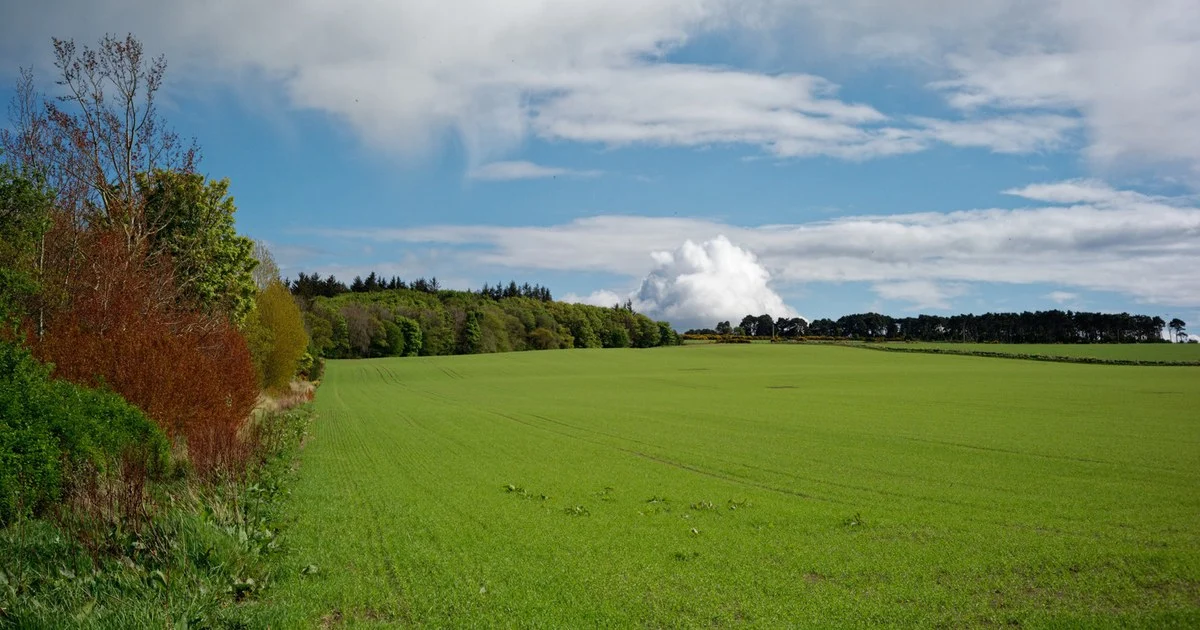
Cover photo: Julian Paren (CC BY-SA 2.0, cropped) · Source
UK Carbon Farming — Last updated: May 2026. This guide pulls together how the UK’s net-zero framework actually lands on a working farm in 2026: the statutory backdrop, the supermarket Scope 3 pressure, the carbon-baselining tools, and the soil, nitrogen, methane and offset conversations from inside a salad, veg and small-arable holding. General information, not bespoke advice. See the action checklist at the end for what to do this season.
The first carbon questionnaire I had to fill out was a Tesco supplier portal job, three or four years back, and it took me the best part of a wet Sunday afternoon. The questions read like they were written by someone who’d never been on a farm. Tonnes of CO2 equivalent per kilo of iceberg lettuce? Diesel litre count? Scope 1, 2 or 3? I phoned the packhouse manager, who knew about half the answers, the accountant, who knew none, and the agronomist, who told me to use the Cool Farm Tool and stop bothering him.
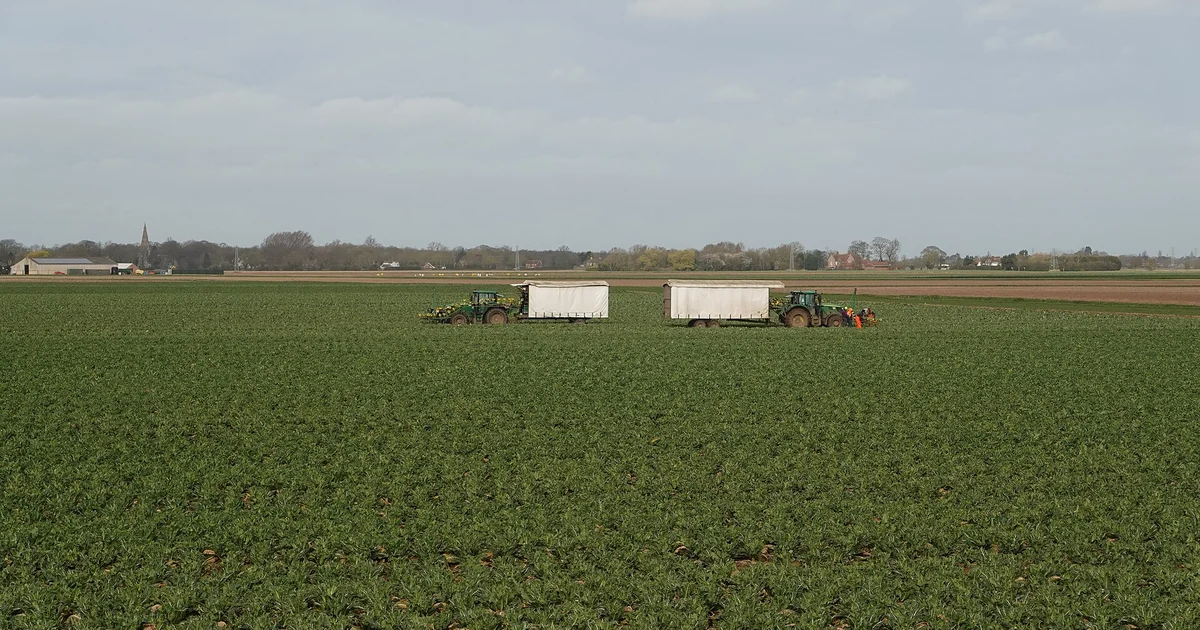
For the bones of two decades I’ve grown salad and veg on this Suffolk holding, and the last couple of years I’ve taken on a chunk of arable too. The carbon profile of this kind of operation is genuinely different from the cereal farmer up the road and the dairy unit two parishes over. We burn a lot of diesel pumping water in July. We run cold stores most of the year. We freight fresh leaf through a tight cold chain. Almost no enteric methane, almost no slurry, and a soil-carbon profile more about cover cropping than peat or permanent pasture.
The shape of the UK carbon farming ask in 2026 is clearer than at any point since the Climate Change Act passed, and the farms that get out in front of it will sit better than the ones waiting for Defra to write the rule. This guide is the conversation I’ve had with our agronomist, a couple of carbon consultants and most of the parish over the last eighteen months, written down.
A way through this story
The regulatory backdrop in plain English — UK Carbon Farming
The statutory frame is the Climate Change Act 2008, amended in June 2019 to set a legally binding target of net-zero greenhouse gas emissions by 2050.[1] The Act binds the UK Government, not individual farms, but the way it cascades through five-yearly carbon budgets is what eventually arrives at the farm gate. The Climate Change Committee, the independent statutory body the Act created, sets out the trajectory and reports against it annually.
The current binding budget is the Sixth Carbon Budget, covering 2033 to 2037, which the CCC recommended and the Government accepted in June 2021. The CCC’s 2024 progress report to Parliament was blunter than its predecessors and found the UK off-track on around half its emissions targets, with agriculture, buildings and surface transport flagged as worst-performing.[2] The 2025 update kept the same headline.
Agriculture sits at around 12% of UK territorial greenhouse gas emissions on Defra’s inventory, with methane (largely enteric fermentation in beef and dairy cattle and sheep), nitrous oxide (largely from nitrogen on cropland and grassland) and carbon dioxide (fuel use and peat oxidation) the three drivers in roughly that order.[3] The headline figure has barely moved in fifteen years. Most other sectors have decarbonised; agriculture hasn’t.
The two policy tools in front of farmers are SFI 2026 on the carrot side and a slow-moving regulatory pipeline on the stick side. SFI 2026 actions on cover cropping, herbal leys, hedgerow management, agroforestry and nutrient management all reduce emissions or build soil carbon to varying degrees, and most sit inside the SFI 2026 actions and payment rates. The bigger stick is Defra’s intention to require farm-level emissions reporting from larger holdings, slated for the late 2020s, alongside tightened ammonia and slurry rules.
The NFU has had its own Net Zero by 2040 plan since September 2019, ten years ahead of the statutory 2050 target.[4] The plan rests on three pillars: reducing emissions through productivity, sequestering more carbon in soils and trees, and producing biofuels and biomass to displace fossil energy. The 2040 date is voluntary; the 2050 date is statutory; the gap is the room the trade has to manoeuvre in.
The commercial backdrop: supermarket Scope 3 lands on the farm
The faster-moving lever, and the one most growers feel first, is supermarket Scope 3. Every major UK retailer has published a net-zero strategy with a supply-chain target.
Tesco committed to net zero in own operations by 2035 and full value chain by 2050.[5] Sainsbury’s Plan for Better matches that pair.[6] M&S’s Plan A target is more ambitious on paper, with a stated ambition to be net zero across the entire supply chain by 2040.[7] Waitrose, part of the John Lewis Partnership, committed to own operations by 2035 and value chain by 2050.[8]
The shape of those commitments matters because Scope 3, for a supermarket, is overwhelmingly agricultural. The carbon attached to the food on the shelf dwarfs the carbon attached to the lights and the lorries. The supermarkets cannot hit their stated targets without their suppliers cutting agricultural emissions on their behalf.
It arrives through three channels. A carbon questionnaire on the supplier portal, usually annual, asking for an emissions baseline by product line. A request to use a specific carbon calculation tool. A cold-chain audit covering refrigerant gas, electricity sourcing for cold stores, packhouse energy use and freight emissions. None of it is paid work. All of it has to be done if you want to keep the contract.
If I’m honest, the supplier-side carbon ask has shifted from optional to compulsory inside the last two seasons. Three years ago a buyer asked nicely if you had a number. Today they ask for the number on the portal, in their preferred format, with a reduction trajectory alongside.
Carbon baselining: the four tools you’ll meet
A baseline is the starting point. Without one, the reductions conversation is theoretical. Four tools cover almost the whole UK working-farm scene.
The Cool Farm Tool, developed at the University of Aberdeen and run by the Cool Farm Alliance, is the most widely accepted in fresh produce. It covers crops, livestock and dairy, applies IPCC Tier 1 and Tier 2 methodology, and outputs a per-product-unit footprint that maps onto a supermarket’s Scope 3 reporting.[9] A small-grower licence through a marketing group sits in the low hundreds of pounds a year.
The Farm Carbon Toolkit is the UK-developed alternative, free for farmers to use, and built around the same Greenhouse Gas Protocol logic. It produces a whole-farm footprint rather than a per-product one, which makes it less useful for retailer reporting and more useful for in-farm decision-making.[10] A lot of growers run both: Toolkit for the farm management view, Cool Farm Tool for the supplier portal.
Sandy, run by Trinity AgTech, is the newer paid platform.[11] It bundles carbon, biodiversity and water reporting into one dashboard and integrates with farm-management software. The price tag is typically four figures a year. Tesco and Sainsbury’s accept Sandy outputs in their supplier programmes; smaller buyers vary.
AGRECalc, developed by SRUC, is the one most weighted to livestock, particularly Scottish suckler herds, dairy and sheep. The methodology is solid and the tool is widely used through the Farm Advisory Service in Scotland.[12] Outside livestock it’s less commonly seen.
The cost line on baselining isn’t the licence; it’s the time. Filling out a Cool Farm Tool entry properly, with diesel records, fertiliser invoices, electricity meter readings, refrigerant top-ups and seasonal fuel use, is a day’s work the first time and half a day after. Getting it right takes a working bookkeeping system you may not currently have.
What I’d actually do, if you’re starting from zero, is run Farm Carbon Toolkit for the whole farm in the back-end of winter, then Cool Farm Tool on whichever product line your biggest buyer asks for in spring. Don’t pay for Sandy until a buyer asks for it specifically.
Soil carbon: the long lever, the measurement problem and the peat question
Soil organic carbon is the largest potential sink in UK agriculture and the most contested.[13] Estimates from Rothamsted and the Centre for Ecology and Hydrology put the technical sequestration potential of UK arable and grassland soils somewhere between 5 and 20 million tonnes of CO2 equivalent a year, depending on practice change and land type. The reality is messier than the headline.
Three problems pull at the story. Sequestration depends on starting condition: a degraded continuous-arable soil has the most headroom, a long-term grassland soil near saturation has very little. Light Suffolk sands respond differently to cover cropping than heavy Lincolnshire clay. The blanket assumption that every farm can sequester a tonne per hectare per year is wrong on most farms.
Permanence is the second. Soil carbon gained over five years of cover cropping can be lost in a single ploughing event. Soil protocols are still working out how to enforce 100-year permanence on a working rotation. Third is the measurement-versus-modelled debate. Direct measurement is expensive (£30 to £80 per sample, plus field labour) and noisy. Most baselining tools use modelled estimates; buyers are increasingly asking for measured data alongside.[14]
Peat is the elephant. The UK has around 3 million hectares of peat soils, and lowland peat under intensive cultivation, including a big chunk of the East Anglian Fens, is the highest single source of agricultural CO2 in the country. Defra’s Lowland Agricultural Peat Task Force reported in June 2023 on water-table management, paludiculture and managed peat-loss reduction.[15] The Government accepted the framing but committed to little detailed action; further regulation is more likely than less.
Where I land is that soil carbon is real, but the claims need handling carefully. If you’re managing soil organic matter through cover cropping, longer rotations and reduced cultivation intensity, you’re doing genuine good work and your buyer’s carbon model will reward you. If you’re being sold a “soil carbon credit” deal off a modelled baseline with thin permanence, read the contract twice. The detail on soil practice belongs in the soil health guide.
Methane: a side-of-the-fence note from the salad bench
I don’t run cattle, so this isn’t my section to write in detail. But methane is half the agricultural emissions story in the UK, almost all of it enteric fermentation in cattle and sheep plus slurry storage, and it’s the one area where the technology pipeline has actually moved in the last three years.
The two interventions to know about are feed additives and slurry covers. 3-NOP (Bovaer, by DSM-Firmenich) is authorised for EU and UK dairy feed and cuts enteric methane by 25 to 40% in trials.[16] Asparagopsis, the red seaweed compound, has stronger reductions in research but isn’t yet at commercial scale in UK herds. Slurry covers and acidification cut methane and ammonia from storage and are eligible under the 2026 Capital Grants air-quality allocation.
For the working livestock view, the livestock farming guide is the place to go. From this side of the gate, the point is that supermarket Scope 3 maths on a typical UK food basket gives meat and dairy roughly half the total agricultural footprint, which is why the buyers are pushing hardest there.
Nitrogen efficiency: the biggest single lever for arable and horticulture
For arable, horticulture and salad/veg, nitrogen is where the biggest single carbon win sits. Synthetic N carries an embedded emissions cost from manufacture (the Haber-Bosch process is energy-intensive, mostly natural-gas-fed), a direct cost in the field through nitrous oxide volatilisation, and an indirect cost through leaching. Defra’s inventory attributes the bulk of agricultural N2O to fertiliser use on arable and improved grassland.[3]
Three practical levers cut the footprint. Precision application: variable-rate spreading, GPS-guided sprayers, soil sampling and in-season tissue testing. Organic matter substitution: cover crops, green manures, longer rotations and well-managed slurry or compost reduce the synthetic requirement on the next cash crop. Biological nitrogen: legume break crops, herbal leys, and the field-scale legumes SFI 2026 supports under CNUM3.
For salad and veg, field veg runs on short cycles with high N demand at the right window, and the temptation to over-apply is real. Iceberg, brassicas and leafy salads respond more strongly to N timing than to N total. A modest precision-fertilisation programme alongside soil sampling can hold yield while cutting application rates by 10 to 20% on a typical Suffolk light-soil block. The underlying soil and rotation conversation sits in the soil health guide.
If I’m honest, this is where most farms get the biggest carbon win for the smallest pain. Cutting twenty units of N off a wheat field that didn’t need it, or off an iceberg block over-fed by habit, costs nothing and saves both money and emissions. The agronomist won’t always volunteer the cut; the conversation starts at the kitchen table.
Carbon credits and offsets: the codes, the prices, the additionality trap
The voluntary side of UK carbon farming has built three codes relevant to working farms.
The Woodland Carbon Code, run by Scottish Forestry on behalf of the UK Government, is the most established. New woodland creation projects are validated and verified to a standardised methodology, and the resulting Pending Issuance Units (PIUs, available at planting) and Woodland Carbon Units (WCUs, issued as the trees verify) trade on a voluntary market.[17] PIU prices in 2025 into 2026 typically traded in the £15 to £30 per tCO2e range; WCUs commanded a premium of £25 to £50.
The Peatland Code, run by IUCN UK, applies to peatland restoration on degraded peat and is structurally similar.[18] It has expanded substantially since 2020. Prices sit broadly in line with woodland units. The Hedgerow Carbon Code is the newer entrant, developed by the Soil Association Exchange and partners in pilot form in 2024.[19] It applies to new hedgerow planting and to changes in management that increase carbon stock over time. The methodology is younger, price discovery less mature, the buyer pool smaller.
The trap that catches most working farms is additionality. A credit, properly defined, is paid for reductions that would not have happened anyway. If SFI is already paying you to manage a hedge, you cannot also sell that hedge as a Hedgerow Carbon Code credit. If you’d planted the woodland for amenity reasons, the WCC validator will say the same. Additionality is the single most common reason a project gets thrown out at validation.
The other practical issue is duration. Woodland and Peatland Code projects run on 100-year permanence assumptions. Locking family land into a 100-year obligation is a serious commitment, and the family that signs it should be reading the agreement with a STEP-qualified solicitor in the room.
Offsets are tactical, not strategic. If you have a block of land that genuinely fits a code, the codes are a way to monetise the work. They are not a substitute for cutting on-farm emissions, and supermarket buyers know it. Most retailers accept offsets only as a residual, after measured reductions, and discount them sharply against actual cuts. Treat the credit market as a side line, not a business plan.
Reporting frameworks: SECR now, farm-level later
The current statutory regime is Streamlined Energy and Carbon Reporting (SECR), which applies to large UK companies and LLPs above defined thresholds.[20] Most working farms aren’t directly captured. The supermarkets, processors and packers that buy from working farms all are, which is why the requirements cascade down through supplier portals.
Defra’s longer-term direction is towards farm-level emissions reporting for larger holdings, signalled in the Environment Improvement Plan and successive Defra strategy documents. The likely landing zone is mandatory baseline reporting for farms above a size threshold somewhere in the late 2020s.[21] Nothing is statute yet. The smart money assumes it will be by 2030.
For an owner-occupied family farm, the practical implication is that the carbon books and the financial books need to be in order by the end of this decade. The bookkeeping system that captures fertiliser invoices, fuel purchases, electricity meter readings and refrigerant top-ups against a parcel-level record is the system that produces both a carbon report and a tax return without doubling the work.
The salad and veg carbon profile is its own animal
This is the bit that gets glossed over in most generic UK carbon farming write-ups.
Cereal arable’s profile is dominated by soil and synthetic nitrogen. The wheat field runs 80 to 130 kg of N per hectare; diesel for cultivation, drilling, spraying and combining is significant but smaller; the cold chain is non-existent because grain is dry-stored at ambient. Levers are precision N, cover cropping, rotation length and reduced cultivation intensity. Detail sits in the arable farming guide.
Livestock’s profile is dominated by enteric methane and slurry. The grass field’s diesel and electricity use is real but small. The animals do most of the emitting. Levers are feed additives, breeding for feed efficiency, slurry covers and forage management.
Salad, veg and protected horticulture carry a different profile. Diesel for transplanting, irrigation pumping and harvest tractor work is substantial. Electricity for pre-cooling, cold storage and packhouse operation runs hard from May to October. Refrigerant top-ups (mostly HFCs, with F-gas regulation pushing the trade towards lower-GWP alternatives) are a real number on an audited footprint. Road freight from packhouse to retailer DC is substantial, particularly on short-shelf-life lines.
For a working salad and field-veg holding, the biggest single carbon lines are usually electricity for the cold chain, diesel for irrigation in dry years, and refrigerant top-ups. Soil and nitrogen matter but don’t dominate. The companion piece is the salad and vegetable production guide.
The practical implication is that a carbon-cutting plan for a salad holding looks different from one for an arable holding. First on the salad list is usually a renewable electricity contract for the packhouse and cold store, second is upgraded refrigerant and condenser kit, third is variable-speed irrigation pumps, fourth is freight optimisation, fifth is field-level soil and N work. On a cereal-only farm the order is reversed. On a livestock farm it’s different again.
A planning checklist for Q3 2026
1. Get a baseline before you do anything else
Run Farm Carbon Toolkit on the whole farm using last year’s invoices and fuel records. Allow a day. The output isn’t perfect; it’s a starting point.
2. Find out what your biggest buyer expects
Phone the supplier-relationship contact at your largest customer and ask which carbon tool they accept, on what cycle, and whether they want third-party verification. The answer for Tesco is different from the answer for a regional packer.
3. Tackle the cheap wins first
Cover crops on bare ground over winter. Variable-rate fertiliser if you have the kit. A renewable electricity contract for the packhouse. Refrigerant top-up logging. None are exotic; all shave the baseline.
4. Ringfence the SFI 2026 carbon-relevant actions
CSAM2 (multi-species winter cover crop), CHRW2 (manage hedgerows), AGF1 and AGF2 (agroforestry) and CNUM3 (legume fallow) all sit inside the carbon story. Stack them through Window 1 if you’re under 50 hectares or first-time, Window 2 otherwise. Detail in the SFI 2026 actions guide.
5. Don’t sign an offset deal in the first year
The voluntary credit market is a tactical tool. Get the on-farm reductions running first. If a code-eligible project genuinely fits your land, work the numbers with a STEP-qualified solicitor before signing anything longer than your tenure.
6. Start the bookkeeping system that will run on past 2030
The farms that struggle when farm-level emissions reporting becomes statutory will be the ones without parcel-level records. The farms that breeze through it will be the ones whose accountant’s spreadsheet already maps to the carbon tool’s input fields. Set the system up now.
For the broader operational context, the Knowledge Hub collects the related guides on arable, horticulture, soil health and SFI.
Where this is heading
Three things to watch.
First, the speed at which supermarket Scope 3 hardens. The current ask is questionnaires, baselines and a reduction trajectory. The next will be third-party-verified figures, then product-level labelling, then contract clauses pricing carbon performance into the contract itself.
Second, the regulatory pipeline on farm-level reporting and on lowland peat. Both have been signalled. Both will land in the next two to four years. Farms with a baseline already will face less disruption than farms without.
Third, the carbon market itself. Woodland and peatland are maturing fast. Hedgerow is bedding in. Soil protocols are still under development. Don’t bet the farm on it.
The honest summary on UK carbon farming is that the ask is real, the tools are usable, the cheap wins are cheap, and the offset market is interesting but not load-bearing. The working farm in 2026 with a baseline, a clean SFI application and a sensible cover-cropping plan is doing more than most. The one waiting for Defra to write the rule will find the rule already written by Tesco’s supplier portal first.
Sources
[1] Climate Change Act 2008, c.27, as amended by the Climate Change Act 2008 (2050 Target Amendment) Order 2019 (SI 2019/1056), legislation.gov.uk: https://www.legislation.gov.uk/ukpga/2008/27/contents; https://www.legislation.gov.uk/uksi/2019/1056/contents/made
[2] Climate Change Committee, Progress in reducing emissions: 2024 Report to Parliament, July 2024, theccc.org.uk: https://www.theccc.org.uk/publication/progress-in-reducing-emissions-2024-report-to-parliament/
[3] Department for Environment, Food and Rural Affairs, Agri-climate report 2024 and UK greenhouse gas emissions: agriculture sector, gov.uk: https://www.gov.uk/government/statistics/agri-climate-report-2024; Department for Energy Security and Net Zero, 2023 UK greenhouse gas emissions, final figures, gov.uk: https://www.gov.uk/government/statistics/final-uk-greenhouse-gas-emissions-national-statistics-1990-to-2023
[4] National Farmers’ Union, Achieving Net Zero: Farming’s 2040 Goal, nfuonline.com: https://www.nfuonline.com/archive?treeid=137544
[5] Tesco PLC, Climate Transition Plan and Tesco Sustainability disclosures, tescoplc.com: https://www.tescoplc.com/sustainability/taking-action/environment/climate-change/
[6] J Sainsbury PLC, Plan for Better, about.sainsburys.co.uk: https://www.about.sainsburys.co.uk/sustainability/plan-for-better
[7] Marks & Spencer Group PLC, Plan A: Net zero by 2040, corporate.marksandspencer.com: https://corporate.marksandspencer.com/sustainability
[8] John Lewis Partnership, Ethics & Sustainability progress reports, johnlewispartnership.co.uk: https://www.johnlewispartnership.co.uk/csr.html
[9] Cool Farm Alliance, Cool Farm Tool methodology and user guidance, coolfarmtool.org: https://coolfarmtool.org/coolfarmtool/
[10] Farm Carbon Toolkit, Calculator methodology and farmer guidance, farmcarbontoolkit.org.uk: https://farmcarbontoolkit.org.uk/toolkit/
[11] Trinity AgTech, Sandy: natural capital and carbon platform, trinityagtech.com: https://www.trinityagtech.com/sandy
[12] Scotland’s Rural College (SRUC), AGRECalc: agricultural emissions calculator, agrecalc.com: https://www.agrecalc.com/
[13] Smith, P. et al., How much land-based greenhouse gas mitigation can be achieved without compromising food security and environmental goals?, Global Change Biology, 2013; Rothamsted Research, Soil carbon and agriculture: evidence summary, rothamsted.ac.uk: https://www.rothamsted.ac.uk/
[14] Department for Environment, Food and Rural Affairs / UK Centre for Ecology and Hydrology, Soil carbon measurement and modelling: working group reports, gov.uk and ceh.ac.uk: https://www.ceh.ac.uk/
[15] Department for Environment, Food and Rural Affairs, Lowland Agricultural Peat Task Force: final report, June 2023, gov.uk: https://www.gov.uk/government/publications/the-lowland-agricultural-peat-task-force-final-report
[16] European Food Safety Authority, Safety and efficacy of 3-nitrooxypropanol (Bovaer) for ruminants, EFSA Journal, 2021; DSM-Firmenich Bovaer technical bulletins, dsm-firmenich.com: https://www.efsa.europa.eu/en/efsajournal/pub/6905
[17] Scottish Forestry / UK Government, Woodland Carbon Code: standards, methodology and unit pricing, woodlandcarboncode.org.uk: https://woodlandcarboncode.org.uk/
[18] IUCN UK Peatland Programme, Peatland Code v2, iucn-uk-peatlandprogramme.org: https://www.iucn-uk-peatlandprogramme.org/funding-finance/peatland-code
[19] Soil Association Exchange / partners, Hedgerow Carbon Code, hedgerowcarboncode.uk: https://www.hedgerowcarboncode.uk/
[20] Department for Business, Energy and Industrial Strategy (now DESNZ), Streamlined Energy and Carbon Reporting (SECR) guidance, gov.uk: https://www.gov.uk/government/publications/academy-trust-financial-management-good-practice-guides/streamlined-energy-and-carbon-reporting
[21] AHDB, Net Zero series: pathways to net zero for UK agriculture, ahdb.org.uk: https://ahdb.org.uk/knowledge-library/agriculture-and-climate-change; Defra, Environment Improvement Plan 2023, gov.uk: https://www.gov.uk/government/publications/environmental-improvement-plan
About the author
Tim Harfield has grown salad and veg on a Suffolk holding for the bones of two decades, and added arable on a three-year tenancy two seasons back. The first carbon questionnaire that landed on his desk took most of a wet Sunday; the second took half a day; the third, with a baselining tool that finally talked to the bookkeeping system, took an hour. The work doesn’t get easier, but the kit does.
The headline: get a baseline in the back-end of winter, work out what your biggest buyer actually accepts, take the cheap wins on cover crops, fertiliser precision and packhouse electricity first, and treat the carbon offset market as a tactical side line rather than a strategic plank. The farms that have a measured number, a reduction trajectory and a clean SFI application by the end of 2026 will be the ones the supermarkets keep on their books in 2030.
You’ve reached the end of this story.