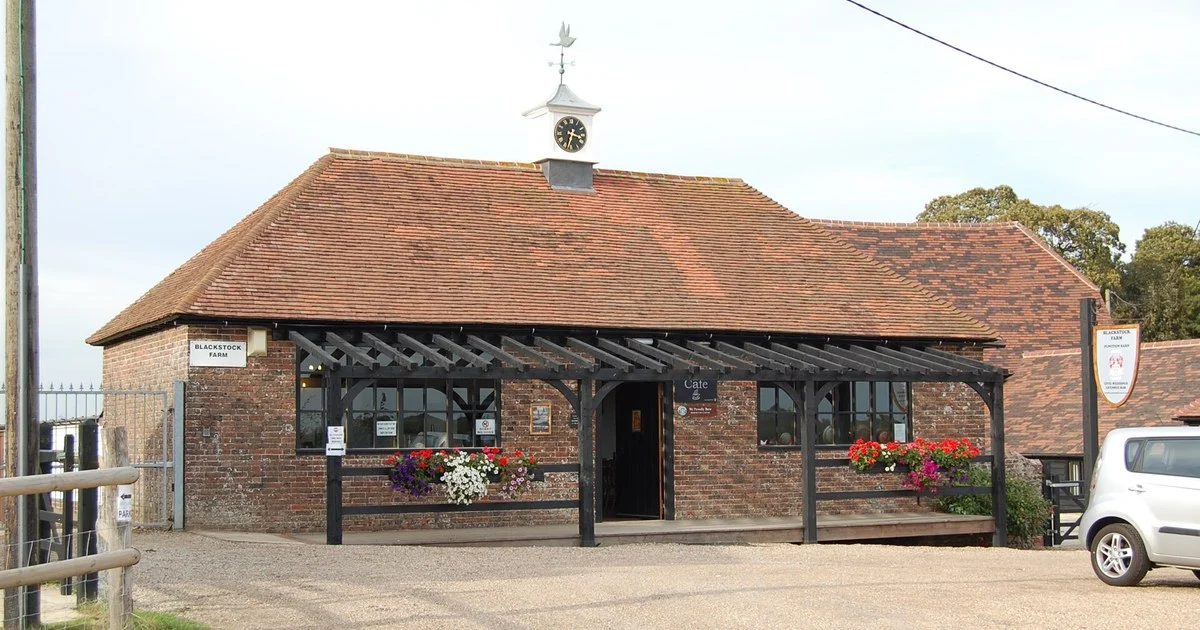
Cover photo: Julian P Guffogg (CC BY-SA 2.0, cropped) · Source
UK Farm Diversification 2026 — Last updated: May 2026. This guide covers what UK farm diversification looks like on a working holding in 2026 — farm shops, glamping, events, education visits, B2B contracting and the energy stream — written from a salad and veg farm in Suffolk that runs three of these alongside the day job. It is general information, not tax or planning advice. See the labour-and-capital section first if you’re at the kitchen-table stage.
The conversation about diversification at our kitchen table started, as most of these conversations do, with a half-serious question and a cold cup of tea. What if we put a couple of bell tents in the bottom field? What if we just opened a roadside stall again? A neighbour two parishes over had let his stone barn out for a wedding the previous summer for what he claimed was a serious five-figure sum, and the shape of his life since had been the standard rural mix of pleased about the money and quietly miserable about the sleep he wasn’t getting at weekends.
That’s UK farm diversification in 2026 in two sentences. The money is real on the working examples; so is the cost of getting it. The serious question isn’t whether you could put up a glampsite, run a Saturday farm shop or contract the combine to a neighbour. It’s whether you’ve got the labour, the capital and the temperament to do it without breaking the day job.
This guide is written from a salad and veg holding that’s tried a few of these streams at small scale and watched plenty of others up close.
A way through this story
The diversification reality — UK Farm Diversification 2026
Defra’s Farm Business Survey puts a meaningful majority of UK farms running some form of diversified activity, with the average income in the tens of thousands of pounds and a long tail of holdings turning over six and seven figures on the diversified side.[1] The Total Income from Farming statistic shows just how thin the agricultural margin has become in recent years, and the diversification line is the thing keeping the lights on for a meaningful slice of British farms.[2]
Read that the right way round though. A holding running a small letting cottage and a few bell tents might clear £10,000 to £20,000 net in a working year. A busy farm shop with cafe, butchery and licensed events can clear six figures, but only after the staff and the capital take you past the working farm and into running a small rural business with the farm attached. Two different decisions.
UK farm diversification is a labour-and-capital question before it is a money question. Every new revenue stream costs you people you don’t currently have, capital you didn’t budget for and weekends you didn’t expect to give up. The spread between excellent and awful returns turns far more on the operator than on the idea. A bell tent can earn £150 a night or sit empty all August; a farm shop can clear 30% gross margin or run at a loss; a wedding barn can be a six-figure income or a small claims dispute with the neighbours. The people decide that, not the kit.
If I’m honest, the best advice I had on the subject came from a land agent over to value a parcel of permanent pasture. He looked at the existing salad and veg work and said: don’t add a project that needs you in two places at five in the morning. Pick the stream that fits the bit of the day you’ve already got free.
Farm shops and direct sales
A farm shop is the idea every working farm has had at the kitchen table at least once. You sell what you grow at retail rather than at gate. You skip the packhouse cut and the supermarket spec line. The numbers, sketched on the back of an envelope, look like they should clear a serious gross margin.
The numbers after three years’ trading look different. A serious farm shop is a retail business with a farm attached, not a farm with a roadside stall. Staffing is the line that catches everyone: someone behind the till seven days a week, an EPOS system, food-safety paperwork three lever-arch files thick before you cut a single sirloin, and a buyer for the bits you don’t grow yourself, because nobody will drive ten miles for an iceberg and a cucumber. The successful shops I know in this part of Suffolk source 60% to 80% of their stock off-farm: bread from the village baker, cheese from a Norfolk dairy, beef from a neighbour’s herd. The farm grows the headline lines; the rest is bought in.
Planning permission is the next pinch. Class R of the GPDO now allows up to 1,000 square metres of agricultural building to convert to a shop without a full planning application, after the 21 May 2024 reforms.[3] That’s enough for a butchery and a cafe inside it. The detail is in the Class Q and Class R guide. Class R doesn’t give you a new vehicle access onto a public highway, and the highway access is what most farm shop applications come unstuck on.
Our own experience with direct sales is small-scale: a few seasons of selling Class 2 iceberg, salad onion and the gluts off the polytunnel into a roadside honesty stall and via a local box scheme. It pays for itself, just about. It doesn’t replace a contract. The farms in this parish that have built direct sales into a real income stream all share three things: a farmer’s spouse or grown-up child who actually likes the retail side, a roadside frontage on a B road or better, and the patience to take three or four years to build regular custom.
What I’d actually do on a working veg holding is start with a stall and an honesty box, watch the takings for two seasons, then commit capital to a proper shop. The fit-out on a serious farm shop runs from £150,000 upwards before staff, and the break-even on that against retail margin is a longer conversation than most operators want to have.
Glamping and camping
The big planning change worth knowing in 2026 is the 60-day rule. Since 26 July 2023 the GPDO has allowed temporary recreational use of land in England (camping pitches, with limited tenting and a small caravan allowance) for up to 60 days in any calendar year, up from the old 28-day limit, subject to a written notification to the LPA for use over 28 days.[4] In Wales, Scotland and Northern Ireland the rules differ. Above 60 days, or for permanent pitches, you’re in a full planning application.
That 60-day window is the working economic case for a low-capital glampsite. A handful of bell tents or shepherd’s huts on a clean field with a mown access track, compost loos, a hand-wash station and a fire pit. Capital on a four to six-tent setup runs from around £25,000 to £60,000 depending on whether you build the loo block out yourself or buy it in. Pitch night rates in 2025 ran in the £80 to £180 range across most of rural England, with a premium for properly-rigged shepherd’s huts.[5] The VisitBritain rural tourism data shows continued growth in domestic short-stay holidays, particularly the over-50s segment that fills the midweek shoulder dates pure family operators struggle to book.[6]
Above 60 days the capital story changes. A permanent campsite with utilities, planning consent and proper road access runs into six and seven figures on the kit alone, and you’re competing against established holiday parks with marketing budgets you cannot match. The CLA’s rural-tourism work makes this point better than I can: small-and-simple at the 60-day end is where most working farms make sense; large-and-permanent is a different industry with a different cost base.[7]
The labour line catches people. Changeover days on a Friday and Monday eat your weekend. Cleaning between bookings, restocking firewood, fielding the Saturday-night text about the smoke alarm. A six-pitch site turning over £40,000 has somebody doing 15 to 20 hours a week of operator time across the busy months. If that somebody is the farmer at the height of harvest, you have a problem.
Looking back, I’d say the people in this parish who’ve made glamping work all started with two or three pitches, kept capital low and only scaled when the bookings filled the existing pitches a season ahead. The ones who built the £100,000 site first, then went looking for customers, are mostly out of it.
Events, weddings and parties
A wedding barn is the idea with the highest variance of any on this list. Done well, on a holding with the right building, access, neighbours and an operator who likes the work, it clears a serious gross margin in a season measured in weekends rather than months. Done badly, on the same farm minus the right neighbours, it’s an environmental health complaint, a noise abatement notice and a difficult parish council meeting away from being shut.
The licensing position is straightforward in principle and fiddly in practice. Selling alcohol or providing regulated entertainment after 11pm needs a premises licence under the Licensing Act 2003, granted by the local authority with consultation rights for residents in range, the police, environmental health and the parish council.[8] A wedding barn in open countryside with a sympathetic LPA can run a 1am late licence with few constraints. The same building 200 metres from a row of cottages will likely be capped at 11.30pm and a 90-decibel limit at the boundary, which on a wedding band is essentially “no amplified music”.
The farms in this parish that have made events work all spent serious time on the neighbour relationship before the planning application, and on the management plan that came with it. A written-down policy on hours, music levels, fireworks (none, ever, after 10pm), parking marshals, and a name and mobile number every nearby resident can ring directly when something goes wrong. The barn in the next parish that didn’t do that is on its third licence review.
The off-season is where the margin lives. A wedding barn doing 15 to 20 weddings between May and September is the headline number; the same barn doing 30 to 40 corporate days, workshops, charity dinners and Christmas parties between October and April is what makes the maths work. The capital cost on a serious conversion runs into the high six figures, and the only way to clear that off a five-month season is to load capacity into the rest of the year.
Don’t do it without an operator who actually likes hosting events. The kit is ten percent of the work; the hospitality is everything else.
Education visits and open farm
The education-visit route is the stream with the lowest capital cost and the highest goodwill yield. A working farm running half a dozen school visits a year through Country Trust, FACE (Farming and Countryside Education) or the LEAF Open Farm Sunday network can earn modest direct revenue at typical rates of £8 to £12 per child for a structured visit, plus a meaningful amount of brand value for a farm shop or holiday let business sitting alongside.[9]
The compliance line is where this gets tighter than people expect. Public liability insurance for visiting children needs the right cover; most farm policies need a specific endorsement for paying public visitors and educational groups. The HSE’s Avoiding ill health at open farms document and the industry code of practice on preventing ill health from animal contact at visitor attractions is what the visit teacher will ask for, and what the local environmental health officer expects to see.[10] The E. coli O157 outbreaks in 2024 reminded the trade why the protocols matter; any open farm taking school groups now operates a tighter hand-washing and animal-contact regime than ten years ago.
The economics on their own do not justify the work. Six visits at £200 to £300 a class is £1,200 to £1,800 in direct income, against a real labour cost. What it does justify is the lift it gives a farm shop, a roadside stall or a glampsite on the same holding. People who visit a farm with their child come back as adults with their own custom. That’s the genuine return.
If I’m honest, this one’s worth doing for the public-good case as much as the income. Most farms in this country could host a school visit a term without much trouble, and the quiet effect on how the next generation thinks about food and farming is bigger than the line on the spreadsheet suggests.
B2B contracting and contract growing
The stream that gets the least press and earns the most consistent money on a working farm is contracting. Machinery contracting, livestock contracting, and contract growing into bigger packers and processors. It’s the bit nobody puts in the rural-tourism brochures, and it’s where a meaningful share of UK farm diversification income actually sits when you look at the Defra data closely.[11]
Our own experience is on the contract growing side. We’ve grown salad lines into bigger packers alongside our direct supermarket work for the best part of two decades. The maths is a different shape from retail. You take a guaranteed weekly tonnage at a contracted price, you carry the full spec and rejection risk, and the packer takes a cut for the post-harvest, marketing and supermarket-relationship work. You’re effectively a sub-grower. The margin is thinner per kilo than direct supply, but the volume is steadier and the buyer relationship is one party rather than three.
It works because it fits the existing day job. We’re growing the crop anyway. Land, labour, irrigation, tractor and agronomy are all sunk costs against the contract programme. The marginal cost of putting an extra five hectares of iceberg through to a bigger packer is far lower than the marginal cost of building a wedding barn from scratch. You’re amplifying what you already do, not bolting on a new business.
Machinery contracting (a combine round, a sprayer round, a baler round) is the same logic from the arable end. A neighbour two parishes over runs combine and balers across six holdings in a 15-mile radius and clears a serious diversified income off a kit base he was running for himself anyway. Livestock contracting (sheep dipping, cattle handling, foot-trimming, lambing assistance) sits on the same shape: existing skill, existing kit, marginal extra revenue.
For most working farms in 2026, B2B contracting is the highest-return, lowest-friction diversification on the list. It rarely makes the rural-tourism press, but the maths beats most of what you’d put on a glossy brochure.
Renewable energy as a diversification stream
Renewables income is its own beast and deserves its own guide; we have one in draft and this section is the short version. Solar PV on barn roofs is the cleanest entry point. A 50kW rooftop array on a south-facing grain store or implement shed, with a working export agreement under the Smart Export Guarantee, can clear a useful four-figure annual margin, with payback windows on capital that have shortened over the last three years as panel prices have fallen and electricity prices have risen.[12]
Larger scale is more involved. Ground-mount solar, anaerobic digestion, biomass boilers and onshore wind can work on the right holding but each carries serious planning, grid-connection and operational considerations that take a working farm into a different business model. The grid-connection queue is the binding constraint for many would-be developers in 2026; the National Energy System Operator’s connections reform is working but the queue for new connections still runs into multiple years on most networks.[13] A serious renewables development is typically structured as a long lease to a third-party developer, with a quarterly rental at a meaningful per-acre rate for the term.
There are tax traps that matter. Land under a long-term solar lease is generally not in agricultural use for inheritance tax purposes during the lease term, with consequences for Agricultural Property Relief that need a planner’s eye before the lease is signed. We come back to that in the next section, and we’ll cross-link to the forthcoming UK Renewable Energy guide once it’s published.
Where I land: solar on roofs is a good fit for most working farms. Larger renewables development is a different industry, on a different timeline, not a project to take on without specialist advice on planning, grid and tax.
The IHT and BPR test
This is the section every farm planner has been quietly worrying about since the 30 October 2024 Budget. Diversification income can poison the inheritance-tax position of the wider farm.
Business Property Relief at 100% is available on a business that is wholly or mainly trading, under section 105(3) of the Inheritance Tax Act 1984. A business wholly or mainly an investment business (letting land, letting buildings, holding a long-term solar lease) is excluded.[14] The leading authority on holiday lets and similar rural income streams is HMRC v Pawson [2013] UKUT 050 (TCC), and the line the Upper Tribunal drew there has been narrowing rather than widening since.[15] A working farm running a busy shop with a serving cafe, a manned visit programme and a real services component will likely qualify as trading. A farm that has progressively let buildings to third parties, signed a 25-year solar lease and now has more turnover from rents than from agriculture is at material risk of failing the test.
The 30 October 2024 Budget reform of APR/BPR puts a £1 million combined cap on relief at 100% from April 2026, with relief at 50% above that. The worked examples sit in the UK Farm Inheritance Tax 2026 guide. The relevant point here is that the trading-status test for BPR matters more, not less, after the cap. If your farm is now in the band where BPR is the difference between a manageable IHT bill and a crippling one, the activities you put alongside it need to keep the trading test on the right side of the line.
What I’d actually do is run the trading-percentage calculation every year on the management accounts, the same way you reconcile the VAT return. If non-trading is creeping past 25%, get the planner in before the next succession event, not after.
The labour question, again
Every section of this guide ends up at labour. Diversification eats people. There is no stream on this list that runs itself: each needs an operator on weekends, evenings or both. On a veg holding running 60 to 70 staff at peak harvest, the marginal labour cost of opening a farm shop or a glampsite isn’t free; it’s another person, often a family member, doing a job that didn’t exist five years ago.
The Migration Advisory Committee’s 2024 work on the Seasonal Worker scheme reminded the sector that the agricultural labour pool is shrinking, the wage floor is rising and compliance is tightening every season.[16] Diversification labour is no different. The days when a holiday cottage was a low-touch second income are largely over: review-driven platforms have raised the service expectation, and a four-star average on a six-month rolling window decides whether you’re full or empty.
The streams that have worked best in this parish all share one feature: a willing operator at the heart of the work. The streams that haven’t worked all share the opposite. You can have all the planning consents and capital in the world, but if nobody on the farm actually wants to run the new thing, it won’t work.
Rural diversification advice and funding: where to start
Rural diversification is the same conversation whether a planner calls it farm diversification, rural enterprise or a change of use. What changes is who you need to talk to, and in what order.
Start with the free tier. The Farming Advice Service, funded by Defra, gives free advice on business planning and the regulations that sit around any new enterprise. Gov.uk’s guidance on diversifying farming businesses covers the tax, planning and tenancy questions in plain terms, and it is worth reading before you pay anyone.[18] Then buy the advice that carries liability: a land agent or planning consultant for anything needing permission, and an accountant before any structure change, because the IHT and BPR position covered earlier in this guide can move against you when farmland starts hosting a non-farming trade.
On money, gov.uk’s funding for farmers page is the single list worth bookmarking, since schemes open and close through the year.[18] For what is actually left to claim in 2026, see our breakdown of capital grants and how to apply, and if you are weighing schemes against each other, the decision framework sets out which fits which farm.
None of this replaces the arithmetic in the sections above. Advice and grant funding lower the cost of trying a diversification, but they do not make a weak enterprise strong.
A planning checklist for the next twelve months
Six things to do this season before any new diversification stream goes live.
Walk the holding with a planner who knows the GPDO and the local LPA. Confirm which existing buildings sit inside Class R, which fields sit inside the new 60-day camping rule, and where the highway access constraints bite.
Run the trading-percentage calculation off the last three years’ accounts. If the non-trading line is rising, decide now whether the next stream pushes you across a BPR threshold.
Cost the labour line honestly. Put a real number on operator time at weekends, evenings and changeover days, at a real 2026 wage.
Speak to the neighbours, then to the parish council, on any stream that will produce traffic, noise or visitors. Before the planning application, not after.
Cost the kit at market rates and add a 20% contingency. The bills always come in north of the budget on conversions of older buildings.
Decide who is going to run it. If the answer is “the farm somehow”, reconsider.
Where this is heading
Defra’s farming statistics and the CLA’s rural-business work both show diversification as a structural feature of UK farming for the foreseeable future, not a temporary response to a bad year.[17] The policy backdrop is slowly catching up: the 2024 GPDO reforms widened Class R, the 2023 changes lifted the camping rule to 60 days, and the SFI options now include several agroforestry and education-relevant payments that fit alongside diversified businesses.
What hasn’t changed is the kitchen-table arithmetic. New streams cost capital and labour up front and pay back over years rather than months. Most working farms can run one or two diversified streams well; few can run more than that without losing the farm at the centre.
This guide sits alongside the Class Q and Class R Permitted Development Rights guide, the UK Farm Inheritance Tax 2026 guide, the UK Farming Grants guide, the UK Salad and Vegetable Production guide and the BritFarmers Knowledge Hub. A standalone Renewable Energy guide is in draft and will cross-link here once published.
Sources
[1] Defra, Farm Business Survey: Diversification on farms in England, gov.uk: https://www.gov.uk/government/collections/farm-business-survey
[2] Defra, Total Income from Farming for the United Kingdom, gov.uk: https://www.gov.uk/government/statistics/total-income-from-farming-in-the-united-kingdom
[3] Town and Country Planning (General Permitted Development) (England) (Amendment) Order 2024, SI 2024/579, legislation.gov.uk: https://www.legislation.gov.uk/uksi/2024/579/contents; GPDO 2015, Sch.2 Pt.3 Class R as amended.
[4] Town and Country Planning (General Permitted Development) (England) (Amendment) (No. 2) Order 2023, SI 2023/750, legislation.gov.uk: https://www.legislation.gov.uk/uksi/2023/750/contents; MHCLG, Permitted development rights: temporary recreational campsites, gov.uk.
[5] PASC UK (Professional Association of Self-Caterers UK), Annual Industry Report, pascuk.co.uk; aggregated UK glampsite operator data via Pitchup.com and Glampsites.com.
[6] VisitBritain, Domestic overnight tourism statistics, visitbritain.org: https://www.visitbritain.org/research-insights.
[7] Country Land and Business Association, Rural Powerhouse: rural economy and tourism reports, cla.org.uk: https://www.cla.org.uk/our-work/rural-powerhouse/.
[8] Licensing Act 2003, Pt.3 (premises licences), legislation.gov.uk; Home Office, Revised Guidance issued under section 182 of the Licensing Act 2003, gov.uk: https://www.gov.uk/government/publications/explanatory-memorandum-revised-guidance-issued-under-s-182-of-licensing-act-2003.
[9] Country Trust, Farm Discovery visit programme, countrytrust.org.uk; FACE (Farming and Countryside Education), face-online.org.uk; LEAF, Open Farm Sunday programme, leaf.eco: https://farmsunday.org/.
[10] Health and Safety Executive, Avoiding ill health at open farms: advice to farmers, AIS23, hse.gov.uk: https://www.hse.gov.uk/pubns/ais23.pdf; Industry Code of Practice on Preventing or Controlling Ill Health from Animal Contact at Visitor Attractions.
[11] Defra, Farm Business Income by type of farm in England, gov.uk; NFU, How agriculture is changing: the importance of diversification, nfuonline.com.
[12] Ofgem, Smart Export Guarantee: a guide for installers and small-scale generators, ofgem.gov.uk: https://www.ofgem.gov.uk/environmental-and-social-schemes/smart-export-guarantee-seg.
[13] National Energy System Operator (NESO), Connections Reform: TMO4+, neso.energy: https://www.neso.energy/industry-information/connections.
[14] Inheritance Tax Act 1984, s.105(3), legislation.gov.uk: https://www.legislation.gov.uk/ukpga/1984/51/section/105.
[15] HMRC v Pawson [2013] UKUT 050 (TCC); HMRC v The Personal Representatives of Maureen W. Vigne [2018] UKUT 357 (TCC).
[16] Migration Advisory Committee, Review of the Seasonal Worker visa, July 2024, gov.uk: https://www.gov.uk/government/publications/seasonal-worker-visa-review.
[17] Defra, Farm Business Survey: Diversification, gov.uk; Country Land and Business Association, Rural Powerhouse publications, cla.org.uk.
[18] Defra, Farming Advice Service: https://www.farmingadviceservice.org.uk/; gov.uk, Diversifying farming businesses: https://www.gov.uk/guidance/diversifying-farming-businesses; gov.uk, Funding for farmers: https://www.gov.uk/guidance/funding-for-farmers.
About the author
Tim Harfield runs a salad and vegetable holding in Suffolk and has done for 21 years, with the last two seasons including a slice of arable in the rotation for soil-health reasons. The diversification work on our holding has run alongside the day job rather than replaced it: a long-running contract-growing relationship with a bigger packer, a small roadside stall during the summer gluts, and the usual on-farm renewables conversation around the kitchen table. The bigger streams (events, full glamping, full farm shop) are things we’ve watched neighbours do and learned from, more than work we’ve taken on ourselves.
The headline: UK farm diversification in 2026 is a labour-and-capital decision before it’s a money decision. Pick the stream that fits the bit of the day you’ve already got free, and run the trading-status test on the wider business before you sign the lease. BritFarmers is independent, takes no commission, and is written by working farmers for working farmers.
You’ve reached the end of this story.