Cover photo: Hugh Venables (CC BY-SA 2.0, cropped) · Source
UK cattle breeds A to Z: native vs continental, the main beef and dairy breeds, dual-purpose and rare breeds, and 46 breeds you will meet on UK farms.
A way through this story
How many cattle breeds are there in the UK?
There is no single official count of every breed kept in Britain, because new imports and composites keep arriving. The clearest figure is for native breeds. The Rare Breeds Survival Trust (RBST) says the UK has 35 native cattle breeds, of which 15 are considered rare, based on its 2026-27 Watchlist.
On top of the natives sit the continental breeds. These are breeds developed elsewhere in Europe, mostly France, Belgium, Switzerland and Germany, which came into Britain in numbers from the second half of the 20th century. Limousin, Charolais, Simmental, Belgian Blue and Blonde d’Aquitaine are the best known on the beef side, and Holstein dominates the dairy herd. Then there are composites such as the Stabiliser, and specialist breeds such as Wagyu kept for niche markets.
For a working farm, the useful split is by purpose: beef, dairy or both. The sections below follow that split, and the A to Z list at the end covers 46 breeds you are likely to meet at UK marts and shows.
Native vs continental cattle
Native breeds were developed in Britain and Ireland, often for a particular region and type of ground. As a broad rule they are hardier, mature earlier, lay down fat more readily and will finish off grass and forage with less concentrate. That suits extensive suckler herds, hill farms, conservation grazing and grass-fed beef.
Continental breeds tend to be larger framed, leaner and faster growing, with more muscle and a higher killing-out percentage. They suit intensive finishing and are widely used as terminal sires on suckler cows and dairy cows to produce calves that grow quickly and meet carcase specifications. The trade-off is higher feed demand, a greater risk of calving difficulty with some sires, and less tolerance of poor grazing.
Many commercial suckler herds blend the two: a native or native-cross cow for hardiness and mothering, put to a continental bull for growth.
Beef cattle breeds
The main beef breeds in the UK fall into three groups.
- Native beef breeds: Aberdeen Angus, Hereford, Beef Shorthorn, Galloway, Belted Galloway, Highland, Welsh Black, Devon, Sussex, Lincoln Red, South Devon, Luing, British White and Longhorn. Most are used as suckler cows, as sires for easy-calving and early-maturing calves, or for grass-fed branded beef.
- Continental beef breeds: Limousin, Charolais, Simmental, British Blue, Blonde d’Aquitaine, Salers and others. Most are used as terminal sires for growth and conformation, while Salers and Simmental also have a following as suckler cows.
- Composites and specialist breeds: the Stabiliser, developed in the United States as a four-way cross of Hereford, Angus, Simmental and Gelbvieh and brought to England in 1997, and Wagyu, used mainly as a sire on dairy cows for a high-marbling beef market.
Our guide to UK beef farming covers suckler and finishing systems in more detail.
Dairy cattle breeds
The UK dairy herd is built mainly on black and white cattle. Holstein and Holstein Friesian cows, bred for high yields, make up most of the national herd, with the British Friesian kept by farmers who want a hardier, longer-lived cow with a better beef calf.
The other dairy breeds are kept for particular systems or milk qualities.
- Jersey and Guernsey: Channel Island breeds known for rich milk high in butterfat and protein, used in liquid milk premiums, cheese and ice cream.
- Ayrshire: a Scottish dairy breed with a reputation for hardiness, good feet and longevity.
- Dairy Shorthorn: a native dual-purpose dairy breed, often used to add strength and longevity in crossbreeding.
- Brown Swiss, Montbeliarde, Fleckvieh and Norwegian Red: imported breeds widely used in crossbreeding programmes for fertility, health and milk solids, and for a better beef calf.
Our dairy farming guide covers herd systems, yields and costs.
Dual-purpose cattle breeds
Dual-purpose breeds give both milk and a saleable beef carcase. They have lost ground to specialist breeds on large farms but suit smallholders, organic herds and house cow keepers.
- Dexter: the smallest British breed, kept for beef, milk and conservation grazing.
- Red Poll: a polled East Anglian breed developed for both milk and beef.
- Shorthorn: originally a dual-purpose breed, now split into Beef Shorthorn and Dairy Shorthorn lines.
- Simmental and Fleckvieh: Swiss and Austrian dual-purpose types, used in the UK for both beef and dairy crossing.
- Gloucester: a rare native breed once kept for milk, beef and draught work, and known for Single and Double Gloucester cheese.
Native and rare cattle breeds
The RBST Watchlist sorts native breeds into three groups. Priority breeds are the most rare and have increased inbreeding. At Risk breeds have lower numbers than ideal and a degree of inbreeding that gives cause for concern. The rest are listed as UK native breeds.
On the RBST’s 2026-27 Watchlist, the Priority cattle breeds are the Albion, Ancient Cattle of Wales, Chillingham Wild Cattle, Dairy Shorthorn (Original Population), Gloucester, Lincoln Red Original Population, Northern Dairy Shorthorn, Vaynol and White Park. The trust notes that White Park and Lincoln Red Original Population cattle moved into the Priority category in the latest assessment.
The At Risk cattle breeds are the British White, Irish Moiled, Native Aberdeen Angus, Shetland, Traditional Hereford and Whitebred Shorthorn.
Following a 2021 review, the trust now bases the Watchlist on effective population size and inbreeding, rather than only on registered females, so a breed can be fairly numerous and still be of concern if too few sires are used. Buying and breeding registered stock helps keep these populations going.
Choosing a cattle breed
- Start with your land. Hill, upland and wet ground favour hardy natives such as Highland, Galloway, Welsh Black or Luing. Good lowland grass can carry larger continentals.
- Match the market. Supermarket specifications reward fast-growing, well-muscled continental crosses; farm shops and box schemes reward breed-named native beef.
- Think about calving. Easy-calving sires matter on heifers, on small cows and wherever you cannot check stock often.
- Consider handling. Polled and small breeds suit beginners with light facilities.
- Check the costs. Our guide to what a cow costs in the UK covers buying in, and our cattle gestation calculator helps plan calving dates once stock is served.
UK cattle breeds A to Z
- Aberdeen Angus (Scotland): polled, usually black beef breed, widely used as an easy-calving sire and for branded beef
- Albion (England): rare blue-grey dual-purpose breed from Derbyshire, an RBST Priority breed
- Ancient Cattle of Wales (Wales): umbrella for rare old Welsh colour types, an RBST Priority breed
- Ayrshire (Scotland): red and white dairy breed known for hardiness and longevity
- Beef Shorthorn (England): native beef breed used as a suckler cow and a crossing sire
- Belgian Blue (Belgium): double-muscled beef sire, developed in the UK as the British Blue
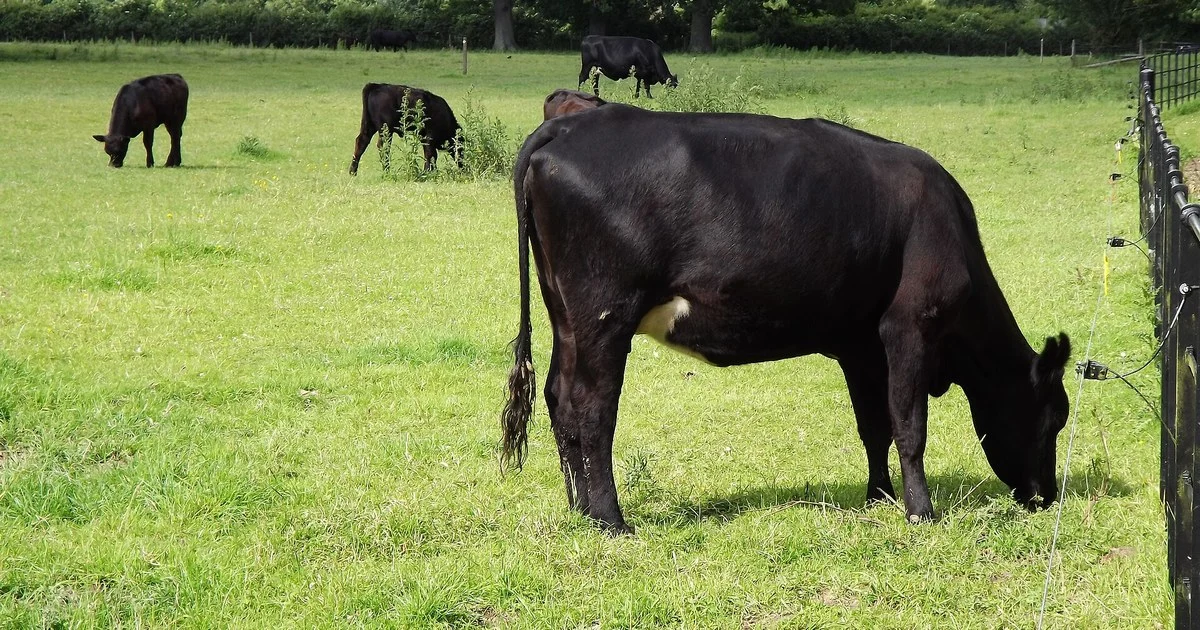
- Belted Galloway (Scotland): polled hill beef breed with a white belt, popular for conservation grazing
- Blonde d’Aquitaine (France): large, lean continental beef sire with high killing-out
- British Blue (UK): British-bred Belgian Blue line, widely used as a terminal sire on dairy cows
- British Friesian (Great Britain): dual-purpose black and white dairy cow with a better beef calf than the Holstein
- British White (Great Britain): polled white beef breed with black or red points, an RBST At Risk breed
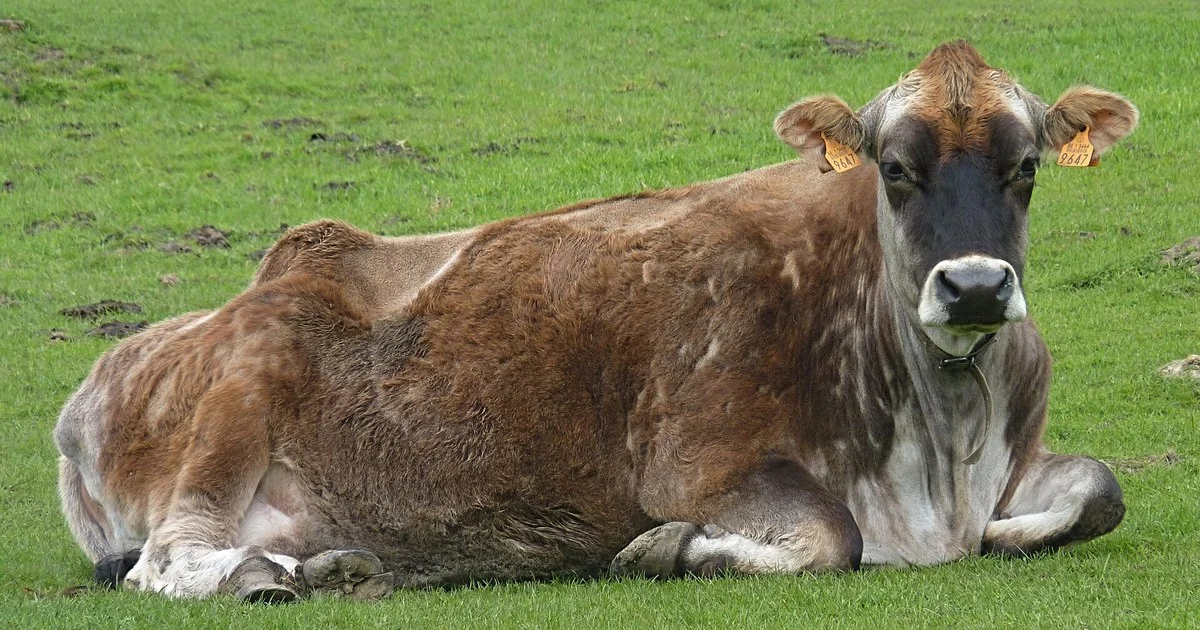
- Brown Swiss (Switzerland): dairy breed used for milk solids, feet and longevity, often in crossbreeding
- Charolais (France): large white continental sire known for growth rate and weight of carcase
- Chillingham Wild Cattle (England): feral white herd kept in a Northumberland park, an RBST Priority breed
- Dairy Shorthorn (United Kingdom): native dairy breed valued for longevity and as a crossing breed
- Devon (England): red beef breed from the South West, also called the Red Ruby
- Dexter (Ireland): the smallest British breed, dual purpose and popular with smallholders
- Fleckvieh (Austria): dual-purpose Simmental type used in dairy crossbreeding
- Galloway (Scotland): hardy, polled hill beef breed with a double coat
- Gloucester (England): rare dual-purpose breed linked to Gloucester cheese, an RBST Priority breed
- Guernsey (Channel Islands): golden-milk dairy breed with high butterfat and protein
- Hereford (England): red and white beef breed with a white face, used worldwide for grass-based beef
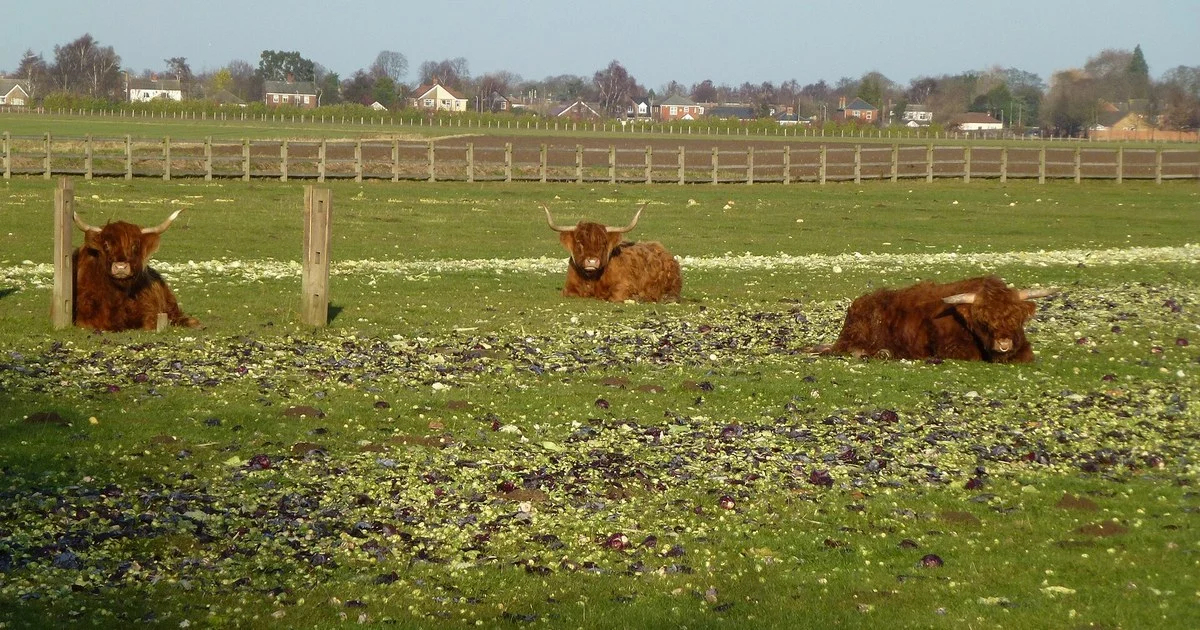
- Highland (Scotland): long-coated, long-horned hill breed for extensive grazing and premium beef
- Holstein Friesian (Germany and the Netherlands): high-yielding black and white dairy cow that dominates UK milk production
- Irish Moiled (Ireland): polled, red and white dual-purpose breed, an RBST At Risk breed
- Jersey (Channel Islands): small dairy breed giving rich, high-butterfat milk
- Kerry (Ireland): small black Irish dairy breed, related to the Dexter
- Limousin (France): golden-red continental beef breed, a leading terminal sire for conformation
- Lincoln Red (England): deep red native beef breed, with a separate Original Population on the RBST Priority list
- Longhorn (England): native beef breed with long, curving horns, used for premium beef and conservation grazing
- Luing (Scotland): hardy suckler breed created on the Isle of Luing from Beef Shorthorn and Highland cattle
- Montbeliarde (France): red and white dual-purpose dairy breed used in crossbreeding
- Norwegian Red (Norway): dairy breed selected for fertility and health, used in crossbreeding
- Red Poll (England): polled East Anglian dual-purpose breed, now kept mainly for beef
- Riggit Galloway (Scotland): Galloway type with a white stripe along the back
- Salers (France): hardy, easy-calving continental breed used as a suckler cow and sire
- Shetland (Scotland): small, hardy island breed, an RBST At Risk breed
- Simmental (Switzerland): large, dual-purpose continental breed used for beef and as a suckler cow
- South Devon (England): large, docile native beef breed from the South West
- Stabiliser (United States): composite suckler breed developed for efficiency, in the UK since 1997
- Sussex (England): deep red beef breed from the Weald, known for docility and grass finishing
- Vaynol (Wales): very rare white park-type cattle, an RBST Priority breed
- Wagyu (Japan): beef breed known for intense marbling, mostly used as a sire on UK dairy cows
- Welsh Black (Wales): hardy black native breed for hill and upland suckler herds
- White Park (Great Britain): ancient white breed with black or red points, an RBST Priority breed
- Whitebred Shorthorn (Great Britain): white Shorthorn from Cumbria and the Borders, used to breed the Blue Grey cow
Frequently Asked Questions
How many cattle breeds are there in the UK?
The Rare Breeds Survival Trust counts 35 native cattle breeds in the UK on its 2026-27 Watchlist, 15 of them rare. Continental, composite and specialist breeds take the total of breeds kept in Britain well beyond that.
What is the most common beef cattle breed in the UK?
There is no single answer, but Limousin, Charolais and Aberdeen Angus bulls are among the most familiar beef sires at UK marts, and much UK beef comes from dairy-bred calves crossed with beef bulls.
What is the most common dairy cattle breed in the UK?
The Holstein Friesian, a high-yielding black and white breed, makes up the bulk of the UK dairy herd.
How do native and continental cattle differ?
Native breeds were developed in Britain and Ireland and are generally hardier and easier to finish on grass. Continental breeds come from mainland Europe and are usually larger, leaner and faster growing.
Which cattle breeds are rare in the UK?
On the RBST 2026-27 Watchlist, the Priority breeds include the White Park, Gloucester, Vaynol, Chillingham and Northern Dairy Shorthorn, and the At Risk breeds include the British White, Shetland and Irish Moiled.
Which cattle breed is best for a smallholding?
Small, hardy, quiet breeds such as the Dexter, and polled natives such as the Red Poll or Belted Galloway, are common choices for smallholders with limited land and handling facilities.
BritFarmers Weekly
One email a week: what’s moved on schemes, prices, disease control and policy, with links to primary sources. Free. No sponsors. Unsubscribe anytime. Subscribe.
Source: Rare Breeds Survival Trust
You’ve reached the end of this story.