Cover photo: Jamain (CC BY-SA 3.0, cropped) · Source
Jersey cattle explained: where the breed comes from, size, milk yield and butterfat, the pros and cons of Jersey cows, and what to watch at calving.
A way through this story
Jersey cattle at a glance
- Origin: the island of Jersey in the Channel Islands
- UK breed society: the Jersey Cattle Society, founded in 1878
- Size: cows weigh around 350 to 400 kg, much lighter than a Holstein
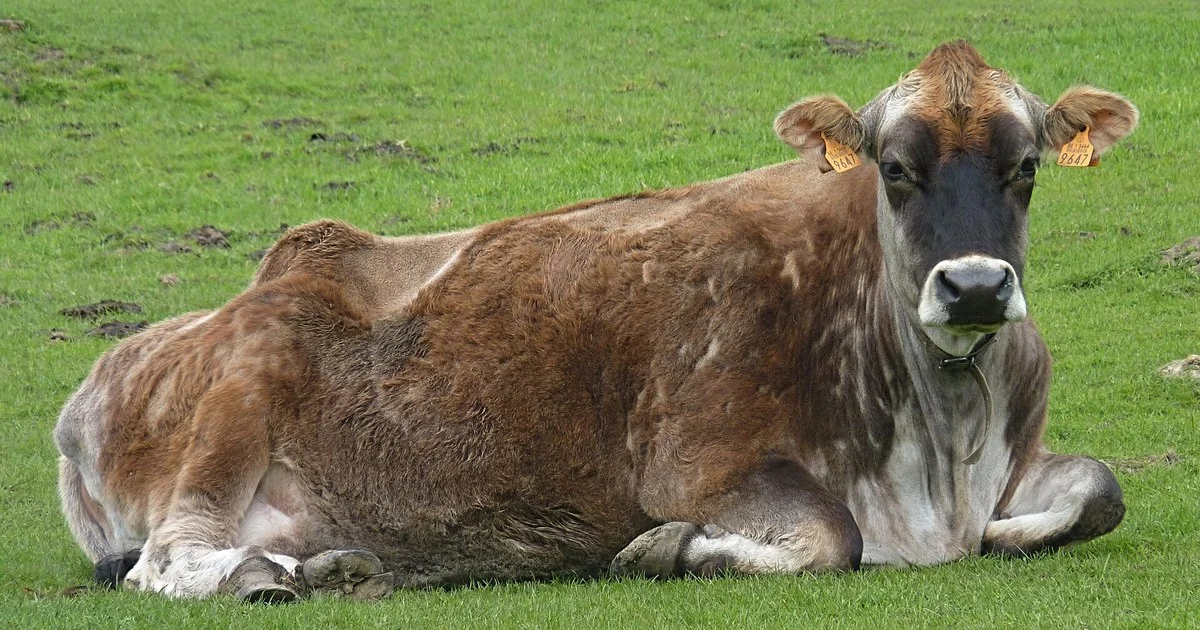
- Colour: fawn is typical, with shades running from light tan to almost black
- Milk: lower volume, but high in butterfat and protein
- Strengths: calving ease, fertility, grazing ability and feed efficiency
- Watch for: milk fever after calving and small, fragile calves
Where the Jersey comes from
Jersey cattle come from Jersey, the largest of the Channel Islands, about 14 miles off the French coast. They are thought to descend from cattle brought over from Normandy and were recognised as a distinct breed by around 1700.
The island banned imports of live cattle for more than two centuries, partly to keep the breed pure. The Royal Jersey Agricultural and Horticultural Society started a herd book in 1866. On the island today there are fewer than 6,000 Jerseys, of which nearly 4,000 are milking cows.
Jerseys reached mainland Britain early. They were here by at least 1741, when they were often called Alderney cattle, and the Jersey Cattle Society of the UK was founded in 1878. The society says the Jersey is now the second most popular dairy breed in the world.
Jersey milk: yield, butterfat and protein
A Jersey gives less milk than a Holstein, but the milk is much richer. That makes the breed a good fit for milk contracts that pay on fat and protein, and for cheese, butter, cream and ice cream.
The society’s 2016 breed figures for recorded UK cows were:
- Average milk yield: 6,043 litres per lactation (top 25% of herds: 7,021 litres)
- Average fat yield: 332 kg (top 25%: 383 kg)
- Average protein yield: 233 kg (top 25%: 270 kg)
- Average calving interval: 399 days (top 25%: 352 days)
On those averages the milk runs at roughly 5.5% fat and 3.9% protein, far above a typical Holstein. Jersey milk also has a deeper yellow colour from natural carotene.
Pros and cons of Jersey cows
The main advantages:
- Calving ease, because the calves are small
- Good fertility and early maturity, so heifers can calve young
- Light weight, which means less poaching on wet ground and better grazing in spring and autumn
- Feed efficiency: a lot of milk solids for the cow’s size
- Heat tolerance, useful as summers get hotter
The drawbacks:
- Lower total milk volume, which matters on a litre-based contract
- Milk fever: Jerseys are more prone to low blood calcium around calving than many breeds
- Small, fragile calves that need extra care in cold weather
- Jersey bull calves have little beef value, so many herds use sexed semen on the best cows and beef sires on the rest
Calving and calf care
Jersey heifers usually calve easily, but the first days afterwards need attention. Talk to your vet about a milk fever prevention plan, especially for older cows, since the risk rises with age and yield. Watch fresh calvers closely for a cow that is slow to get up or goes off her feed.
Jersey calves are small and lose heat quickly. Clean, dry, draught-free housing, plenty of good colostrum soon after birth and a calf jacket in cold weather all help. Our guide to cattle diseases covers calf scours and pneumonia, the two big problems in young calves. Use our cattle gestation calculator to plan calving dates.
Jerseys in UK dairy herds
Jerseys are kept as pure herds, often on grass-based and spring-calving systems, and are also widely crossed with Holsteins and other breeds to raise milk solids and improve fertility in the herd. Our UK dairy farming guide sets out how breed choice fits with different systems and milk contracts.
If you are buying in, ask for milk recording data, health status for diseases such as BVD and Johne’s, and the calving and mastitis records of the herd you are buying from.
Frequently Asked Questions
How much milk does a Jersey cow produce?
The Jersey Cattle Society’s 2016 breed average for recorded UK cows was 6,043 litres per lactation, with the top 25% of herds averaging 7,021 litres.
What is the butterfat of Jersey milk?
Jersey milk is much richer than Holstein milk. Society figures put average butterfat at around 5.5% and protein at around 3.9%.
How big is a Jersey cow?
Jersey cows usually weigh 350 to 400 kg and stand around 115 to 120 cm at the shoulder. Bulls weigh around 600 to 700 kg.
Are Jersey cows prone to milk fever?
Yes. Jerseys are more prone to milk fever, or low blood calcium around calving, than many breeds. Agree a prevention plan with your vet.
When was the Jersey Cattle Society founded?
The Jersey Cattle Society of the UK was founded in 1878. The island of Jersey’s own herd book dates back to 1866.
BritFarmers Weekly
One email a week: what’s moved on schemes, prices, disease control and policy, with links to primary sources. Free. No sponsors. Unsubscribe anytime. Subscribe.
Source: UK Jersey (Jersey Cattle Society) via NBDC
You’ve reached the end of this story.