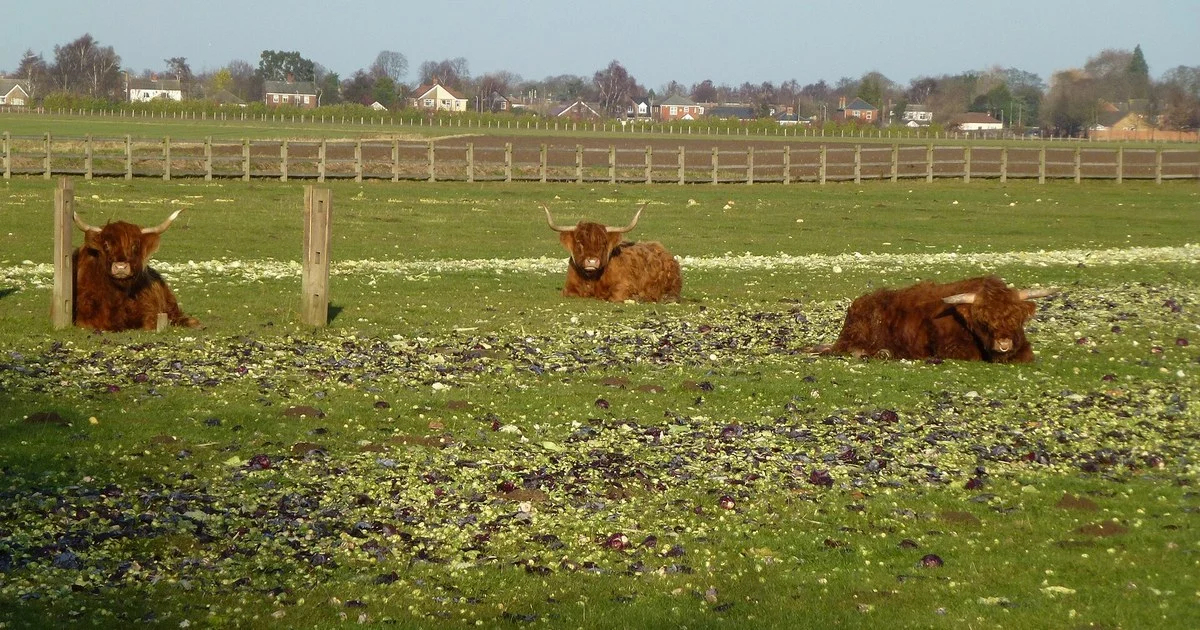
Cover photo: Richard Humphrey (CC BY-SA 2.0, cropped) · Source
Highland cattle explained: where the Highland cow comes from, its size, coat and horns, why a herd is called a fold, calving, beef and what to know before you buy.
A way through this story
Highland cattle at a glance
- Origin: the Scottish Highlands and Western Isles
- Breed society: the Highland Cattle Society, founded in 1884, with the first herd book in 1885
- Size: mature cows average around 450 kg and bulls around 650 kg
- Horns: both sexes are horned, with long, wide horns
- Coat: a double coat, with an oily outer layer over a soft undercoat
- Colours: red, yellow, black, dun, silver (white) and brindle
- Lifespan: commonly longer than most cattle breeds, up to about 20 years
- A group of Highlands is called a fold, not a herd
Where the breed comes from
Highland cattle come from the west of Scotland, and the Highland Cattle Society says written records of the breed go back to the 18th century. Historically there were two types. The Kyloe was a smaller island type, usually black, kept in the Hebrides. Its name is linked to the practice of swimming cattle across the kyles, the narrow straits between the islands and the mainland. The mainland type was larger and more often red or dun.
When landowners and farmers founded the Highland Cattle Society in 1884, the two types were registered together as one breed, and the first herd book followed in 1885. The breed standard has changed little since.
The breed’s best-known patron was Queen Elizabeth II, who set up a fold at Balmoral in the 1950s. It is still there today and has a strong showing record.
Coat, horns and colours
The coat is what makes a Highland. It has two layers: a long, oily outer coat, which is the longest of any cattle breed, over a soft, downy undercoat. That combination sheds rain and holds warmth, so Highlands rely on hair rather than a thick layer of fat to keep out the cold.
Red is the most common colour, followed by yellow. Black, dun, silver and brindle are all accepted. Both bulls and cows carry horns. A bull’s horns tend to sweep forward and are heavier at the base, while a cow’s are longer and often rise upward.
Why a group of Highland cattle is called a fold
In winter, Highland cattle were traditionally brought into open stone shelters at night to protect them from the weather. Those shelters were called folds, and the name stuck to the cattle themselves. Breeders still refer to their herd as a fold, and the Balmoral herd is known as the Balmoral fold.
Hardiness and grazing
Highlands were bred to live outside on poor hill grazing through a Scottish winter, and that hardiness is the main reason people keep them. They browse as well as graze, so they will eat rough grass, rushes and scrub that other cattle leave behind. That makes them a common choice for conservation grazing on heath, moorland and nature reserves.
They are no longer a Scottish curiosity. The Highland Cattle Society notes folds from the Sussex Downs to the East Anglian fens and the Outer Hebrides, and breed societies now exist across Europe, as well as in Argentina, Australia and New Zealand.
Breeding and calving
Highlands are slow to mature. Heifers usually calve for the first time at two to three years old, later than most commercial beef breeds. Gestation runs at roughly 277 to 290 days, so you can use our cattle gestation calculator to work out a due date from the service date.
Cows are long-lived and can keep breeding well into their teens, which offsets the slow start. Many folds calve outdoors in spring, with cows and calves on rough grazing.
Highland beef
Because Highlands keep warm with their coat rather than with fat under the skin, the beef tends to be leaner than many breeds, with fat marbled through the muscle rather than sitting on the outside. It is known for flavour and tenderness, and is usually sold through butchers, farm shops and direct sales rather than the mainstream supermarket chain.
The trade-off is time. Highland steers are slow-growing and are usually finished older than continental crosses, so the beef suits premium and direct-sale markets rather than a fast-finishing system.
Before you buy Highland cattle
- Check pedigree registration with the Highland Cattle Society if you want to breed or sell registered stock. The society keeps computerised breed records.
- Look at the society’s premier sales at Oban, held in October and February, to see good stock and judge prices.
- Plan your handling setup for horns. A crush with a wide head yoke and a race wide enough for horned cattle makes routine jobs safer, and our cattle handling guide covers the basics.
- Follow the normal rules for cattle: CPH number, ear tags, passports and TB testing as required where you farm.
- Read up on the health side too. Our guide to cattle diseases covers the notifiable diseases you must report and the common ones to talk to your vet about.
How many Highland cattle are there in the UK?
Highland cattle are a UK native breed recognised by the Rare Breeds Survival Trust. Figures reported to the UN Food and Agriculture Organization put the number of registered breeding cows in the UK at 3,161 in 2021. The breed is popular, but the registered pedigree population is still modest compared with the mainstream beef breeds.
Frequently Asked Questions
How big do Highland cattle get?
Mature Highland cows average around 450 kg and bulls around 650 kg. Cows stand about 105 cm at the shoulder and bulls about 125 cm, which makes them smaller than most commercial beef breeds.
How long do Highland cattle live?
Highlands are long-lived for cattle and can live up to about 20 years, with cows often breeding well into their teens.
Why is a group of Highland cattle called a fold?
In winter the cattle were kept at night in open stone shelters called folds. The name passed to the cattle, and breeders still call a Highland herd a fold.
Do Highland cows have horns?
Yes. Both bulls and cows are horned. Bulls’ horns are heavier and sweep forward, while cows’ horns are usually longer and rise upward.
Are Highland cattle good for beef?
Yes, the beef is lean, well marbled and known for flavour. Highlands grow slowly, so they suit premium and direct-sale markets rather than fast finishing systems.
BritFarmers Weekly
One email a week: what’s moved on schemes, prices, disease control and policy, with links to primary sources. Free. No sponsors. Unsubscribe anytime. Subscribe.
Source: Highland Cattle Society
You’ve reached the end of this story.