Cover photo: Colin Smith (CC BY-SA 2.0, cropped) · Source
Aberdeen Angus cattle explained: Scottish origins, polled black and red cattle, maternal traits, beef-on-dairy role, Sire Verification and buying tips.
A way through this story
Aberdeen Angus cattle at a glance
- Origin: north-east Scotland, from the counties of Aberdeen, Banff, Kincardine and Angus
- Breed society: the Aberdeen-Angus Cattle Society, formed in 1879, with the first herd book published in 1862
- Horns: naturally polled, so no horns in either sex
- Colour: solid black or solid red
- Size: cows weigh about 550 kg and bulls about 850 kg
- Strengths: easy calving, good mothering, early maturity and well marbled beef
- Market share: Angus-sired cattle made up 29% of prime cattle killed in Great Britain in 2025, the largest single breed type
Where the breed comes from
The Aberdeen Angus was developed in the early 19th century from the polled black cattle of north-east Scotland. The Aberdeen-Angus Cattle Society credits three men with shaping the breed.
Hugh Watson became tenant of Keillor Farm in Angus in 1808 and gathered stock widely to build a herd of outstanding quality. William McCombie took the farm of Tillyfour in Aberdeenshire in 1824 and founded his herd largely on Keillor bloodlines; he is often called the father of the breed. Sir George Macpherson-Grant returned to the family estate at Ballindalloch on the River Spey in 1861 and developed one of the great herds. Ballindalloch was the third herd ever listed in the herd book and is the oldest still breeding.
The first herd book was published in 1862 and the society was formally set up in 1879. In 2026 the society marked its 150th herd book. The breed has a long royal connection: Queen Elizabeth the Queen Mother was patron for 65 years from 1937, and King Charles is the current patron.
Appearance and size
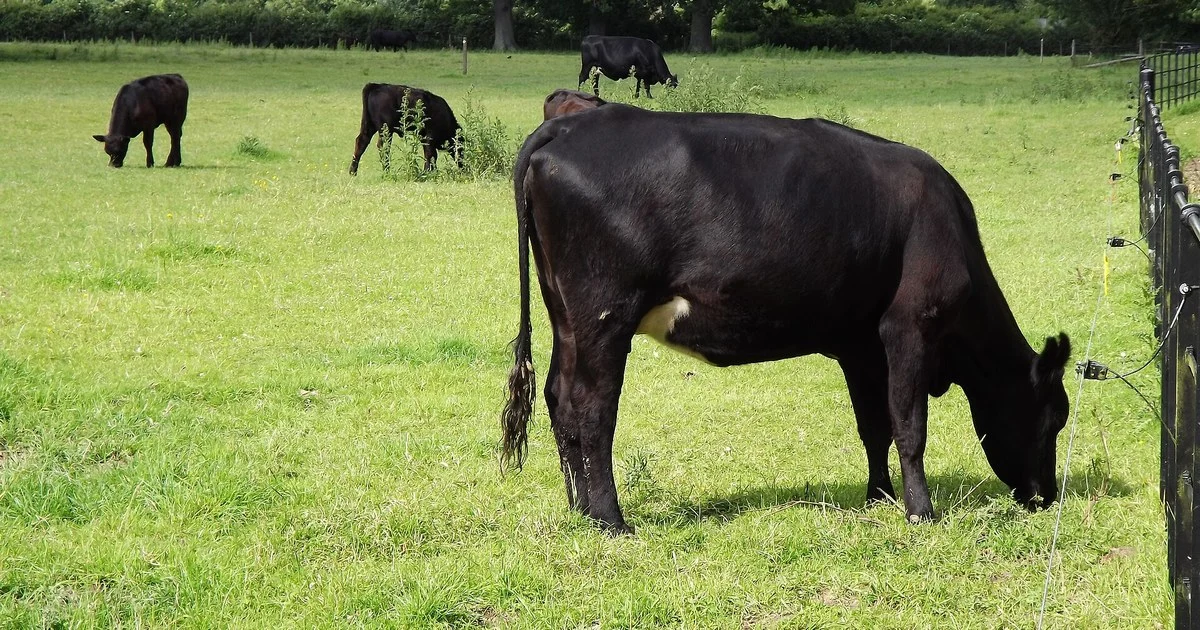
Angus cattle are compact, deep-bodied and naturally polled. Most are solid black. Red Angus also occur, as the recessive red colour has always been present in the breed.
Cows weigh about 550 kg and bulls about 850 kg, which makes Angus a moderate-sized breed compared with the continentals. That moderate frame is a big part of the appeal for suckler herds: a smaller cow eats less, and Angus cattle are known for converting low-cost forage into good quality beef.
Maternal traits and calving
The society describes Angus females as having strong maternal attributes: calving ability, calf vigour, milk, and a high weaning weight as a share of the cow’s own weight. They also mature earlier than some other native breeds such as the Hereford or the North Devon, which means steers and heifers can finish off grass and forage at lighter weights and younger ages.
Easy calving is the main reason Angus bulls are used on heifers in both beef and dairy herds. Calving ease still varies between bulls, so check the bull’s estimated breeding values for calving ease and birth weight rather than relying on the breed name. Gestation is a little over nine months; our cattle gestation calculator will give you the due date.
Angus in beef-on-dairy
Angus has become the dominant beef sire on UK dairy farms. Dairy farmers like Angus bulls for easy calving on heifers and cows, and calf buyers like the black, polled cross calves that finish readily on forage-based systems.
Levy board analysis quoted by the society shows that in 2025 Angus-sired cattle accounted for 29% of prime-aged cattle killed in Great Britain, making Angus the most popular breed type. Of those, 57% came from dairy beef systems. In other words, more than half of Angus-sired prime cattle now start life on a dairy farm.
If you are rearing or finishing Angus cross dairy calves, buy from a known source where possible, and check the sire is registered so that the cattle qualify for Angus beef schemes.
The Angus beef premium and Sire Verification
Angus beef is one of the best-known breed brands in the meat trade, and many retailers and processors run Angus schemes that pay a premium over standard prime cattle. The society works with retailers including Waitrose and Marks & Spencer. The size of any premium, and the rules for qualifying, are set by each processor’s scheme, so check the current terms with your buyer before you plan a system around it.
To protect the brand, the society has run a Sire Verification programme since 2017. Breeders submit lists of bulls they have sold, and the bulls are DNA tested so that beef sold as Aberdeen Angus can be traced back to a registered sire. The scheme is voluntary for most members, but all bulls and led females entering society sales must be tested for Sire Verification and myostatin. The society charged £15 a head for calves born in 2017 or later at the time its scheme page was written.
Uses in UK systems
- Pure suckler herds on grass, including hill and upland farms, where moderate cow size and easy calving matter
- Angus cross suckler cows, which bring the breed’s maternal traits into a commercial herd
- Beef bulls on dairy heifers and cows, the biggest single use of Angus genetics in the UK
- Grass and forage-based finishing systems, helped by the breed’s early maturity
- Breed-branded beef schemes paying a premium for verified Angus cattle
Pros and cons
Pros:
- Naturally polled, so no disbudding
- Easy calving and good mothering
- Early maturing, suited to forage-based finishing
- A strong breed brand with premium schemes available
Cons:
- Early maturity means cattle can lay down fat at lighter weights if fed too hard or kept too long
- Smaller carcases than continental crosses, so price per head can be lower without a scheme premium
- Calving ease varies between bulls, so check breeding values
Before you buy Aberdeen Angus cattle
- Check registration and Sire Verification status with the Aberdeen-Angus Cattle Society if you want pedigree stock or plan to sell into an Angus scheme.
- Look at estimated breeding values for calving ease, birth weight, growth and carcase traits.
- Ask for herd health status, including TB history, BVD, Johne’s and IBR. Our guide to cattle diseases covers what to discuss with your vet.
- Have a new bull fertility tested by your vet before the breeding season.
- Make sure passports and tags match and quarantine new stock.
- Our guide to how much a cow costs in the UK covers what affects the price of breeding stock.
Frequently Asked Questions
Do Aberdeen Angus cattle have horns?
No. Aberdeen Angus are naturally polled, so neither bulls nor cows grow horns.
Are Angus and Aberdeen Angus the same breed?
Yes. Angus is the short name for the Aberdeen Angus, which comes from north-east Scotland. The breed is solid black or solid red.
How big do Aberdeen Angus cattle get?
Cows weigh about 550 kg and bulls about 850 kg, which is moderate for a beef breed and smaller than most continental breeds.
Why are Angus bulls used on dairy cows?
They are easy calving and produce black, polled calves that finish well on forage. In 2025, 57% of Angus-sired prime cattle killed in Great Britain came from dairy beef systems.
What is Aberdeen Angus Sire Verification?
A society DNA programme, running since 2017, that checks Angus-sired cattle back to a registered bull so that beef sold as Aberdeen Angus is genuine.
BritFarmers Weekly
One email a week: what’s moved on schemes, prices, disease control and policy, with links to primary sources. Free. No sponsors. Unsubscribe anytime. Subscribe.
Source: Aberdeen-Angus Cattle Society
You’ve reached the end of this story.