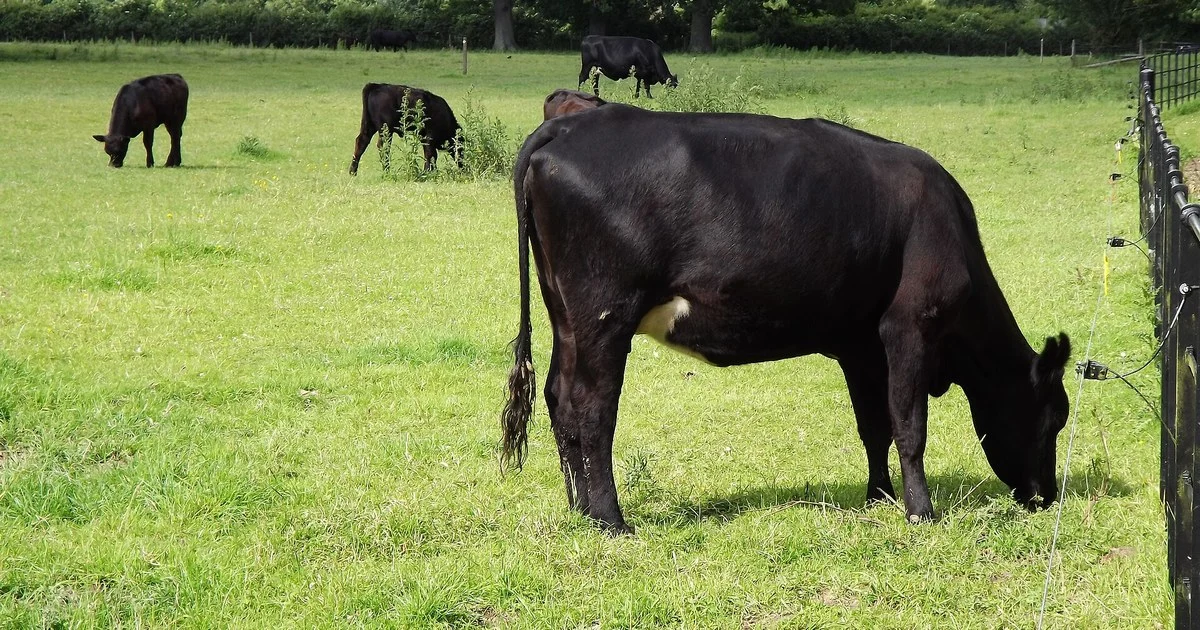
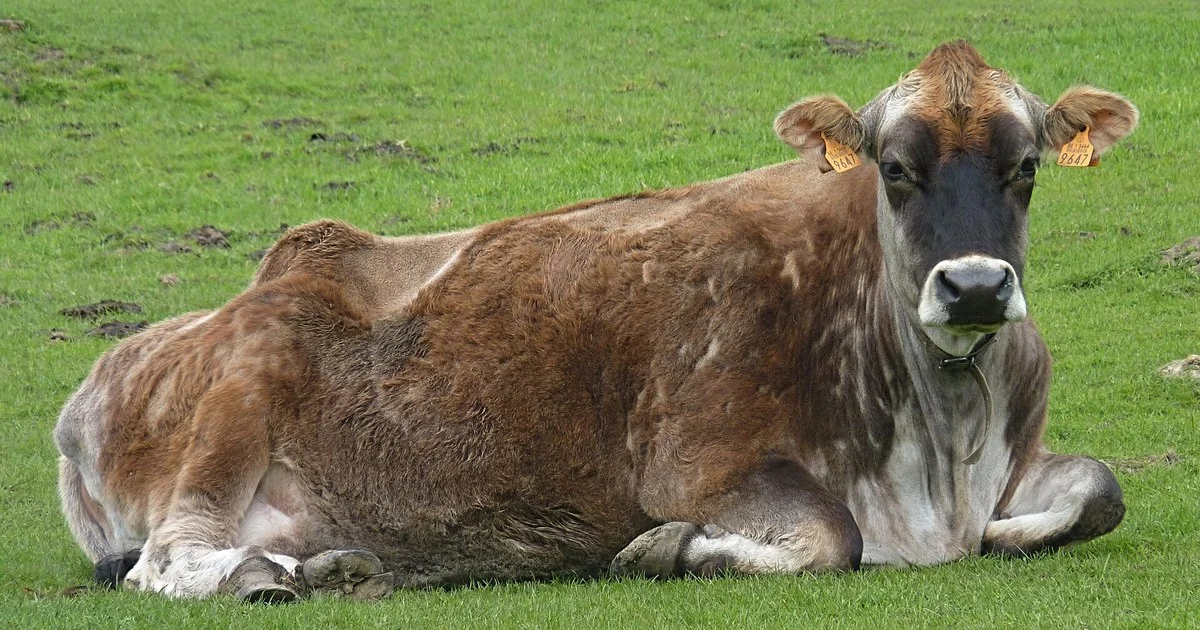
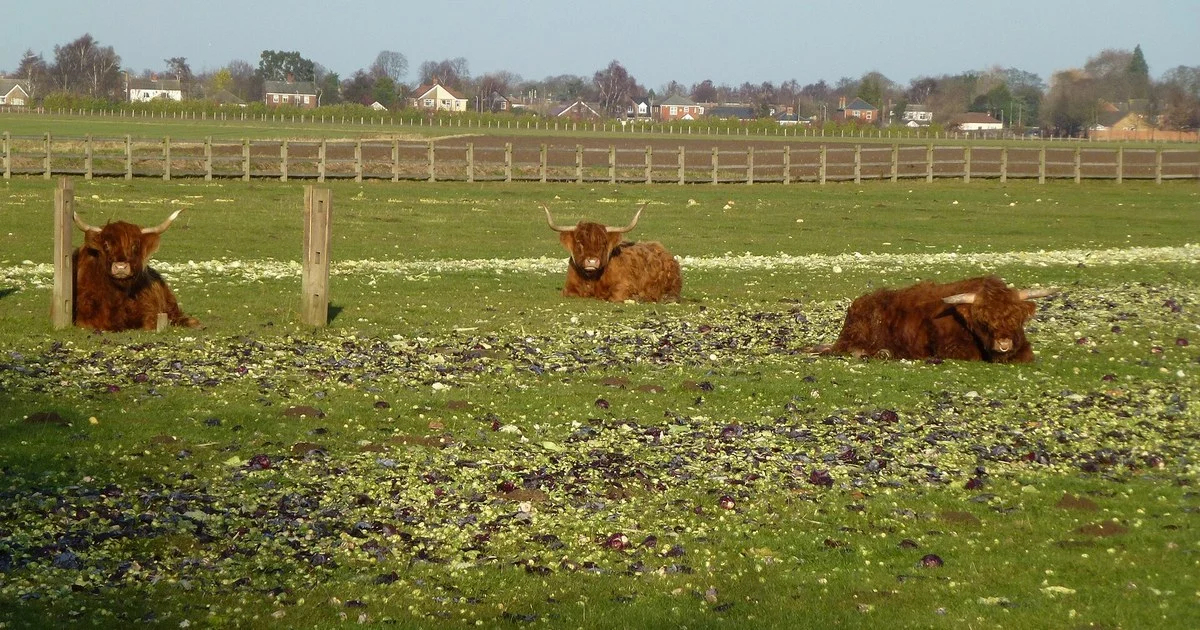
Cover photo: Eric Jones (CC BY-SA 2.0, cropped) · Source
Last updated: 3 October 2026. Short answer: at the GB deadweight prices for the week ending 26 September, a finished steer is worth around £2,205 and a cull cow around £1,380, working from 630.7p/kg and 460.4p/kg on typical carcase weights. Store and breeding cattle trade through auction marts at prices no public national series has tracked since 2024. Figures below are AHDB and gov.uk sourced, with the arithmetic shown.
Ask a finisher, a dairy farmer and a smallholder what a cow costs and you will get three different numbers, all of them right. Cattle are priced by purpose. The meat trade prices a finished animal by the kilo of carcase it will hang up. A store animal is priced on what feeding will add to it. A dairy cow is priced on the milk she has left in her. The only universal rule is that the beast itself is rarely the biggest cost of keeping cattle, and the paperwork starts before the animal arrives.
A way through this story
What cattle are worth in October 2026
GB deadweight cattle prices — week ending 26 September 2026
Average price paid by GB abattoirs across all classifications, pence per kg deadweight. Per-head values are our arithmetic at the carcase weight shown.
| Category | Price | Indicative per head |
|---|---|---|
| Steers | 630.7p/kg | ≈£2,205 at 350 kg |
| Heifers | 627.4p/kg | ≈£2,010 at 320 kg |
| Young bulls | 615.4p/kg | ≈£2,155 at 350 kg |
| Cows (cull) | 460.4p/kg | ≈£1,380 at 300 kg |
Source: AHDB beef markets, GB deadweight prices, week ending 26 September 2026. Carcase weights are illustrative, chosen to show the arithmetic.
This table is updated monthly; this is the October 2026 edition, refreshed 3 October. Next update: early November 2026.
The trade context matters as much as the numbers. The all prime average gained a further 8p on the week to 628p/kg, with young bulls posting the largest rise at 11p, as tight prime cattle supplies and autumn demand underpin the market. Prime cattle slaughter rose marginally to 29,500 head but stayed 3,000 head below the same week last year. The cull cow average ticked up 10p to 460p/kg and is back on an upward trend after falling sharply through August, though it still sits 51p below the same week of 2025. Prime prices remain a little below last year too: steers are 12.5p/kg down on the same week in 2025, which on that 350 kg carcase is £44 a head less than the same animal made a year ago. Below last year is not the same as cheap, though: the AHDB weekly market wrap puts the all prime price 134p above its five-year average.
Turning pence per kilo into a price per animal
Deadweight prices are quoted per kilo of carcase, not per animal, so the per-head figure depends on what the beast kills out at. The table’s carcase weights are working assumptions, not statistics: a well-finished continental-cross steer might hang up heavier than 350 kg and a native-breed heifer lighter than 320 kg, and the price per kilo itself moves with conformation and fat class around those averages. The method is what transfers: take the current p/kg from AHDB, multiply by a realistic carcase weight for the animal in front of you, and you have its meat value. Where those published numbers come from, and how to read them week to week, is covered in our guide to UK farm prices and agricultural markets.
Store and breeding cattle: why nobody can quote you a national average
Store cattle, suckler cows and dairy herds are sold through live auction, and the national reporting of that trade ended quietly. Until the end of 2023, AHDB published auction prices under licence from the Livestock Auctioneers’ Association; from January 2024 the LAA moved the data to a commercial partner and AHDB stopped publishing it. Any site offering a single 2026 national figure for a suckler cow or a freshly calved heifer is working without the series that claim would need.
What sets the price at the ring is age, breed, calving history, health status and TB testing, and the day’s local supply. The working substitute for a national average is your nearest mart’s recent sale report, which most auctioneers publish free on their own websites, or a conversation with the auctioneer before the sale. Dairy prices add yield records and calving date on top. It is more legwork than reading one number off a website, and it is also how the people who buy cattle for a living actually do it.
The paperwork before the beast
Cattle carry more regulation than any other farm animal, and it starts before purchase. The land needs a County Parish Holding (CPH) number. Every animal must have its own cattle passport, and births, deaths and every movement must be reported under the cattle identification and registration rules. Registration is free, and skipping it is not a shortcut anyone should offer you: an animal without a passport cannot legally be moved or sold, which makes it close to worthless whatever you paid.
Common questions
How much does a beef cow sell for?
A finished steer or heifer at current GB deadweight prices is worth roughly £2,010 to £2,205 depending on carcase weight, and a cull cow around £1,380 at 460.4p/kg on a 300 kg carcase. Those are gross values at the abattoir gate before haulage and levy.
How much is a dairy cow?
There is no public national series, so any single figure is somebody’s estimate. Price depends on age, yield history, calving date and health status, and the practical route to a real number is recent sale reports from marts that run dairy sales, or a breed society. Her floor value is the cull price: about £1,380 at current deadweight rates.
How much does a calf cost?
Calves trade through the marts like stores, so the same honesty applies: no public national average exists in 2026. Dairy-bred bull calves sit at the bottom of the trade and beef-cross heifers towards the top, with the gap between them wide enough that a single quoted figure would mislead more than it informs. Your local mart’s calf sale report is the real answer.
Sources
[1] AHDB, Beef markets: GB deadweight cattle prices (week ending 26 September 2026)
[2] AHDB, Weekly cattle and sheep market wrap, 2 October 2026
[3] AHDB, Auction market price reporting (end of national auction data, January 2024)
[4] gov.uk, Register land you use to keep livestock
[5] gov.uk, Cattle identification, registration and movement
You’ve reached the end of this story.