A way through this story
Belted Galloway cattle at a glance
- Origin: the Galloway hills of south west Scotland
- Nickname: the Beltie
- Breed society: the Belted Galloway Cattle Society, which grew out of the Dun and Belted Cattle Breeders’ Association formed in 1921
- Colours: black, dun or red, always with a complete white belt round the middle
- Horns: naturally polled
- Coat: a double coat, with a long, coarse outer layer over a soft undercoat
- Size: cows typically 450 to 600 kg and bulls 750 to 1,000 kg
- Use: suckled beef, finished slowly off grass and rough grazing, and conservation grazing
- Health note: all newly registered bulls must test clear of alpha mannosidosis
Where the Beltie comes from
The Galloway itself is an old breed from the former counties of Kirkcudbright and Wigtown in south west Scotland. Black was the favoured colour, but brindle, red, dun, white and belted animals also turned up. Nobody is certain where the white belt came from. The Belted Galloway Cattle Society says the most popular theory is a cross with the Dutch belted Lakenvelder in the 17th and 18th centuries, when trade between Britain and the Low Countries was at its height.
Four foundation herds are named by the society: Boreland near Kirkcudbright, Lullenden, Mark (later moved to Auchengassel) and Mochrum. In 1921 those four, with thirteen other Scottish herds and nine English ones, formed the Dun and Belted Cattle Breeders’ Association. A herd book followed in 1922, and registration of non-belted dun cattle stopped in 1951, leaving the belted animals as a breed in their own right.
The society notes Belties were in Northumberland as early as 1800, and that drovers taking cattle south from Galloway to the Norfolk fairs liked one in the bunch so they could see which way the herd was heading in poor light. The breed was badly hit by foot and mouth in 2001, according to both the society and Wikipedia, but numbers have since recovered.
Appearance and the breed standard
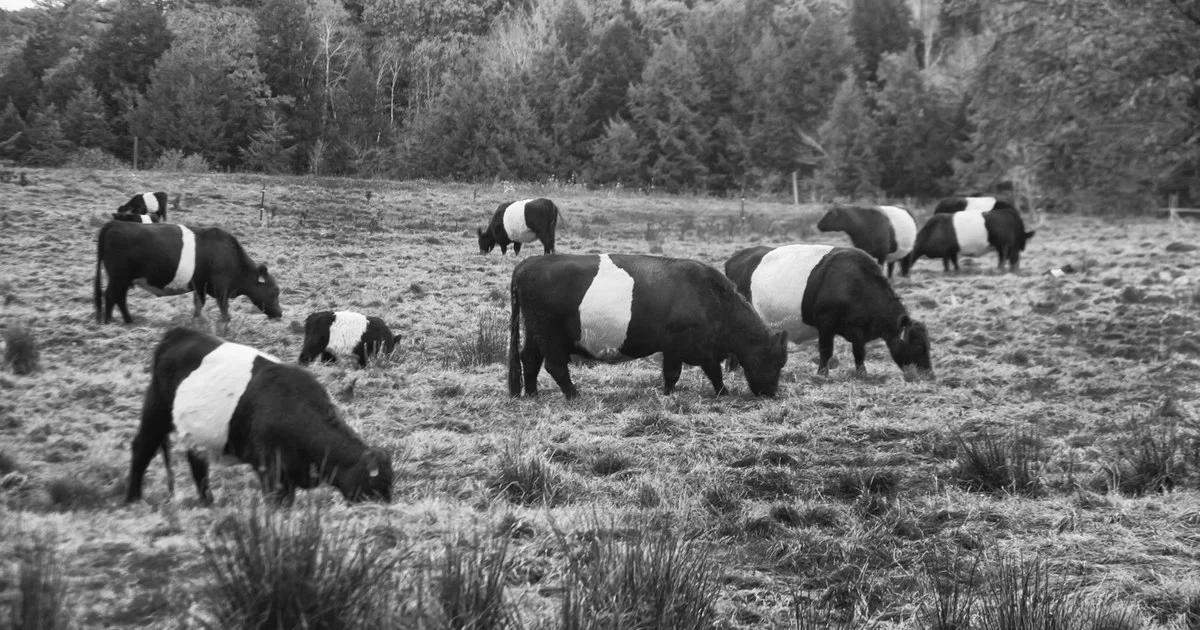
The belt is what buyers and judges look at first, and the society’s rules are strict. The belt must go all the way round the body, should not reach further forward than the shoulder or further back than the hind leg, and must have no black spots in it. White hair anywhere else disqualifies, although females with white on a foot no higher than the dew claws can go into the appendix register.
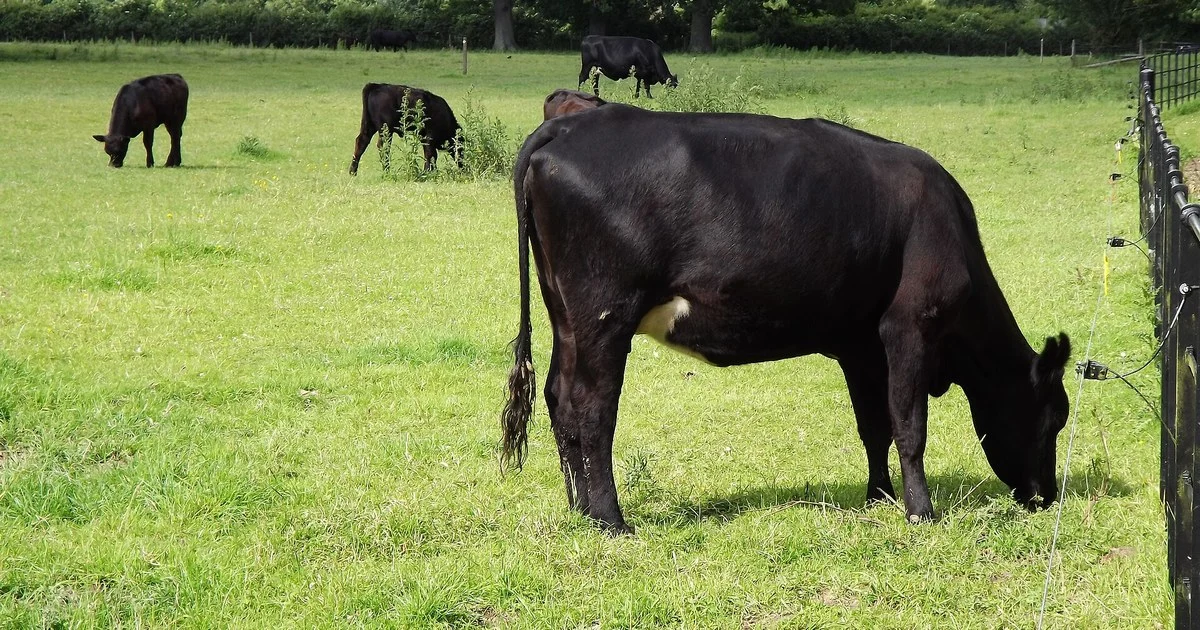
Belties come in black, dun and red. They are naturally polled, which makes them easier to handle and house than horned hill breeds. The double coat, with a long, coarse outer layer that sheds rain over a soft, warm undercoat, is the same as the Galloway’s.
Size varies with breeding and feeding, but Wikipedia gives cows at around 450 to 600 kg and bulls at 750 to 1,000 kg. The society inspects every bull through its panel before registration and can inspect females at its discretion.
Temperament and longevity
Good nature is one of the traits the society highlights, and that quiet temperament, together with the polled head, is part of why the breed appeals to smallholders and to graziers working on sites with public access. Cows with young calves still deserve the same care as any suckler cow.
Longevity is a strong point. The society says Beltie cows live far longer than most cattle, often well into their twenties, producing more calves and cutting replacement costs. The trade-off is that they are slow to mature, and one commercial member’s herd profile notes they do not put heifers to the bull until two years old.
Belted Galloway beef
Belties were bred to turn rough hill grazing into beef. Because they rely on their double coat rather than a layer of back fat to keep warm, the society says the meat is lean and succulent. Wikipedia notes that cattle reared on forage alone can take up to four years to reach slaughter weight, so this is a slow, low-input system rather than a fast finishing one.
Much of the commercial crop goes through local markets and is not sold under the breed name. Breeders who want the premium usually market it themselves through farm shops, local butchers or box schemes, and the society keeps a list of members selling beef direct.
Growth is the weak point. In a herd profile on the society’s own website, a Northumberland farm running both breeds reported that its Belted Galloways had lower growth rates and carcase weights than its plain Galloways on similar grazing, and that the Galloways thrived better on hard hill ground. Belties suit a premium, extensive system; they are not a substitute for a continental cross if weight of beef is the goal.
Conservation grazing
Belted Galloways are one of the breeds most often used for conservation grazing. They graze unselectively, take rushes, reeds and coarse grasses that other cattle leave, and live out on poor ground. The same Northumberland herd reported that the cattle needed no concentrates, calved easily outdoors and helped improve its hill for plants and wildlife.
A member’s account on the society website describes grazing a small, wet conservation site with Belties at a low stocking rate, with no fertiliser, spraying or cutting, and seeing wildflowers, insects, frogs, reptiles and game birds return. Results will depend on the site, the stocking rate and the management plan, so agree grazing levels with whoever holds the agreement for the land.
Health note: alpha mannosidosis
Alpha mannosidosis (AM) is an inherited disorder found in the breed. A calf that inherits two copies of the faulty gene usually dies in the womb or at birth, and any that survive are born with severe deformities. Carriers, with one copy, are healthy, so the problem only shows when two carriers are mated.
Testing of all bulls at inspection and registration began at the end of 2022, and every newly registered bull must now be AM clear. In its update to the end of 2024, 1,046 animals had been tested and 23% were carriers, though the society expects the true figure across the breed to be lower because herds with a suspected problem test more. Among young bulls born since 2020, 19% were carriers, and the share of carriers fell from 26% of tested animals born in 2022 to 18% of those born in 2023.
Carrier females can still be registered. Using a clear bull means no affected calves, but half the calves from a carrier cow will be carriers, so test any bull calf you plan to keep for breeding while it is young. Talk to your vet about any abortions, stillbirths or deformed calves, whatever the cause.
Before you buy Belted Galloway cattle
- Ask for the AM status of any bull, and of the cows if you plan to keep an older, untested stock bull.
- Check the belt against the breed standard if you want to register or show the cattle. A broken belt or stray white will rule an animal out.
- Join the society before breeding pedigree stock, as only members can register cattle.
- Look at the society’s October show and sale at Castle Douglas to see good stock in one place.
- Budget for a slow system. Heifers are usually bulled later and steers finished older than commercial crosses, so cash flow is slower.
- Sort out a CPH number, ear tags, passports and TB testing before the cattle move. Our guide to what a cow costs in the UK covers buying, and our cattle diseases guide covers health checks to agree with your vet.
Is the Belted Galloway a rare breed?
No. The Belted Galloway appears as a UK native breed on the Rare Breeds Survival Trust’s 2026-27 Watchlist, outside its Priority and At Risk categories. Wikipedia records around 3,500 breeding cows in the UK in 2012. The society says its membership is over 500, with members across Britain, Ireland and overseas.
Frequently Asked Questions
Why do Belted Galloways have a white belt?
Nobody knows for certain. The breed society says the most popular theory is a cross between the old Galloway and the Dutch belted Lakenvelder in the 17th and 18th centuries.
Do Belted Galloway cows have horns?
No. Belted Galloways are naturally polled, so both bulls and cows are hornless.
How big do Belted Galloway cattle get?
Wikipedia gives mature cows at around 450 to 600 kg and bulls at 750 to 1,000 kg, which makes them a medium-sized beef breed.
Are Belted Galloways good for beef?
Yes, for a premium, grass-based system. The beef is lean and well flavoured, but the cattle grow slowly and can take up to four years to finish on forage alone.
What colours do Belted Galloways come in?
Black, dun or red, always with a complete white belt round the middle and no white elsewhere on the body.
BritFarmers Weekly
One email a week: what’s moved on schemes, prices, disease control and policy, with links to primary sources. Free. No sponsors. Unsubscribe anytime. Subscribe.
Source: Belted Galloway Cattle Society
You’ve reached the end of this story.