Cover photo: Peter Van den Bossche from Mechelen, Belgium (CC BY-SA 2.0, cropped) · Source
Belgian Blue cattle explained: double muscling and the myostatin gene, size and colours, calving and caesareans, and why the British Blue is used so widely on.
A way through this story
Belgian Blue cattle at a glance
- Origin: central and upper Belgium, 19th century
- UK name: British Blue, after the first imports in 1982
- Known for: double muscling, caused by a deletion in the myostatin gene
- Size: bulls average around 1,200 kg and cows around 700 kg
- Colours: white, blue roan and black, or a mix of these
- Main UK use: a terminal beef sire, very often on dairy cows
- Main drawback: purebred cows frequently need a caesarean to calve
Where the Belgian Blue comes from
The breed started in Belgium in the 19th century, when local cattle were crossed with Shorthorns from Britain and possibly Charolais. At first it was a dual-purpose animal, kept for milk and meat. The modern beef breed took shape in the 1950s, when Professor Hanset at an artificial insemination centre in Liège Province selected hard for muscling.
The first Belgian Blues came to the UK in 1982, and the British Blue Cattle Society was formed that year. From 1990 the society promoted British-bred cattle as a British type, and the breed is now generally called the British Blue here.
Double muscling and the myostatin gene
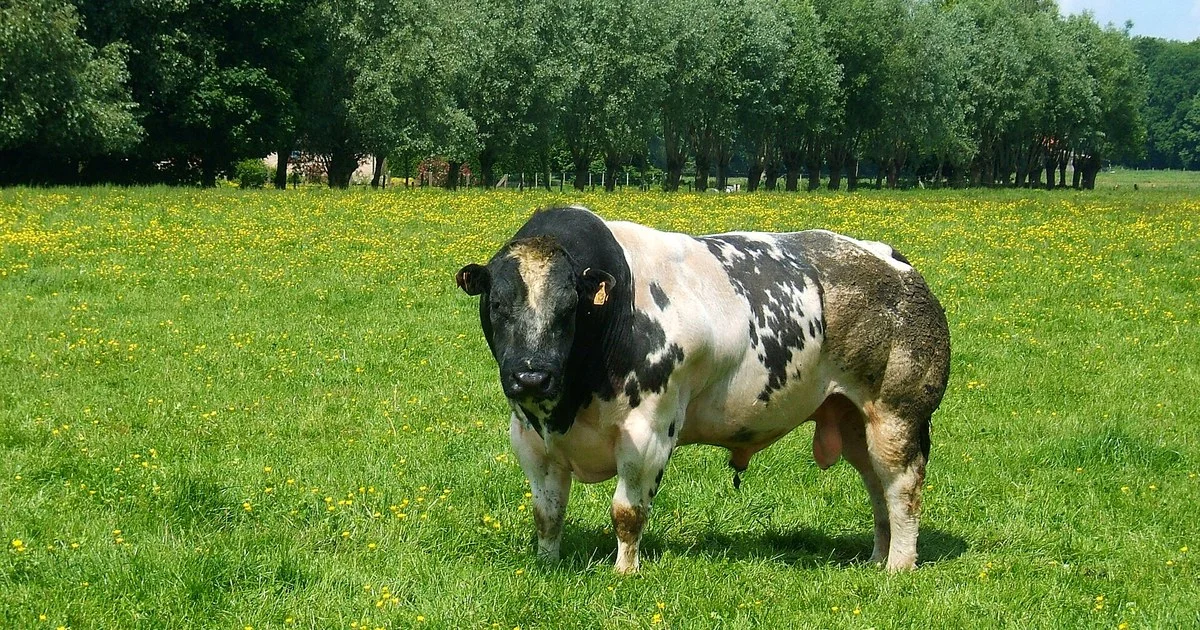
Myostatin is a protein that limits muscle growth. Belgian Blues carry a deletion in the myostatin gene, so the brake on muscle development is partly switched off. The calf develops more muscle fibres before birth, rather than just larger ones, which gives the bulging, heavily muscled shape the breed is known for.
The same mutation reduces fat. Double-muscled cattle carry noticeably less fat and give a muscle yield around 20% higher on average than cattle without the mutation, so the beef is very lean and tender.
The gene is not unique to Belgian Blues. Research reported by Farmers Weekly in 2001 found that 37% of the UK South Devon population carried a myostatin deletion, which is a reminder that selecting hard for muscling can bring the gene in by the back door.
Calving and caesareans
Calving is the breed’s big welfare issue. Purebred double-muscled cows have a narrower birth canal and their calves are heavily muscled, so difficult calvings are common. Many pure Belgian Blue calves are delivered by planned caesarean section, and a cow may go through five or six caesareans in her working life. Anyone running a pedigree herd needs a vet relationship and a plan for this.
The picture is very different when a Blue bull is crossed onto other cattle, especially a big-framed dairy cow. The cross calf only carries one copy of the gene and is usually born normally. Surveys reported by the British Blue Cattle Society in 2007 put calving difficulty for Blue-sired calves at 3.3%. Bull choice still matters, so look at calving ease figures before you buy semen or a bull.
Why the British Blue is so common on UK dairy farms
Most UK beef breeds are judged by how well they finish on their own. The British Blue earns its place differently: put a Blue bull on a Holstein or Friesian cow and you get a calf that is worth far more than a pure dairy bull calf, with much better shape, while the cow still calves easily.
In 2007 the British Blue Cattle Society said 75% of the beef semen used on dairy cows was British Blue. The breed’s share has been challenged since by Aberdeen Angus and other easy-calving sires, but Blue cross calves remain a mainstay of the store and rearing trade. Our UK beef farming guide covers how dairy-bred calves fit into the wider beef supply.
Size, colour and appearance
Belgian Blues are large and heavily muscled, with visible definition through the shoulder, loin and hindquarter. Bulls average around 1,200 kg and 148 cm at the shoulder, and cows around 700 kg and 132 cm.
The coat can be white, blue roan or black, and many animals mix the three. Blue roan is the classic colour that gives the breed its name. Cross calves out of black-and-white dairy cows are often blue roan or black.
Temperament and management
Blues are generally quiet to handle, which matters with cattle of this size. Good handling facilities are still important, and our cattle handling guide sets out what a safe setup looks like.
The heavy muscling has some management costs. Pure Blues can be more prone to calving trouble and need careful feeding to support their frame. Cross calves out of dairy cows are reared in large numbers, so calf health is the main concern, and our guide to cattle diseases covers scours and pneumonia in young calves.
Frequently Asked Questions
What is the difference between a Belgian Blue and a British Blue?
They are the same breed. Belgian Blues were first imported to the UK in 1982, and British-bred cattle have been promoted as the British Blue since 1990.
Why do Belgian Blues have so much muscle?
They carry a deletion in the myostatin gene. Myostatin normally limits muscle growth, so with it disrupted, calves develop more muscle fibres before birth. This is called double muscling.
Do Belgian Blue cows need caesareans?
Purebred Belgian Blue cows often do, because of their narrow birth canal and heavily muscled calves. Blue-sired cross calves out of other breeds, including dairy cows, are usually born normally.
How big is a Belgian Blue bull?
Belgian Blue bulls average around 1,200 kg and 148 cm at the shoulder. Cows average around 700 kg.
Why are Belgian Blue bulls used on dairy cows?
A Blue bull on a dairy cow gives a calf with much better beef shape and value than a pure dairy calf, and the cross calf is usually born without difficulty.
BritFarmers Weekly
One email a week: what’s moved on schemes, prices, disease control and policy, with links to primary sources. Free. No sponsors. Unsubscribe anytime. Subscribe.
Source: Wikipedia: Belgian Blue
You’ve reached the end of this story.