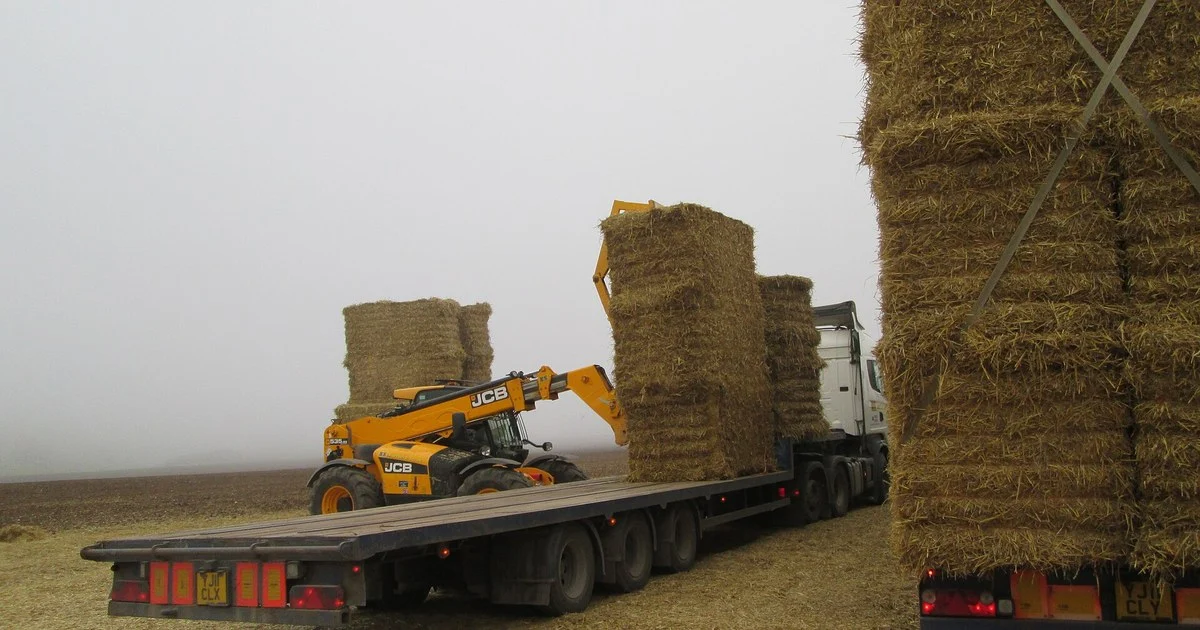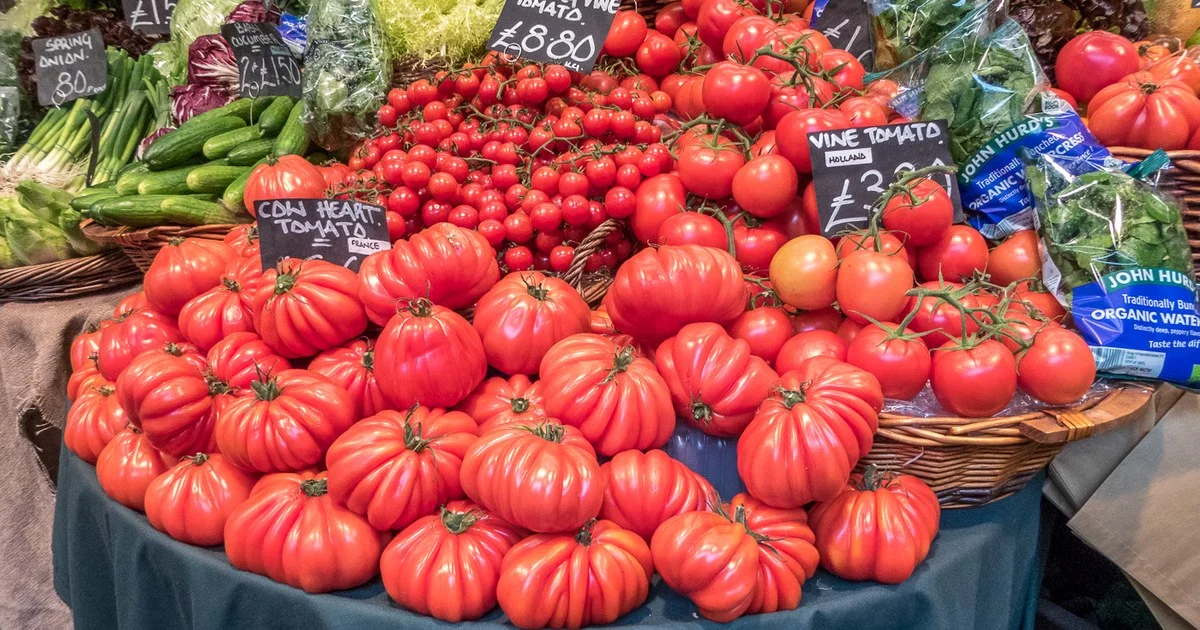
Cover photo: Christine Matthews (CC BY-SA 2.0, cropped) · Source
Last updated: July 2026. A working grower’s guide to the UK fresh-produce wholesale market system: the markets that operate in 2026 (New Covent Garden, Birmingham, New Spitalfields, Western International, Manchester, Glasgow, Bristol), the salesman relationships that decide what your crop fetches, the sale-or-return convention, the daily rhythm, the grading and packaging that move a price, the contract-versus-spot question, and a worked consignment example built on Defra’s current wholesale price data. Every market fact is linked to the operator’s own published pages; every worked-example assumption is labelled as one. General information, not regulated business advice.
The wholesale market is the oldest route to market British growers have, and in 2026 it is still the fastest: crop confirmed with a salesman in the afternoon, delivered overnight, priced on the floor before dawn, and moving to restaurants and greengrocers by mid-morning. This guide is the homework I would want done before sending a first speculative pallet to Nine Elms or Birmingham: how the system works, what the conventions are, and what the published price data says the arithmetic actually looks like.
A way through this story
The market system that still exists
The UK’s city wholesale markets have been consolidating since the supermarkets centralised their buying, but a genuine national network still trades six nights a week. The majors, with their operators’ own published facts:
New Covent Garden Market (NCGM), Nine Elms, London. London’s original and largest wholesale fresh produce market, on the south bank of the Thames at Nine Elms since 1974, home to 137 businesses with around 2,500 employees, and trading fresh produce and flowers to London and beyond since 1670.[1][2] The site is in the final stages of a long-running redevelopment: the Covent Garden Market Authority is currently consulting on Building C, the third and final building of the new Fruit and Vegetable Market, and the permanent home of the Flower Market.[2]
Birmingham Wholesale Market, Witton. The UK’s largest integrated wholesale market — fruit, vegetables, meat, fish, dairy, flowers and plants on one 18-acre site at The Hub, Nobel Way, opened in 2018, with more than 80 tenant businesses serving the Midlands trade. The fruit and vegetable market runs 3:30am to 11:30am Monday to Friday and 3:30am to 9:30am on Saturday, deliveries land from 12:30pm to 3am, and under-16s are not allowed on site.[3][4]
New Spitalfields Market, Leyton, east London. The highest number of wholesale horticultural traders of any UK market — more than 140 businesses — and Europe’s widest choice of exotic produce, trading midnight to 11am Monday to Saturday. Covered in full in our New Spitalfields guide.[5]
Western International Market, Southall, west London. Owned and run by the London Borough of Hounslow, around 50 traders listed in its directory, trading 11:45pm to about 8:30am Monday to Saturday, with the capital’s Asian, African and Caribbean produce trade at its core. Covered in our Western International guide.[6]
New Smithfield Wholesale Market, Openshaw, Manchester. The largest wholesale market in the North West on Manchester City Council’s description, a 35-acre site trading from 2:30am to 12:30pm on weekdays, closing at 11am on Saturdays. Covered in our Manchester guide.[7]
Glasgow Wholesale Market, Blochairn. Scotland’s major fresh produce market, a 32-acre site at Junction 14 of the M8 opened in 1969, most traders open 2am to 9am Monday to Friday, sharing its site with the country’s only inland fish market. Covered in our Glasgow Blochairn guide.[8]
Bristol Fruit Market, St Philip’s Marsh. The South West’s wholesale floor, trading 5am to 11am on weekdays and until 9am on Saturdays. Covered in our Bristol guide.[9]
Smaller regional operations serve Liverpool, Newcastle, Sheffield, Cardiff and other cities, but the seven above are where the national fresh-produce price is discovered each morning — and four of them (Birmingham, Manchester, Bristol and London) are where Defra collects the official wholesale price series this guide uses below.[10]
What the markets actually do
It is helpful to think of a wholesale market as a price-discovery institution as much as a physical distribution centre. The market discovers the price of a perishable category each morning, in real time, through the interaction of the volume on the floor and the buyers walking it. The price is paid that morning or on agreed credit terms, and the produce moves out by the close of trading.
For a grower the market plays four roles. It is price discovery in real time: contract pricing is set weeks ahead, the market price is set this morning, and a grower with surplus or an early crop has a route to market within hours. It is the buyer of last resort when the contract buyer cuts the order or the supermarket refuses the second cut. It is the route to market for specialist crops too small for supermarket contracts — heritage varieties, niche salad leaves, speciality herbs — for which the restaurant trade is the natural buyer and the market is how the restaurant trade buys. And it is the working route to the catering sector: the path from farm to city kitchen runs, almost universally, through one or more wholesale market businesses.
Three things the market does not do: it does not promote your brand to consumers, it does not commit to anything beyond the day’s trading, and it does not add value to the produce — washing, processing and prepared-pack work happen elsewhere.
The salesman relationship: how the system actually works
The single most important fact about supplying a wholesale market is that you do not sell to “the market”. You sell to a specific wholesaler business within it, run by a specific salesman, and the relationship between grower and salesman is what determines whether the price moves up or down for your crop.
The wholesaler rents a trading unit, buys from growers, importers and packhouses, prices the produce for the morning’s demand, and trades until the stand clears. The salesman’s job is threefold: source produce that matches the day’s expected demand, sell it at a price that clears the stand before the close, and account back to the grower on price and volume. The grower-salesman relationship is the heart of it. The salesman knows what the grower can supply; the grower knows what the salesman can sell; and the trust built over seasons is what gets a fair price reported back on a variable morning, and what gets a crop looked after when the market is oversupplied.
It cuts both ways. A grower who feels under-paid compares notes with other growers and checks the published price series; a salesman who is consistently below the market loses growers. Both sides have skin in the game.
Cash, credit and the “sale or return” convention
The markets historically ran on cash; most established grower-salesman relationships now run on invoiced credit terms agreed between the parties. The convention that catches new growers is “sale or return”: the grower delivers at a notional price, the wholesaler sells what it can, and the grower receives what was actually achieved, minus commission and any agreed handling charges. If the produce does not sell, the grower bears the loss.
The contrast is a “firm price” arrangement, where the salesman commits to a price up front and carries the selling risk. Firm prices are more common in established relationships and on predictable commodity volumes; sale or return is the default on speculative consignments, seasonal or specialist produce, and new relationships. Unless you have explicitly agreed otherwise, assume a consignment is sale or return.
The protection is paperwork, not custom. Before the first pallet leaves the farm, agree in writing — email is fine — the price arrangement, the commission rate, the payment terms and the deduction structure. Commission is negotiated per relationship; no UK market publishes a commission tariff, which is precisely why the written confirmation matters. Most grower-salesman disputes are not about the gross price but about deductions: commission, handling, returns and waste. A written agreement removes most of the friction before it starts.
The daily rhythm
The market day, from a supplying grower’s side, runs to a rhythm that varies only in its start time from market to market — midnight at Leyton, 11:45pm at Southall, 2:30am in Manchester, 3:30am in Birmingham, 5am in Bristol.[3][5][6][7][9]
Day before, late afternoon: the grower confirms the consignment with the salesman — volume, grade, packaging, price expectation or “your best” on sale or return — and the salesman confirms the bay and the slot. Overnight: the consignment travels and lands before or at opening. The small hours: unloading, then the busiest trading as restaurants, greengrocers and catering buyers walk the floor. Late morning: the tail of trading, discounted cleardown of what remains, then the stand is cleared. Mid-morning to afternoon: the salesman reports back — price achieved, volume cleared, any quality issues — and invoicing follows.
A consignment that arrives late sells into a thinner market. That is the whole logistics discipline in one sentence: the delivery slot agreed with the salesman is a commitment, and the driver who knows the market’s gates and bays is a genuine commercial asset.
Grading, packaging and the bits that move the price
The market sets the category price; your consignment’s grade and presentation set where in the range it lands. The UK marketing standards define Class I and Class II specifications for most fresh produce categories, they are published on gov.uk, and they are worth printing for the packing shed.[11]
Beyond the formal grade: variety transparency moves price (a box labelled with the variety sells differently from a generic one); named provenance moves price with some buyers, restaurants especially; clean, undamaged packaging in tradable units sells better than the same crop in scruffy boxes, and the marginal cost of decent packaging is recovered in the price; a neat, evenly loaded, clearly labelled pallet gets to the front of the stand; produce arriving warm or wilted gets downgraded on arrival, so the coldchain matters; and consistency week to week is what earns a name on the stand. A grower who delivers well one week and shabbily the next loses trust, and trust is priced.
Contract grower vs spot supply
Every grower using the markets faces the same strategic choice: contracted regular supply, spot consignments, or a mix.
Contracted regular supply — defined volume, grade and frequency across a season, with an agreed price formula — buys predictable cash flow, a stronger salesman relationship and a planning anchor for the cropping calendar. It costs flexibility: the consignment goes whether or not the day’s price is good, and the formula usually caps the upside as well as the downside.
Spot supply — delivering when there is surplus or when the market is short — keeps the option value and catches the good weeks, at the price of no commitment coming back the other way.
Most growers who use the markets well run a hybrid: a regular base with an established salesman, and spot consignments when there is surplus. The conversation about regular supply is best had after a season of spot supply has taught both sides what the other can do. And the wider channel decision — how much crop goes to supermarket contract versus the markets at all — is worked through in our supermarket contracts versus wholesale pricing guide.
What the prices actually are: a worked example on Defra data
Defra publishes national average wholesale prices for home-grown horticultural produce, collected at Birmingham, Manchester, Bristol and London and updated fortnightly.[10] That series is the honest baseline for every price conversation in this guide, and it deserves to be read before any lorry is loaded, because the numbers are smaller than newcomers expect.
In the week 27 release (published 6 July 2026), iceberg-type crisp lettuce averaged £0.72 per head with a usual range of £0.60 to £0.93; cauliflower averaged 76p a head, topped and washed carrots 76p per kilogram, strawberries £3.92 per kilogram, and mixed baby-leaf salad £5.17 per kilogram.[10] Here is a worked consignment at those prices for a notional eastern-counties grower sending iceberg to a London market. The volumes, haulage and commission are assumptions for illustration; the price is Defra’s.
- Consignment: four pallets, roughly 500 heads per pallet, 2,000 heads (assumption)
- Achieved price: Defra week 27 average of £0.72 per head[10] — gross £1,440
- Salesman commission at an assumed 10 per cent: £144
- Haulage, assumed £250; packaging and labels, assumed £120
- Net to grower: about £926, or roughly 46p a head
Two honest conclusions. First, at commodity prices measured in pence per head, wholesale consignments are a volume and marginal-return channel, not a windfall: the run pays because the crop is already grown and the alternative is worse. Second, the spread matters more than the average — the top of the published iceberg range sits nearly a third above the mean, and the difference between a short market and an oversupplied one is exactly what the salesman relationship exists to navigate. On speciality lines the arithmetic changes shape: baby-leaf at £5.17 a kilogram carries its haulage in a way 72p iceberg never will, which is why speciality growers lean on the markets hardest.[10]
Logistics, emissions zones and insurance
The most underestimated operational requirement is punctuality, covered above. The second is the vehicle itself. The two London markets sit inside the London Low Emission Zone, which covers most of Greater London and requires lorries over 3.5 tonnes to meet the Euro VI standard or pay a daily charge.[12] The regional picture varies city by city — Greater Manchester has no charging zone at all, Glasgow’s LEZ is penalty-based but excludes the M8 route to Blochairn, and Bristol’s zone map stops short of the market — and the market-by-market guides linked above cover each case. Check the vehicle and the route before pricing any run.
On insurance: standard farm public liability cover does not automatically extend to delivery operations to a third-party site, goods in transit are normally the haulier’s cover up to a specified value, and product liability limits are worth checking against the volumes involved. None of that is exotic — it is a ten-minute conversation with your broker before the first season, not after the first dispute.
A six-step wholesale-readiness checklist
Six things to do before sending the first pallet.
Visit the market. Walk the floor in the early hours on a trading morning, talk to three or four salesmen in your category, and watch the trade happen. A market is impossible to understand by phone.
Choose the salesman and the wholesaler company carefully: references from other growers, a clear conversation about firm price versus sale or return, commission and payment terms, and written confirmation of all of it.
Check the current Defra wholesale price release for your crop, so you go into the price conversation knowing the published average and range.[10]
Get the grading right against the gov.uk Class I and Class II specifications, and brief the packing team to them.[11]
Get the packaging right: clean tradable units, clear labels, secure pallet wrapping. The marginal cost is recovered in the price.
Plan the relationship as a long-term build. The first months are calibration, the first season builds the relationship, and the trust that gets the better price on a difficult morning is built over years, not phone calls.
Where this is heading
Three forces are shaping the system. The first is consolidation within each market: fewer, larger wholesaler businesses, driven by succession and property pressure — visible in everything from NCGM’s decade-long rebuild to the space advertised at Blochairn.[2][8] The second is the technology overlay: app-based ordering platforms now digitise part of the wholesaler-to-restaurant relationship, complementing the physical floor more than replacing it, because the floor remains where the price is discovered. The third is the changing restaurant landscape, whose demand profile the markets serve category by category.
The thing that will not change is that, for a grower with surplus crop on a Tuesday morning, the wholesale market remains the highest-velocity route to market that exists. The salesman takes the call, the price gets named that day, the produce moves, and payment follows in the agreed window. It is the system, and it works.
Further reading
Market-by-market guides in this series: New Spitalfields (Leyton), Western International (Southall), Manchester New Smithfield, Glasgow Blochairn and Bristol. This guide also sits alongside our UK Agricultural Markets and Prices 2026 guide, our UK Supermarket Contracts vs Wholesale Pricing 2026 guide, our UK Direct Sales and Farm Shop 2026 guide and our Box Schemes and CSA 2026 guide.
Sources
[1] Covent Garden Market Authority, About the Market: newcoventgardenmarket.com.
[2] Covent Garden Market Authority, Redevelopment (137 businesses, Nine Elms since 1974, Building C consultation): newcoventgardenmarket.com.
[3] Birmingham Wholesale Market, About the Market (largest integrated market, 18 acres, 80+ tenants, opened 2018): birminghamwholesalemarket.company.
[4] Birmingham Wholesale Market, Opening hours: birminghamwholesalemarket.company.
[5] City of London Corporation, New Spitalfields Market traders and businesses: cityoflondon.gov.uk; Entry and exit (hours): cityoflondon.gov.uk.
[6] Western International Market, About and Contact (ownership, hours): westerninternational.co.uk.
[7] Manchester City Council, New Smithfield Wholesale Market (site, hours): manchester.gov.uk.
[8] City Property Markets, Glasgow Wholesale Markets, Blochairn (site, hours, lettings): citypropertyglasgow.co.uk.
[9] Bristol Fruit Market (address, hours): bristolfruitmarket.co.uk.
[10] Defra, Wholesale fruit and vegetable prices, weekly average (week 27, published 6 July 2026; collected from Birmingham, Manchester, Bristol and London markets): gov.uk.
[11] Defra, Comply with marketing standards for fresh fruit and vegetables: gov.uk.
[12] Transport for London, Low Emission Zone: tfl.gov.uk.
Disclaimer: This guide is general information about UK fresh produce wholesale markets in 2026. It is not regulated business or financial advice and is not a substitute for tailored guidance from your accountant, your buyer or your industry body. Market prices, commission structures and operational practices vary by market, category and consignment; always confirm the working arrangement in writing before relying on it.
You’ve reached the end of this story.