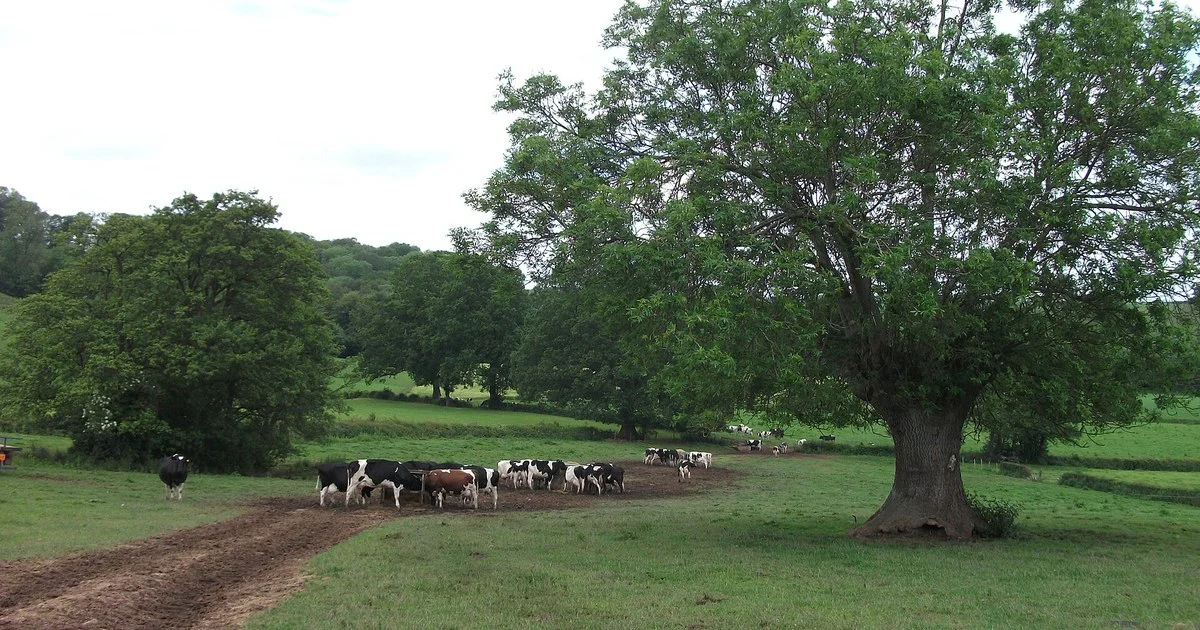
Cover photo: Peter Evans (CC BY-SA 2.0, cropped) · Source
Tim’s take:
Milk prices rarely move as one, and the latest figures show why dairy farmers should pay close attention to what buyers are paying for, rather than fixate on the headline farmgate number. The average UK milk price reached 36.89p per litre in August 2026, up 4% from July, yet still 17% below August 2025. That looks like a recovery in the monthly comparison, but the annual gap tells a more uncomfortable story for the working dairy business.
The market is also sending sharply different signals across products. Butter fell £240 per tonne over the month to £3,300, while SMP reportedly rose £200 per tonne. UK milk deliveries for October to date are 3.2% lower than a year earlier, with August volumes down 3.7%, according to AHDB. This is the important context: less milk has not stopped particular commodity prices from falling, as butter and bulk cream both weakened. Mild Cheddar was also lower at £3,290 per tonne, down £40.
For farmers, the practical question is whether the September-to-October price pattern is reshaping contracts, processor demand or herd economics. Watch the next Defra and AHDB releases closely, and use them when reviewing milk pricing rather than waiting for a single headline figure to make decisions.
UK milk prices explained: farmgate at 36.89ppl, butter down £240/t and SMP up £200/t. Why fat and protein are moving apart, and what it means for farmers.
A way through this story
UK milk prices at a glance
- Farmgate milk price: 36.89p per litre (UK average, August 2026), up 4% on July but 17% lower than August 2025 (Defra)
- Milk supply: UK deliveries for October to date are 3.2% lower than a year ago, according to AHDB. In August, UK volumes were 3.7% down on the year
- Butter: £3,300/t, down £240/t over the month
- Bulk cream: £1,528/t, down £180/t
- Mild Cheddar: £3,290/t, down £40/t
- Skimmed milk powder (SMP): £2,930/t, up £200/t
Wholesale prices are AHDB’s indicative averages for the reporting period 28 September to 31 October 2026, published on 23 October.
Less milk, but weaker prices: why
Normally a fall in milk supply would push dairy product prices up. This autumn that link has broken down, and AHDB’s latest report explains why.
Butter stocks are high. AHDB says butter stocks are “still very high here and abroad”, and buyers have covered their needs for the quarter. With no urgency to buy, prices fell back and lost the gains made in September.
Global protein demand is producing more butter. Demand for protein is strong worldwide, so processors are drying more milk into SMP. Making SMP also produces cream, which becomes butter. That extra butter is part of what is holding fat prices down.
Cheap imports set a ceiling. AHDB reports Irish butter trading below UK prices and American butter about £1,000/t under European levels, which it says is distorting the global market.
Butterfat has been strong. National volumes are down, but the fat content of milk has been high as grass growth picked up after the dry summer. Defra’s August figures show butterfat at 4.27%, 1.4% higher than a year earlier. More fat per litre means more cream and butter, even from less milk.
The result is what AHDB calls a divergence between fat and protein: butter and cream falling, SMP rising.
Why SMP is the exception
SMP gained £200/t in the month to average £2,930/t. AHDB puts this down to growing global demand for protein, fairly tight supplies and low production. Some food manufacturers are also switching from more expensive whey ingredients to SMP, and feed demand is strong.
AHDB also notes that rising energy costs will push up production costs, especially for milk drying.
For farmers this matters because the value of a litre of milk is split between its fat and its protein. When protein holds up and fat falls, processors whose product mix leans towards butter and cream are under more pressure than those making powders or cheese.
What a litre of milk is worth at the factory gate
AHDB turns wholesale prices into three market indicators that show what a litre of milk is worth to a processor, before it pays the farmer.
- AMPE (Actual Milk Price Equivalent) values milk made into butter and SMP. It rose to 39.26ppl in October, from 38.69ppl in September, and is 9% higher than a year ago
- MCVE (Milk for Cheese Value Equivalent) values milk made into mild Cheddar and whey. It fell to 38.63ppl, from 39.08ppl in September
- MMV (Milk Market Value) weights both by how UK milk is typically used. It fell to 38.8ppl in October
The AMPE breakdown shows how much the market has turned since last autumn. In October 2025, butter contributed 22.63ppl of the AMPE and SMP 12.60ppl. This October, butter contributes 15.39ppl and SMP 22.69ppl. The total is higher than a year ago, but protein now carries the value that butterfat used to.
These indicators are estimates. They use standard production costs and yields, which AHDB last revised in September 2025, so they show the direction of the market rather than what any processor actually earns.
What it means for your milk price
Wholesale prices are not farmgate prices. What you are paid depends on your processor, your contract and what your milk is turned into. But wholesale markets set the direction, usually with a lag of a few months.
AHDB’s view is cautious. It says market sentiment is “certainly less concerned about milk volumes than we saw last month” and that high stocks and high global supplies are back in the driving seat. Its conclusion: this “does cast doubt on the sustainability of some of the Autumn milk price rises that have been previously announced depending on the product mix for individual processors.”
It is a similar story for cheese. AHDB says many cheese producers needed to raise milk prices last quarter to secure supply, but market movements have not supported this. “The concern is that the price of butter will fall further and drag cheddar with it,” AHDB warned.
In practice:
- On a cheese or liquid contract, the Cheddar price is the one to watch. It is steadier than butter, but under pressure
- If your buyer makes butter and cream, weak fat markets are a direct risk to its price
- If your milk goes into powders, the protein side is currently the strongest part of the market
- Regional supply differs. AHDB reports the South West has seen tighter supplies than milk fields further north, which have been less affected by drought and bluetongue
AHDB’s three-month projection
AHDB has found that a 1ppl change in MMV usually leads to around a 0.5ppl change in the GB average farmgate price about three months later. On that basis, its latest projection for the GB average price is:
- November 2026: up 0.3ppl
- December 2026: up 1.8ppl, reflecting September’s strong market
- January 2027: down 0.1ppl, the first projected fall, following October’s weaker MMV
Over the three months to December, the cumulative projected rise is 2.0ppl for the GB average. AHDB’s own summary is that strong global milk supplies and high stocks of product in store are likely to weigh on prices in the coming months, even though GB supply is still falling.
Treat these as a guide to direction, not a forecast of your price. Each buyer sets its price differently, and timing varies by contract.
How far milk supply has fallen
AHDB’s weekly deliveries data shows GB dairies collected an average of 34.08 million litres a day in the week to 17 October, 3.9% less than the same week last year. The gap has widened through October, from 2.7% in the week to 3 October.
GB deliveries in August were 1,000 million litres, down 3.6% on the year. Northern Ireland is moving the other way: its July deliveries were 244 million litres, up 1.0%. AHDB estimates September UK production at 1,195 million litres.
Defra’s August figures add more detail. Volumes fell 4.9% from July, and protein content rose to 3.44%, 0.9% higher than a year earlier. Milk is carrying more fat and protein per litre, which partly offsets the drop in volume for processors.
Why farmgate prices have fallen so far this year
Defra’s figures show how far the farmgate price has come down. At 36.89p per litre, August was 17% lower than a year earlier, even after rising 4% from July. Milk volumes in August were 1,212 million litres, 3.7% lower on the year.
The figures are revised as late returns come in. Defra’s survey covers about 90% of milk bought from UK farms, and in August 76% of England and Wales buyers responded, with the rest estimated. June and July were both revised up, by 0.48ppl and 0.47ppl, when the August figures came out.
Defra’s monthly average excludes retrospective bonus payments, so some farmers’ actual returns may be slightly higher. Prices also vary widely between contracts. AHDB’s farmgate price analysis for July shows the gap:
- GB average, all milk: 35.87ppl, 18.1% lower than July 2025
- GB excluding retailer-aligned contracts: 34.15ppl, 22.1% lower on the year
- Non-aligned contracts paid 1.72ppl less than aligned contracts
- Northern Ireland: 33.77ppl, 5.9% below GB
The GB five-year average price in July was 40.84ppl. At under 36ppl, farmers on an average contract were being paid around 5ppl a litre less than the five-year norm.
Drought has hit both sides of the business. Less grass means less milk, and many herds are going into winter short of forage. Our hay, silage and haylage guide covers what that means for winter feeding. On contracts that pay for constituents, high-butterfat milk from breeds such as Jerseys earns extra for its fat, but in a weak fat market that extra is worth less than it was.
Questions to ask your milk buyer
National averages only go so far. With butter and Cheddar weakening and protein holding up, these are the questions worth putting to your buyer or your producer group before the next price announcement:
- What share of the milk you collect goes into butter and cream, cheese, liquid and powders? That mix decides how much of the fall in fat prices reaches your price
- How is the price set? Some buyers follow a formula linked to market indicators, others set a standard litre price each month. Ask how quickly market changes reach your price and in which direction
- What are the constituent values? If you are paid for fat and protein separately, check whether the protein rate is moving up as the fat rate falls
- Are any autumn increases already announced at risk? AHDB has warned that some are in doubt, depending on each processor’s product mix
- What notice period applies to a price change under your contract, and is there a minimum price or a review clause?
Keep a note of the answers alongside your monthly statements. It makes it easier to compare your price with the AHDB league table and the Defra average when the next figures are published.
What to watch next
- Defra’s September farmgate price, the next monthly release on the milk prices page
- AHDB’s November wholesale report, to see whether butter finds a floor or keeps falling
- Processor announcements for December and January, particularly from buyers heavily exposed to butter and cream
- Winter milk supply, which will depend on forage stocks and the weather
We will update this page as new figures are published.
Frequently Asked Questions
What is the UK milk price now?
The latest Defra UK average farmgate price is 36.89p per litre for August 2026, up 4% on July and 17% lower than August 2025. Individual contract prices vary.
Why are butter prices falling when milk production is down?
High butter stocks in the UK and abroad, strong global SMP production that also yields butter, cheap Irish and US butter, and high butterfat in milk have outweighed lower volumes, according to AHDB.
Will milk prices go up this winter?
AHDB says weaker fat markets cast doubt on whether some autumn price rises can be sustained, depending on each processor’s product mix. Protein values are stronger.
What is the difference between wholesale and farmgate milk prices?
Wholesale prices are what dairy products such as butter, cheese and powders sell for. Farmgate prices are what processors pay farmers per litre, set by contracts and usually following wholesale markets with a lag.
BritFarmers Weekly
One email a week: what’s moved on schemes, prices, disease control and policy, with links to primary sources. Free. No sponsors. Unsubscribe anytime. Subscribe.
Source: AHDB
You’ve reached the end of this story.