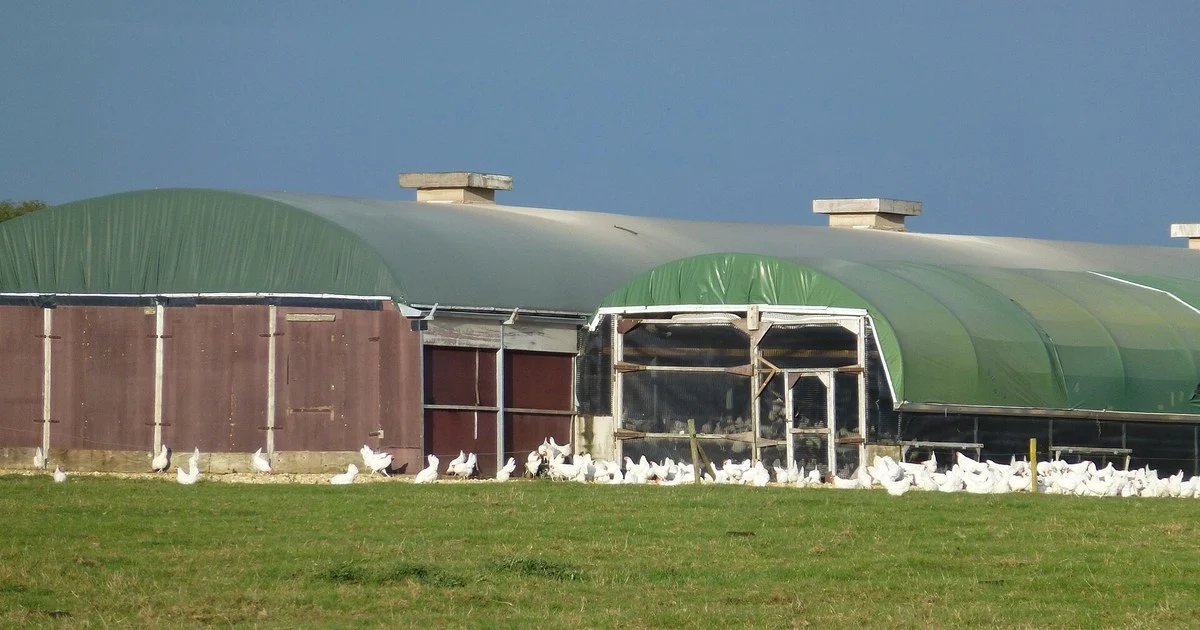
Cover photo: Bob Harvey (CC BY-SA 2.0, cropped) · Source
Tim’s take:
For poultry keepers, the first confirmed case of the new season is a prompt to review containment, records and contingency plans before an outbreak dictates the timetable. The H5N1 finding at a commercial farm near Belford means any premises in the surrounding area could face sudden restrictions, movement controls or the loss of birds, so practical preparedness matters more than headlines.
This was confirmed on 19 October 2026 as England’s first H5N1 case of the 2026/27 season, listed as AIV 2026/21. A 3km protection zone and a 10km surveillance zone now surround the premises, with all poultry there to be humanely culled. The government has not yet published how many birds were affected or the flock type, which will leave nearby businesses assessing uncertainty about direct contact, shared equipment and local markets. The first Great Britain case this season was H5N5 in a backyard flock on 2 October, underlining that different avian influenza strains are already circulating.
Keepers within or near those zones should check official notices daily, restrict unnecessary access, tighten biosecurity and speak with their vet or agricultural support team before moving birds, equipment or eggs. Watch the zone maps and case updates, and make sure your contingency arrangements can be acted on immediately if your premises fall inside a restricted area.
Northumberland bird flu: H5N1 confirmed at a commercial poultry farm near Belford on 19 October. What the 3km and 10km zones mean for keepers.
A way through this story
What has been confirmed
Highly pathogenic avian influenza (HPAI) H5N1 was confirmed in commercial poultry near Belford, North Northumberland, on 19 October 2026. It is England’s first bird flu case of the 2026 to 2027 season (case number AIV 2026/21).
A 3km protection zone and a 10km surveillance zone have been declared around the premises, and all poultry there will be humanely culled. The government has not published the type or number of birds.
The first case in Great Britain this season came earlier. On 2 October H5N5 was confirmed in backyard poultry at Ness on the Isle of Lewis. With that case, Great Britain lost its official freedom from highly pathogenic bird flu. As of 21 October, GOV.UK’s latest situation page lists two UK cases this season: one H5N5 in Scotland and one H5N1 in England, with none in Wales or Northern Ireland.
If you keep birds within 3km of the premises
The protection zone carries the strictest rules. According to Defra’s zone guidance, inside a 3km protection zone you must:
- keep poultry and other captive birds housed
- not move poultry or other captive birds on or off your premises without a licence (there are exceptions for pets)
- not move eggs without a licence. Table eggs can still go to wholesale or retail premises to be sold directly to consumers
- not move poultry meat inside or outside the zone except under the rules in the case declaration
- not spread poultry litter, manure or slurry, or take them off the premises
- follow your veterinary inspector’s instructions for disposing of any carcasses
- follow all the surveillance zone rules below as well
The exact boundaries and any extra conditions are set out in the zone declaration. Check your holding against the disease zone map rather than estimating distances.
If you are within 10km
In the surveillance zone, birds do not have to be housed, but you must:
- keep a record of all poultry and eggs entering or leaving your premises, except table eggs going straight to wholesale or retail premises for sale to consumers
- not move poultry, other captive birds, or mammals (including pigs) to or from premises where poultry or captive birds are kept without a licence
- not spread poultry litter, manure or slurry, or take them off the premises
In every control zone you must also follow the biosecurity rules, keep a record of anyone who transports or markets your poultry or eggs, and keep to the rules on fresh meat. Bird gatherings, including fairs, markets, shows and sales, are banned. Game birds must not be released. Licences are applied for through the movement licence pages on GOV.UK.
Zones stay in place until they are withdrawn by a further declaration, which happens only once all the disease control and surveillance work inside them is finished. Breaking the rules can mean a fine and up to six months in prison.
What the risk level says, and what it doesn’t
APHA updated its risk assessment on 21 October, two days after the Belford case. The risk of poultry being exposed to HPAI H5 in Great Britain stays at low where biosecurity is suboptimal or poor, and very low where stringent biosecurity is applied at all times.
The levels did not change. What changed is the confidence: uncertainty rose to high in both cases. On 1 October it had been medium for farms with poor biosecurity and low for those with stringent biosecurity. The risk to wild birds was assessed as medium on 1 October.
In plain terms, APHA does not think exposure has become likely, but it is less sure of that than it was three weeks ago. One commercial case does not mean an epidemic is coming. Last season shows how quickly things can build, though: there were 100 cases of highly pathogenic bird flu in the UK in the 2025 to 2026 season, compared with 82 the season before.
Is there a housing order?
No. Outside the Belford protection zone, there is no requirement to house birds in England. The avian influenza prevention zone (AIPZ) that applied last winter was lifted on 4 June 2026.
That can change quickly. Our bird flu housing order guide covers when housing orders have arrived in recent seasons and how they work in each nation. In the meantime, keepers anywhere should be doing the basics: keeping wild birds away from feed and water, cleaning and disinfecting footwear and equipment, and limiting visitors. The autumn bird flu checklist goes through it item by item.
How to report suspected bird flu
Bird flu is a notifiable disease. If you suspect it in your birds, you must report it immediately, even if you are outside a zone. GOV.UK lists the signs and the numbers:
- England: Defra Rural Services Helpline, 03000 200 301
- Wales: 03003 038 268
- Scotland: your local APHA Field Services Office
Do not move birds or anything else off the premises while you wait for a vet. Our guide to what happens when you report a notifiable disease explains the process from the phone call onwards.
We will update this page if further cases are confirmed in Northumberland or the zones change.
Frequently Asked Questions
Where was bird flu confirmed in Northumberland?
At a commercial poultry premises near Belford, North Northumberland, confirmed on 19 October 2026 as HPAI H5N1 (case AIV 2026/21). A 3km protection zone and 10km surveillance zone are in place.
Do I have to house my birds?
Only if you are inside the 3km protection zone around the Belford premises. There is no national housing order in England; the prevention zone was lifted on 4 June 2026.
Can I sell eggs in the surveillance zone?
Table eggs going directly to wholesale or retail premises for sale to consumers are exempt from the record-keeping rule. Other movements of poultry and eggs must be recorded, and some need a licence.
How many bird flu cases are there in the UK this season?
As of 21 October 2026, two: H5N5 on the Isle of Lewis on 2 October and H5N1 near Belford on 19 October.
BritFarmers Weekly
One email a week: what’s moved on schemes, prices, disease control and policy, with links to primary sources. Free. No sponsors. Unsubscribe anytime. Subscribe.
Source: GOV.UK / APHA
You’ve reached the end of this story.