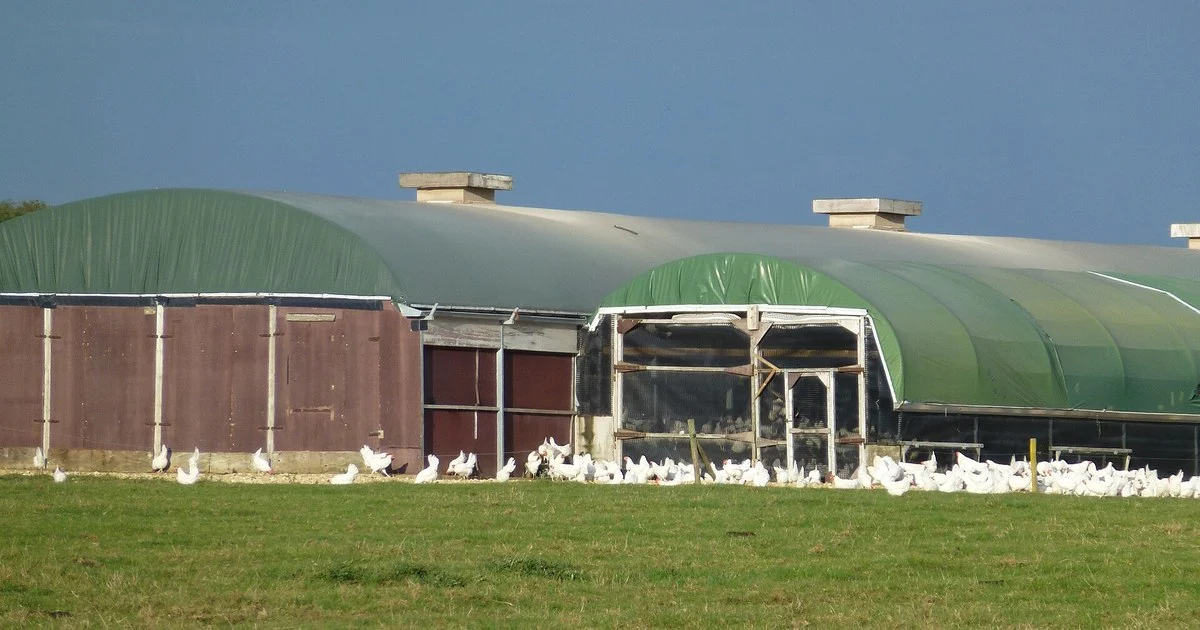
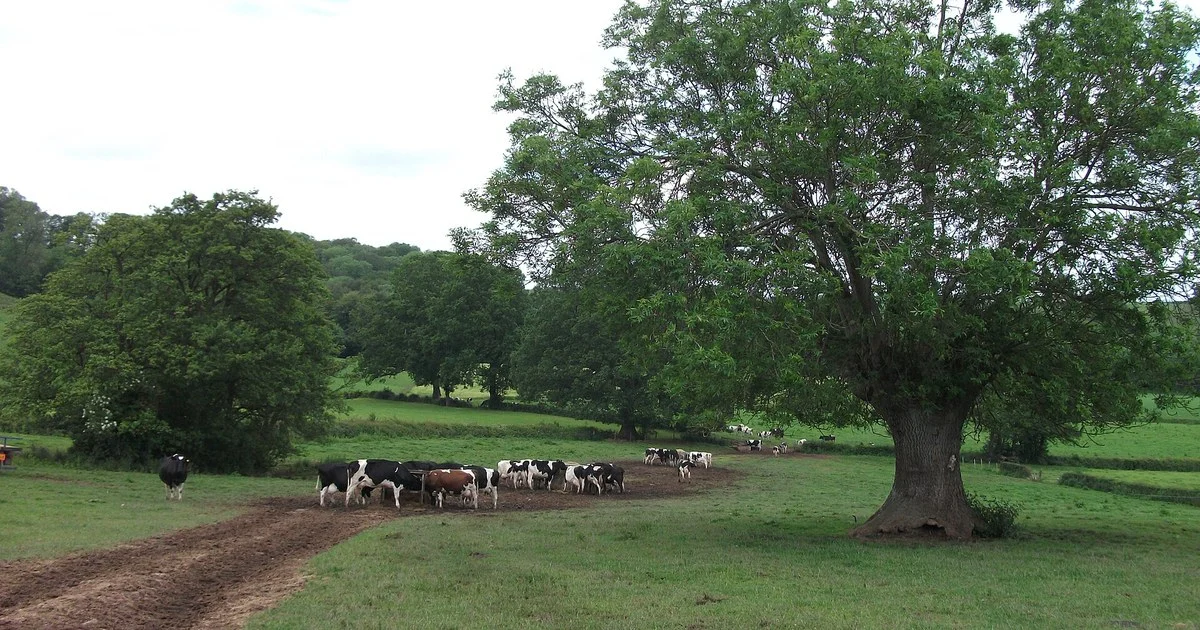
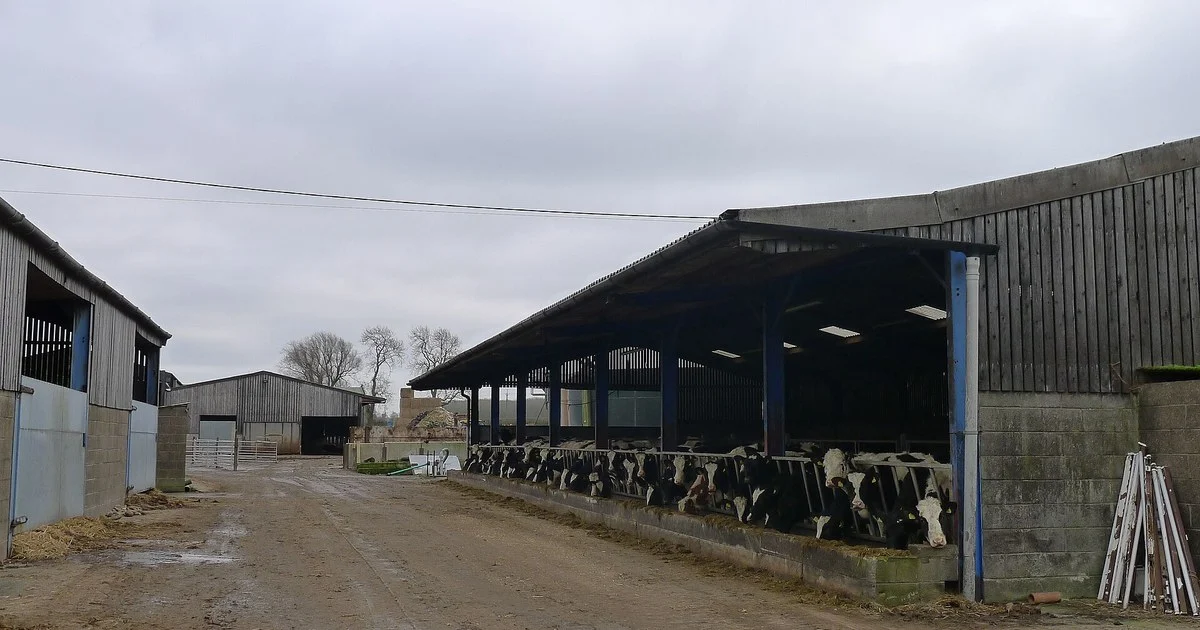
Cover photo: Bob Harvey (CC BY-SA 2.0, cropped) · Source
Status, 21 October 2026: the 2026 to 2027 bird flu season has started. HPAI H5N5 was confirmed in backyard poultry at Ness, Isle of Lewis, on 3 October, ending Great Britain’s freedom status, and H5N1 was confirmed in commercial poultry near Belford, Northumberland, on 19 October, each with a 3km protection zone. No national prevention zone or housing order had been announced when this note was added; check the GOV.UK latest situation page for current measures.
Tim’s take:
The clock on bird flu housing orders is one every poultry keeper should already be working to, not waiting for. Britain’s self-declared freedom from HPAI on 18 May 2026 and the lifting of the last GB-wide prevention zone on 4 June 2026 give a useful breathing window, but that window closes fast once autumn migration gets underway and the first wild bird positives start turning up on the Defra dashboard.
Last season ran to 100 confirmed H5N1 cases across the UK, which is the sort of figure that sharpens the mind about whether your housing is genuinely ready. Worth checking now whether pop-holes seal properly, whether range netting will stand up to a determined fox trying to get at confined birds, and whether your contingency plan covers feed, water and egg collection if birds are suddenly indoors for weeks rather than days.
Watch your APHA alerts from late October onwards. If a prevention zone drops in the first half of November, as recent form suggests it will, keepers who have already run a dry rehearsal will sleep a lot better than those scrambling to adapt on day one.
There is no bird flu housing order 2026 in force yet. On the record of recent seasons, the next one is most likely to land in early November.
A way through this story
Introduction
If you want the short answer: there is no housing order in force anywhere in Great Britain as of late July 2026, and on recent form the next one is most likely to arrive in the first half of November. Britain self-declared freedom from highly pathogenic avian influenza on 18 May 2026, and the last GB-wide prevention zone was lifted on 4 June 2026. Every bird on every holding can legally be outside today.
That is the calendar in outline. The useful detail is in how much the date has moved between seasons, what triggers the decision, and what a keeper is expected to have ready before the announcement rather than after it. The 2025/26 season ran to 100 confirmed HPAI H5N1 cases across the UK, and the restrictions that followed cost free-range producers a housing period of roughly five months.
The bird flu 2026/27 calendar at a glance
Every season moves these dates, but this is the shape of a UK bird flu winter:
August to September: additional biosecurity requirements for game bird rearers, and the first regional prevention zones as wild bird migration begins.
October to December: the Avian Influenza Prevention Zone (AIPZ) is declared, usually regionally first, then nationally. This is the biosecurity stage, not the housing stage.
Early November onwards: mandatory housing measures, typically regional first and national within days or weeks.
January to February: peak case numbers, and the point at which any remaining regional measures are usually extended nationwide.
April to June: housing lifted, then the AIPZ revoked, then self-declared disease freedom.
The run of recent seasons shows how wide that November anchor really is.
What actually triggers a housing order
No calendar houses a flock. Risk assessment does.
Defra and the devolved administrations act on the assessed risk of incursion from wild birds, which rises as overwintering migratory waterfowl arrive and concentrate on wetlands. The decision chain runs in stages, and the stages matter because they carry different obligations. An AIPZ requires enhanced biosecurity but leaves birds outdoors. A housing order requires birds to be kept indoors or otherwise separated from wild birds.
The second input is confirmed cases on the ground. Regional housing measures have repeatedly been declared in the counties carrying the case load first, with national measures following once the pattern is established rather than localised. That two-step is why keepers outside an affected county should not read a regional announcement as irrelevant to them: in both 2024/25 and 2025/26 the regional order was the warning shot for a national one.
Early November is the modal date, not the rule
The recent record is the best guide to what to expect, and it is more variable than the folk memory suggests.
In 2021/22, a GB-wide AIPZ was declared on 3 November 2021 and UK housing measures came into force on 29 November 2021. In 2022/23, a national housing order for England came into force on 7 November 2022. In 2025/26, regional housing measures across northern and central-eastern England landed on 30 October 2025, a national English housing order followed on 6 November 2025, and Wales followed on 13 November 2025.
Then there is 2024/25, which broke the pattern. The AIPZ covered only parts of the East of England on 13 December 2024. Regional housing measures reached East Riding, Hull, Lincolnshire, Norfolk and Suffolk on 23 December 2024. The AIPZ did not extend to the whole of England, and housing did not reach York, North Yorkshire and Shropshire, until 25 January 2025. Wales declared its AIPZ on 30 January 2025.
So the honest range for a national English housing order is early November to late January, with early November the most frequent landing spot in the seasons on record.
Free-range eggs: the rule that changed, and most keepers missed
For a hobby flock, a housing order is an inconvenience. For a free-range egg business it used to be a marketing-standards cliff edge. That cliff edge is gone, and a surprising amount of advice still in circulation has not caught up.
Under the old rules, eggs from housed hens kept free-range status for a 16-week derogation only. Past that point they had to be relabelled and sold as barn eggs, at barn prices, on a date fixed by when the order began. In the long winters that meant relabelling mid-season in automated packhouses, which was expensive and awkward to execute.
That changed. The Free-Range Egg Marketing Standards (Amendment) (England) Regulations 2024 took effect on 22 January 2025, removing the 16-week limit in England, and parallel Scottish regulations removed it in Scotland. Defra consulted on both together, the stated aim being a level playing field with the EU and Northern Ireland, where the limit had already gone. Eggs from hens housed under a mandatory housing order can now be marketed as free-range for the full duration of that order, however long it runs.
The practical effect on the 2025/26 season was substantial. Housing ran from 6 November 2025 to 9 April 2026, a little over five months, comfortably beyond the old 16-week threshold. Under the previous rules that season would have forced a relabelling exercise; under the current ones it did not.
What has not changed is everything else the order costs: covered housing capacity, stocking density and welfare management over a long winter indoors, and the feed and labour that go with it. The money moved. It did not go away.
Getting ready before the announcement, not after
The jobs that bite are the ones that cannot be done in the 48 hours between announcement and enforcement.
Housing capacity is the obvious one: enough covered space, at the right stocking density, with functioning ventilation, because an order arriving in November leaves no time to build. Water and feed moved under cover, since open troughs are exactly the wild bird contact point the order exists to break. Ponds and standing water fenced off. Hard surfaces cleansable, with disinfectant on hand at the approved concentration. Wild bird deterrents in place rather than in a catalogue.
The administrative one is registration, and it has changed. Since 1 October 2024 it has been compulsory in England for all bird keepers to register their birds with Defra, not just those with 50 or more. That covers backyard flocks, birds of prey and racing pigeons. Caged pet birds kept entirely inside a house are excluded. Registration is how Defra reaches keepers when a zone is declared, so an unregistered keeper is one who finds out late.
Nation by nation: the running order
The four administrations act separately, and they do not move together:
England usually goes first and usually goes furthest, reflecting where the commercial poultry density and most of the case load sits. England recorded 79 of the UK’s 100 HPAI cases in 2025/26.
Wales has consistently followed England by days to weeks rather than acting in step: 13 November against 6 November in 2025, and 30 January against 25 January in 2025.
Scotland has at times moved ahead of England, declaring a Scotland-wide AIPZ in September 2025 before England’s regional measures in October. Scotland recorded 9 cases in 2025/26.
Northern Ireland operates its own regime under DAERA and recorded 5 cases in 2025/26.
The practical consequence for anyone farming across a border, or selling into another nation, is that the applicable rule is the one where the birds are, on the date in question.
What a clean summer does to the 2026/27 timing
This is where 2026/27 stops being a typical season.
Britain is entering this autumn from a stronger position than the last two. The self-declared freedom from HPAI on 18 May 2026 and the lifting of the GB-wide AIPZ on 4 June 2026 mean there is no residual domestic reservoir carried into the season, which is not how 2024/25 began. The 2025/26 total of 100 UK cases was concentrated rather than continuous, and the disease control zones were progressively revoked from December 2025 through May 2026.
What that does not do is push the date back. The dominant driver is wild bird incursion in the autumn migration, and a clean summer does not change the migration. The reasonable expectation is a season that starts on the normal schedule, with the October-to-December AIPZ stage and a housing decision in the November window, unless case numbers in continental Europe run unusually early or unusually hot. Anyone budgeting on the assumption that a quiet summer means a late order is reading the wrong signal.
The official language when the last order was lifted was deliberately conditional. “With the threat of Avian Influenza receding, birds can now be allowed access to ranges and outdoor areas,” said Deputy UK Chief Veterinary Officer Jorge Martin-Almagro, announcing the decision on 2 April 2026. Receding is not gone, and the same risk assessment machinery that lifted the order in April is what will reimpose it in the autumn.
Where the real numbers land
Defra publishes the running case list and the current status of every zone on its bird flu latest situation page for England, updated as cases are confirmed, and it is the only source that is authoritative on the day. The animal disease cases service shows which zones are live at any postcode.
Registration, which is now the mechanism by which keepers are told a zone has been declared, is done through Defra’s poultry register. The NFU’s running summary of prevention zones and housing orders that is useful for seeing the sequence of announcements in one place.
We track the 2026/27 declarations as they land, alongside what each stage actually requires of a keeper.
Bottom line
Nothing is in force today. On the record of recent seasons, expect a prevention zone somewhere in Great Britain between October and December, and a national English housing order most likely in the first half of November, with late January the outer edge if the season runs like 2024/25. Wales tends to follow England within a fortnight; Scotland has moved first before now.
The date is not the thing to plan around, because it moves by up to eleven weeks. Housing capacity, covered feed and water, fenced-off water, and a current Defra registration are the things to have in place by the end of October. Watch for the first regional housing announcement rather than the national one: in both of the last two seasons, it was the reliable signal that the national order was coming.
Frequently Asked Questions
Is there a bird flu housing order in the UK right now?
No. Mandatory housing measures were lifted in England and Wales at 00:01 on 9 April 2026, and the GB-wide Avian Influenza Prevention Zone was lifted on 4 June 2026. Great Britain self-declared freedom from highly pathogenic avian influenza on 18 May 2026. Mandatory biosecurity requirements for keepers remain in place regardless.
When will the bird flu housing order come in for 2026?
No date has been announced, and it depends on assessed risk rather than a fixed calendar. On recent form, early November is the most likely window: national English housing orders came into force on 7 November 2022 and 6 November 2025, and UK-wide measures on 29 November 2021. The 2024/25 season was much later, with national English housing not reached until 25 January 2025.
What is the difference between an AIPZ and a housing order?
An Avian Influenza Prevention Zone requires enhanced biosecurity but allows birds to remain outdoors. A housing order goes further and legally requires poultry and captive birds to be kept indoors or otherwise separated from wild birds. The AIPZ is normally declared first, with housing measures following if risk continues to rise.
Do I have to register my chickens with Defra?
Yes, in England. Since 1 October 2024 registration has been compulsory for all bird keepers, replacing the previous threshold of 50 or more birds. It covers backyard flocks, birds of prey and racing pigeons. Caged pet birds kept entirely inside a domestic dwelling are excluded. Registration is how Defra notifies keepers when a zone is declared.
How long did the last bird flu housing order last?
The 2025/26 national housing order in England came into force on 6 November 2025 and was lifted on 9 April 2026, a period of just over five months. The previous season’s measures were lifted on 15 May 2025. Note that since 22 January 2025 there is no 16-week limit on free-range labelling in England or Scotland: eggs may be marketed as free-range for the full duration of a mandatory housing order.
BritFarmers Weekly
One email a week: what’s moved on schemes, prices, disease control and policy, with links to primary sources. Free. No sponsors. Unsubscribe anytime. Subscribe.
Source: Defra / GOV.UK
You’ve reached the end of this story.