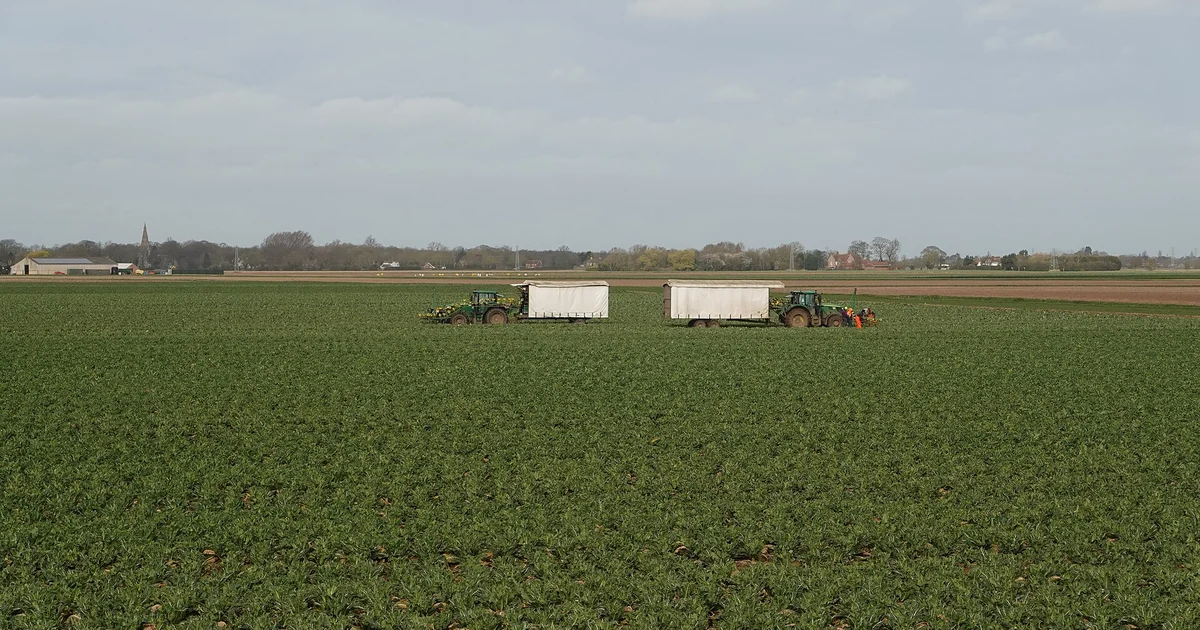
Cover photo: Maurice Pullin (CC BY-SA 2.0, cropped) · Source
Tim’s take:
Ten-year contracts are a rare creature on British farm deals. Most grower-buyer relationships run on twelve-month price negotiations, leaving producers exposed to input cost spikes and shifting retail priorities. When a major commits to a decade, it signals something has changed in how the supply chain values domestic growing, and the working farmer should pay close attention to what that means for their own patch.
The Sainsbury’s tie-up with Thanet Earth and Evesham Vale covers tomatoes, peppers and cucumbers, but the real story sits with winter cucumbers. Thanet Earth, the largest single-site glasshouse complex in the country, will keep producing through the darker months using supplementary lighting, heating and CO2 enrichment, replacing the imported volume that normally fills supermarket shelves from autumn. It is a vote of confidence in energy-intensive protected cropping that has been on shaky ground since 2022.
For growers outside the glasshouse club, the question is whether this model travels. Watch how Aldi, Tesco and the Co-op respond over the next twelve months, and whether any of them chase similar long-term commitments with arable or fresh produce co-ops in your region. If they do, get your procurement conversations in early, because the growers already locked in will be hard to shift.
Sainsbury’s salad growers Thanet Earth and Evesham Vale have signed 10-year supply deals. Why contract length matters more than volume.
A way through this story
What Sainsbury’s has actually signed
Sainsbury’s announced on 23 July 2026 that it has signed 10-year supply agreements with two British growers: Thanet Earth in Kent, the largest single-site glasshouse complex in the country, and Evesham Vale Growers in Worcestershire. The deals cover tomatoes, peppers and cucumbers.
The headline commitment is winter cucumbers. British whole cucumbers have traditionally been a summer line, with imports filling the gap from autumn onwards. Under this agreement Thanet Earth will grow through the darker months using supplementary lighting, heating and CO2 enrichment, and Sainsbury’s expects to increase the volume of British-grown whole cucumbers on its shelves by up to 60% this winter.
The first product to reach shelves is an 800g Taste the Difference British Salad Selection box this summer. Sainsbury’s says the agreements sit within a wider commitment to invest more than £5bn through long-term arrangements with over 2,400 British and Irish farms. The full announcement is on the retailer’s corporate press site.
Why the length is the story, not the volume
Extra cucumbers make the consumer headline. The part that changes anything for growers is the number ten.
A lit glasshouse is not a seasonal decision. Supplementary lighting, heating plant, CO2 dosing and the grid or generation capacity to run them are capital projects that are paid back over a decade or more, not over one trading year. A grower asked to make that investment against a supply arrangement that is renegotiated every season is being asked to carry the whole risk of the retailer walking away. Most rational businesses decline, which is a large part of why British protected cropping contracted rather than expanded after the energy price shock.
The official figures show the squeeze is specific to this crop. DEFRA’s Horticulture Statistics 2025, published on 25 June 2026, put the UK cucumber planted area down 5.7% to 100 hectares, with production falling 3.8% to 51,000 tonnes, even as yields improved to 510 tonnes per hectare. Tomatoes went the other way: area up 7.2% to 226 hectares and production up 4.1% to 79,000 tonnes. Growers are getting more out of each hectare. There are simply fewer hectares of cucumbers to get it from, and that is the gap this deal is aimed at.
Both growers said as much. “Working with Sainsbury’s in this way means we can plan ahead with more certainty and keep pushing what’s possible for British growing,” said Rob James, technical director at Thanet Earth. “Having the confidence and certainty that comes with a long-term agreement allows us to look ahead to the future and invest in our business,” said Paul Faulkner, director at Evesham Vale Growers.
That is the mechanism. The contract is not funding the crop. It is underwriting the building.
What it does not tell us
Several things are absent from the announcement, and they are the things that determine whether this is a genuine shift or a well-presented pair of contracts.
The pricing terms are not public. A ten-year agreement is only worth having if the price mechanism inside it tracks input costs, particularly energy. A decade of guaranteed volume at a price that does not move when gas does transfers risk rather than removing it.
The capital split is not stated. Sainsbury’s says Thanet Earth will invest in the glasshouse capacity. It is not clear what, if anything, the retailer is contributing beyond the volume commitment.
And two sites are two sites. Thanet Earth and Evesham Vale are already among the larger protected-cropping businesses in the country. Whether this model reaches growers below that scale is the open question, and nothing in this announcement answers it.
There is also a straightforward energy point. Growing cucumbers under lights through a British December is energy-intensive by definition. Whether that carries a lower footprint than importing from southern Europe or north Africa depends entirely on how the glasshouse is powered, and Sainsbury’s has not published that comparison.
What this means for growers
If you grow under protection, the practical read is this.
The precedent is useful. A major multiple has now publicly described ten-year terms as commercially normal rather than exotic. That is a reference point in your next negotiation, whoever you supply.
The test to apply to any long-term offer put to you is not the headline duration. It is three questions: how does the price move when energy moves, who owns the asset at the end, and what are the exit terms if the retailer’s category strategy changes in year four.
And if you are weighing a capital investment in lighting or heating, the relevant comparison is not this year’s margin. It is whether you hold a commitment long enough to depreciate the kit against it. That is the calculation these two businesses have evidently been able to make, and most cannot.
For background on the economics of the sector, see our guides to UK glasshouse and polytunnel production and UK salad and vegetable production.
Frequently Asked Questions
Which growers has Sainsbury’s signed 10-year deals with?
Thanet Earth in Kent and Evesham Vale Growers in Worcestershire. The agreements cover tomatoes, peppers and cucumbers and were announced on 23 July 2026.
Will British cucumbers now be available in winter?
Sainsbury’s expects to increase British-grown whole cucumber volumes on its shelves by up to 60% this winter. The crop will be grown at Thanet Earth using supplementary lighting, heating and CO2 enrichment.
Why does a 10-year contract matter to a grower?
Glasshouse infrastructure such as lighting and heating plant is paid back over a decade or more. A short-term supply arrangement leaves the grower carrying the full risk of that investment, which is why long-term commitments, rather than volume alone, are what unlock capital spending.
Has Sainsbury’s published the pricing terms?
No. The announcement covers duration, volume and the products involved. Pricing mechanisms, including how prices respond to energy costs, and the split of capital investment have not been made public.
BritFarmers Weekly
One email a week: what’s moved on schemes, prices, disease control and policy, with links to primary sources. Free. No sponsors. Unsubscribe anytime. Subscribe.
Source: J Sainsbury plc
You’ve reached the end of this story.