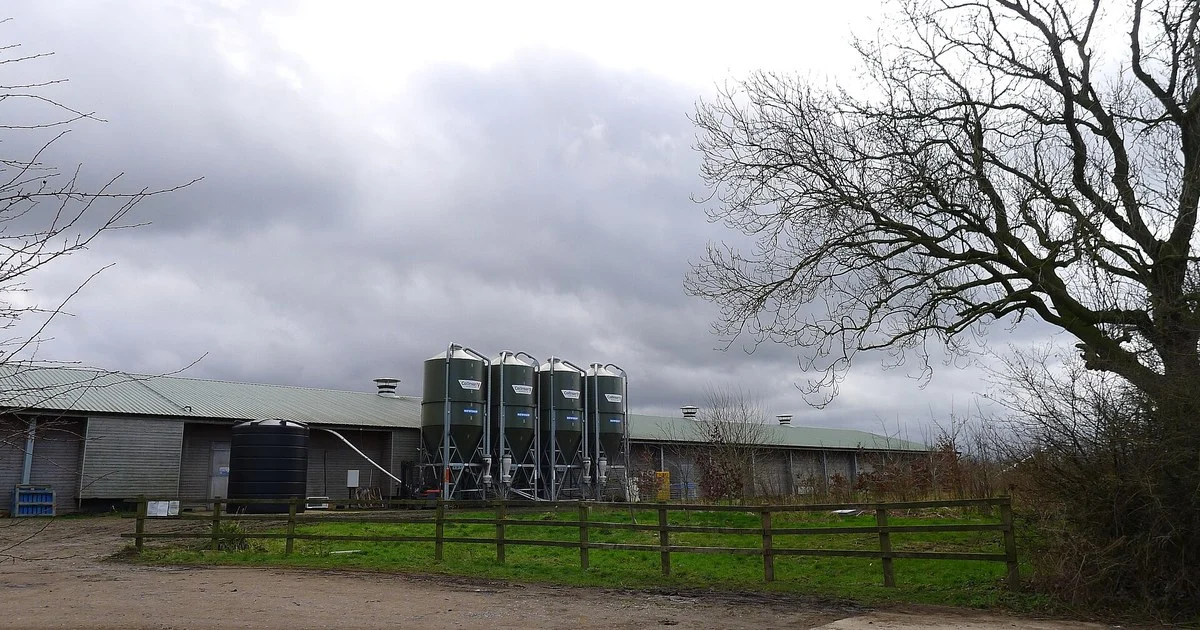
Cover photo: Tim Heaton (CC BY-SA 2.0, cropped) · Source
Tim’s take:
Two more cases will worry keepers nearby, but the rule that reaches most flocks came five days earlier. England has had a housing order since 13 November, and it applies whether or not you are anywhere near Lincolnshire or North Yorkshire.
The new cases, near Coningsby and near Thirsk, were both confirmed in commercial poultry on 18 November. Each has a 3km protection zone and a 10km surveillance zone around it. They take England to nine cases this season, the first of which was confirmed only a month ago, on 19 October. The official risk in wild birds is now rated high.
If you keep birds near either site, check the zone map before you move anything: birds, eggs, litter or manure. Do not guess from the distance by road. Everyone else in England should check whether the housing order covers their flock, because it catches small flocks that sell or give away eggs as well as the big units. I would also go back over the basics this week: feed and water kept away from wild birds, and clean boots and vehicles.
Bird flu Lincolnshire and North Yorkshire: H5N1 confirmed near Coningsby and Thirsk on 18 November. What the 3km and 10km zones mean for keepers.
A way through this story
What has been confirmed
Highly pathogenic avian influenza (HPAI) H5N1 was confirmed in commercial poultry at two premises in England on 18 November 2026:
- near Coningsby, East Lindsey, Lincolnshire (case AIV 2026/30)
- near Thirsk, North Yorkshire (case AIV 2026/31)
A 3km protection zone and a 10km surveillance zone have been declared around each premises, and all poultry on both will be humanely culled. Both declarations took effect at 18:45 on 18 November and stay in force until they are withdrawn or amended.
Defra has not published the type or number of birds at either site.
These bring England to nine H5N1 cases in the 2026 to 2027 season, and the UK to 13 cases of highly pathogenic bird flu, according to GOV.UK’s latest situation page as updated on 18 November. England’s first case of the season was near Belford in Northumberland on 19 October.
Where the zones are
Each zone is a circle drawn around an Ordnance Survey grid reference given in the declaration:
- Coningsby: TF2692353244 (declaration PDF)
- Thirsk: SE3913575909 (declaration PDF)
The protection zone is everything within 3km of that point. The surveillance zone is the ring from 3km out to 10km.
Do not estimate from a road atlas. Check your holding on the bird flu disease zone map, which shows the boundaries. If part of your premises is inside a zone, assume the rules apply to you and ask APHA.
Rules inside the 3km protection zone
The declarations apply the same measures at both sites. If you keep poultry or other captive birds inside a protection zone you must:
- house your birds, or keep them isolated if a veterinary inspector directs that because housing is impractical or would badly affect their welfare
- keep a record of visitors, and of all poultry entering or leaving the premises
- report straight away any rise in sickness or deaths, a significant drop in egg production, or a change in feed or water intake
- not move poultry, other captive birds or mammals on or off the premises without a licence. Pets that stay in the house and have no contact with the birds are exempt
- not move poultry, poultry meat, eggs or carcases into, within or out of the zone unless the movement is licensed. Table eggs going direct to wholesale or retail premises are exempt
- not remove or spread used poultry litter, manure or slurry without a licence
- clean and disinfect vehicles that enter or leave premises where birds are kept
Bird gatherings such as fairs, markets and shows are banned, and game birds must not be released. Poultry and eggs can be carried through the zone on a major road or by rail as long as the vehicle does not stop.
Rules inside the 10km surveillance zone
The surveillance zone does not carry its own housing requirement, but the national housing order described below still applies. Inside the zone:
- the same visitor and movement records must be kept, and the same signs reported
- moving poultry, other captive birds or mammals on or off premises where birds are kept needs a licence
- removing or spreading used poultry litter, manure or slurry needs a licence
- carcases of poultry or other captive birds must not leave the premises without a licence
- gatherings are banned and game birds must not be released
- poultry and eggs can only be moved into or within the zone under the biosecurity conditions of a licence, and poultry moved onto a premises must stay there for at least 21 days
- moving poultry or eggs out of the zone needs a licence, and only for listed purposes such as slaughter or delivery to a designated packing centre
Table eggs going direct to wholesale or retail premises are exempt from the movement rules. Licences are applied for through the movement licence pages on GOV.UK.
Failing to comply may be an offence under the Animal Health Act 1981.
The housing order applies everywhere in England
You do not have to be near Coningsby or Thirsk to be affected. An avian influenza prevention zone (AIPZ) has covered England since 11 November, and since 13 November it has included mandatory housing:
- if you keep 50 or more birds, you must house them
- if you keep fewer than 50 and sell or give away eggs, poultry products or live birds, you must house them
- if you keep fewer than 50 purely for your own use, you do not have to house them
GOV.UK has guidance on housing birds safely. Wales has had a prevention zone with mandatory biosecurity, but no housing requirement, since 16 November. Northern Ireland’s prevention zone, with housing, took effect on 19 November. Our housing order guide explains how the rules differ by nation.
The official risk level has risen since October. The risk in wild birds in Great Britain is now assessed as high. The risk of poultry being exposed is medium where biosecurity is poor and low where stringent biosecurity is applied at all times.
What keepers should do now
- Check the zone map to see whether you are in either zone. This applies to backyard flocks as much as commercial units.
- If you are in a zone, start your visitor and movement records today.
- Do not move birds, eggs, litter or manure until you have checked whether you need a licence.
- Shoots inside either zone must not release game birds.
- Wherever you are in England, make sure your birds are housed if the housing order applies to you. The autumn bird flu checklist goes through the biosecurity basics.
Bird flu is a notifiable disease. If you suspect it, report it immediately: call 03000 200 301 in England or 03003 038 268 in Wales. Our guide to reporting a notifiable disease explains what happens after the call.
We will update this page if the zones change or further cases are confirmed nearby.
Frequently Asked Questions
Where has bird flu been confirmed in Lincolnshire?
In commercial poultry near Coningsby, East Lindsey, confirmed on 18 November 2026 as HPAI H5N1 (case AIV 2026/30). A 3km protection zone and 10km surveillance zone are in place.
Where has bird flu been confirmed in North Yorkshire?
In commercial poultry near Thirsk, confirmed on 18 November 2026 as HPAI H5N1 (case AIV 2026/31). A 3km protection zone and 10km surveillance zone are in place.
Do I have to house my birds?
In England, yes if you keep 50 or more birds, or fewer than 50 and you sell or give away eggs, poultry products or live birds. The housing order has applied since 13 November 2026. Inside a 3km protection zone all poultry and captive birds must be housed or isolated.
Can I still sell eggs from inside a zone?
Table eggs moved direct to wholesale or retail premises are exempt from the movement restrictions in both zones. Other egg movements need a licence.
BritFarmers Weekly
One email a week: what’s moved on schemes, prices, disease control and policy, with links to primary sources. Free. No sponsors. Unsubscribe anytime. Subscribe.
Source: GOV.UK / APHA
You’ve reached the end of this story.