Sheepdog Breeds: The Border Collie, the New Zealand Huntaway and Which Dog Fits UK Farms
Tim’s take:
A good dog is the cheapest labour a sheep farm will ever employ and the hardest to replace. Most British flocks answer the dog question the same way their grandfathers did, with a collie, and usually that is the right answer. But the question is worth actually asking, because the breeds are tools with different shapes, and the loud one from New Zealand that half the internet is suddenly searching for genuinely does a different job.
A way through this story
The Border Collie: the default for a reason
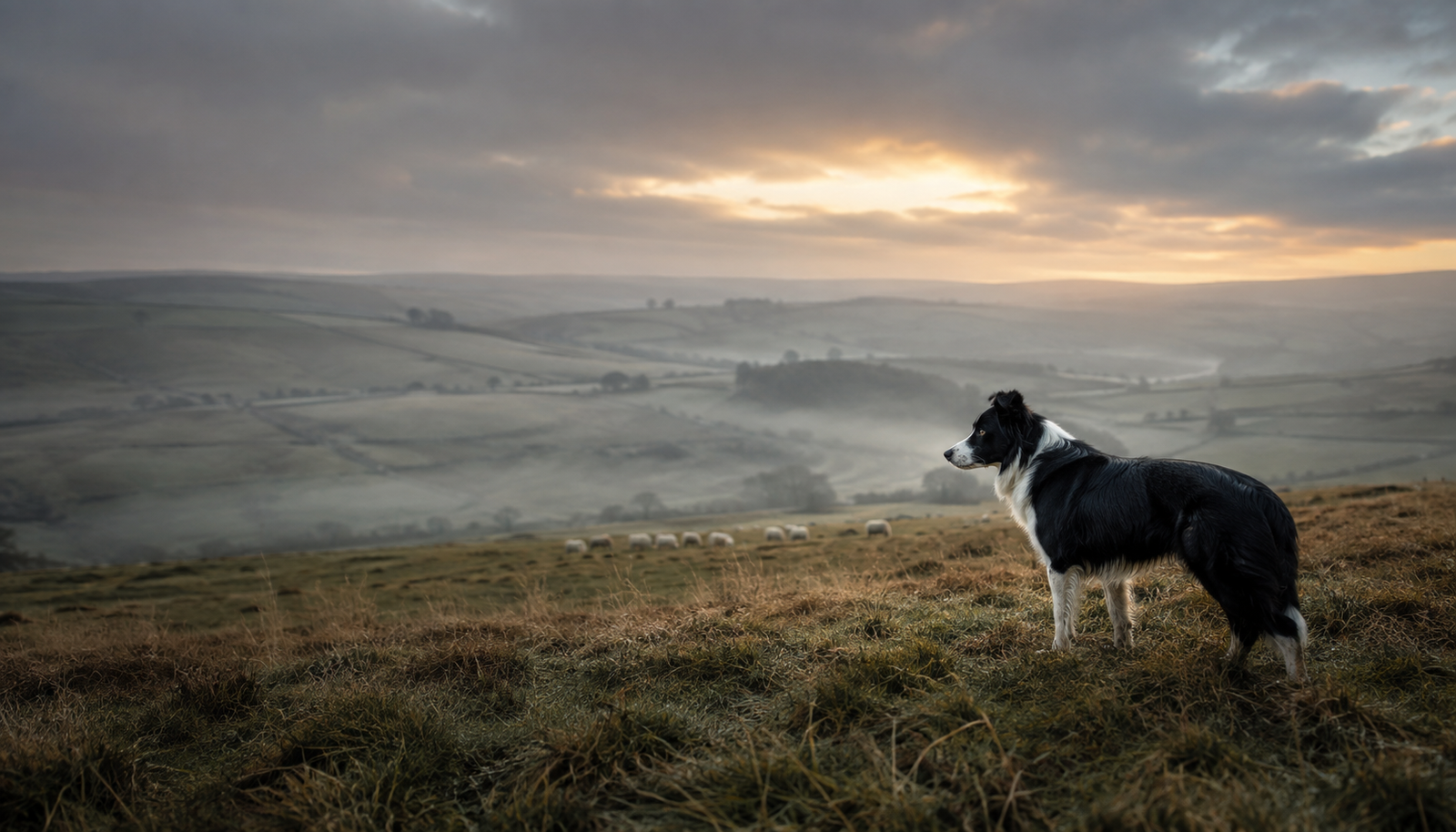
The working Border Collie is the most organised breeding project in British agriculture. The International Sheep Dog Society, founded in 1906 with the stated purpose of improving the shepherd’s dog, registers more than 6,000 pups a year into a stud book that now holds over 300,000 entries, with pedigrees traceable back a century. A dog without papers can still earn its way in: the society’s registration on merit route admits any dog that proves itself a good working example, which tells you where the breed’s priorities sit.
The collie’s method is the famous one: silent work, the crouch, the eye, the wide outrun that ends with sheep flowing back towards the handler. It is a gathering dog before anything else, and for the fetching, folding and close work that makes up most lowland and upland shepherding, nothing touches it.
The New Zealand Huntaway: bred to be heard
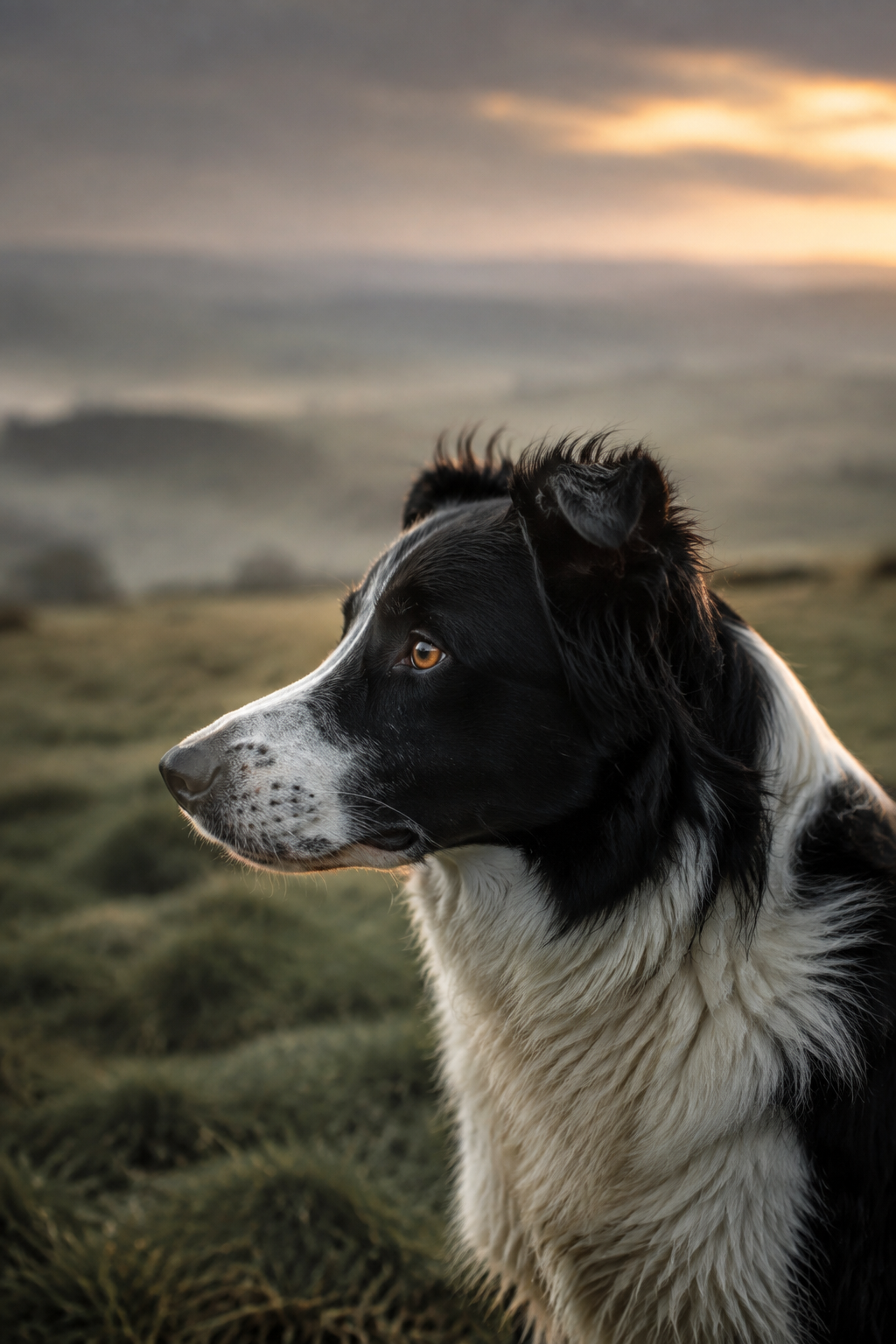
The Huntaway is the dog people are searching for when they ask about New Zealand sheep dogs, and it breaks the first rule every collie handler was taught, because it is supposed to bark. Dogs New Zealand, the national kennel club, describes a breed created in the early 1900s for one purpose: moving sheep up steep hill country with a deep, deliberate bark, complementing the silent work of the NZ Heading dog. The ancestry is honest mongrel, possibly Border Collie, Bearded Collie, Labrador, Rottweiler, Harrier, Gordon Setter and Smithfield Collie, because the breed was assembled from whatever worked.
It is a big dog, 50 to 66 cm at the shoulder and 20 to 40 kg, and that spread is itself the point: the breed standard is explicit that Huntaways are selected solely on working ability and physical soundness, never looks. Where the collie gathers sheep towards you, the Huntaway drives them away and upwards, pushing a mob off the flat and up a face with a bark it can sustain all day. On the vast stations it was built for, that noise replaces a second shepherd.
Does it belong on a British farm? Sometimes. Big open hill gathers and forcing work at the yards are where the bark earns its keep, and the dog’s size and stamina suit hard ground. Set against that: most UK holdings are smaller, more fenced and closer to neighbours than anything the breed was designed for, and a dog bred to be loud is loud. It is a specialist tool arriving in a country already well served by a generalist.
The rest of the toolbox
The Australian Kelpie, another descendant of British collie stock reshaped by a harder country, works closer to the collie style with more push, and has its adherents on UK farms. And Britain’s own older types survive in pockets: the Welsh Sheepdog, a looser-eyed, more upright worker; the Bearded Collie, whose working lines predate its show career; the Old English Sheepdog, a drover’s dog long since lost to the ring. The pattern across all of them is the same one the Huntaway proves: sheepdog breeds are shaped by the ground and the job, not the other way round.
Choosing for the farm you actually have
The honest questions are about the work, not the dog. Mostly gathering and close handling on fenced ground: a collie, and the ISDS registry is where to start looking. Big open gathers, heavy mobs, yard forcing: that is where a driving dog states its case. Whatever the breed, the dog is one decision inside a system; our guides to UK sheep farming, sheep breeding and the Blackface hill flocks that dogs like these were built to move cover the rest of it.
Frequently asked questions
What breed is a New Zealand sheep dog?
Two types: the Huntaway, a large bark-driving breed for pushing sheep up steep country, and the Heading dog, which works silently in the collie style. The Huntaway stands 50 to 66 cm, weighs 20 to 40 kg, and is bred on working ability alone.
What is the most common sheepdog breed in the UK?
The Border Collie. The International Sheep Dog Society registers over 6,000 working pups a year into a stud book of more than 300,000 entries, and the working population beyond the registry is larger still.
What is the difference between a Huntaway and a Border Collie?
Direction and noise. The collie gathers sheep towards the handler, silently, on the eye; the Huntaway drives them away and uphill on a sustained deep bark. New Zealand teams commonly run both because the jobs are different.
You’ve reached the end of this story.
Images in this edition are AI-generated editorial illustrations.