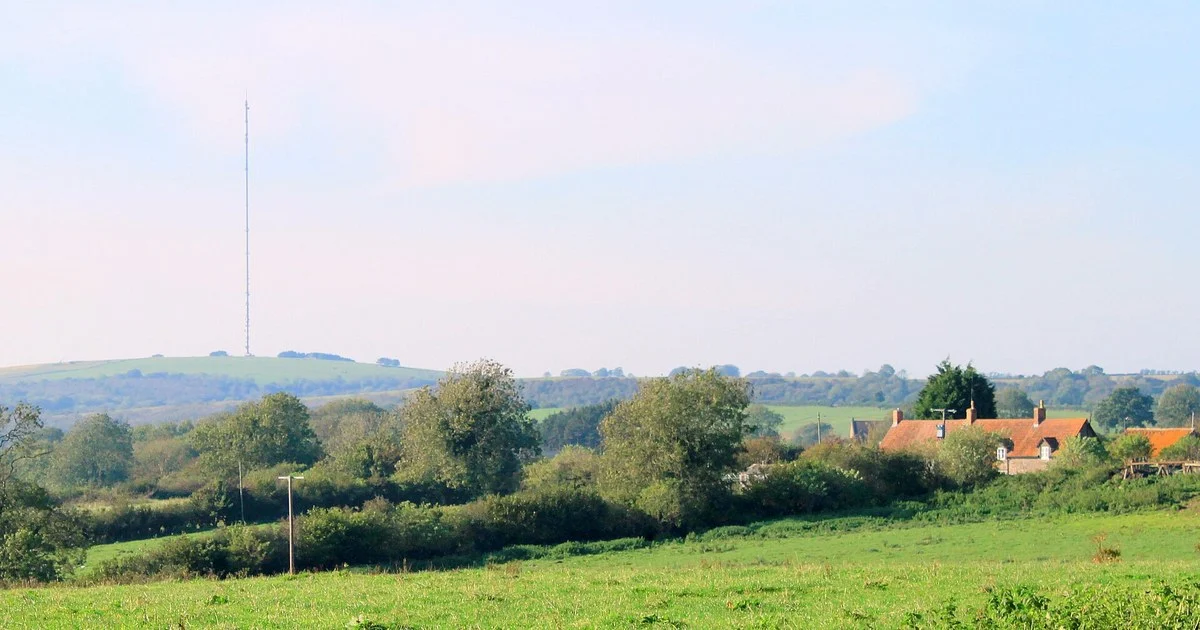
Cover photo: Eric Jones (CC BY-SA 2.0, cropped) · Source
Rural broadband for a farm in 2026 is not one decision. The reliable setup is usually one fixed line if you can get it, one mobile or satellite fall-back if the business depends on it, and a yard network designed around steel buildings, not around a neat house plan.
The mistake is buying the fastest headline speed and assuming the farm is sorted. A farmhouse office, grain store, lambing shed, packhouse, workshop and far yard can all have different signal problems. The right question is not “what broadband package is cheapest?” It is “which jobs on this holding stop when the connection fails?”
This guide is written for UK farms, smallholdings and rural businesses trying to make a practical 2026 decision: fibre if it is coming, fixed wireless where it is credible, 4G or 5G where the mast actually reaches the yard, and satellite where the holding is genuinely hard to connect.
A way through this story
Start with the farm jobs, not the package speed
A farm broadband setup has to serve work, not just screens. Before ringing suppliers, list the jobs that depend on a connection:
- banking, invoices, payroll, VAT and rural payment accounts;
- livestock records, movement reporting, assurance paperwork and vet correspondence;
- grain store monitoring, cameras, alarms, weather stations and irrigation controls;
- card payments, online orders, email, delivery labels and website updates;
- phone calls over Wi-Fi where mobile signal is poor indoors.
That list changes the decision. A household can tolerate a slow film download. A farm office with a payment deadline, calving camera, card machine or packhouse label printer cannot treat the connection as a nice extra. The same fixed-cost discipline applies to energy: if you have not read the separate BritFarmers guide to farm energy costs in the UK, read that alongside this because power, broadband and resilience now sit in the same overhead conversation.
The five realistic routes for rural broadband farm UK decisions
Most working farms are choosing between five routes. None is perfect. The right answer depends on what reaches the holding, where the office sits, and whether the weak point is the incoming connection or the network around the yard.
| Route | Best fit | Main weakness | Farm verdict |
|---|---|---|---|
| Fibre to the premises | Farmhouse or office that can get a full-fibre install | May stop at the lane, village edge or one building only | Best first choice where it is genuinely available. Check the address and the build plan, not just the postcode. |
| Fixed wireless access | Open country with line of sight to a mast or local provider | Trees, buildings and terrain matter; quality varies by supplier | Worth pricing where fibre is absent, especially for yards that can mount kit high and clear. |
| 4G or 5G router | Farms with a usable outdoor mobile signal | Indoor signal can collapse inside steel, concrete or insulated panels | Good as a second line or main line where a directional antenna can see the mast. Test before contract. |
| Low-earth-orbit satellite | Remote holdings, awkward valleys and places missed by cable build-outs | Needs clear sky, has kit cost, and may not suit every budget | Often the quickest rescue option where everything else is years away. Keep power and mounting in mind. |
| Dual-WAN or bonded setup | Any farm where a connection failure stops trading | More kit, more setup, more things to maintain | The sensible business setup: one main line, one fall-back, automatic failover if possible. |
What Project Gigabit actually means for a farm
Project Gigabit is the government programme for hard-to-reach premises that would otherwise miss out on gigabit-capable broadband. GOV.UK describes it as targeting homes and businesses not included in suppliers’ commercial plans, with a national ambition for 99% of premises to have gigabit-capable access by 2032.
That matters, but it does not mean every farm gets a quick trench to the yard this year. The practical question is whether the holding is inside an active procurement or contract area, a supplier commercial build, or neither. If it is neither, the voucher route may matter.
The Gigabit Broadband Voucher Scheme can provide eligible homes and businesses with vouchers worth up to £4,500 towards the cost of installing gigabit-capable broadband. The same guidance says the scheme operates where there is no Project Gigabit procurement or contract, and no existing or planned commercial coverage.
For a farm, that means three checks before assuming there is money on the table:
- Is the exact farm address already covered by a planned commercial or Project Gigabit build?
- Is there a registered supplier willing to build to that premises or cluster of premises?
- Will the voucher cover enough of the real build cost, or does the farm still face a contribution?
In Suffolk, the local context is not theoretical. Suffolk County Council says the county’s Project Gigabit contract was awarded to CityFibre, representing a £100 million investment for high-speed gigabit broadband capability. That does not answer every individual farm, but it gives Suffolk holdings a place to start checking build progress rather than relying on rumour.
Mobile coverage is improving, but farms still need to test their own yard
The Shared Rural Network progress update says the programme’s objective is 4G coverage to 95% of the UK by December 2025, with improvements for an additional 280,000 premises and 16,000 kilometres of roads. That is useful national context. It is not the same as proving that your office, grain store or calf shed has a reliable signal.
Farms are awkward for mobile. Steel cladding, grain bins, thick walls, refrigeration panels and low yard positions can knock out signal that looks good on a public coverage map. A mobile router in the kitchen window is not the same as a directional antenna mounted above the workshop roofline.
Before signing a long contract, test with a phone or temporary SIM from the networks you are considering. Test in the place the router will actually sit. Test when the yard is busy, not only on a quiet Sunday afternoon. If the signal only works with the office door open, it does not work.
Build the farm network around buildings, not around Wi-Fi hope
Many farm broadband problems are blamed on the incoming line when the real failure is inside the yard. One router in the farmhouse will not reliably serve a packhouse, office, workshop and far shed if the signal has to cross brick, steel, glass, insulation and wet weather. This is also where farm investment decisions overlap with wider farm diversification planning: card payments, cameras, booking systems and online sales all depend on the unglamorous network behind them.
The basic hierarchy is:
- Wired link
- Best for fixed buildings where cable can be run safely. It is dull, but it works.
- Point-to-point wireless bridge
- Useful between buildings with clear line of sight. Better than hoping ordinary Wi-Fi reaches across a yard.
- Mesh Wi-Fi
- Useful inside houses and offices. Often oversold for farmyards because every hop costs performance.
- Mobile or satellite fall-back
- A second route to the internet when the main line fails, not a substitute for a proper local network around the yard.
The test is simple: can the person doing the job get a stable signal where the job happens? If the answer is no, the farm has a network-design problem, not just a broadband-package problem.
The cheapest reliable setup for most small farms
For many small UK farms in 2026, the sensible order is:
- Check full fibre availability and Project Gigabit plans at the exact farm address.
- If fibre is unavailable, check fixed wireless and local rural broadband providers.
- Test 4G or 5G outdoors with a proper router and external antenna before committing.
- If the business cannot tolerate outages, add a second route and use a router that can fail over automatically.
- Only then spend money extending Wi-Fi around buildings.
That order avoids the common mistake: buying repeaters, boosters and shiny mesh boxes before proving the main connection and yard layout. Farm Wi-Fi kit can be useful, but it cannot rescue a bad incoming connection or a router buried in the wrong building.
Where satellite fits
The government’s UK Wireless Infrastructure Strategy recognises satellite and fixed wireless as part of the answer for hard-to-reach areas. It says satellite can connect remote or very hard-to-reach premises where other broadband options are limited, and can also improve resilience as a backup connection.
That is the right frame. Satellite is not magic, and it is not always the cheapest route. It is most compelling when the alternative is waiting years for cable build-out, or when a farm needs a working connection quickly and has clear sky for the dish.
If you use satellite as the main line, think about three practical details before ordering:
- where the dish can see open sky without farm machinery, trees or buildings blocking it;
- how the cable gets safely into the office or comms cabinet;
- what happens to the business connection during a power cut.
A farmer’s buying checklist
Before choosing rural broadband for a farm, write down answers to these:
- Which single task loses money fastest if the internet goes down?
- Does the connection need to reach one office or several buildings?
- Is full fibre available at the exact address, not just nearby?
- Is the holding in a Project Gigabit area, voucher area, commercial build area, or none of those?
- Which mobile network is strongest at roof height, not at kitchen-table height?
- Do you need a second connection for failover?
- Who will maintain the router, antenna, dish, cables and passwords when something breaks?
That last question is not glamorous, but it matters. A farm broadband setup is part of the business infrastructure now. If the only person who understands it is the installer who came once three years ago, the system is fragile. It also belongs in the same risk folder as machinery guards, electrics and lone-working procedures covered in the BritFarmers farm safety guide.
Bottom line
The best rural broadband farm UK setup in 2026 is rarely one box from one supplier. Start with the best fixed connection available, check Project Gigabit and voucher eligibility, test mobile signal properly, and build the yard network around the buildings that actually need service.
If the internet is only used for email, a single line may be enough. If it runs payments, compliance, cameras, orders, staff communication or remote monitoring, treat it like water or power: one main route, one fall-back, and a simple plan for when it fails. Farms considering solar, battery storage or wider electrical upgrades should also read the BritFarmers guide to farm renewable energy in 2026, because connection, power and monitoring decisions increasingly land together.
Sources
- GOV.UK: Project Gigabit
- GOV.UK: Gigabit Broadband Voucher Scheme information
- GOV.UK: Shared Rural Network progress update, September 2024
- GOV.UK: UK Wireless Infrastructure Strategy
- Suffolk County Council: Project Gigabit
FAQ
What is the best broadband for a farm?
The best farm broadband is usually full fibre if it is available at the exact premises. Where it is not, fixed wireless, 4G or 5G routers, satellite, or a dual-connection setup may be more practical.
Can farms get help with broadband installation costs?
Some farms may be eligible for the Gigabit Broadband Voucher Scheme, which GOV.UK says can provide vouchers worth up to £4,500 towards installing gigabit-capable broadband where the premises meet the scheme conditions.
Is satellite broadband good enough for a farm?
Satellite can be a good option for remote or very hard-to-reach farms, especially where other broadband routes are years away. It still needs clear sky, sensible mounting, power resilience and a proper local network around the yard.
You’ve reached the end of this story.