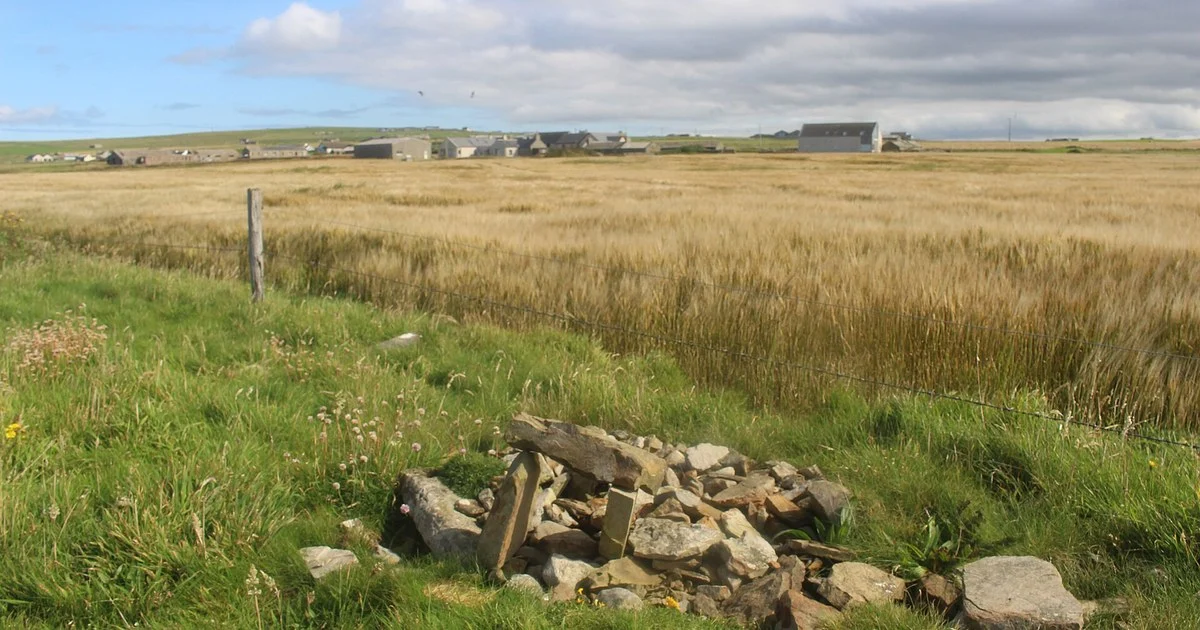
Cover photo: Des Blenkinsopp (CC BY-SA 2.0, cropped) · Source
Demonstrator projects are useful or theatre, depending on whether they’re tied to operating reality. The £2.4 million RePeat circular farm at Pollybell, running across 5,000 acres of Lincolnshire, Nottinghamshire, and South Yorkshire, has the scale and the partner structure to actually demonstrate something rather than illustrate it. A three-year window for the demonstrator phase suggests the funders expect transferable findings, not just a glossy report.
The detail past the headline is the integration goal: food production plus low-carbon fuel generation as a single rotation. That’s harder than running parallel systems on adjacent fields, and it’s where most circular-economy projects in farming have run aground previously. The farms that have got close are the ones with sufficient scale to absorb learning costs while the rotation settles. Pollybell at 5,000 acres has that headroom.
For working arable farms watching this from the sidelines, the practical move is to track the data Pollybell publishes year by year on actual margin per hectare under the integrated system versus a conventional rotation. That comparison is the test. If RePeat delivers margin parity or better, the model is portable down to mid-sized farms; if it doesn’t, the project still teaches the sector where the limits sit. Three-year demonstrators often answer their first big question in year one.
A £2.4m circular farm project at Pollybell Farm could reshape UK agriculture, linking food production with clean fuel generation.
A way through this story
Lincolnshire Trial Connects Crops to kWs — Circular Farm
It’s not every day you hear about turning a field of crops into both dinner and a tank of fuel for your boiler, but that’s precisely what a new £2.4 million ‘circular farm’ initiative, dubbed RePeat, aims to do. Launched on Pollybell Farm’s vast 5,000-acre estate across Lincolnshire, Nottinghamshire, and South Yorkshire, this UK-first project seeks to integrate food production with low-carbon fuel generation in a way that could truly alter the agricultural sector for the next generation. It’s about more than just sustainability; it’s about a new economic model for farming that makes sense both environmentally and on the balance sheet.
This three-year demonstrator brings together some serious players: the University of Lincoln, Pollybell Farm themselves, and energy supplier Flogas, all with backing from Defra’s Farming Innovation Programme and Innovate UK. The core idea is simple in concept, complex in execution: use biomass from farm-grown crops to produce renewable dimethyl ether (rDME), a low-carbon fuel that can power homes off the gas grid. This is blue-sky thinking; it’s about practical solutions for the 1.5 to 2 million rural homes currently struggling with limited affordable low-carbon heating options. What’s more, the system plans to capture heat and CO2 from fuel production, redirecting it to controlled environment agriculture for year-round food production – a cycle designed to cut waste and boost efficiency, which any farmer knows is music to the ears.
Beyond the Farm Gate: Energy Security for Rural Britain
The implications of RePeat extend far beyond the immediate farm gates of Pollybell. By focusing on renewable rDME from biomass, the project is tapping into a significant need for energy independence in rural areas. We’ve seen the volatility of global energy markets impact farm input costs directly, so having a localised, farm-produced fuel source could provide a much-needed buffer. Flogas’s involvement here isn’t surprising; they’re clearly seeing the potential for a new off-grid fuel market that aligns with national decarbonisation goals while offering stability to consumers.
Dr. Amir Badiee from the University of Lincoln articulated this nicely, stating RePeat is ‘about bringing together technologies that already exist and proving they can work as a connected system on a commercial farm.’ That’s the real test: moving from lab-scale ideas to something that’s commercially viable and repeatable across various farm settings. The university will be leading the charge on system design, monitoring, and validation, ensuring that the data gathered is reliable and, importantly, transferable. For farmers watching this unfold, reliable, transferable data is worth its weight in gold when considering adoption.
Pollybell’s Pioneering Spirit and the Future Economics of Farming
Pollybell Farm isn’t new to this kind of ground-breaking work, having already spearheaded over £9 million in research across peatland management, biomass, and controlled environment agriculture. They’re a farm that clearly understands the long game, seeing the value in investing in future-proof technologies. Project lead James Brown hit the nail on the head when he suggested this approach could ‘transform how farms operate.’ He added, ‘The opportunity here is to rethink how land is used, producing food, generating energy and improving environmental outcomes in a single system.’ That’s not just rhetoric; it’s a shift in how we might conceptualise land use, moving away from siloed production to a truly integrated system that generates multiple income streams.
This integration of food, energy, and environmental management is what we’ve been talking about for years, but often in abstract terms. RePeat offers a concrete, large-scale demonstration of how it can actually work. It’s about building resilience into farm businesses, diversifying income streams in an increasingly volatile market, and addressing climate pressures head-on. If successful, this could set a precedent for how UK agriculture contributes to both national food security and national energy security, and frankly, that’s a prospect worth paying close attention to.
What This Means for Farmers
For working farmers, this RePeat project on Pollybell’s land isn’t just another research grant headline; it’s a window into potential new revenue streams and greater operational autonomy. Imagine being able to grow a crop that not only feeds people but also fuels your farm machinery, heats your farmhouse, or even provides a guaranteed revenue stream by supplying fuel to a local energy grid. It opens up the possibility of truly circular income, hedging against fluctuating commodity prices for both food and fossil fuels.
Importantly, the focus on integrating existing technologies means lessons learned here will be more practical to implement elsewhere. If proven viable, it could empower farmers to take a more active role in the energy market, rather than just being consumers. The concept of capturing waste heat and CO2 for controlled environment agriculture also represents a tangible way to potentially extend growing seasons and increase yields, offering year-round income possibilities from high-value crops.
What to Do Next
Keep a close eye on the progress of the RePeat project over the coming three years. Follow updates from the University of Lincoln, Pollybell Farm, and Flogas. While immediate adoption isn’t on the cards for most, understanding the technology and the economic models being tested will position you well for potential future opportunities. Consider what biomass feedstocks could be grown on your own land and research the practicalities of small to medium-scale biomass processing. Attend industry events and workshops where the project’s findings will likely be shared. This is about watching; it’s about learning how these principles might one day apply to your own farm, helping you plan for a future where food, fuel, and environmental stewardship are all part of the same profitable equation.
Frequently Asked Questions
What is the RePeat project?
The RePeat project is a UK-first £2.4 million ‘circular farm’ initiative in Lincolnshire aiming to turn crops into both food and low-carbon fuel (renewable dimethyl ether, rDME) on a large scale. It integrates food production, renewable energy, and environmental management.
What fuel will be produced?
The project will produce renewable dimethyl ether (rDME) from farm-grown biomass. This low-carbon fuel can be used in existing heating systems, particularly beneficial for off-grid rural homes.
Where is the project located?
The large-scale demonstrator is being established across Pollybell’s 5,000-acre estate, which spans Lincolnshire, Nottinghamshire, and South Yorkshire.
Who is involved in the RePeat project?
The project brings together the University of Lincoln, Pollybell Farm, and energy supplier Flogas, with funding support from Defra’s Farming Innovation Programme and Innovate UK.
BritFarmers Weekly
One email a week: what’s moved on schemes, prices, disease control and policy, with links to primary sources. Free. No sponsors. Unsubscribe anytime. Subscribe.
Official Sources
- AHDB — Agricultural technology and innovation resources
- HSE Agriculture — Farm machinery safety and regulations
You’ve reached the end of this story.