If your licence only lets you fill your irrigation reservoir from November, you may be able to start this month. On 1 October the Environment Agency published a regulatory position statement, RPS 382, that allows abstraction licence holders to take water outside their authorised period to fill existing storage reservoirs. It runs from 1 to 31 October 2026 inclusive.
The EA says this typically lets farmers start refilling about a month earlier than their licences allow, and that eligible holders don’t need to wait for a local drought assessment first. It isn’t a general relaxation, though. Your licence’s other limits still apply, you have to tell the EA before you start, and large parts of East Anglia and every Principal Salmon River catchment are excluded.
A way through this story
Why it’s been issued
The reservoirs that carry irrigated crops through summer are emptier than usual going into winter. In its drought report for 25 September to 1 October, the EA says some reservoirs are at 0% to 20% of capacity and that all the river flow sites it reports on were normal or lower for the time of year. Formal Section 57 spray irrigation restrictions are still in place in parts of East Anglia until 31 October.
Refill depends on rivers having water to spare, and they mostly don’t yet. RPS 382 adds October to the window, but it doesn’t add rain. The month only helps where flows are above your licence’s hands-off flow.
Who can use it
You need an abstraction licence that already authorises filling a water storage reservoir for later use in spray or trickle irrigation. The reservoir must already exist, and the water can only go into it.
You can’t use the RPS if your licence already lets you abstract in October, or “All year”, to fill a storage reservoir. Check the “Period of abstraction” section of your licence. If October is already covered, you’re under your normal licence and the RPS doesn’t apply.
The conditions
Under RPS 382 you must:
- abstract only between 1 and 31 October 2026
- stay within the rate and daily volume in your licence (usually under “Maximum quantity of water to be abstracted”)
- comply with any hands-off flow, hands-off level or similar restriction in your licence
- keep to every other licence condition, including the point of abstraction and fish or eel intake screening
- record the volume you take each day you abstract, keep those records for six years and show them to the EA if asked
- notify the EA before you start. Email rpsregistrations@environment-agency.gov.uk with your licence number and the licence holder’s name, and put “RPS 382” in the subject line.
You also must not derogate a protected right. That means you can’t take water in a way that stops another lawful abstractor, licensed or exempt, from taking what they’re entitled to.
The notification matters for another reason. Once the EA has it, you’ll get abstraction alerts in the usual way until 31 October, so you’ll know when flows drop below your hands-off threshold.
Where it doesn’t apply
Section 57 catchments. You can’t use RPS 382 in the 18 catchments under spray irrigation restrictions in Section 57 of the Water Resources Act 1991. The EA lists them as the Blackwater, Bure, Butley/Tidal Alde and Ore, Can and Roxwell Brook, Chelmer, Colne, Deben, “Flynn” and Lark, Glaven, Mun and coast, Stour (lower) and Brett, Stiffkey, Tas, Ter, Waveney, Wensum, Wid and Yare. Most of Norfolk, Suffolk and Essex irrigation country is on that list. The RPS has a map.
Principal Salmon Rivers. It’s also excluded in all 43 catchments classed as Principal Salmon Rivers. These include the Test, Itchen, Hampshire Avon, Dorset Frome and Stour, Exe, Tamar, Wye, Severn, Eden, Lune, Ribble, Tyne, Tees and Wear. The full list is in the RPS.
If your farm is in either group, you can still ask the EA for out-of-season abstraction based on a site-specific assessment. The RPS points to the EA’s guidance on water abstraction during prolonged dry weather and drought.
Separately, the EA has asked licence holders in some Essex and Suffolk catchments to cut abstraction voluntarily. That doesn’t stop you using the RPS. The EA asks you to consider whether you can keep to the voluntary reduction anyway.
Cost and returns
The EA won’t charge you for water taken under the RPS, and your annual subsistence charge doesn’t change. Don’t include RPS water in your annual abstraction return. Keep your own daily records instead.
What to check before you switch the pump on
- Your licence. Is it for filling a reservoir for spray or trickle irrigation, and does its period exclude October?
- Your catchment. Is it on the Section 57 or Principal Salmon River list? If you’re not sure, use the maps in the RPS or ask the EA.
- Your flow conditions. What’s your hands-off flow or level, and is the river above it today?
- The email. Send the notification to rpsregistrations@environment-agency.gov.uk with “RPS 382” in the subject before you abstract.
- The meter. Start a daily volume log from day one.
The RPS expires on 1 November 2026, and the EA can withdraw or amend it before then. Use “Get emails about this page” on the RPS publication page to get updates. If you start under the RPS and later can’t meet a condition, stop abstracting and email wrregulation@environment-agency.gov.uk with “RPS 382” in the subject. Questions go to the same address.
For the East Anglian picture, see our piece on abstraction restrictions and winter refill in East Anglia. For licensing more broadly, see UK water resources and abstraction licences in 2026, and for recent rain where you are, see UK rainfall by region.
Sources
- Environment Agency, RPS 382: Abstraction outside the authorised period for filling water storage reservoirs (1 October 2026)
- Environment Agency blog, How does the Environment Agency manage abstraction to protect the environment? (1 October 2026)
- Environment Agency, Dry weather and drought in England: 25 September to 1 October 2026
- Water Resources Act 1991, section 57
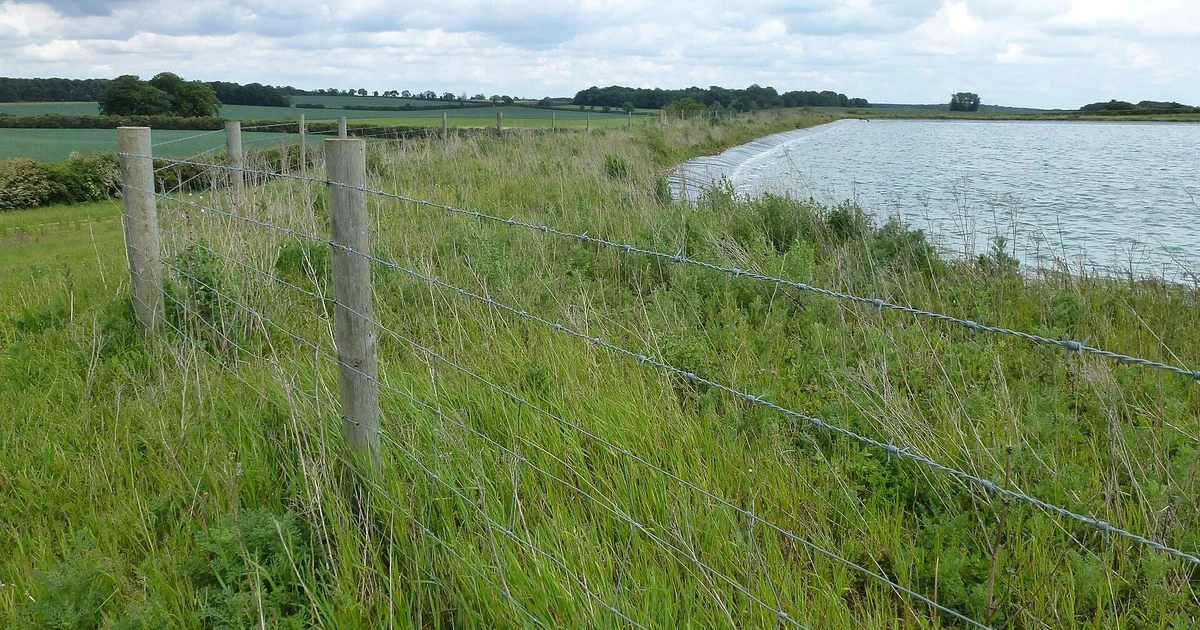
Cover photo: An irrigation reservoir north of Castle Acre, Norfolk, photographed in May 2014, not during the 2026 drought. Photo: Richard Humphrey (CC BY-SA 2.0, cropped), via Wikimedia Commons.
You’ve reached the end of this story.