The irrigation season is over, but the water problem in eastern England isn’t. The Environment Agency’s dry weather and drought update for 18 to 24 September, published on 25 September, shows restrictions on abstraction licences rising again, and it repeats a warning that should worry anyone with a winter-fill reservoir: some reservoirs and farm storage are at 0% to 20% of capacity.
A way through this story
What changed this week
Central, east and south-east England had less than 5mm of rain in the week. East and south-east England saw 1mm to 3mm, while the north-west had 23mm. Across England, September rainfall to the 22nd was 58% of the long-term average, and around half of average in the east and south-east.
River flows fell at almost every site the EA reports on. Five were classed as exceptionally low, and two of them, the Ouse and the Yare, are in east England.
The number of restrictions on abstraction licences rose from 467 to 533, which the EA puts down to lower river flows in some catchments. That’s an England-wide figure, not an East Anglian one, and it isn’t a new high: the 4 to 10 September update counted 549. The trend is that restrictions eased as some rain arrived, then climbed back as rivers dropped again.
On top of those, 1,383 voluntary restrictions are cutting abstraction by 50%, spread across the Thames, Wye and Severn catchments. The 4 to 10 September update had 1,094.
In East Anglia specifically, formal Section 57 restrictions remain in place in parts of the region until 31 October. That date hasn’t moved in September’s reports.
What Section 57 means
Section 57 of the Water Resources Act 1991 lets the Environment Agency, during an exceptional shortage of rain or other emergency, serve a notice temporarily reducing how much water a licence holder may abstract for spray irrigation. The licence has effect with that reduction for the period the notice specifies.
It’s a targeted power. It bites on irrigation abstraction, not on other licensed uses. With the main irrigation season finished, most growers won’t feel it much in October unless they’re still watering late crops. The EA notes “some pressure remains for finishing root crops”, and its 4 to 10 September update mentioned growers struggling to soften hard ground for lifting where restrictions limited water.
The refill problem
The EA says concerns remain “in some areas about the ability to refill reservoirs over the winter”. The 0% to 20% figure for some reservoirs and farm storage isn’t new this week; the 11 to 17 September update reported the same range. What’s changed is that another dry week has passed without improvement.
A reservoir that empty needs a wet winter and rivers flowing high enough to abstract from. Neither is in the EA’s short-range forecast. It expected a weakening band of rain on Friday 25 September to leave many areas dry, then a settled weekend. For Monday 28 and Tuesday 29 September it forecasts changeable weather, with rain and wind mostly in the west, “while southern and eastern areas remain more settled and dry”.
For the wider picture, England’s reservoir storage stabilised at 56.4% this week, 18.6% below average for the time of year. Fourteen reservoirs or groups are under half full, and five are exceptionally low, including Hanningfield in Essex. Groundwater is falling at every site the EA reports.
Public supply in the east
East Anglia is one of ten EA areas in drought, alongside Lincolnshire and Northamptonshire and the East Midlands. For water companies serving the region:
- Anglian Water is at drought level 2 in its Fenland and Norfolk, Norwich and Broads resource zones, and level 1 in Ruthamford, Lincolnshire and Suffolk. Its hosepipe ban covers the whole company area except Hartlepool.
- Essex and Suffolk Water is at drought level 2 in all zones, with a company-wide hosepipe ban.
- Cambridge Water is at drought level 1, with a hosepipe ban for all customers.
Around 30 million people across England are covered by hosepipe bans, unchanged on the previous week.
What to track over the next month
Three things are worth watching separately, because they won’t move together:
- Your licence conditions. Check whether your abstraction licence is under a Section 57 notice, a flow-based restriction or a voluntary reduction, and when each ends. Section 57 notices in East Anglia currently run to 31 October. The EA says it has received 39 flexible abstraction requests from agriculture this year, so asking is an established route if your circumstances justify it.
- Remaining crop demand. Root crops still in the ground are the main irrigation need left. Once they’re lifted, Section 57 matters far less to most farms.
- River flows for refill. Winter storage depends on rivers recovering enough to abstract from. Our guide to farm water resources and abstraction covers how licences and winter storage work, and UK rainfall by region has the longer-term averages to compare against.
The EA also reminds farmers to check ground and weather conditions before spreading organic manures, including slurry, to protect rivers already running low.
The National Drought Group meets next on 1 October. Whether East Anglia’s Section 57 restrictions end on 31 October as scheduled, or get extended, will depend on rain that hasn’t yet appeared in the forecast.
Sources
- Environment Agency, Dry weather and drought in England: 18 to 24 September 2026, updated 25 September 2026
- Environment Agency, Dry weather and drought in England: 11 to 17 September 2026
- Environment Agency, Dry weather and drought in England: 4 to 10 September 2026
- Water Resources Act 1991, section 57
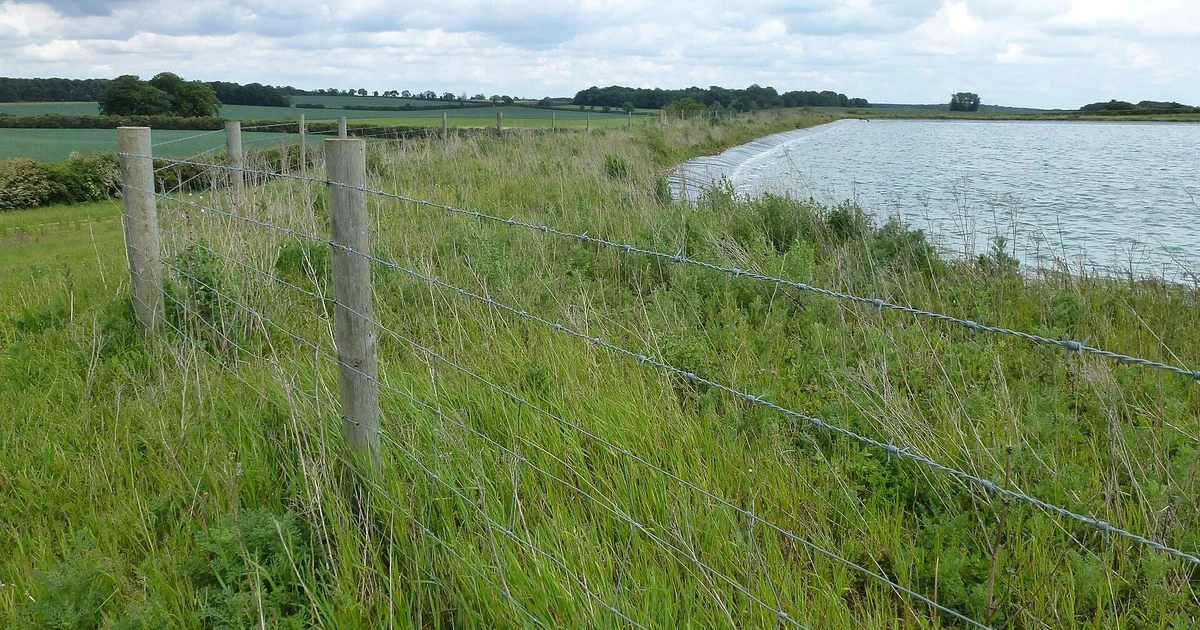
Cover photo: An irrigation reservoir north of Castle Acre, Norfolk, photographed in May 2014, not during the 2026 drought. Photo: Richard Humphrey (CC BY-SA 2.0, cropped), via Wikimedia Commons.
You’ve reached the end of this story.