Cover photo: JoachimKohler-HB (CC BY-SA 4.0, cropped) · Source
Limousin cattle explained: French origins, arrival in the UK in 1971, size and colour, carcase and calving traits, temperament, pros, cons and buying tips.
A way through this story
Limousin cattle at a glance
- Origin: the west of the Massif Central in central and south-west France, in the former provinces of Limousin and La Marche
- Arrival in the UK: 179 pedigree bulls and heifers landed at Leith in February 1971
- Breed society: the British Limousin Cattle Society, set up as a company in 1970
- Size: the breed standard gives mature females an average of 650 kg and mature males 1,000 kg
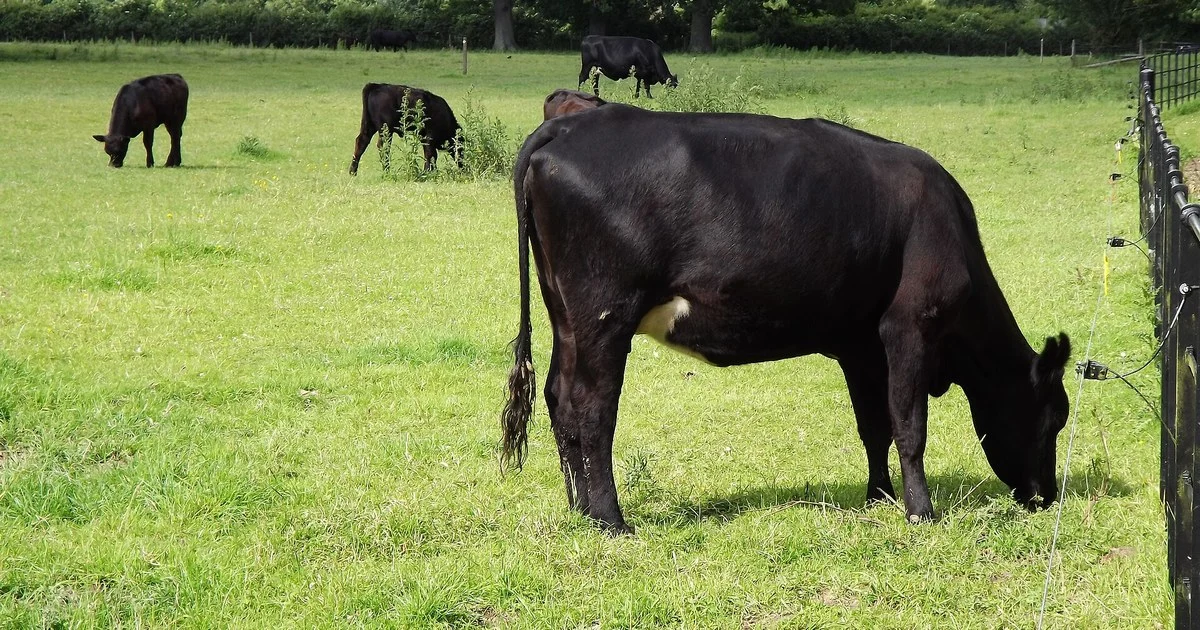
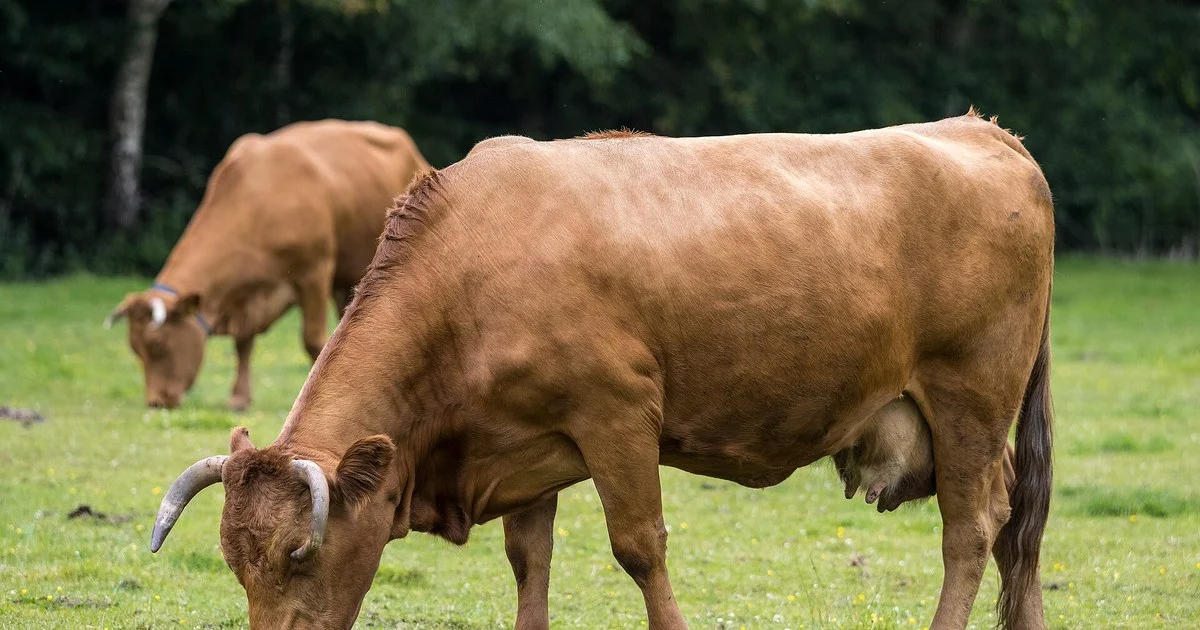
- Colour: solid red (golden-red to wheat) or black, with lighter shading around the eyes, muzzle and underside
- Horns: traditionally horned, with polled lines widely available
- Strengths: muscling, high meat yield with little bone and fat, and easy calving
- Position: the UK’s largest numerical beef breed since 1998
Where the breed comes from
The Limousin comes from the west of the Massif Central, a wet region with harsh weather and poor granite soils. The society points to cave paintings at Lascaux, near Montignac, thought to be around 20,000 years old, which show cattle with a striking resemblance to today’s Limousin.
For most of its history the breed was a draught animal. A French herd book was opened in 1886, and over the 20th century selection moved firmly towards beef. Limousins are now farmed in around eighty countries.
How Limousin cattle came to the UK
The British Limousin Cattle Society was set up as a limited company in 1970, and in February 1971, 179 pure-bred bulls and heifers arrived at Leith Docks in Edinburgh. Uptake was quick. By 1986 the Limousin had taken the number one beef AI position nationally, pushing the Hereford into second place, and in December 1998 it became the largest numerical beef breed in the UK, according to the society.
Figures from cattle passport registrations show how far the breed spread. In 2015, Limousin-sired cattle made up 28% of beef-sired cattle registered in the UK, with 486,680 registrations, the twentieth year in a row the breed had led the rankings. At the time of the breed’s 50th anniversary celebrations, the society reported around 3,000 breeder members registering 18,000 pedigree calves a year.
Appearance and size
The breed standard describes a large but fine, strong-boned frame, with mature females averaging 650 kg and males 1,000 kg. Look for a short head with a wide forehead and broad muzzle, well-fleshed forequarters, a deep chest with well sprung ribs, a broad, straight, well-muscled back and a large, rounded rump. Legs should be fine-boned but strong and straight, with sound feet.
The traditional colour is a solid, vivid red, with lighter shading under the belly, inside the thighs, and around the eyes, muzzle, tail and anus. Black Limousins are also registered. Horned cattle carry fine horns curving forward with lighter tips, but many UK breeders now use polled bulls to avoid disbudding.
Carcase, calving and maternal traits
Muscle is what the Limousin is known for. The society describes the breed as easy calving and hardy, producing well-marbled beef with a low proportion of bone and fat. In US Meat Animal Research Center trials reported on Wikipedia, Limousins gave a saleable meat yield of 46.0%, against 34.9% for British breeds.
The F94L gene, identified in Limousin cattle in 2008, is reported to increase the weight of prime cuts by as much as 19% and overall beef yield by 7%.
Females are described by the society as having high fertility, good milking ability, a high conception rate and ease of calving. In practice Limousin cross heifers, often out of dairy or native cows, have been one of the main types of suckler replacement in the UK. Use our cattle gestation calculator to plan calving dates from service.
Temperament
Limousins had a reputation for being flighty, and breeders in Europe, North America, Australia and New Zealand have worked to improve temperament since the mid-1990s. The UK breed standard requires cattle to be quiet and manageable.
Temperament still varies between bloodlines and is affected by how cattle are reared and handled. Choose bulls with docility figures where they are available, see stock handled before you buy, and make sure your handling system is up to the job. Our cattle handling guide covers race, crush and pen layout.
Uses in UK systems
- Terminal sire on suckler cows to produce well-muscled store and finished cattle
- Limousin cross suckler cows and heifers as replacements
- Pedigree breeding and bull sales
- Beef sire on dairy cows, where a well-muscled calf adds value, choosing easy calving bulls
- Intensive and grass-based finishing, with buyers targeting high-yielding, well-conformed carcases
Pros and cons
Pros:
- High killing out and meat yield, with lean, well-muscled carcases
- Easy calving for a continental breed
- Widely available genetics, including polled and docile lines
- Strong demand for well-conformed Limousin cross cattle
Cons:
- Some bloodlines can still be flighty, so handling facilities matter
- Larger frame and higher feed needs than native breeds
- Heavily muscled cattle need good feeding to finish well and are less suited to very low-input systems
Before you buy Limousin cattle
- Check pedigree registration and breeding values with the British Limousin Cattle Society, including calving ease, growth, muscling and docility.
- Watch the animal being handled and walked before you commit.
- Ask for herd health status, including TB history, BVD, Johne’s and IBR. Our guide to cattle diseases covers what to discuss with your vet.
- Get a bull fertility tested by your vet before he goes to work.
- Make sure passports and tags match and quarantine new stock.
- Our guide to how much a cow costs in the UK explains what affects prices.
Frequently Asked Questions
Where do Limousin cattle come from?
From the Limousin and La Marche area on the west of the Massif Central in France. The breed came to the UK in 1971, when 179 bulls and heifers landed at Leith.
How big do Limousin cattle get?
The UK breed standard gives an average of 650 kg for mature females and 1,000 kg for mature males. Wikipedia quotes 650 to 850 kg for cows and 1,000 to 1,300 kg for bulls.
Are Limousin cattle easy calving?
The society lists ease of calving as a key breed trait, but it varies between bulls. Check calving ease breeding values, especially when choosing a bull for heifers.
Do Limousin cattle have horns?
The traditional Limousin is horned in both sexes, but polled Limousins are widely available and many UK breeders now use polled bulls.
Are Limousin cattle aggressive?
They had a reputation for being flighty, and breeders have worked on temperament since the mid-1990s. The breed standard now asks for quiet, manageable cattle, but always see stock handled before you buy.
BritFarmers Weekly
One email a week: what’s moved on schemes, prices, disease control and policy, with links to primary sources. Free. No sponsors. Unsubscribe anytime. Subscribe.
Source: British Limousin Cattle Society
You’ve reached the end of this story.