A way through this story
Herdwick sheep at a glance
- Home: the central and western dales of the Lake District, Cumbria
- Breed society: the Herdwick Sheep Breeders’ Association
- Name: from the Old Norse for sheep pasture, recorded from the 12th century
- Horns: most rams are horned, while pure ewes should show no horns
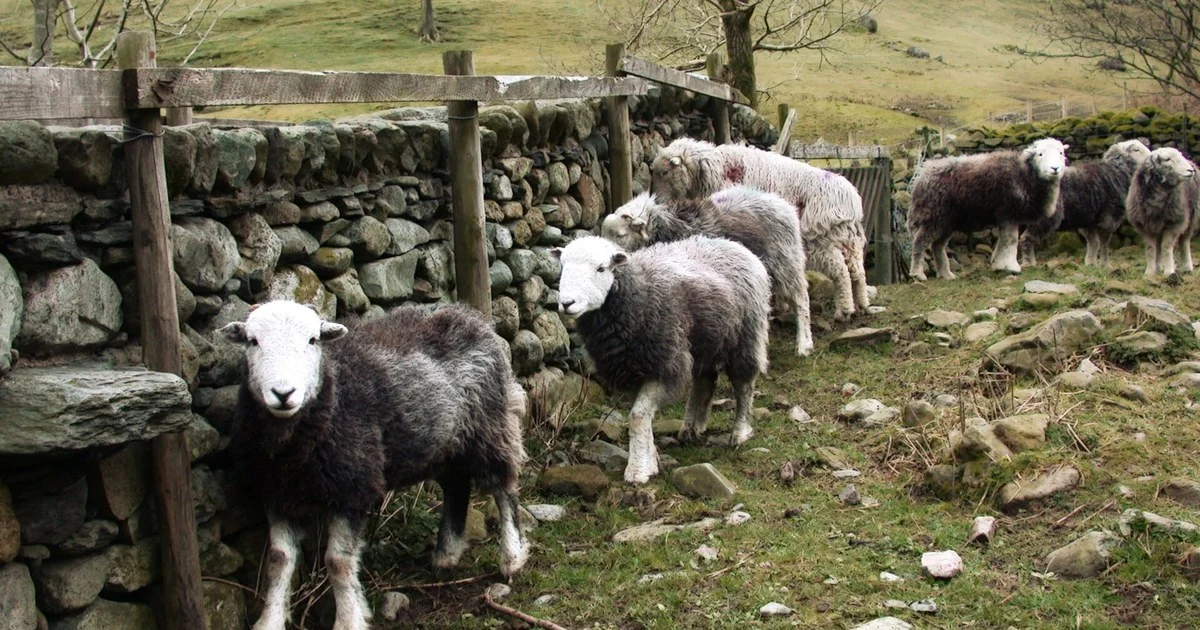
- Fleece: lambs are born black, turn dark brown as hoggs and go grey after their first shearing
- Hefted: ewes teach their lambs which part of the open fell to graze
- Meat: Lakeland Herdwick has protected designation of origin (PDO) status
Where Herdwicks come from
The Herdwick Sheep Breeders’ Association describes the breed as the hardiest of Britain’s hill sheep, grazing fells that run to over 3,000 feet. The word Herdwyck, meaning sheep pasture, appears in documents going back to the 12th century. The most common theory is that the breed’s ancestors arrived with Norse settlers in the 10th or 11th centuries, but the true origin is unknown.
The breed is tightly concentrated. The association says probably 99% of Herdwicks are kept in commercial flocks in the central and western Lake District, and the national park authority puts 95% of all Herdwick sheep in Cumbria.
Hefting: how Herdwicks stay on their own ground
Fell grazing in the Lake District is largely unfenced common land, so flocks rely on hefting, known locally as the heaf. Lambs graze alongside their mothers on the part of the fell that belongs to their farm and learn where they should be. That knowledge passes from ewe to lamb down the generations, and a hefted flock usually stays with the farm when the tenancy or ownership changes.
Hefting has a practical value that is easy to underestimate. It keeps flocks apart on shared fells with little walling or shepherding, and spreads grazing over ground no fence could practically divide. If a hefted flock is lost, the knowledge goes with it, and replacement sheep need far more shepherding before they settle.
Appearance and fleece
Herdwicks are sturdy, strong-boned sheep with good conformation for a hill breed. Rams have a broad chest and thick-set legs and usually carry strong horns, though the PDO specification notes up to 20% are polled or have little horn. Ewes are finer-boned and should show no sign of horns; horn on a ewe suggests crossing with another hill breed such as the Swaledale.
The colour change is the breed’s best-known feature. Lambs are born largely black, often with white tips to the ears. By their first year, as hoggs, they have turned dark brown, and after the first shearing the fleece lightens to a shade between slatey blue-grey and light grey, while the head and legs turn white.
The wool is coarse, with thick kempy fibres that shed water, and has long been used for carpets, rugs and hard-wearing outer cloth. It is hard-wearing rather than soft, so the fleece is rarely worth much at the wool board, although some producers sell it direct for felting and tweed.
Herdwick lambs and meat
Herdwick ewes are bred for survival on the high fells rather than prolificacy. Lambs grow slowly on fell grazing: the PDO specification gives a slaughter age of 8 to 12 months, compared with as young as 4 months for lowland lambs, at 28 to 40 kg live weight and 14 to 22 kg deadweight. Lamb carcasses typically classify as O, and shearling and mutton carcasses as R.
The meat has protected status. Lakeland Herdwick was registered as a protected designation of origin by the EU on 17 May 2013 and was carried into the UK scheme from 31 December 2020. The name can only be used for meat from pure-bred Herdwick flocks born, raised and slaughtered in Cumbria. The specification describes the meat as fine grained with a more intense flavour from the longer grazing period, and darker than lowland lamb. Lakeland Herdwick and older Herdwick mutton sell to butchers, restaurants and direct customers at a premium over standard lamb, which helps offset the breed’s lower output.
Beatrix Potter and the Herdwick
Beatrix Potter is the breed’s most famous supporter. According to the Beatrix Potter Society, she became one of the most admired Herdwick breeders in the area and won prizes at all the local shows. At the association’s AGM in March 1943 she was elected President from March 1944, which would have made her the first woman to hold the post, but she died in December 1943 before taking office.
She left fifteen farms and over 4,000 acres to the National Trust. The society says they remain working farms, run by National Trust tenant farmers in line with her wishes.
The 2001 foot and mouth outbreak
Cumbria was hit hard by foot and mouth disease in 2001. In June that year, the breed society secretary told Farmers Weekly that roughly 30% of the breed, about 30,000 head, had been slaughtered, including several hundred tups. More than a third of the 25,000 replacement hoggs away-wintered on lowland farms were caught in contiguous culls. The national park authority now puts the loss at nearly a third of the Herdwick population.
Whole hefts were wiped out, and with them the knowledge of where to graze. Restocked fells needed far more shepherding to settle new sheep. That loss is why the association has since banked semen and embryos from key hefted bloodlines, with collections made in December 2024 and January 2025.
Pros and cons of Herdwick sheep
- Very hardy on high, wet, exposed fell grazing
- Hefting reduces the need for fencing and shepherding
- Long-lived and thrifty on poor grazing
- Lakeland Herdwick PDO gives a premium meat market
- Low prolificacy compared with lowland ewes
- Slow-growing lambs, finished at 8 to 12 months
- Coarse wool has little value through standard wool sales
Keeping Herdwicks away from the fells
Herdwicks are sometimes bought by smallholders and conservation graziers outside Cumbria. They do well on rough grazing but will put on too much condition on rich lowland grass, so stock them on poorer ground or control their intake. Buy from established breeders, ideally through the association’s sales, check feet, teeth and udders, and agree a flock health plan with your vet. Our guides to Swaledale and Blackface sheep cover the other main hill breeds if you are comparing options.
Frequently Asked Questions
Why do Herdwick sheep change colour?
Lambs are born largely black, turn dark brown as hoggs in their first year and lighten to grey after their first shearing. The head and legs turn white with age.
Where are Herdwick sheep found?
Almost entirely in the Lake District. The breed association says probably 99% of Herdwicks are kept in the central and western dales.
What does hefted mean?
A hefted flock knows its own patch of open fell. Ewes teach their lambs where to graze, so the flock stays on its own ground without fencing.
Did Beatrix Potter keep Herdwick sheep?
Yes. She was a prize-winning Herdwick breeder and was elected president of the breeders’ association from 1944, but died in December 1943 before taking up the role.
Do Herdwick ewes have horns?
Most Herdwick rams are horned, though some are polled. Pure Herdwick ewes should have no horns at all; horns on a ewe suggest crossbreeding.
What is Lakeland Herdwick?
Meat from pure-bred Herdwick sheep born, raised and slaughtered in Cumbria. It has held protected designation of origin status since 2013.
BritFarmers Weekly
One email a week: what’s moved on schemes, prices, disease control and policy, with links to primary sources. Free. No sponsors. Unsubscribe anytime. Subscribe.
Source: Herdwick Sheep Breeders’ Association
You’ve reached the end of this story.