The useful answer: bird flu UK 2026 preparation should happen before autumn pressure arrives. Do not wait for a housing order to tidy the yard, register birds, check the disease map, sort boot hygiene, or work out who phones the Animal and Plant Health Agency if birds look wrong.
This is an industry-watcher guide, not a livestock-keeper diary. The rules can change by country, zone and date, so the live government pages matter more than any article written in May. The job here is to make the farm ready enough that a new restriction is an admin job, not a panic.
Bird flu UK 2026: start with the live page, not memory
Bird flu is one of those topics where last winter’s rules are useful background but poor operational guidance. The current England page is GOV.UK’s bird flu guidance for poultry and captive birds. It covers the latest situation, reporting route and links to disease-control material.
For a farm, smallholding or diversified unit with birds on site, the practical autumn rule is simple: bookmark the live page, check it before moving birds, and check it again if wild-bird pressure rises locally. That matters whether the birds are a commercial flock, a few hens beside a farm shop, gamebirds, ducks, geese, rare breeds, or birds kept as part of an education or visitor offer.
The legal bite is not theoretical. GOV.UK states that bird flu is notifiable in poultry and other captive birds, and suspected disease must be reported immediately. If you do not report it, you are breaking the law.
| Autumn job | Who it matters for | Why it matters | Source to check |
|---|---|---|---|
| Check the live disease situation | All keepers of poultry or captive birds | Zones, housing measures and local rules can change quickly when risk rises. | GOV.UK bird flu guidance |
| Register the birds | Keepers in England or Wales, including small flocks | Official guidance requires small-flock registration within one month. | keeper registration guidance |
| Tighten biosecurity before wild-bird pressure builds | Backyard flocks, commercial poultry, gamebirds and mixed farms | Clean boots, controlled access, wild-bird separation and clean feed/water reduce the obvious routes in. | prevention guidance |
| Know the report route | Anyone seeing suspect signs in captive birds | Bird flu is notifiable, so suspicion triggers a phone call rather than a wait-and-see week. | reporting guidance |
| Check gatherings before shows or sales | Anyone moving birds to markets, shows, sales or exhibitions | General licences and conditions can change with disease risk. | bird gatherings licences |
Registration is no longer just a big-flock issue
Small flocks matter because disease does not care whether the holding looks commercial. GOV.UK’s small-flock registration page says keepers must register within one month of keeping birds at any premises in England or Wales.
That one sentence catches a lot of farms that do not think of themselves as poultry businesses. A few hens near the yard, ducks beside a pond, birds kept for farm-shop atmosphere, seasonal birds for a visitor event, or mixed livestock premises with poultry in the corner can all bring the farm into the bird-keeper system.
The point is not bureaucracy for its own sake. Registration is how official disease warnings and control information reach keepers quickly. If nobody knows the birds are there, the farm is already behind before a zone or warning is announced.
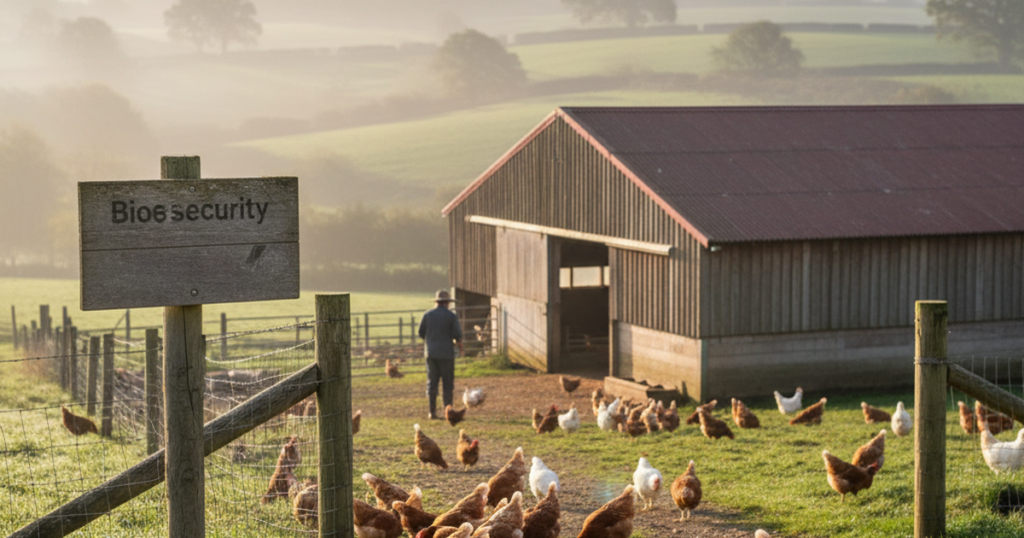
Biosecurity needs to be boring before it needs to be urgent
The GOV.UK prevention guidance is worth reading before the wet, messy part of the year. The routes in are predictable: wild birds, contaminated faeces, dirty boots, clothing, vehicles, equipment, feed and water.
That makes the basic farm jobs obvious. Keep feed and bedding under cover. Stop wild birds getting into stores. Fence off or cover standing water where captive birds can mix with wild-bird contamination. Keep birds away from yard traffic where possible. Clean and disinfect housing, drinkers and equipment. Control rodents. Make visitor access deliberate rather than casual.
The hard part is not understanding it. The hard part is doing it when every other autumn job is also shouting. That is why the better time is before pressure rises: decide where the clean line is, where boots change, where disinfectant sits, who can enter bird areas, and what happens when delivery drivers or visitors arrive.
Mixed farms should treat poultry corners as part of the whole business
Bird flu can look like a poultry-only issue, but the practical disruption is wider. Restrictions can affect movements, visitors, staff routines, sales, shows, markets, school visits, open days, gamebird activity and the general risk mood around the farm.
If the farm has sheep, cattle, arable, veg, a shop, a campsite, a wedding barn or a public path, the poultry corner is still part of the whole holding. A few birds can pull the rest of the business into tighter access control if disease risk rises. The same thinking sits behind BritFarmers’ guide to what happens when you report a notifiable disease.
That is why the autumn checklist should sit in the farm office, not just in the poultry shed. Who checks the live map? Who rings the vet? Who rings APHA? Who tells staff? Who updates visitors? Who stops movements? Who has the holding and registration details to hand?
Reporting: do not wait for certainty
The reporting threshold is suspicion, not laboratory proof. GOV.UK tells keepers to report suspected bird flu immediately to APHA in England, Wales or Scotland through the listed routes. The notifiable-disease frame is also set out in the GOV.UK collection of notifiable animal diseases.
That matters because delay is the expensive habit. Waiting to see if birds improve can cost time, spread risk and make the farm look careless. If mortality, severe illness, unusual nervous signs, swollen heads, breathing trouble, sudden egg-drop or other worrying signs appear, the job is to report and follow instructions.
For visitor-facing farms, this should be written down. A Saturday helper, temporary worker or family member should not be left guessing while the owner is off site. The phone numbers and first steps need to be visible.
Shows, sales and gatherings need a separate check
Bird gatherings are a separate trap because plans can be made weeks before risk changes. Markets, sales, shows, exhibitions and swaps depend on licensing and conditions. The bird gatherings general licence page is the official starting point.
The working rule is not complicated: if birds are leaving the holding for a gathering, check the licence conditions close to the date. Do not rely on what was allowed when the entry form was filled in.
What farms should do now
- Bookmark the live disease page
- Use the official GOV.UK page, not a screenshot or an old social-media post.
- Confirm registration
- Small flocks in England or Wales still need checking against the less-than-50-birds guidance.
- Write the report route down
- Put APHA contact details and the farm’s bird details somewhere staff can find them.
- Walk the wild-bird contact points
- Look at ponds, feed stores, gutters, standing water, dirty yards and shared equipment.
- Decide the clean line
- Boot changes and disinfection only work if everyone knows where the bird area begins.
Bottom line
Bird flu preparation is not about predicting the exact autumn 2026 rule. Nobody sensible should pretend to know that in May. It is about making the farm ready for the rule when it arrives.
Register the birds. Check the live official page. Keep wild birds away from feed, water and housing. Write down the reporting route. Treat shows and movements as date-sensitive. If the farm is also visitor-facing, make bird areas boringly controlled before the busy season collides with disease risk.
For the wider livestock context, read the UK livestock farming guide, and for recent site coverage see the note on bird flu restrictions easing in April. Those are background. The live government page is the operating source.
FAQ
Do small poultry keepers need to register in 2026?
The official keeper-registration page says small-flock keepers in England or Wales must register within one month. Check the official page for the exact scope and country-specific rules.
When should suspected bird flu be reported?
Immediately. Bird flu is a notifiable disease. Delaying because the signs are not yet certain is the wrong side of the line.
Can farms rely on last winter’s bird flu rules?
No. Disease zones, prevention zones, housing measures and gathering conditions can change. Check the live official guidance before movements, shows, sales or changes to bird management.