
AHDB Pilot — Data-sharing pilots in agriculture have been promising frictionless paperwork reduction for the better part of fifteen years, with most of them collapsing under the weight of their own ambition. The AHDB Farm Data Exchange clearing its proof-of-concept hurdle is worth a different kind of attention because the design choice underneath it is genuinely different.
The ‘farmer-first’ framing is the part to read carefully. Most data platforms in farming have been built on the assumption that the farmer is a data source for someone else’s value chain. The Exchange is trying to invert that, with the producer holding the consent layer and pulling cattle movements, processor data, and feed supply information into one place under their own control. If it delivers on that, the implication for the working farm’s bargaining position with processors and supermarkets is non-trivial.
The risk is that the proof-of-concept stage is the easy part. Scaling means buy-in from existing database holders, security obligations under the data protection regime, and a sustainable funding model that doesn’t require farmers to pay for what their own data unlocks. Worth tracking whether AHDB names firm timelines and named partner databases over the summer. Pilots that don’t graduate within twelve months tend not to graduate.
A national farm data-sharing system has moved a significant step closer after an AHDB pilot demonstrated strong industry backing and clear practical bene…
AHDB data platform clears major hurdle — AHDB Pilot
A national farm data-sharing system has moved a significant step closer after an AHDB pilot demonstrated strong industry backing and clear practical benefits for working farmers. The Agriculture and Horticulture Development Board announced on 16 April 2026 that its Farm Data Exchange proof-of-concept had proven technically viable, showing a “farmer-first” approach could dramatically reduce paperwork while giving producers genuine control over their information.
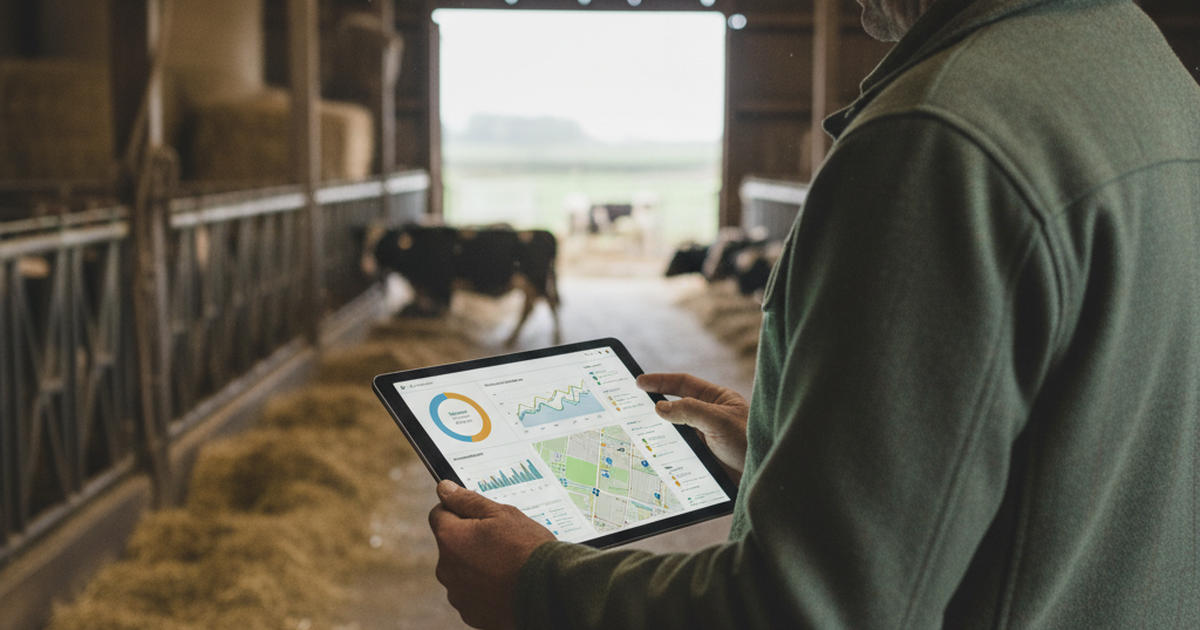
The platform can securely pull core farm records, including cattle movements, processor data and feed supply information, directly from existing databases, removing the need for repeated data entry across multiple systems. This addresses a long-standing frustration across the sector, where farmers routinely submit the same details to government bodies, banks and supply chains, often through incompatible systems that talk to each other not one jot.
Findings from the trial, combined with a survey of 450 farmers, suggest appetite for the system is strong. More than half of respondents said they would use the platform if AHDB developed it further. Many highlighted how automatically pulling in existing records could slash duplication, cutting administrative workload significantly. Adam Short, AHDB’s data programmes associate director, said the need for a coordinated approach was becoming increasingly urgent. “Data is becoming central to modern agriculture and without a coordinated system, farmers risk losing control over the value of their own data,” he warned. “We’ve successfully demonstrated our ability to build something farmers actually want to use.”
What this means for farmers on the ground
Let’s be frank about what this could mean for your farm. If you’ve spent half a morning wrestling with three different portals to report the same batch of cattle, or retyped the same field records into yet another form, you’ll understand immediately why this matters. The current situation is a time-waster of the highest order, and time is precisely what most farmers have least of.
Sophie Gregory, a farmer who took part in the pilot, captured it perfectly: “I’d always thought we ran a simple system, but once you look closely you realise absolutely everything is data. The most painful part is the duplication across so many platforms… everything in one place would save me a huge amount of time.” She’s right. Modern farming generates reams of data, movements, yields, inputs, stock records, and yet we spend hours manually transferring the same information between systems that ought to share it automatically.
Trust will be critical to any rollout. Farmers surveyed described AHDB as a credible organisation capable of acting as a neutral intermediary, a key factor when you’re asking people to pool sensitive business information. Respondents also stressed the need for strong data security, which is entirely reasonable. Nobody wants their private financial or operational details floating around the digital ether.
Specifically, beyond the farm gate, processors involved in the pilot flagged potential benefits including improved accuracy and reduced costs through more consistent data flows. That matters because when the supply chain works more efficiently, it tends to show up in the prices farmers receive, or at least in the costs they avoid. However, questions remain over how such a system would be funded and adopted across an industry notorious for its fragmented structure. Getting every farmer on board voluntarily will be no small feat.
What farmers should do now
If you’re interested in getting involved with future development, make your voice heard through AHDB’s ongoing consultation processes. The more farmers who engage now, the better the final system will reflect actual on-the-ground needs rather than theoretical ideals from those who’ve never wrestled with a clunky cattle movement form at 11pm.
Start by reviewing what data systems you currently use and where the pain points are worst. Identify the three or four platforms you interact with most frequently and note exactly what information you have to re-enter manually. This will help you articulate what you’d want from a centralised system when consulted.
Keep an eye on AHDB communications regarding the next phase of development. If funding is secured and the rollout proceeds, early adopters will help shape standards that benefit everyone. And perhaps most importantly, don’t dismiss the idea because it sounds complicated. The whole point is to make your life simpler, not to add another layer of technology you don’t need.
The clock is ticking on fragmented, duplicative reporting. Either farmers shape this system, or it gets shaped for them by those with less understanding of what happens when you’re trying to move cattle before the abattoir closes.
Frequently Asked Questions
What is the AHDB Farm Data Exchange pilot?
It’s a proof-of-concept platform that can pull farm records, including cattle movements, processor data and feed supply information, directly from existing databases, reducing the need for manual data entry across multiple systems.
How many farmers supported the system?
A survey of 450 farmers found more than half would use the platform if developed further by AHDB.
When was the pilot announced?
AHDB announced the results on 16 April 2026.
What are the main concerns about the system?
Questions remain over funding and how the system would be adopted across a fragmented industry. Trust and data security were highlighted as key factors by surveyed farmers.
Who quoted about the system?
Farmer Sophie Gregory and Adam Short, AHDB’s data programmes associate director, both commented on the pilot results.
BritFarmers Weekly — launching soon
One honest email a week when we launch, what’s moved on schemes, prices, disease control and policy, with links to primary sources. Join the early list.