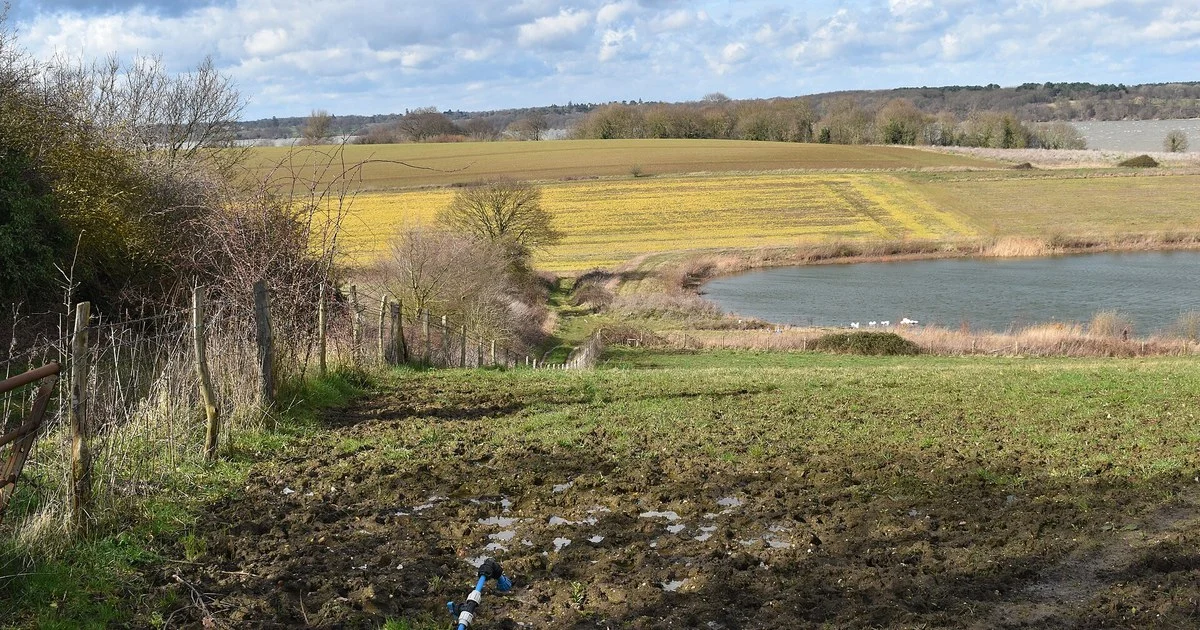
Cover photo: Simon Mortimer (CC BY-SA 2.0, cropped) · Source
Tim’s take:
The dates came first and the rules followed a few hours later, and the rules are what matter. This is a 40% grant for irrigation storage, scored in competition. It is not a general drought fund.
The Rural Payments Agency’s guidance sets the grant at between £15,000 and £300,000, paid at fixed rates for each cubic metre stored: £3.60 for a clay-lined reservoir up to 10,000 cubic metres, and 90p after that. Applications open on 30 November and the first stage closes on 23 February 2027. Scoring favours horticultural food crops, the driest areas, projects that share water with neighbours, and applicants who already hold their planning permission and abstraction licence.
So you can apply without permissions, but you will score better with them. My advice is to get those applications moving now, talk to the neighbours who might take water, and work out whether you can fund the other 60%. Above all, do not order anything or pay a deposit before you have a funding agreement. That can make the whole project ineligible.
The Water Management Grant opens on 30 November with up to £15m for farm reservoirs in England. Grant rates, who can apply and how it is scored.
A way through this story
What has been announced
Defra has put £43 million behind two schemes for farmers in England. The announcement was published on 19 November 2026, the day Environment Secretary Dame Angela Eagle was due to speak at the CLA Rural Business Conference in Westminster.
The money splits two ways:
- Water Management Grant: up to £15 million for farm reservoirs and other water storage
- Farming Innovation Programme: up to £28 million for projects on soil health, water quality and environmental management
Later the same morning the Rural Payments Agency (RPA) published the full guidance for Water Management grant round 3. That is where the detail is: who can apply, the grant rates and how applications will be scored.
This is the third round of the grant. The Prime Minister announced it in the summer as part of his drought package, after what Defra calls “a summer of dry weather and wildfire”.
How much you can get
The grant pays up to 40% of eligible costs. You must find at least 60% from private sources such as savings or a bank loan. Lease purchase and hire purchase are not allowed.
- Minimum grant: £35,000 for a project with a reservoir or an underground main, or £15,000 for a project that is above-ground tanks only
- Maximum grant: £300,000 per business (SBI), across all its applications
You do not submit quotes. The grant is worked out from fixed reference rates in the item specification:
- earth bank reservoir with clay lining: £3.60 per cubic metre for the first 10,000m3, then £0.90 per cubic metre
- earth bank reservoir with synthetic liner: £4.40 per cubic metre for the first 10,000m3, then £1.10 per cubic metre
- above-ground steel storage tanks: £28.40 per cubic metre, with a minimum tank size of 100m3
- underground distribution main: £12 per metre
When you claim, you get whichever is lower: the amount from those rates, or 40% of your actual invoices. The grant is paid in arrears, in up to three claims.
By our arithmetic from those rates, a 20,000m3 clay-lined reservoir would attract up to £45,000, and the same size with a synthetic liner up to £55,000. A clay-lined reservoir on its own needs to hold about 9,700m3 to reach the £35,000 minimum.
The reference rates leave a lot out. They do not cover pumps, a pumphouse, the abstraction point, inlet and outlet pipework, fencing, filtration or electricity. The grant will not pay for engineers’ fees, design fees, legal costs, VAT, or the cost of getting planning permission and abstraction licences.
Who can apply, and what the water can be used for
According to the RPA guide, four kinds of applicant are eligible:
- a farmer or grower who owns the land
- a tenant farmer or grower
- a landlord who is not a farmer, including local authorities, national park authorities and the Crown Estate
- a water management company formed by a group of farmers, growers and landowners
You need a single business identifier (SBI) and must be registered with the Rural Payments service. Tenants need their landlord’s agreement and a tenancy that runs for five years after the project is finished.
The grant is for irrigating crops and nothing else. Eligible crops include field vegetables, potatoes, salads, soft and top fruit, ornamentals and forest nursery stock, and also arable crops and grass and forage crops. The water cannot be used for livestock drinking water, washing, cleaning, sport or leisure.
Other limits that will rule projects out:
- the project must be in England, and cannot be on common land or land with shared grazing rights
- it cannot store or move mains water
- boreholes, irrigation equipment, hose reels and over-ground pipes are not funded
- harvested rainwater must come from the roof of a glasshouse, polytunnel or farm building
- extending or modifying an existing reservoir is not eligible
- everything must be new, and kept for five years after the final claim is paid
Dates and how applications are scored
Applications are made through a new online service, the Farm and Land Service, in two stages.
- Stage 1: opens 30 November 2026 and closes at 11.59pm on 23 February 2027. The RPA aims to assess these within four weeks of the closing date.
- Stage 2: by invitation, closing at 11.59pm on 28 October 2027. This is where you supply plans and drawings, an accountant’s letter on the viability of the business, and letters of support from every business that will use the water.
Defra says the grant will not run first-come, first-served, so an application sent on the closing day has the same chance as one sent on day one. That does not mean everyone eligible gets funded. The round is competitive, and if it is oversubscribed the RPA will fund the highest-scoring applications. It will prioritise projects that:
- benefit growers of horticultural food crops
- are in areas of least water availability, shown on the priority area map
- already have all their planning permissions and abstraction licences
- will share water for irrigation with other farmers and growers
Note the third point. Defra’s press release makes much of the fact that you can apply before permissions are in place, and that is true: they must be obtained within 12 months of the grant funding agreement, and copies go in with your first claim. But applications that already have them score higher.
CLA President Gavin Lane welcomed the fund and the work Defra is doing on “the wider barriers to constructing farm reservoirs, including planning requirements and abstraction licensing”. He added: “This fund is an important first step, but the scale of the challenge should not be underestimated.”
Do not start work early
This is the rule most likely to cost someone their grant. You cannot incur any eligible costs before the start date on your grant funding agreement. The guide spells out what that includes:
- starting work
- paying a deposit
- placing an order
- entering into a legal contract
Doing any of these early “may make your whole project ineligible”.
You can prepare. Applying for planning permission and abstraction licences, and drawing up plans, are all allowed before you apply.
Farming Innovation Programme: up to £28 million
Defra calls this the biggest Farming Innovation Programme competition so far. It is aimed at practical projects on soil health, water quality and environmental management.
As an example of earlier funding, the release names ElentecBioAg, which has developed technology that treats dairy cow slurry and turns it into fertiliser nutrients a farm can use or sell.
The release says applications “will open” alongside the water grant. It gives no closing date and no eligibility rules. Earlier rounds of this programme have been competitions for research and development projects, often involving farmers working with a technology business or researcher, so this is unlikely to be a grant for buying standard kit. Check the competition brief before spending time on it.
SFI, common land and fertiliser
Three smaller items sit in the same release.
Sustainable Farming Incentive. The Environment Secretary is “expected to promise” changes that move SFI away from first-come, first-served. There is no detail and no timetable. Our SFI payment rates guide covers the scheme as it stands.
Common land. A trial “beginning from November” will let farmers on common land, such as Dartmoor, join Countryside Stewardship Higher Tier. Defra says they were not eligible before. How commoners apply is not explained.
Fertiliser. Ministers have launched work on a Fertiliser Sustainability and Resilience Plan and invited experts to help shape it. Defra says prices of some fertilisers in the UK rose by 30% in two months this year, between February and April 2026.
What to do before 30 November
- Check where your farm sits on the priority area map. Location is one of the four things that are scored.
- Check your Rural Payments account. You need an SBI and a permission level of “make legal changes” or “full permissions” for the business.
- Get planning and abstraction applications moving. They improve your score, they take time, and the grant will not pay for them. Our guide to water resources and abstraction covers how licensing works.
- Talk to neighbours who might take water. Sharing is scored, and at stage 2 you will need a letter of support from each business involved.
- Cost the whole project, including everything the reference rates leave out. You will be funding at least 60% of the eligible costs and all of the rest.
- Do not order anything or pay a deposit.
Growers in the east of England will know why this matters. Our report on abstraction restrictions in East Anglia sets out what happened when licences were restricted this year.
The grant covers England only.
Frequently Asked Questions
When does the Water Management Grant open?
Stage 1 applications open on 30 November 2026 and close at 11.59pm on 23 February 2027. Applicants who score highly enough are invited to stage 2, which closes at 11.59pm on 28 October 2027.
How much is the Water Management Grant?
Between £15,000 and £300,000 per business. The minimum is £35,000 unless the project is above-ground tanks only. The grant covers up to 40% of eligible costs, worked out from fixed reference rates such as £3.60 per cubic metre for the first 10,000m3 of a clay-lined reservoir.
Is the Water Management Grant first-come, first-served?
No. Applications are scored, and if the round is oversubscribed the Rural Payments Agency funds the highest-scoring projects. Priority goes to horticultural food crops, areas of least water availability, projects with permissions already in place and projects that share water with other growers.
Do I need planning permission before I apply?
No. You can apply without planning permission or an abstraction licence, but you must get them within 12 months of your grant funding agreement and submit copies with your first claim. Applications that already have them score higher.
Can livestock farms apply for the Water Management Grant?
Only for irrigation. Grass and forage crops are eligible crops, so a livestock farm can apply to store water for irrigating them, but the water cannot be used for livestock drinking water, washing or cleaning.
BritFarmers Weekly
One email a week: what’s moved on schemes, prices, disease control and policy, with links to primary sources. Free. No sponsors. Unsubscribe anytime. Subscribe.
Source: GOV.UK / Defra
You’ve reached the end of this story.