Cover photo: Mat Fascione (CC BY-SA 2.0, cropped) · Source
Tim’s take:
Wales has just turned its back on the area-based model that farmers here have known for decades, and the implications deserve proper attention from anyone running livestock or mixed units across the border or studying how devolved policy moves. The Sustainable Farming Scheme, live since 1 January 2026, replaces BPS with payments tied to twelve universal actions covering soil, habitat, hedgerows, animal health and professional development, plus a headline requirement to manage at least 10% of your holding as habitat. That is not a tweak; that is a different kind of contract between government and grower.
The taper is where the arithmetic gets uncomfortable. With BPS winding down and SFS revenue still finding its level, the first scheme year ran through Rural Payments Wales Online from March until 15 May, so anyone reading this has missed the boat for year one and must now plan for 2027. Welsh farmers I’ve spoken with are already mapping which universal actions their existing operations can tick off without costly restructuring, and which ones, like the 10% habitat floor, will force genuine land use decisions rather than box-ticking.
Watch the next Welsh Government progress reports and the SFS payment rate bands as they firm up over autumn; the producers who get ahead now, by auditing their current practices against those twelve actions and costing the BPS gap, will be the ones sleeping easier when the taper bites.
Sustainable Farming Scheme Wales explained: payment rates, the 12 universal actions, the 10% habitat rule and what the BPS taper costs.
A way through this story
The scheme that replaced BPS in Wales
The Sustainable Farming Scheme became the Welsh Government’s main mechanism for supporting farmers on 1 January 2026, and it works nothing like the Basic Payment Scheme it is replacing. BPS paid on entitlements and land area. The SFS pays for doing things: a set of universal actions covering soil, habitat, hedgerows, animal health and professional development, carried out across the whole farm. Applications for the first scheme year ran on the Single Application Form through Rural Payments Wales Online from March until 15 May 2026, so the door for year one has already closed. That makes this a planning question now, not a form-filling one. Whether to join in a later application round, and what staying out actually costs once the BPS taper bites, are decisions with real money attached, and the scheme documents run to hundreds of pages. The essentials fit in a much shorter read.
Three layers on top of a regulatory baseline
The scheme stacks three layers on a compliance floor. The regulatory baseline is a set of rules already in law that every participant must follow; it earns no payment by itself. The universal layer sits above it and is the entry point: 12 universal actions that generate the universal payment, the part most farms will actually live with. Above that, an optional layer pays for going further on specific ground, with actions grouped under 14 themes in 2026, from multispecies cover crops and enhanced habitat management to improved public access and lowering ammonia emissions. A collaborative layer funds work that only makes sense across holdings, such as sector-scale projects. The scheme description is blunt that the universal layer is designed as the foundation, and everything else assumes you are standing on it.
The 12 universal actions, and which ones you can skip
The universal actions are: soil health (UA1), integrated pest management (UA2), benchmarking (UA3), continuous professional development (UA4), habitat maintenance (UA5), temporary habitat creation on improved land (UA6), designated site management plans (UA7), hedgerow management (UA8), woodland maintenance (UA9), a tree and hedgerow planting opportunity plan (UA10), historic environment (UA11) and animal health and welfare (UA12). You must undertake every action that applies to your farm, but several fall away on their own. UA2 does not apply if you use no plant protection products, UA7 only bites if you have a designated site such as an SSSI, UA9 needs existing woodland, and UA12 does not apply to arable or horticulture businesses with no livestock. UA6 disappears if you already have enough habitat to meet the scheme requirement. The practical work for most farms sits in the soil, habitat, hedgerow and animal health actions.
How the scheme got here, and what was dropped along the way
The SFS that launched is noticeably softer than the versions consulted on. The Welsh Government originally proposed two separate schemes, Business Resilience and Public Goods, which merged into a single five-year contract per farm. Feedback from the tenanted sector then forced another rethink, because five-year commitments sat badly with short farm business tenancies, and the answer became the universal layer with single-year declarations. The number of universal actions came down from 17 to 12. Most significantly, the requirement for 10% tree cover on every farm, the single most resisted element of the earlier design and the trigger for large farmer protests, was removed altogether. Tree planting is now incentivised instead: UA10 asks only for a planting opportunity plan, and actual woodland creation earns money through the optional layer. That history matters when reading the current rules, because it shows which parts of the scheme the government treats as negotiable and which, like the 10% habitat requirement, it has held onto throughout.
What the universal payment actually pays
The published first-year rates, which the Welsh Government still labels as expected rather than final, come in four parts. The whole farm payment is £70 per hectare on the first 70 hectares of eligible land, then £2 per hectare on everything above that. The social value payment adds £107 per hectare on all eligible land. The habitat maintenance payment is £69 per hectare on habitat kept under UA5 or created under UA6, and a woodland maintenance payment of £62 per hectare covers woodland managed under UA9. Common land can be brought in, apportioned in a similar way to BPS, where you have a legal grazing right. The steep taper on the whole farm payment after 70 hectares is deliberate redistribution: a 60-hectare family farm keeps the full £70 rate across its area, while a 700-hectare unit earns £2 per hectare on nine tenths of its ground. The ready reckoner exists precisely so you can run your own numbers before forming a view.
The 10% habitat requirement
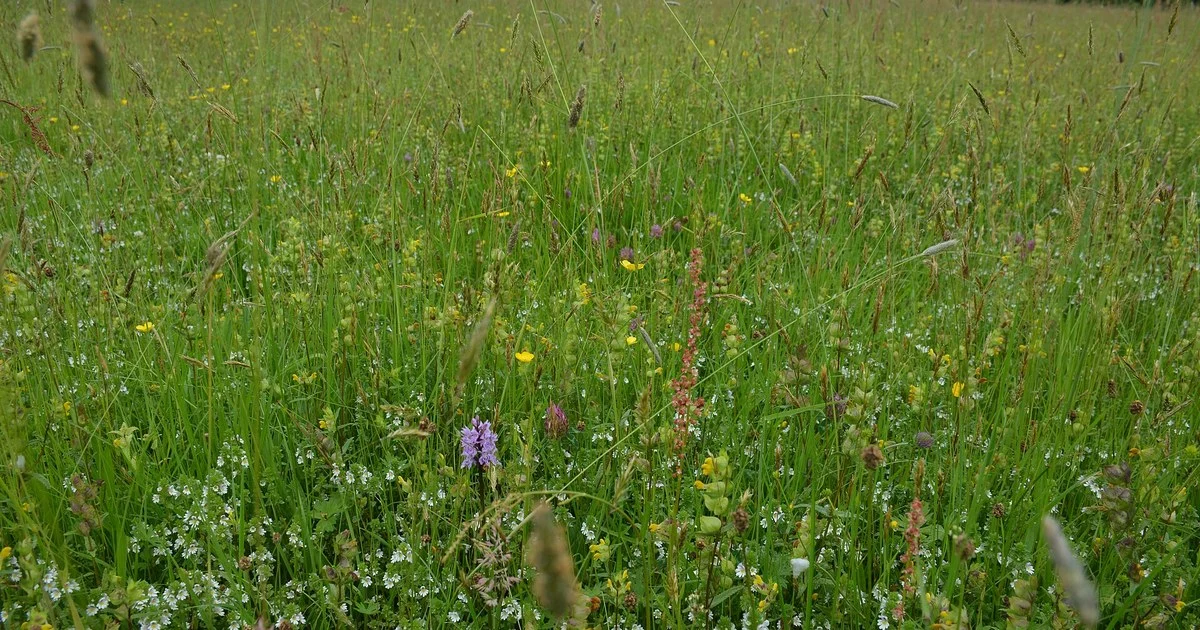
Every farm in the scheme must have at least 10% of its area managed as habitat. Farms that already carry that much, and many Welsh livestock farms do once ffridd, unimproved grassland and field margins are counted properly, simply maintain it under UA5 and collect the £69 per hectare habitat payment for doing so. Farms short of the threshold create temporary habitat on improved land under UA6 to make up the difference, and that created habitat earns the same rate. The requirement applies to your land in Wales only: a cross-border business cannot count English fields towards it, and the scheme will not pay on them either.
Capping, and the £1,000 stability payment
Large claims are capped on a sliding scale. Nothing is deducted below £25,000. The rate rises through bands, with 5% between £25,000 and £50,000, 10% to £150,000, then progressively steeper cuts until everything above £300,000 is withheld entirely. At the other end of the scale, farms of up to 100 hectares that joined in 2026 receive a one-off £1,000 stability payment on top, an acknowledgement that the transition asks proportionally more of small farms. Both measures push the same direction: the money is being tilted towards the middle of Welsh farming rather than the top of it.
What staying out costs: the BPS taper
This is the number that forces the decision. BPS is now a legacy scheme in Wales and is being phased out on a published timetable: payment values fell to 60% of the 2025 calculation in 2026, drop to 40% in 2027 and 20% in 2028, and the final BPS claim year is 2028. There is no BPS application or payment in 2029. The entitlement value, the redistributive payment and the young farmer payment all taper together. A farm that stayed out this year has already given up two fifths of its old direct payment, and the remaining steps arrive quickly. The other side of that ledger deserves stating too: joining is a one-way door, because once you are in the SFS you cannot revert to BPS. For some businesses, particularly those with high per-hectare entitlement values and little appetite for the universal actions, riding the taper down to 2028 may still be a defensible short-term choice. It is just one with an expiry date printed on it.
Tenants, new entrants and who can actually join
The scheme is built for whole farms actively managed in Wales, and the Welsh Government has been at pains to say the structure is not a barrier to those without owned land. The scheme “offers flexibility to accommodate different farming types and systems and is truly accessible to tenant farmers and to new and young entrants that have access to land”, says the ministerial foreword to the scheme description. The document also accepts that tenancy agreements may put some universal actions out of a tenant’s reach, and applicability rules flex for that. Landowners with no agricultural activity are largely outside the universal and optional layers, though collaborative funding can reach them case by case. None of this removes the practical tenancy questions, term lengths against multi-year commitments above all, and the farming unions pressed exactly that point throughout the scheme’s design.
Beyond the universal layer
The optional layer is where the scheme starts to differentiate between farms. Its 2026 themes include sustainable production, creation of permanent and temporary habitats, enhanced woodland management, hedgerow creation and restoration, organic support and conversion, improved water quality and flood mitigation, and enhanced biosecurity. Woodland creation and organic conversion run as named schemes applied for alongside the universal layer on the same Single Application Form. The collaborative layer, funding joint work across holdings, opens up beyond that. Detail on what each optional action pays arrived through 2026 guidance releases rather than the original description, and the key messages page is where the Welsh Government posts each round of dates and updates as they land.
Compliance, records and falling short
Compliance with the regulatory baseline, the Universal Code and every applicable action is a condition of payment, and the scheme description is specific about the machinery behind that sentence. Records matter: soil test results, for instance, must be kept for five years and produced on request, and activity diaries back up several habitat actions. Inspections run against published verifiable standards, and a sanctions matrix sets out the consequences. The stated approach to minor non-compliance is proportionate, starting with further guidance, warnings or additional training rather than immediate clawback, though inaccurate declarations sit in a different category. The scheme also builds in derogations for scenarios genuinely beyond a farmer’s control, extended drought or frozen ground among the named examples, where management requirements can be relaxed. It is paperwork, and no one pretends otherwise, but it is paperwork with a published rulebook rather than discretion.
Where this leaves a Welsh farm now
With the 2026 window shut, the useful work is preparation. Run the ready reckoner against your own hectarage and habitat position, and compare the answer with your 2027 BPS figure at 40%. Read the universal layer rules booklet against your actual system, because the applicability carve-outs mean the workload differs sharply between a hill sheep unit and a dairy farm. If habitat mapping is your sticking point, that is worth resolving early; the 10% requirement is the piece most likely to need physical change on improved farms. And treat the published rates as provisional until Rural Payments Wales confirms them for the year you would enter. What no spreadsheet settles is the one-way door. Once through it there is no path back to BPS, and that, more than any per-hectare rate, is what farmers weighing the scheme are actually deciding.
Frequently Asked Questions
What does the Sustainable Farming Scheme pay per hectare?
The expected first-year universal payment rates are £70 per hectare on the first 70 hectares of eligible land and £2 per hectare above that, plus a £107 per hectare social value payment on all eligible land. Maintained or created habitat earns £69 per hectare and maintained woodland £62 per hectare. The Welsh Government describes these as expected rates for the first scheme year.
When can I apply for the Sustainable Farming Scheme?
Applications for the 2026 scheme year ran on the Single Application Form via Rural Payments Wales Online from March to 15 May 2026 and are now closed. The scheme runs annual application rounds, so preparation now is aimed at the next SAF window.
Is the Sustainable Farming Scheme compulsory in Wales?
No. Farmers can stay on the Basic Payment Scheme while it lasts, but BPS values are tapering: 60% of the 2025 calculation in 2026, 40% in 2027 and 20% in 2028, with no BPS at all from 2029. Once a farm joins the SFS it cannot revert to BPS.
What is the 10% habitat requirement?
Every participating farm must manage at least 10% of its Welsh land as habitat. Existing habitat maintained under universal action 5 counts, and farms below the threshold create temporary habitat on improved land under universal action 6. Both earn the £69 per hectare habitat payment.
Can tenant farmers join the Sustainable Farming Scheme?
Yes. The scheme description states it is accessible to tenants and new entrants with access to land, and the rules accept that some universal actions may be unachievable under particular tenancy agreements. Tenants should check their term length against the scheme’s multi-year commitments before applying.
BritFarmers Weekly
One email a week: what’s moved on schemes, prices, disease control and policy, with links to primary sources. Free. No sponsors. Unsubscribe anytime. Subscribe.
Source: Welsh Government
You’ve reached the end of this story.