

Last updated: May 2026. A working policyholder’s walk through the UK farm insurance market in 2026: the major insurers, the cover types every commercial holding actually carries, the things that move a premium up or down at renewal, and the exclusions that bite when a claim goes in. General information, not regulated advice. See the renewal checklist at the end for what to do before the policy lapses.
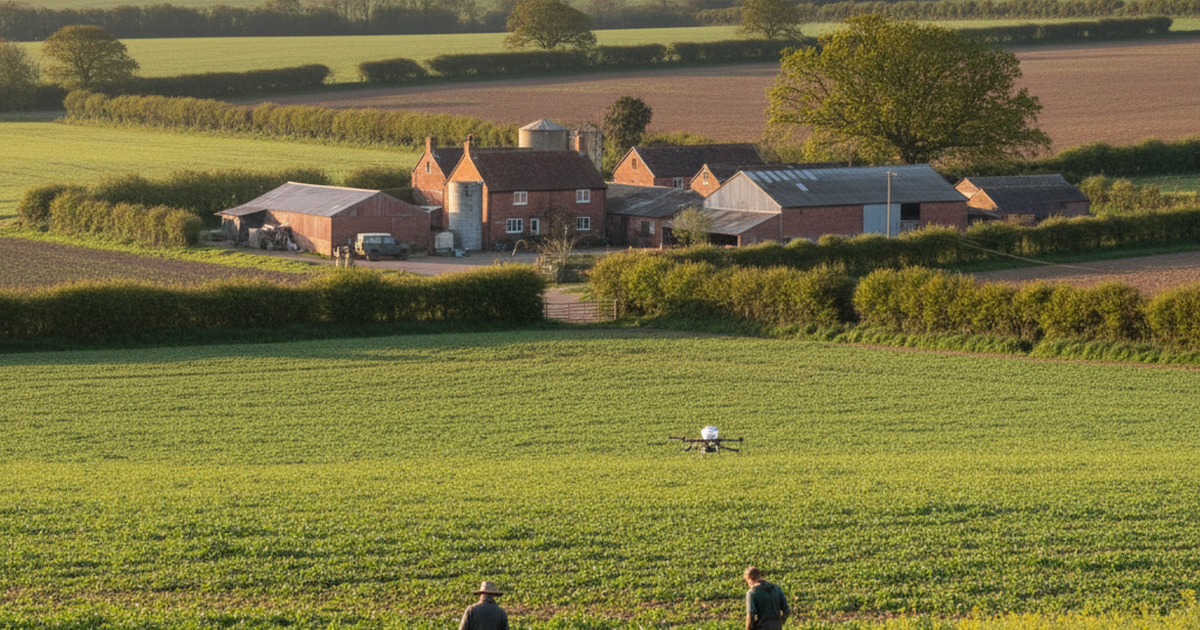
The renewal pack landed on the kitchen table the second week of April, the way it always does. Brown envelope, NFU Mutual branding on the front, the missus picking it up between the milk jug and the toast and sliding it across to me with the same face she pulls every year. Twenty-three years on this holding, twenty-one of those in salad and field veg and the last two with a slice of wheat and oilseed in the rotation, and every April I open the envelope, swear once, ring the broker, and we work through it together.
This is the conversation I’ve had every spring since I took out my first policy. Farm insurance isn’t an interesting subject until it is, and by the time it is interesting it’s usually too late. So I want to write down what I’ve learnt as a working policyholder (not as an underwriter, not as a broker, and not as anyone trying to sell you a product), because every commercial farm in this country pays a premium and most of us have only a hazy idea of what the policy actually does.
The market: who underwrites UK farms in 2026
A handful of names carry most of the UK farm insurance book. NFU Mutual is the giant, writing the majority of UK farm policies since the 1900s on a mutual basis, with local agency offices that still know the difference between a flat-eight bale grab and a continuous-flow drier.[1] Their farming book has been around 70 per cent market share on commercial agricultural policies for as long as anyone tracks the number, and the ABI consistently flags them as the dominant agricultural underwriter.[2]
Cornish Mutual is the regional equivalent in the South West, mutual-owned.[3] Lycetts is a broker (not an insurer) that places a great deal of agricultural and estate business through Lloyd’s and the company market.[4] A-Plan Farm sits in the broker camp too, post-Howden acquisition.[5] The Farmers Insurance Bureau is a long-established broker focused on family farms.[6] Aviva, Allianz Cornhill, NIG and Ecclesiastical have rural books, usually accessed through a broker, and Lloyd’s syndicates pick up the bigger, more complicated risks.[7]
The point of knowing the names is that the market is competitive. NFU Mutual is comfortable being the default. The brokers are not, and a half-decent broker will run two or three quotes against your renewal every two or three years to keep the incumbent honest.
Cover types: what’s on every working farm policy
A farm combined policy is what most commercial holdings actually buy. It’s a single contract that bundles property, liability and a few specialist sections together, written on a farming-specific wording rather than a stitched-up commercial policy. The bones of it run as follows.
Public liability covers your legal liability to members of the public for injury, death or property damage caused by your farming activities. £5 million is the floor most insurers offer. £10 million is the working standard for any farm with a public right of way crossing the holding, a diversification activity, or contracting work for third parties.[8]
Employers’ liability is statutory. The Employers’ Liability (Compulsory Insurance) Act 1969 requires every employer to carry at least £5 million of cover; the practical market standard is £10 million automatically.[9] The certificate must be displayed where employees can see it. Casual harvest workers, students on placement, family members drawing a wage and limb (b) self-employed workers under your direction all count. The fine for not carrying it is £2,500 per day; for not displaying the certificate, £1,000.
Business interruption covers the loss of gross profit while the farm recovers from an insured loss. If the pack house burns down in October, business interruption pays the wages, standing charges and lost margin on the autumn brassicas you can no longer process. The indemnity period matters more than the sum insured: 12 months is too short for any farm building that needs planning consent to rebuild. 24 months is the working minimum; we carry 36 months on the pack house because the steel and chillers alone are a 14-month lead.
Buildings, fixtures and contents covers fire, lightning, storm, flood, escape of water, impact, malicious damage and theft. The wording matters. “All-risks” is broader than “specified perils”; subsidence is often excluded on older buildings; thatched property is its own conversation entirely. Sums insured are on a reinstatement basis, not market value, and the insurer can apply average if you’re underinsured: a 20 per cent shortfall means a 20 per cent reduction in payout, regardless of loss size. A professional RICS reinstatement valuation every five years is worth the money.[10]
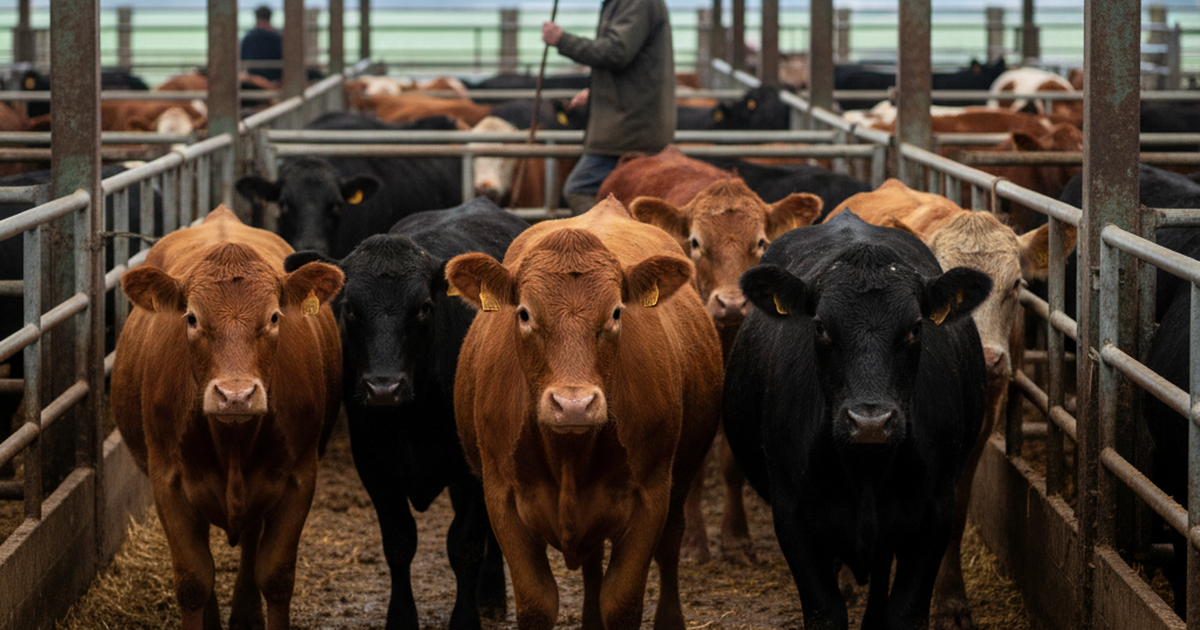
Machinery and farm equipment is normally a separate section covering self-propelled and trailed kit against fire, theft, accidental damage and (if you pay for it) breakdown. Most policies offer “new for old” up to a certain age (5 or 7 years is common), and market value after that. Theft has hardened most in the last five years. NFU Mutual’s rural crime figures put farm machinery theft at over £11 million in 2023, with GPS units alone accounting for around £4 million.[11] Premiums on policies without proper security measures have gone up sharply.
Livestock cover is variable. Most farm combined policies include limited cover as standard (death by fire, lightning, electrocution, road traffic accident in transit). Full livestock cover (illness, disease, calving losses, theft) is a separate section and usually only worth the money on high-value breeding stock rather than a commercial flock or herd.
Crop insurance is where the UK looks meanest compared to the rest of Europe. The mainstream UK farm policies cover crops in store for fire and theft, and standing crops for fire, lightning and (sometimes) malicious damage. Hail damage cover is available as an add-on from a handful of specialist underwriters but is rarely written on field-scale arable in the UK because hailstorm frequency is low and the premium-to-claim ratio doesn’t work. Multi-peril crop insurance covering drought, excess rain, frost and disease, the kind of contract that backstops every cereal farmer in France or Spain, barely exists as a private product here.[12]
Motor and road risks covers farm-registered vehicles on the road. Tractors and telehandlers on the public road need third-party motor cover and a driver with Category F (included with most pre-1997 Category B car licences).[13] Farm 4x4s sit on standard motor policies, often with a “farm fleet” multi-vehicle discount.
A combined policy normally bundles in money, goods in transit, legal expenses, environmental impairment (Defra-style liability for slurry escapes), and personal accident for the principals. None of those are headline cover. All are worth checking are actually there at the limits you’d want.
Premium drivers: what moves the number
The renewal premium is built from a small number of variables, and once you understand them you can argue about them.
Claims history is the heaviest single driver. Five years clean and you’re in the best rating band. One bad year on theft or a liability settlement above £25,000 and the loading sticks for three renewals. Claim frequency hits harder than severity for most underwriters: four small slips on a farm shop concourse will move the premium more than a single £100,000 fire.
Sums insured drive the property and machinery premiums directly. They should reflect actual reinstatement cost, not historical value. The RICS Building Cost Information Service indices for agricultural buildings show roughly a third increase between 2020 and 2025.[14] If your buildings sum insured hasn’t been reviewed in that window, you’re almost certainly underinsured.
Risk assessment documentation pays for itself faster than any other variable. Insurers want a written risk assessment, current LOLER certificates on every lifting machine, training records for every operator, a fire risk assessment for any building over 50 m², and (increasingly) a documented anti-theft plan. Most underwriters offer 5 to 15 per cent off premium for a documented set.[15] Our broker reckons our risk assessment alone is worth about 8 per cent off the liability premium, which is more than the cost of an afternoon’s paperwork.
Machinery age and security sit together. Newer kit attracts lower theft and breakdown rates but a higher absolute premium because the values are bigger. CESAR marking, Thatcham-approved immobilisers, lockable yard gates, perimeter lighting, secure overnight GPS storage and forensic marking on high-value items all move the number. Failing to meet the insurer’s published security schedule is grounds to decline a theft claim outright, regardless of premium paid.[16] Postcode matters too: East Midlands, East Anglia and Kent attract the highest theft loadings, because that’s where the organised rural crime is.
The exclusions that catch people
Every farm insurance complaint I’ve ever heard at the kitchen table or at a market traces back to an exclusion the policyholder didn’t know about. Three categories catch people more than any others.
Diversification activities are the most common gap. A standard farm combined policy covers farming. It usually does not, without a specific rider, cover the glamping pods at the bottom of the orchard, the wedding venue in the converted barn, the farm shop with the coffee bar, the holiday cottage on Airbnb, the children’s play barn or the dog daycare in the old calf shed. Each of those is a separate trade, with separate liability, food hygiene, fire and visitor exposures.[17]
A friend two parishes over converted a stone barn to a holiday cottage in 2023, signed up to a booking platform, and forgot to tell the insurer. A guest fractured a wrist on the step. The insurer declined the liability claim because the farm policy didn’t cover commercial accommodation. He paid the settlement out of pocket.
Tenants vs landlord cover is the second classic. If you let a farm building to a third party (the old packhouse to a vegetable wholesaler, the dairy parlour to a contractor, the workshop to a mobile mechanic), the landlord policy and the tenant policy do different jobs and the gap between them is where claims fall. A formal lease or licence with insurance obligations spelled out is the document that prevents arguments. A handshake is the document that loses you the building.
Contract grower and contract harvester liability catches the newer arable operators most. If you grow on contract for a packer, the contract usually specifies product, public and employers’ liability at minimum levels and may require crop-in-store, in-transit, or product recall cover. If you take a contract muck-spreading or combining job, your motor policy covers the road journey, but the work itself sits under a contracting liability not always included in a standard farm policy. A bolt-on contractor’s section is usually cheap and worth its weight in gold the day you slide a sprayer into a neighbour’s hedge.
Other exclusions worth checking line by line: environmental impairment (slurry escapes into a watercourse can run into six figures); cyber; flood (often capped or zone-excluded); subsidence; and any “unattended vehicle” exclusion that voids theft cover if the keys were in the cab.
Crop and weather insurance: the EU gap
Now to the part that genuinely annoys me. If I farmed the same crops in France, Spain or Italy, I could buy a multi-peril crop insurance contract covering drought, excess rain, hail, frost and disease, at a premium 60 to 70 per cent subsidised by the EU Common Agricultural Policy’s risk-management toolkit.[18] Spain’s Agroseguro scheme has been running 40 years and covers roughly half the country’s agricultural area. France’s MRI system launched in 2023 covers cereals, oilseeds, vines and orchards with a state-backed reinsurance pool for catastrophic losses.[19]
In the UK in 2026, none of that exists. The Defra Farm Business Survey consistently shows insurance expenditure as a small line on cost-of-production, typically 0.5 to 1 per cent of farm revenue, precisely because the cover doesn’t exist to buy.[20] What we have is fire and theft on crop in store, fire on standing crop, and a handful of specialist hail and frost policies through Lloyd’s syndicates that work for high-value top-fruit and viticulture but rarely write field-scale arable. When 2018 took a third off the wheat yield and 2020 took half the salad crop off our holding in three weeks of June rain, neither was an insured loss. Straight hits to the bottom line.
The Defra Farming Resilience Fund and the Risk Management Resilience consultation have nibbled at the edges, but successive governments have been unwilling to underwrite a state-subsidised scheme on the EU model.[21] If I’m honest, I think the EU got this one right and we got it wrong. Until the policy changes, the working answer is to budget for one year in five being a wreck and keep the overdraft facility liquid.
Renewal-shopping discipline and why brokers earn their fee
Three habits make farm insurance a household budget item rather than a steadily rising line on the P&L.
The first is to read the schedule. Not the policy wording (90 pages, lawyer-grade), but the schedule (3 pages, what’s covered and at what limit). Sums insured, indemnity periods, excesses, named locations, named drivers. Most renewal mistakes are caught here in 20 minutes once a year.
The second is to remarket every three years. Not every year. The mutuals reward loyalty in a real way (they call it “renewal discount” and the number is real), and chopping and changing yearly resets that clock. But three years without a market test is the point the incumbent has stopped trying. Two or three quotes routinely saves between £500 and £5,000 a year on a commercial policy.
The third is to use a specialist agricultural broker. A good one earns their commission three ways: they quote against the market every two or three years; they handle the claim when it comes in; and they tell you about the cover you didn’t know you needed. Our broker rang me in February to ask whether I’d added the wheat to the standing-crop section after the 2024 rotation change. I hadn’t. I’d have been uninsured on £80,000 of wheat all the way to harvest if she hadn’t asked. That one phone call paid her commission for three years.
A renewal checklist
If you do nothing else after reading this, do six things before the next renewal date.
Open the schedule and read the buildings sum insured against an honest current rebuild estimate. If it hasn’t been reviewed in three years, book a RICS-led reinstatement valuation. They cost £400 to £1,500 depending on the holding and pay for themselves in two years.
Cross-check the machinery list against the actual yard. Delete kit you’ve sold. Add kit you’ve bought. Set the value at a number you’d be happy to accept if the shed burnt down tomorrow.
List every diversification activity on the holding (every glamping pod, every farm shop counter, every wedding booking, every Airbnb let, every dog day) and confirm each is named on the policy at an appropriate liability limit.
Pull together the safety paperwork (risk assessment, LOLER certificates, PUWER records, training register, fire risk assessment) into a single PDF and send it to the broker. Ask in writing what discount it earns.
Check the public liability limit. £5 million is the floor. £10 million is the working standard for any farm with a public right of way, a diversification activity or any contract work for third parties.
Ring two other brokers if your current insurer has been the incumbent for three years or more. Two quotes, no obligation, one morning of work.
Sources
[1] NFU Mutual, About us, nfumutual.co.uk.
[9] Employers’ Liability (Compulsory Insurance) Act 1969, legislation.gov.uk.
[11] NFU Mutual, Rural Crime Report 2024, nfumutual.co.uk.
About the author
I run a salad and field vegetable holding in Suffolk, twenty-three years on the same ground, the last two with a slice of wheat and oilseed rotated in alongside the iceberg, baby-leaf and brassicas. The insurance bill has been the line item I’ve understood worst and paid most consistently for two decades. Most of what’s above is the answer I got after twenty years of opening the renewal envelope, ringing the broker, and asking the same questions until the answers stuck.
The headline: insurance is one of the only farm overheads where a morning of paperwork can knock 5 to 15 per cent off the premium. Walk the schedule before you sign it, document the risk management you’re already doing, name every diversification on the policy in writing, and remarket every three years. The cover you didn’t know you needed is the one that bites you in October.