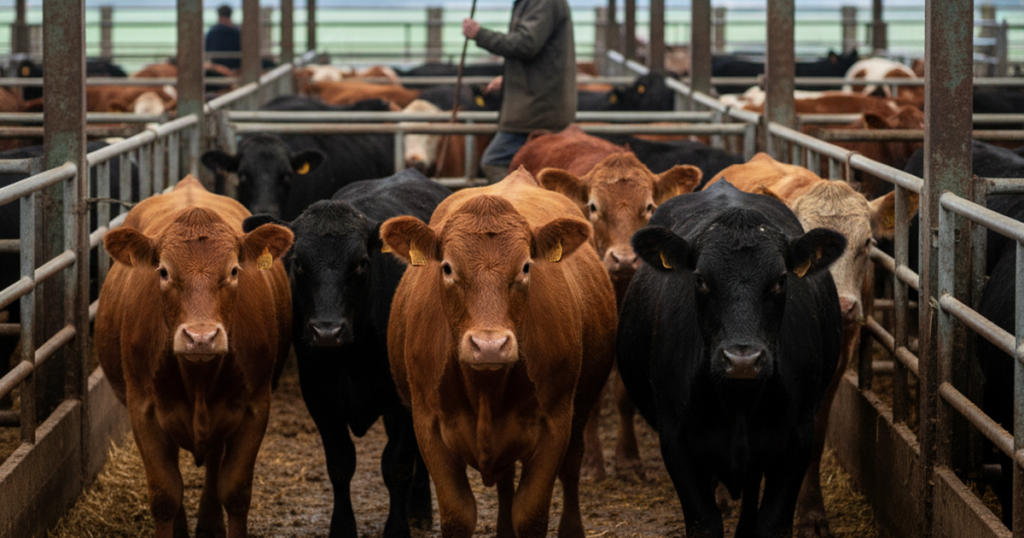
Livestock markets surged past £3bn in turnover for 2025, demonstrating strong demand and competitive prices for UK farmers. UK agricultural markets
Live Auctions Hit Record £3 Billion as Demand Outstrips Supply
Well, wouldn’t you know it, the old live ring is still pulling its weight, and then some. farm finance options For the first time ever, livestock market turnover in England and Wales has blown past the £3 billion mark. That’s a whopping half a billion quid jump – £554 million, to be precise – in just one year, smashing the previous record of £2.5 billion. It’s a clear signal that despite all the grumbling, and believe me, there’s always plenty of that, demand for British livestock remains fiercely strong. We’re talking 10.76 million head passing through the auctions in 2025, an increase of 42,000 on the year before, which flies in the face of national herd and flock reductions.
This isn’t some statistical blip; it’s a testament to the competitive nature of our livestock markets. Chris Dodds, the LAA executive secretary, rightly pointed out that “Markets have been operating for hundreds of years, and they remain as relevant as ever.” He’s not wrong. Even with digital alternatives rearing their heads, farmers clearly still value the transparency and the cut-and-thrust of a proper auction. What’s driving this? Unquestionably, demand. Buyers are hungry for stock, particularly finished animals, and they’re willing to pay for it. That’s good news for your bottom line, even if input costs are still gnawing at margins.
Finished Stock Shines, But Not All Sectors Share the Windfall
The biggest winners in this surge were undoubtedly those selling finished stock. We saw an increase of 86,000 head marketed in this category, reaching 6.83 million. The sheep boys really led the charge here, with finished sheep numbers climbing by 78,000 to 6.52 million. Even pigs saw a respectable bump of 13,000, and finished cattle, though a smaller increase, still added 2,000 head to the tally. What this tells me is that the consumer appetite for British meat isn’t diminishing, and the supply chain is working hard to meet it.
Alastair Brown from the LAA hit the nail on the head when he said the live ring “continues to deliver real value for farmers,” highlighting its “transparent, competitive marketplace… with no hidden deductions.” That’s been the mantra for decades, and it’s evidently still what farmers want. Prime cattle, sheep, and even cull ewes are all fetching historically high average prices. Store cattle values have gone through the roof, with increases of around £500 per head in many cases. I’ve even heard reports of calves hitting £1,000 – a phenomenal price that speaks volumes about the demand for quality breeding stock.
Now, it isn’t all sunshine and roses. Numbers for store and breeding sheep are still under pressure, a reflection of the long-term contraction in our national flock. Cattle numbers are similarly affected by a shrinking suckler herd. But even there, there are silver linings. Strong milk prices last year, in 2025, meant more young dairy-bred cattle found their way into the system, offering a bit of resilience where it was needed. It’s a mixed bag, certainly, but the overall picture from the LAA data is one of strength in a market that many armchair critics have written off time and again.
What This Means for Farmers
For us working farmers, these figures are a welcome shot in the arm. It confirms what many of us have been seeing in the ring: good stock is fetching good money. This is about headline numbers; it’s about the tangible difference competitive bidding makes when you’re trying to cover escalating feed, fuel, and labour costs. While input costs remain a nagging worry, seeing £500 extra per head for store cattle, or those record prices for finished beasts, means your hard work is being properly valued.
It reinforces the importance of using your local auction. If you’ve been tempted by direct sales or other channels, these figures ought to make you reconsider. The LAA is right; the live ring provides competitive price discovery. It’s where the real market value is established, day in, day out, with a wide pool of eager buyers all pushing to get their hands on your animals. That competition is your friend, and it’s clearly working to your advantage right now. Don’t underestimate the power of multiple buyers vying for your stock; it’s the bedrock of a fair deal for the producer.
What to Do Next
First off, keep breeding and finishing quality. The demand is there, and as these figures show, buyers are willing to pay a premium for well-presented, healthy stock. On top of that, don’t just rely on historical prices; the market is moving quickly. Keep a very close eye on those auction reports and average price guides in the farming press. Knowing your market inside out means you’re better placed to decide when and where to sell, maximising your returns. Also, and perhaps most importantly, support your local livestock market. These institutions are more than just places to buy and sell; they’re social hubs, information exchanges, and, as these figures highlight, vital components in ensuring fair prices for British agricultural produce. If the live ring thrives, we all benefit; it’s as simple as that.
Strong domestic demand is only part of the picture — UK red meat exports also hit a record £2 billion in 2025, opening new markets and supporting farm-gate prices.
Frequently Asked Questions
How much did livestock market turnover increase in 2025?
Livestock market turnover surged by over £554 million in 2025, reaching a record total of £3 billion across England and Wales.
Which type of livestock saw the biggest increase in throughput?
Finished sheep accounted for the largest increase in throughput, rising by 78,000 head to 6.52 million in 2025.
What is driving the record prices in livestock markets?
Strong demand in the live ring, fuelled by tight supplies in the UK and globally, is driving record prices and competitive bidding for livestock.
Related Articles
BritFarmers Weekly — launching soon
One honest email a week when we launch — what’s moved on schemes, prices, disease control and policy, with links to primary sources. Join the early list.
Official Sources
- NFU — National Farmers’ Union news and updates
- DEFRA — Department for Environment, Food & Rural Affairs