

Farm Emissions — National emissions averages are a useful line for the politics and a misleading one for any specific farm. England’s 18% drop since 2010 is real, but the same dataset has individual catchments hitting 76% reductions and others stuck under 5%. That’s not noise. That’s the actual policy story.
The structural gains the research credits — better fertiliser efficiency, livestock genetics, slurry handling — are available to almost any operation that wants them, but they don’t deploy themselves. They follow targeted scheme funding, agronomist relationships, and time. Catchments that have moved fastest are the ones with active farmer-cluster groups, not just better grants. The clusters compound.
If you’re farming in one of the under-5% catchments, the data is a slap, but it’s also a steer. The next round of catchment-sensitive funding will focus harder on the lagging areas, because that’s where the headline national figure now needs to move. Funding tends to follow the gap. Worth checking which catchment cluster is active near your holding, and worth asking the chair which schemes the group has actually unlocked over the last two years. Targeted action gets results that flat policy doesn’t.
New research reveals 18% farm emissions drop since 2010, but regional disparities raise questions about policy effectiveness and future farming incentives.
National Progress Masks Stark Regional Divides — Farm Emissions
England’s farms are genuinely cutting their environmental footprint, but the gains are far from evenly distributed. New modelling of 72,000km² of intensive farmland shows greenhouse gas emissions from agriculture fell 18% between 2010 and 2021. That’s real progress. But when you dig into the regional data, the picture becomes much more complicated.
Some water catchments achieved reductions of up to 76% in environmental indicators over the same period. Others recorded changes of less than 5%. If you’re farming in one of those underperforming catchments, this data won’t feel like cause for celebration—it’ll feel like a slap.
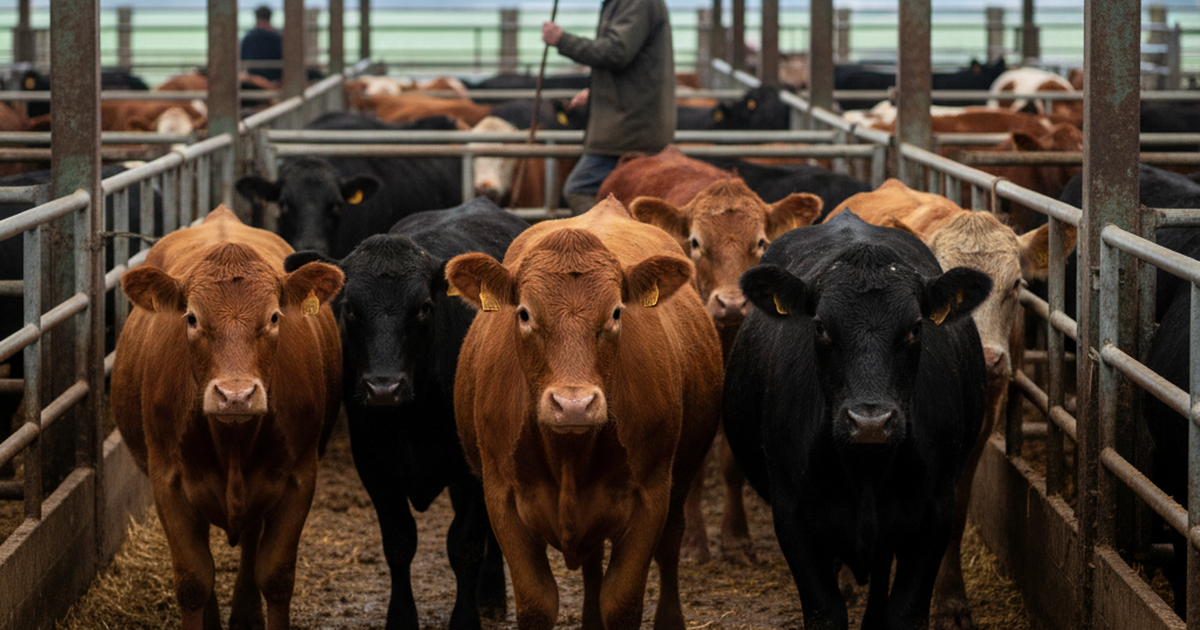
The research attributes the national improvement to structural shifts: livestock numbers are down 12%, dairy land has contracted, and general cropping has expanded as farms specialise. Fewer cattle and changes in land use have driven the headline figures. But those shifts haven’t happened uniformly across the country, and the benefits haven’t flowed to all regions equally.
“The relationship between farming practices and environmental outcomes remains complex,” the researchers acknowledge. That’s diplomatic language for a messy reality. What works in Lincolnshire doesn’t necessarily work in Cornwall, and the modelling can’t always explain why.
What This Means for Farmers
Let’s be direct about what this research actually tells us—and what it doesn’t.
The 18% reduction in farm emissions is real and measurable. Fewer cattle, more arable cropping, and shifting land use have genuinely lowered agriculture’s environmental impact. Professor Adie Collins, one of the study’s authors, points out that structural changes are delivering “measurable benefits” and that land use shifts can “drive improvements in environmental performance whilst delivering food production.” That’s worth acknowledging.
But the uneven progress raises serious questions about policy design. If some catchments achieved 76% reductions while others managed less than 5%, what does that tell us about how environmental schemes are being implemented? Are farmers in those underperforming areas being given the right support? Or are they being penalised for factors outside their control?
The concentration of livestock on fewer, larger dairy and grazing holdings is accelerating. This specialisation brings efficiency gains but also concentrates environmental pressure. More arable crops are now concentrated on cereal farms. This isn’t necessarily a problem, but it does mean the debate about farming and environment needs to engage with structural reality, not just individual farm practices.
The researchers noted their study doesn’t account for emissions linked to imported meat—meaning the full environmental impact of UK consumption isn’t captured. That’s a significant gap. If we’re celebrating lower domestic farm emissions while consuming more imported produce, we may simply be exporting our environmental footprint rather than reducing it.
Dr Yusheng Zhang argues that “routine strategic assessment of evolving environmental footprints will be critical” as pressures from climate change, energy costs and resource constraints build. He’s right. But that assessment needs to translate into policy that actually helps farmers make transitions, not just measures their performance.
What to Do Next
The findings underline a clear trend towards lower farm emissions—but also a stark reality that further progress requires more than good intentions.
Farmers should keep a close eye on how these regional disparities influence future policy development. Professor Collins suggests emerging policy frameworks could help farmers “earn from multiple environmental services”, which could translate into meaningful income streams for those who’ve already reduced their footprint. But that only works if the schemes are designed around the actual diversity of farming systems, not some national average.
The 12% reduction in livestock numbers happened largely through market forces, not policy mandates. That’s worth remembering as Defra develops its post-Brexit agricultural policy. If the government wants further reductions, they’ll need to offer incentives that actually stack up financially for farm businesses.
Specifically, consider whether your current farming system aligns with the specialisation trend the research identifies. Arable operations are concentrating on cereal farms, livestock on dairy and grazing holdings. That shift is happening with or without policy intervention. The question is whether you want to be driving it or being driven by it.
The research confirms structural change can deliver both environmental and production goals. That’s not the contradiction some claim it is. But it requires investment, planning, and policy support that actually reaches farmers on the ground—not just theoretical frameworks designed in Whitehall.
Pressures from climate change, energy costs and resource constraints aren’t going away. The study suggests further progress will depend on stronger policy support and clearer incentives. Farmers should engage with consultation processes and make clear what kind of support would actually enable meaningful change on their holdings. The alternative is schemes designed without adequate farmer input—again.
Frequently Asked Questions
How much have farm emissions fallen in England?
Greenhouse gas emissions from farming fell by 18% between 2010 and 2021, according to new modelling covering 72,000km² of intensive farmland.
Why are farm emissions falling?
The reduction is driven by structural changes including a 12% drop in livestock numbers, contraction of dairy land, and expansion of general cropping as farms specialise.
Are emissions falling equally across all regions?
No. Some water catchments achieved reductions of up to 76%, while others recorded changes of less than 5%, highlighting significant regional inequalities in progress.
Does the study account for imported meat emissions?
No. The researchers noted the study does not account for emissions linked to imported meat, meaning the full environmental impact of UK consumption isn’t captured.
BritFarmers Weekly — launching soon
One honest email a week when we launch — what’s moved on schemes, prices, disease control and policy, with links to primary sources. Join the early list.