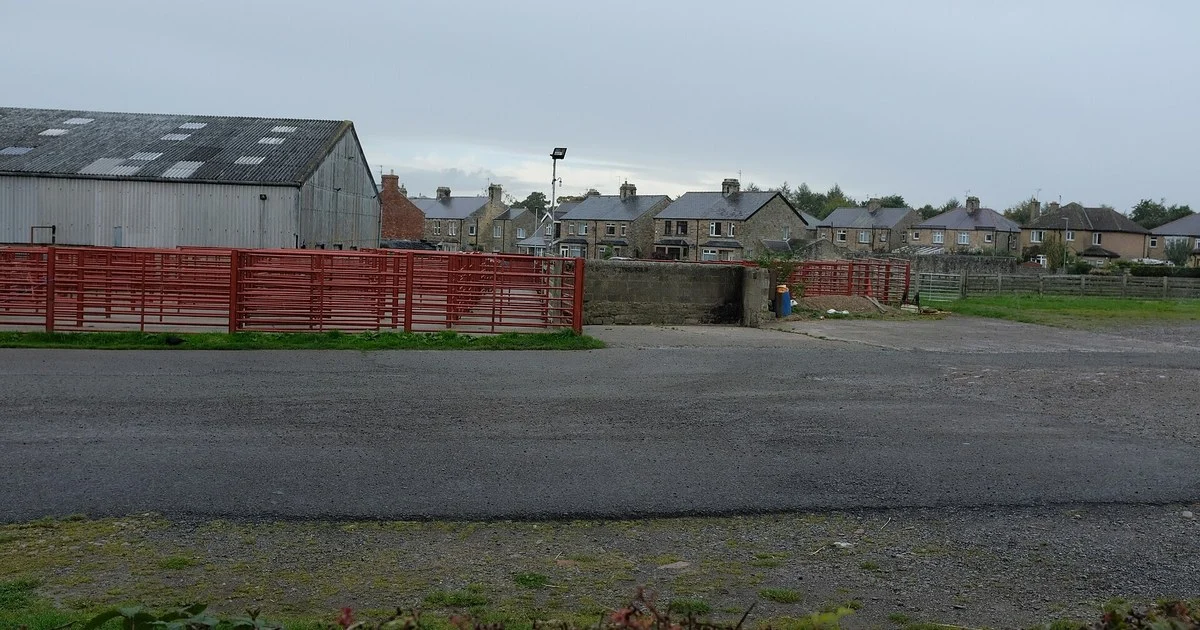
Cover photo: Bob Harvey (CC BY-SA 2.0, cropped) · Source
Meat Supplier — Five-decade businesses don’t usually fail in a quiet news cycle. Donald Russell sliding towards closure is the kind of story that should make every premium supplier with sub-scale processing capacity rerun their forward-orders maths, because the underlying pressure isn’t unique to one Aberdeenshire firm.
The detail to read in the announcement is the failure to find a buyer as a going concern. That’s the part that says the asset value of the brand, the customer book, and the trade relationships didn’t add up to enough for a strategic buyer to take it on. In a sector where premium British beef and lamb supply chains are supposedly tight, that’s a structural finding, not a one-off.
For working farms supplying premium meat into the food service or direct-to-consumer trade, the closure is a useful prompt to check the financial health of your own onward processors and aggregators. A supplier failure six links down the chain shows up as a payment delay or a price reset two months later. Worth a phone call to your processor this month, and worth asking honestly whether the route to market you’ve been relying on for ten years has the same fundamentals it did three years ago.
The Inverurie-based meat supplier, which has traded for five decades, revealed that 30 staff have already been made redundant, with a further 90 now ente…
A way through this story
Meat Supplier on the Brink
Over 100 jobs are hanging by a thread after Donald Russell confirmed it is sliding towards closure. The Inverurie-based meat supplier, which has traded for five decades, revealed that 30 staff have already been made redundant, with a further 90 now entering formal consultation as the firm’s Harlaw Road factory prepares to shut. The company confirmed it failed to secure a buyer for the business as a going concern, leaving the future of its operations in serious doubt. Founded in 1974, Donald Russell built its reputation supplying premium British beef and lamb to restaurants and trade customers, alongside a direct-to-consumer online service. The potential loss of more than 100 jobs would deal a significant blow to the rural economy in north-east Scotland. In a statement, the company said: “Sadly, after exploring all possible alternatives, we were unable to find a buyer for our business as an ongoing concern.” It added that advanced talks are underway over the sale of the Donald Russell brand and its direct-to-consumer website, potentially saving part of the business. The firm thanked staff for their efforts, stating: “We are grateful to all our fantastic colleagues, who have maintained the highest standards throughout an incredibly difficult period.” This latest round of job losses follows the closure of the company’s Kintore cold storage site last August, which saw around 70 jobs disappear. The cumulative contraction represents a devastating contraction for the regional meat processing sector.
What This Means for Farmers
For livestock farmers supplying the business, the implications stretch far beyond this week’s headlines. Donald Russell was a significant outlet for premium Scottish beef and lamb, and its closure will compress an already tight market for farmgate sales. When a major buyer disappears from the supply chain, farmers face reduced competition for their livestock, which typically translates into downward pressure on prices. The company has been a longstanding supplier of premium British meat to restaurants and consumers, and its potential closure could have knock-on effects for farmers and producers within the supply chain. Earlier this year, chief executive Matthew Flood pointed to “unprecedented volatility in meat prices, unpredictable energy costs and the rising costs of doing business” as creating “a perfect storm”. Those same pressures are being felt across the UK meat processing sector, where rising costs and market volatility have squeezed margins from farm to fork. Farmers who have built relationships with Donald Russell over years now face the uncertainty of finding alternative outlets at a time when the processing sector is consolidating. The loss of a premium buyer also matters because it reduces the diversity of routes to market. When fewer buyers compete for stock, the balance of power tilts further towards the processors. That’s not a theoretical concern — it’s a direct hit to farmgate prices and cash flow at a time when input costs remain stubbornly high.
Industry Under Pressure
Donald Russell’s troubles are not an isolated case. The closure of its Kintore cold storage site last August, which saw around 70 jobs lost, underlined the scale of the company’s ongoing contraction. The challenges reflect wider pressures facing the UK meat processing sector, where rising costs and market volatility have squeezed margins across the supply chain. Energy costs have hit processing businesses particularly hard, with cold storage and refrigeration running around the clock. Labour shortages have added to operational costs, while consumer demand has been unpredictable in the post-pandemic economy. For farmers, this structural pressure on processors means the market is likely to remain volatile. Consolidation in the processing sector generally reduces competition for livestock, which tends to suppress farmgate prices. If more processors exit the market, the remaining businesses gain more pricing power over farmers. That’s a trend worth watching carefully. While parts of Donald Russell could yet survive under new ownership — the brand and online operation are still attracting buyer interest — the loss of the Inverurie processing facility would remove a significant regional employer and buyer. The next few weeks will determine how many of those 100-plus jobs can be saved and whether any viable buyer emerges for the physical operations.
Frequently Asked Questions
How many jobs are at risk at Donald Russell?
Over 100 jobs are now in doubt. Thirty staff have already been made redundant, with around 90 remaining employees entering a formal consultation process as the Harlaw Road factory in Inverurie prepares to close.
Why is Donald Russell closing?
The company failed to secure a buyer for the business as a going concern. Chief executive Matthew Flood cited ‘unprecedented volatility in meat prices, unpredictable energy costs and the rising costs of doing business’ as creating a perfect storm.
Could the business be saved?
Advanced talks are underway over the sale of the Donald Russell brand and its direct-to-consumer website, which could see that part of the business survive under new ownership. However, the Inverurie processing facility appears set to close.
What does this mean for farmers supplying Donald Russell?
Farmers lose a significant premium buyer, reducing competition for livestock and potentially pushing down farmgate prices. The closure adds to consolidation pressures in the meat processing sector, which generally gives processors more pricing power over farmers.
BritFarmers Weekly
One email a week: what’s moved on schemes, prices, disease control and policy, with links to primary sources. Free. No sponsors. Unsubscribe anytime. Subscribe.
You’ve reached the end of this story.